Germany’s SIGINT Jet Programme Delivers Its First Aircraft — and It Carries No Sensors

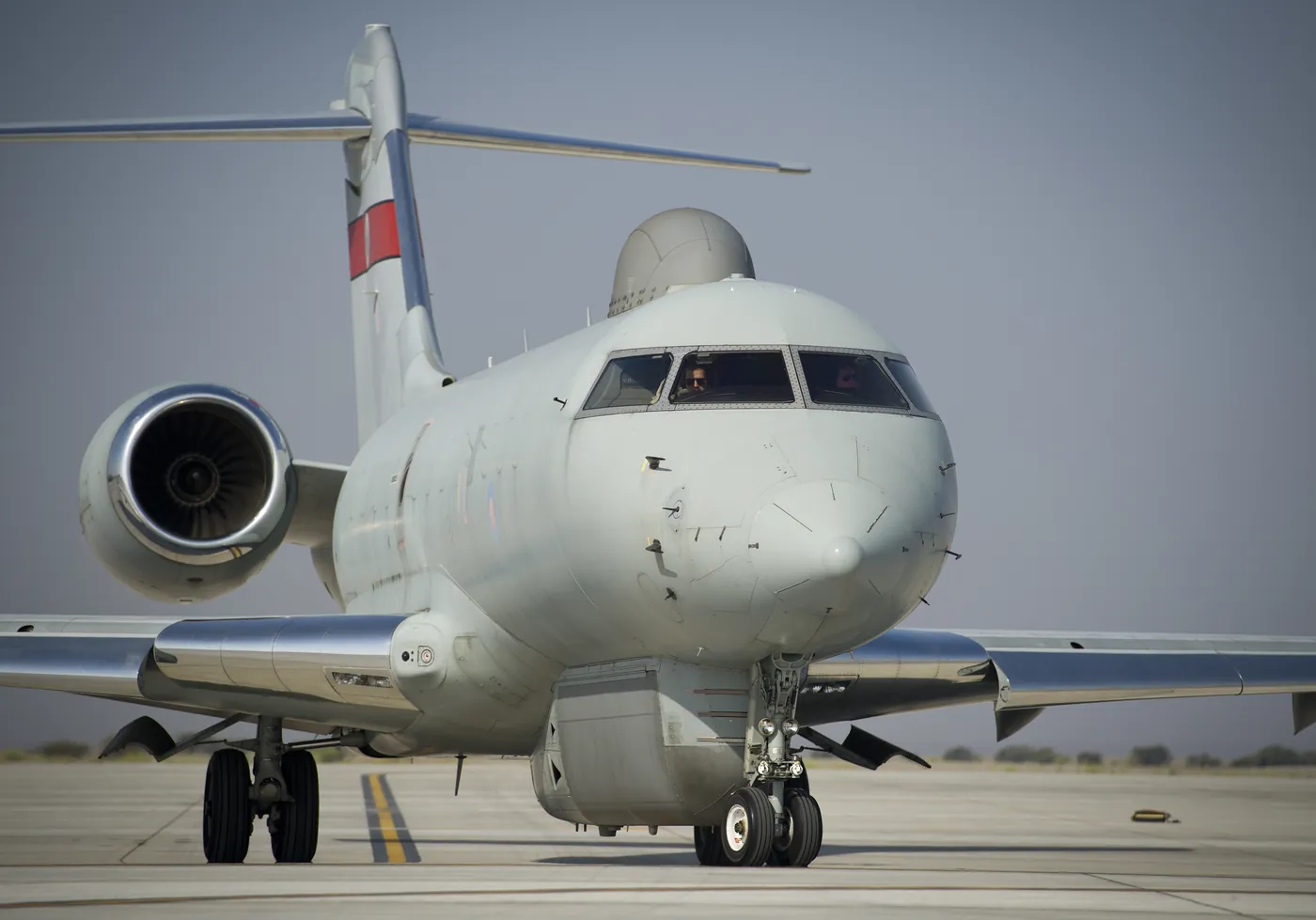
Germany’s airborne signals intelligence programme has reached its first delivery. A used Bombardier Global 6000 procured by Lufthansa Technik will be handed to the Bundeswehr as a training platform by the end of September.
Why buy an aircraft with no sensors
The delivered aircraft carries no reconnaissance payload. Its cockpit and avionics are identical to the operational PEGASUS jets; what is missing is the mission system.
The reasoning is crew readiness. Type conversion for aircrew can proceed regardless of when the mission aircraft arrive. Completing type qualification before the jets are delivered shortens the path to operational capability once they are. Dedicating a separate airframe to training also preserves flight hours on expensive mission systems.
What PEGASUS is
The name stands for Persistent German Airborne Surveillance System. The platform carries signals intelligence sensors able to intercept and locate military radio communications and radar emissions at extended range.
Hensoldt is prime contractor and supplies the sensor suite, with mission hardware integration performed in Germany. The Bundeswehr initially ordered three aircraft. Handover of the three mission jets is scheduled for 2027, with initial operational capability expected in 2028. They will be based with Tactical Air Wing 51 “Immelmann” at Schleswig-Jagel.
A programme with two false starts
PEGASUS exists because two earlier German attempts at airborne SIGINT failed. The uncrewed Euro Hawk programme was cancelled when certification for flight in civil airspace proved unobtainable. A follow-on plan to move the same sensor to the MQ-4C Triton was abandoned over certification and cost.
The current answer sidesteps the problem entirely by putting the sensor on a crewed business jet. The Global 6000 is a civil-certified platform, which means routine flight in European airspace. Endurance is shorter than an uncrewed solution would offer, but programme risk drops sharply.
The mission system runs on its own clock
In programmes of this class the aircraft is usually the easy part. Delay comes from integrating antenna arrays into the airframe, maturing signal processing software, and in-flight electromagnetic compatibility testing. A SIGINT aircraft carries dozens of antennas that must work on one fuselage without interfering with each other.
Delivering the training aircraft early is a way of managing that schedule risk. With crew readiness decoupled from the mission-system timeline, delays stop compounding.
Three aircraft, or six
Whether three airframes suffice for sustained coverage is under debate in Germany. Between maintenance cycles and training demand, holding a continuous patrol with three platforms is difficult. A supplementary budget proposal for three additional platforms was expected to reach parliamentary review during 2026.
The Ministry of Defence describes the programme as supporting early crisis recognition, situation assessment and threat determination in potential operational areas.
Why SIGINT matters
Signals intelligence can detect military activity before physical observation does. Radar emissions carry fingerprint characteristics that reveal what type of system is deployed where. The volume and pattern of radio traffic provides early warning of unit movement.
Electronic warfare planning depends on the same data. Without knowing a radar’s operating frequency and pulse characteristics, no effective jamming technique can be developed against it. SIGINT platforms are, in that sense, the invisible precondition for electronic warfare capability.
The wider read
Turkey has operated its own answer in this space for years. HAVELSAN’s CN-235-based stand-off jamming and electronic intelligence configurations and ASELSAN’s ground-based KORAL system are links in the same intelligence chain, with the Boeing 737-based Peace Eagle AEW&C fleet building the air picture alongside them.
What the German case highlights is that platform choice here is settled by regulation as much as by engineering. Business-jet solutions look less ambitious than uncrewed ones but carry far less certification risk, and Turkish work on business-jet-based ISR configurations reflects a similar cost-and-risk calculation.
Sources
- Lufthansa Technik and German Ministry of Defence statements
- hartpunkt, 26 August 2026
Image: Bombardier Global 6000-based ISR aircraft (representative). Source: Wikimedia Commons.