General Dynamics Tests GPS-Independent Navigation on the Hypersonic Talon-A

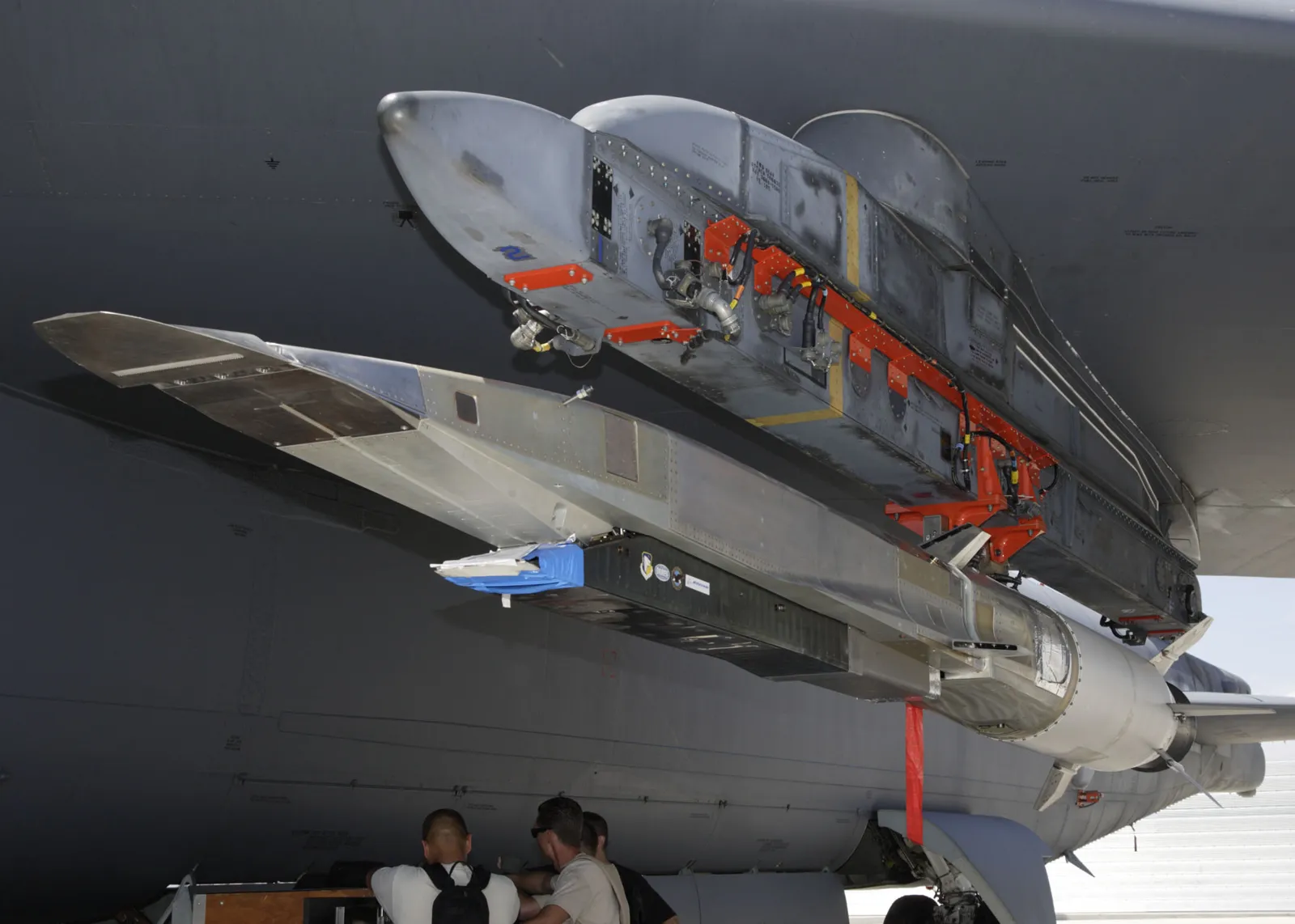
Quick take: General Dynamics Mission Systems says it has flown its GPS-independent MO-Nav receiver aboard Stratolaunch’s Talon-A test vehicle at Mach 5 or faster, working alongside the US Army’s DEVCOM Aviation and Missile Center.
Why navigation without GPS matters
For any vehicle flying at hypersonic speed, losing a reliable position fix is a serious problem the moment satellite navigation becomes unreliable. Jamming or spoofing can knock out GPS-dependent systems entirely. The growing number of GPS interference incidents reported across the Baltic and Black Sea regions over 2025-2026, some of which have disrupted civilian air traffic, shows this isn’t a purely theoretical threat.
General Dynamics’ MO-Nav receiver is meant to fill exactly that gap: a backup able to determine position and timing even when GPS is degraded or denied altogether.
How MO-Nav works
MO-Nav is described as a compact, single-board circuit card assembly. As a software-defined receiver, it isn’t tied to one satellite constellation — it can draw on multiple GNSS systems, “signals of opportunity,” and commercial positioning, navigation and timing (PNT) signals at once. Because it’s software-based, new capabilities can be added through updates rather than hardware swaps.
The test flew on Stratolaunch’s reusable, rocket-powered Talon-A test aircraft, one of the key US platforms for hypersonic testing, capable of exceeding Mach 5. General Dynamics did not disclose the exact flight date; the announcement itself was dated October 7, 2026, and datelined Fort Wayne, Indiana.
From artillery rounds to hypersonic flight
This isn’t MO-Nav’s first outing. The receiver was previously demonstrated in a cannon-fired artillery application, a useful proof point since it shows the technology surviving both extreme acceleration and extreme speed. The company is now folding that core technology into a broader package called MOHAWK — the Multiple Orbit Highly Assured Weapons Kit.
MOHAWK adds spectral and constellation diversity plus scalable anti-jam protection on top of MO-Nav’s base capability. According to the company’s roadmap, a 2027 hypersonic demonstration of MOHAWK with integrated M-Code capability is planned, to be followed by precision-guided munition demonstrations in 2028.
A parallel race with Northrop Grumman
General Dynamics isn’t working alone in this space. Northrop Grumman has flown a separate GPS-independent inertial navigation unit on the same Talon-A platform during its first two hypersonic flights, in December and March. That system remains in research and development. The parallel efforts from both companies show that the US defense industry increasingly treats GPS-resilient navigation as a core requirement for hypersonic weapons programs, not an afterthought.
This competition reflects the broader growth in both the number and funding of US hypersonic weapons programs in recent years. A hypersonic vehicle is only useful in a real conflict if its navigation can survive an adversary’s electronic warfare capabilities.
NATO and regional context
GPS jamming and spoofing are no longer just a US concern — they’re on NATO’s eastern-flank agenda too. Baltic states and Black Sea littoral countries reported repeated GPS interference incidents through 2025-2026, some affecting civilian air traffic. For the Black Sea security architecture that Turkey is part of, progress on GPS-independent navigation extends well beyond hypersonic weapons alone, feeding into a broader debate about operational resilience.
General Dynamics and the Army have not released technical details on range, duration or performance from this specific test, which makes independently assessing the system’s maturity difficult for now.
Sources
- General Dynamics Mission Systems, official announcement, October 7, 2026 (Fort Wayne, Indiana) — used for the test, platform and MO-Nav/MOHAWK technical description.
- Military Embedded Systems, “GPS-denied software-defined receiver demonstrated at hypersonic speeds” — used for independent confirmation and technical detail.
- Defence Industry Europe, “General Dynamics demonstrates navigation without GPS on Talon-A hypersonic aircraft” — used for the Stratolaunch link and platform information.
- Interesting Engineering, coverage of the GPS-free hypersonic navigation test — used for general context.