Raytheon’s Coyote and KuRFS go export as Qatar and Jordan buy LIDS

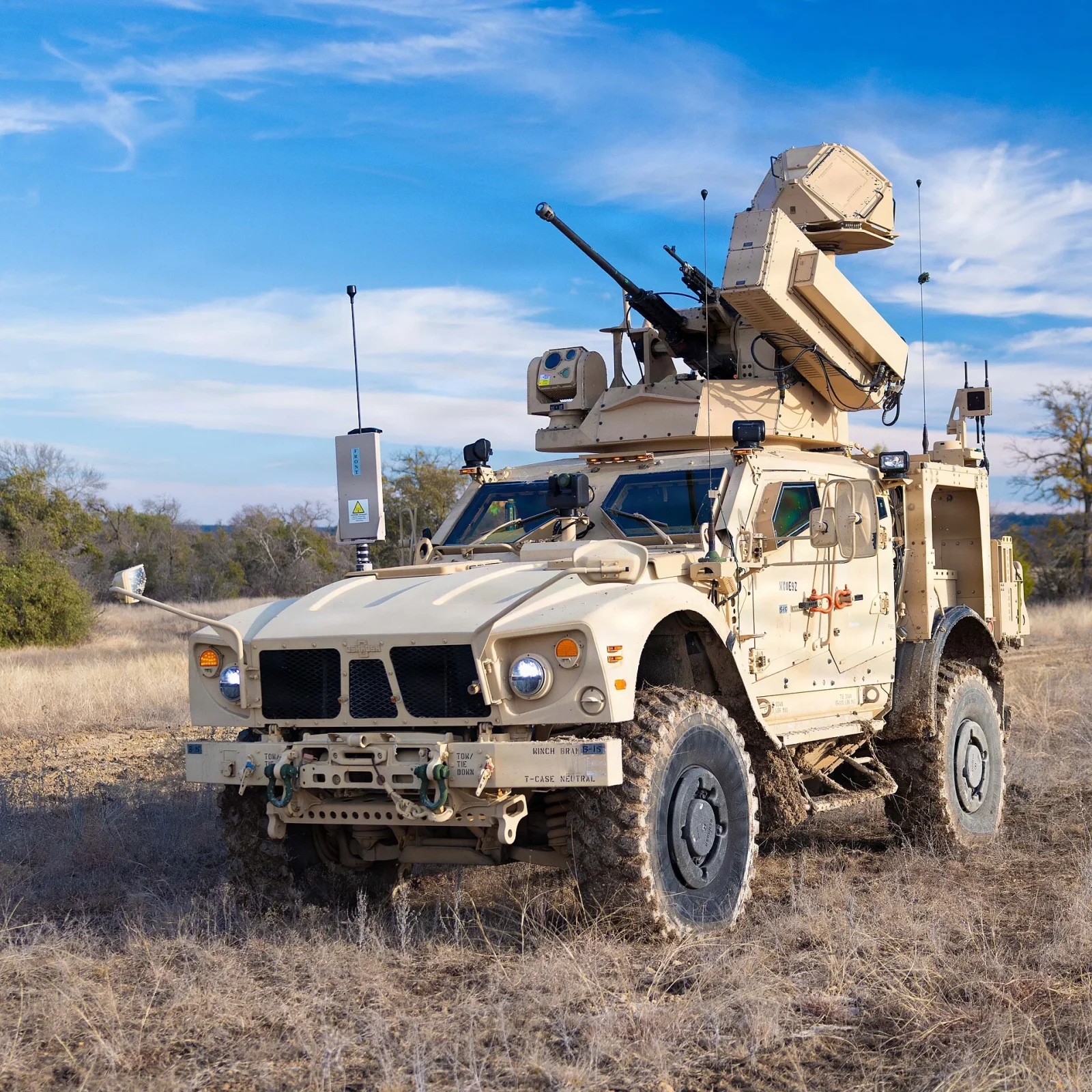
Raytheon has won $729 million in contracts to supply components of the U.S. Army’s LIDS counter-drone system to the Army itself, Qatar and Jordan. The company said on 13 October 2026 that the awards are the first international sales of its KuRFS radar and Coyote interceptor.
What the contracts cover
The announcement, issued from Raytheon’s Tucson, Arizona, base, says the work covers critical components of LIDS, the Low, slow, small unmanned aircraft Integrated Defeat System. Deliveries will include both fixed-site and mobile configurations, meaning the buyers are acquiring protection for static infrastructure as well as a vehicle-mounted layer that can move with forces in the field.
Raytheon did not disclose how the $729 million is divided among the three customers, how many systems are involved, or when deliveries begin. Nor did the release say which Coyote block Qatar and Jordan will receive. What it does establish is that the two Middle Eastern states are the first foreign operators of the KuRFS-Coyote pairing.
Tom Laliberty, president of Land and Air Defense Systems at Raytheon, described LIDS as a proven and cost-effective layer of defence that gives allied forces the protection they need against hostile drones. The company added that it is accelerating Coyote production and investing in additional capacity to meet a rise in global demand.
A sensor and an effector built to work together
KuRFS, the Ku-band Radio Frequency Sensor, handles detection. It is an active electronically scanned array radar offering 360-degree coverage, and Raytheon markets it for both counter-UAS and counter-rocket, artillery and mortar missions. According to the company, it can discriminate among many small objects at once and tell birds from drones, a persistent problem for short-range air defence crews.
Coyote provides the kill. The Block 2 is an expendable interceptor with a kinetic warhead, while the Block 3NK carries a non-kinetic payload, can loiter to engage swarms, and can be recalled and reused. Raytheon says Coyote variants have achieved hundreds of intercepts in combat. The round is rail-launched from fixed and mobile platforms on land, at sea and in the air.
KuRFS is also not tied to a single shooter. Raytheon lists integration with land-based Phalanx, 30mm cannons, .50-calibre guns and high-energy lasers, which gives a new operator room to add effectors over time without replacing the radar.
Rocket-powered Coyote enters testing
A day earlier, on 12 October, Raytheon said it had completed three developmental tests of the Coyote Block 2C+RM. The company-funded upgrade moved from concept to test in 15 months. The trials confirmed initial integration with the existing counter-drone architecture and included the first launches of a Coyote fitted with a tactical rocket motor.
Replacing the turbine engine used for cruise in earlier versions, the rocket motor is meant to cut engagement times and allow faster follow-on shots. The variant also introduces a new seeker and warhead intended to defeat all classes of current and emerging drone threats. The test results were publicised during the week of the AUSA 2026 annual meeting.
Taken together, the two announcements show Raytheon opening the fielded system to export customers while preparing a faster successor. The goals listed in the 13 October release, quicker launch, higher speed and longer reach at higher altitude, line up closely with the Block 2C+RM work.
Why Qatar and Jordan matter
Both countries host significant U.S. military presence. Al Udeid Air Base in Qatar is a key forward hub for U.S. Central Command, while Jordan borders Syria and Iraq and has long been exposed to one-way attack drones. The January 2024 drone strike on the Tower 22 outpost in north-eastern Jordan, which killed three U.S. soldiers, underlined how dangerous the low-altitude threat has become in the region.
Buying the same architecture the U.S. Army fields should ease joint training, logistics and track sharing with American units. Fixed sites suit airbases, energy installations and government facilities; the mobile version fits border security and manoeuvre forces. Across the Gulf, the cost of firing expensive missiles at cheap drones has pushed governments toward lower-cost interceptors layered under existing air defence.
The deal also lands in a crowded market. European and Turkish firms already compete with American suppliers for Gulf short-range air defence and counter-drone requirements, and Qatar in particular maintains close defence ties with Türkiye. Raytheon’s entry suggests procurement in the region is moving toward networked, multi-vendor architectures in which the ability to integrate sensors and shooters from different suppliers becomes a deciding factor.
Sources
- RTX press release (official, 13 October 2026) — $729m award, U.S. Army/Qatar/Jordan, first export of KuRFS and Coyote, fixed and mobile configurations, Laliberty quote, production ramp-up.
- RTX press release (official, 12 October 2026) — three Coyote Block 2C+RM tests, 15-month timeline, rocket motor, new seeker and warhead.
- RTX Coyote product page (official) — Block 2, Block 2C+RM and Block 3NK variants, launch platforms.
- RTX KuRFS product page (official) — AESA, Ku-band, 360-degree coverage, C-UAS/C-RAM roles, integrated weapons.
- Defence Industry Europe (non-official, 13 October 2026) — export framing and regional demand context.
- Janes (non-official, October 2026) — AUSA 2026 context for the rocket-powered Coyote tests.