Five More F-35A Husarz Land in Poland, Bringing the Fleet to Eight

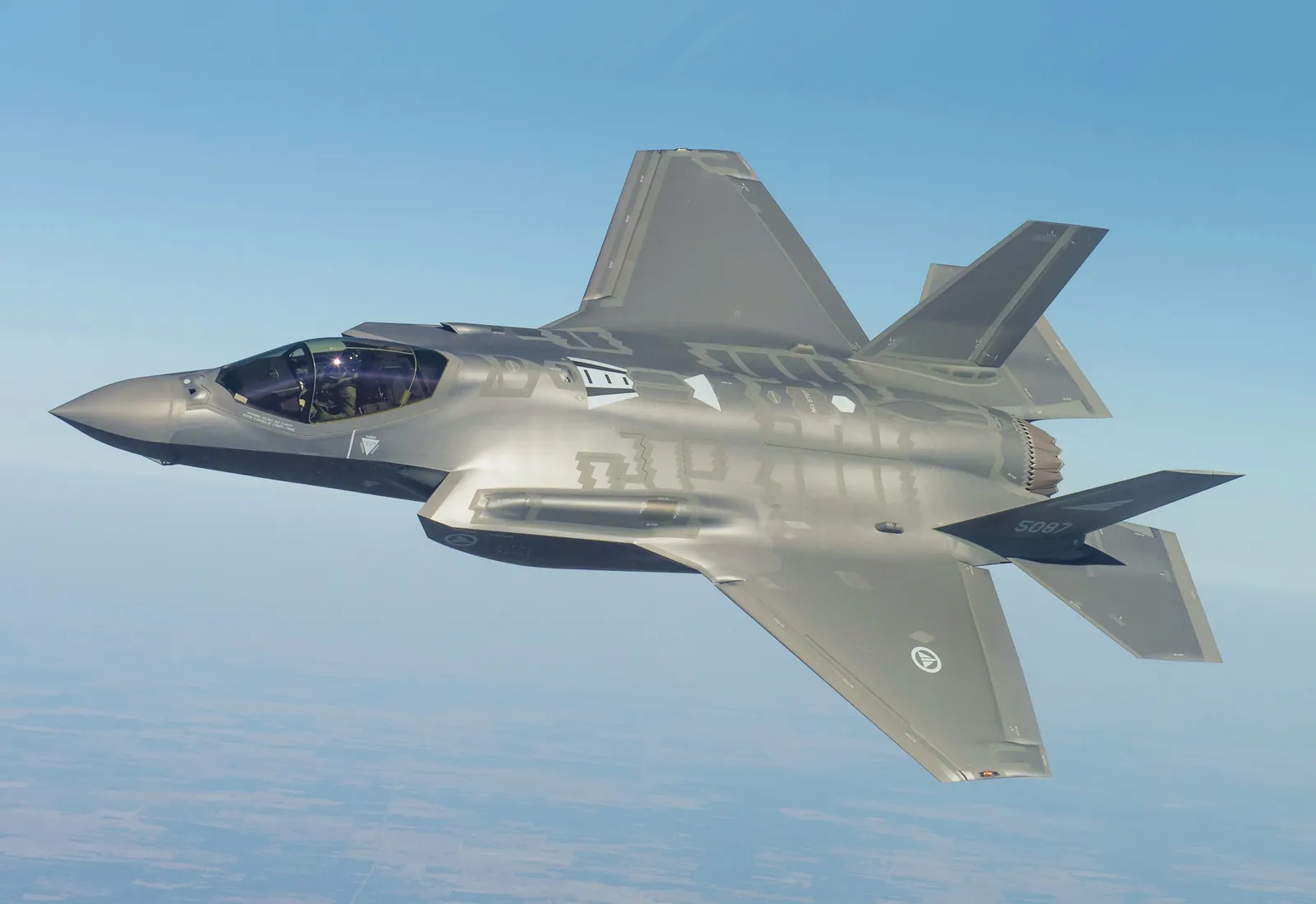
Five F-35A Husarz fighters touched down at the 32nd Tactical Air Base at Lask on 28 August, carrying tail numbers 3512 through 3516. The arrival was announced by Polish Defence Minister Wladyslaw Kosiniak-Kamysz and the Operational Command of the Polish Armed Forces.
Eight down, twenty-four to go
The batch takes Poland’s delivered F-35 fleet to eight aircraft. The first jets arrived in May of this year, following a training pipeline that took Polish pilots through Ebbing Air National Guard Base in the United States.
Warsaw signed for 32 F-35As with the United States on 31 January 2020. The remaining 16 aircraft under the current order will be assembled at the European final assembly and check-out facility at Cameri in Italy — a detail with implications beyond logistics, since it deepens the continent’s own F-35 sustainment base.
The name Husarz refers to Poland’s historic winged hussars, heavy cavalry that occupies a particular place in the national military imagination. The Polish Air Force adopted it for the type following a public vote in 2021.
One piece of a very large rearmament
The F-35 buy is the air component of a modernisation programme with few peers in Europe. Poland is retiring Soviet-era MiG-29 and Su-22 fleets, bringing in FA-50 light combat aircraft from South Korea alongside the F-35A, and upgrading its existing F-16C/D Block 52+ force.
On the ground the same pattern repeats: K2 tanks and Abrams, K9 howitzers and HIMARS, Patriot and the CAMM-based Narew air defence system. Poland has pushed defence spending above four percent of GDP, placing it among the highest proportional spenders in NATO.
What changes on the eastern flank
Poland’s fleet adds to a fifth-generation presence that already includes Norway, Denmark, the Netherlands, Belgium, Finland and Germany, whose aircraft rotate through Polish bases on air policing duties.
The contribution is not only low radar cross-section. Sensor fusion and datalink capacity let these aircraft pass a real-time air picture to each other and to ground elements — the capability that shapes planning in airspace defended by dense integrated air defences.
Scale remains the qualifier. Eight aircraft constitute a training and conversion nucleus rather than an operational capability.
Infrastructure lags the aircraft
Fifth-generation procurement is not finished when the jets land. The F-35 requires purpose-built maintenance facilities, secure data infrastructure for mission planning and dedicated training simulators. Poland is building that out at Lask, where hangars, munitions storage and runway work run as separate investment lines.
That is why several years typically separate first arrivals from full operational capability. Polish planning treats initial operational capability as something achieved incrementally, as deliveries progress and ground crews complete certification.
The Turkish comparison
The F-35 programme reads differently from Ankara. Turkiye was a partner nation: TAI, Alp Aviation, Ayesas and Kale Aero produced everything from centre fuselage sections to landing gear components, cockpit display units and engine parts. Some of that work continues.
Since Turkiye’s removal from the programme, its fighter planning has advanced on two tracks — modernising the F-16 fleet alongside new Block 70 procurement, and developing the national combat aircraft KAAN. KAAN’s first flight in 2024 and the 48-aircraft agreement signed with Indonesia indicate a programme moving on both schedule and export fronts, while the Eurofighter Typhoon process offers an interim option.
Poland and Turkiye illustrate two procurement strategies running side by side inside the same alliance. Warsaw bought capability off a mature line for speed; Ankara chose to build its own. The costs, timelines and industrial returns differ sharply. What they share is that both will reshape the regional air balance over the coming decade.
Sources
- Polish Ministry of National Defence and Operational Command of the Polish Armed Forces announcements, 28-29 August 2026
- Statement by Defence Minister Wladyslaw Kosiniak-Kamysz