A Bridge Over the Tumen: Russia and North Korea Are About to Get Their First Road Link

The first road bridge between Russia and North Korea is close to completion. On the Tumen River, the North Korean approach roads, customs building and controlled entry point are finished; infrastructure on the Russian bank is still under construction.
One crossing on a 17-kilometre border
Russia and North Korea share just 17 kilometres of land border, all of it running along the Tumen. Until now the only fixed connection was the rail bridge at Tumangang. The new structure will carry wheeled traffic across that frontier for the first time.
Half-metre-resolution commercial satellite imagery shows the North Korean side complete, with a customs building and controlled entry point several hundred metres back from the riverbank. On the Russian side, border facilities and road works remain unfinished.
The bottleneck is containers, not capacity
The military significance sits in a technical constraint on the existing rail route. Analysts point to a persistent bottleneck at the Tumangang rail link, where North Korea’s lack of standardised ISO shipping containers forces cargo to be transloaded by hand. Every shipment takes longer and carries less.
A road bridge eases that in two ways. Truck movement is more flexible than wagon transfer and needs less handling infrastructure at the crossing. And where rail runs on a single line, road allows parallel flow.
Road and rail do different jobs
In military logistics rail is unmatched for heavy, bulky loads — tonnage per movement is far above what road achieves. But rail is fixed to its route, and a single point of damage stops everything behind it. Road offers lower capacity with far more flexibility: alternative routes, dispersed timing, small-lot movement.
Having both removes the fragility of a single-mode corridor. Until now the Tumen crossing has been exactly that.
Moving what
Flows of military materiel between the two states have been among the most closely watched subjects of the past two years. Monitoring organisations have documented North Korean artillery ammunition reaching Russia, much of it routed by sea through the port of Rason. A fixed land connection removes the weather and port-capacity constraints of a maritime route.
The legal frame is the 2024 Comprehensive Strategic Partnership agreement, which includes a mutual defence clause. The bridge can be read as that political text turning into physical infrastructure.
The regional equation
A permanent land link also loosens North Korea’s commercial dependence on China. For years the overwhelming share of Pyongyang’s external trade has run through Dandong on the Chinese border. A second gate to the north gives it negotiating room.
Seoul and Tokyo read the same development differently. What North Korea receives in exchange sits at the centre of the regional balance debate; satellite technology, submarine propulsion and air defense components recur most often in open-source assessment.
Built in plain sight
It is worth noting that the bridge is being built in open terrain, fully visible to commercial satellites. Projects of this kind usually prioritise concealment. The choice here suggests the two governments see value in the cooperation being seen rather than hidden.
The wider read
There is no direct Turkish angle, but the case restates something the defense industry keeps relearning: transport infrastructure is part of combat power, not a supporting function. One of the clearest lessons of the war in Ukraine has been that artillery ammunition flow is a sustained industrial and logistical problem rather than a procurement event.
Turkey’s expansion of ammunition output through MKE, and the entry of private-sector players such as Repkon into international ammunition supply chains, answer the production half of that equation. The delivery half depends on ports, rail connections and border crossing capacity — and needs at least as much planning.
Sources
- Defense News, 26 August 2026
- Planet Labs commercial satellite imagery analysis
- Russia-DPRK Comprehensive Strategic Partnership agreement (2024)
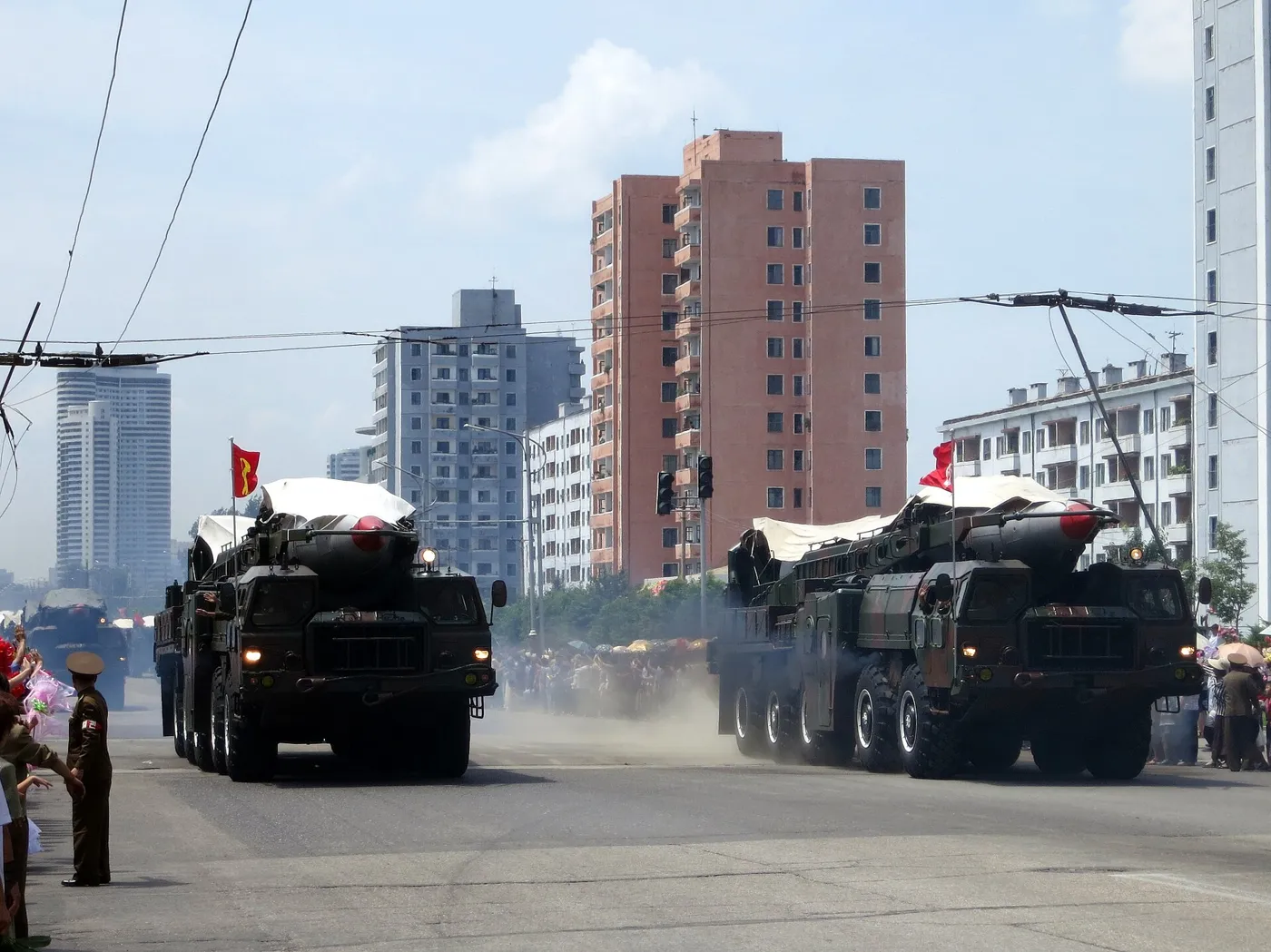
Image: North Korean military systems, representative archive image. Source: Wikimedia Commons.