The Navy Just Paid $90 Million to Take Blackbeard Out of the Prototype Phase

Castelion has been awarded an $89,997,162 firm-fixed-price order from the US Navy to move its Blackbeard hypersonic strike weapon out of the prototype phase and into a configuration ready for troops. Announced by the company on 25 August, it is the fourth Navy award tied to the programme in eight months.
What the order covers
The award funds the transition of Blackbeard to Early Operational Capability. The firm-fixed-price structure puts the risk of cost growth on the contractor rather than the government — a contract type the Pentagon has leaned on increasingly hard in its fast-track acquisition lines over the past two years.
Castelion said the order builds on its earlier work under the heading “Low Cost Highly Manufacturable Long Range Strike Weapon Production.” That phrasing matters: this is not a clean-sheet development effort but the industrialisation of a weapon that is already flying.
Eight months, four contracts
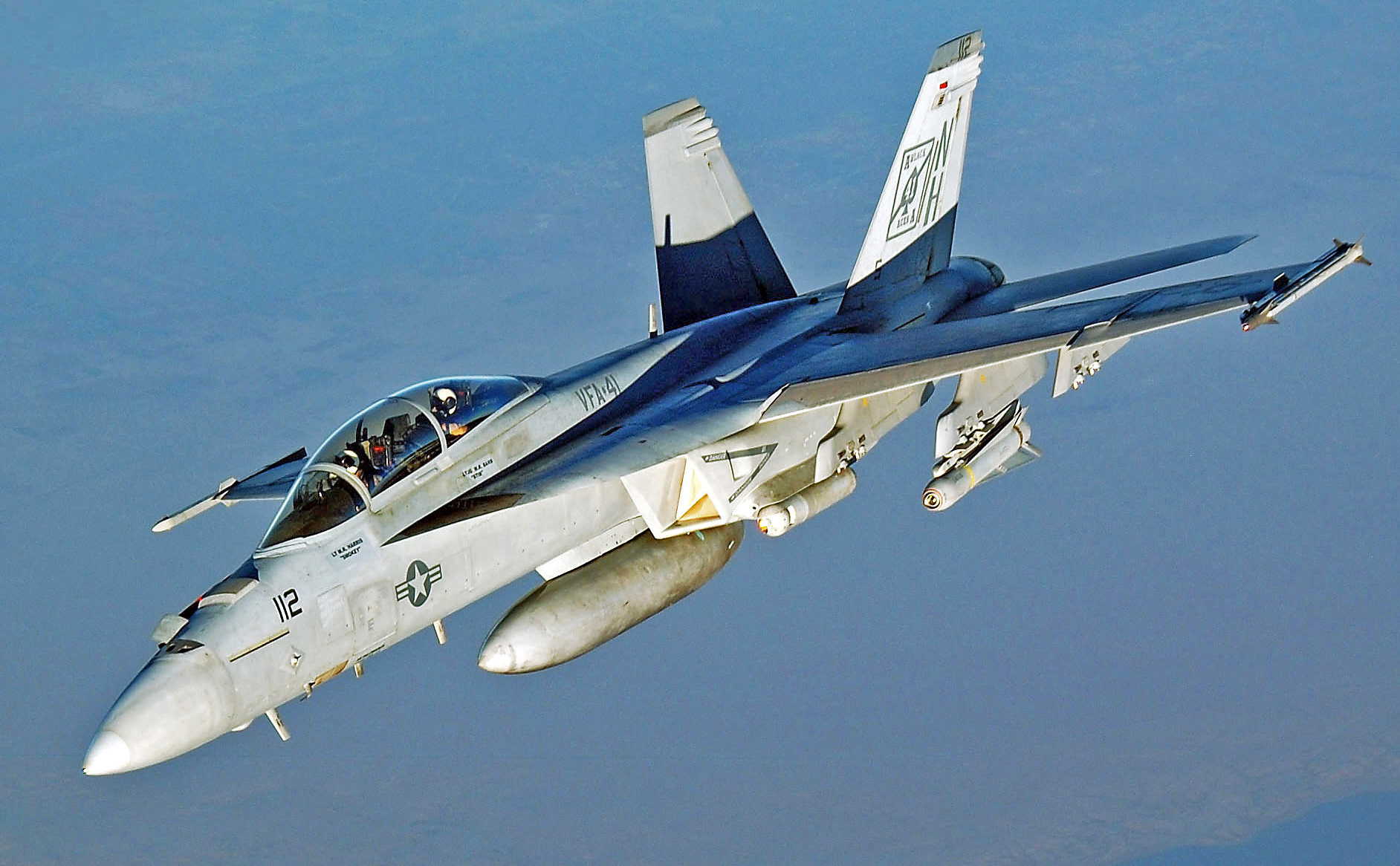
Blackbeard has moved faster than almost any comparable American munitions programme. In February 2026 the Navy put down $49.9 million to begin the shift from prototype to early operational capability. In April a $105 million award covered integration onto the F/A-18 Super Hornet, including safety certification and carrier-suitability testing, with early operational use targeted for 2027.
June brought the first delivery order: $23.4 million for 50 early operational capability pre-production rounds and 50 storage-and-shipping containers, with work centred on Castelion’s Project Ranger campus in Rio Rancho, New Mexico, and completion expected in 2027. The company has said it invested more than $250 million in that 1,000-acre site.
A framework agreement signed in May with the Department of War sets the ceiling of ambition: multi-year procurement at 500 weapons a year. Castelion also closed a $1 billion private funding round for the programme earlier this month.
Why “cheap hypersonics” became the point
Blackbeard’s distinguishing feature is not speed. It is unit cost and manufacturability. Conventional hypersonic programmes produce rounds that cost millions apiece; Castelion designed its weapon around a production line from the outset, drew on commercial supply chains, and iterates the design through frequent flight tests rather than lengthy design reviews.
The operational logic behind that choice has been visible in the Red Sea and the eastern Mediterranean. Expensive interceptors and expensive strike rounds both run into the same wall: magazine depth. An inventory that empties in the first week of a conflict makes the range and speed figures on the datasheet irrelevant. The Navy’s parallel work on the AIM-424 Malice long-range air-to-air missile and on containerised low-cost strike weapons follows the same reasoning down different branches.
The hard part is not the speed
Hypersonic describes flight at Mach 5 and above. Reaching that speed is not the difficulty — ballistic missiles have re-entered the atmosphere in that regime for decades. The difficulty is manoeuvring there while holding guidance quality.
Above Mach 5 the airframe skin passes a thousand degrees, the ionised plasma sheath that forms around the vehicle can block radio links, and aerodynamic loads punish control surfaces. Each of those is a separate materials, guidance and structures problem, and solving them together is what drives cost. Castelion’s answer is to accept a narrower performance envelope in exchange for something it can build in volume.
The F/A-18 question
Choosing the Super Hornet as first carrier aircraft puts Blackbeard directly into the carrier air wing. For a navy weighing range against tanker capacity, giving a deck-launched aircraft a hypersonic strike option is a meaningful shift. It is also the riskiest part of the programme: shipboard safety and certification work is where fast-moving munitions programmes historically slow down.
What it means beyond Washington
The real lesson of Blackbeard is industrial rather than technological. The trade between a small number of exquisite rounds and a large number of buildable ones is now being resolved in favour of the second, inside the world’s largest defence budget.
That has implications for every mid-sized producer with a deep-strike portfolio, Turkey included. Ankara’s long-range strike capability has broadened quickly — ROKETSAN’s TAYFUN family, the SOM and ÇAKIR cruise missile lines, and anti-ship developments among them — and Turkish industry’s comparative strength has long been in munitions families that can be produced at rate and exported. Blackbeard suggests that logic is now mainstream in the United States as well.
Sources
- Castelion press release, “U.S. Navy Awards Castelion $90M to Advance Blackbeard to Early Operational Capability,” 25 August 2026
- Castelion press release, “U.S. Navy Awards Castelion First Delivery Order for Blackbeard Hypersonic Weapon,” 16 June 2026
- Castelion press release, “Castelion Awarded $105M U.S. Navy Contract to Field Blackbeard on the F/A-18 Super Hornet in 2027,” 24 April 2026
Image: F/A-18 Super Hornet (illustrative). Source: Wikimedia Commons.