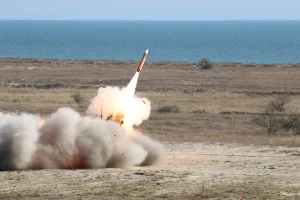
What is the Iron Dome? Israel’s Short-Range Rocket Shield, Explained

The Iron Dome — Hebrew Kippat Barzel — is the world’s most operationally tested short-range air-defense system. Developed by Rafael Advanced Defense Systems together with state-owned Israel Aerospace Industries (IAI) and U.S. firm Raytheon (RTX), the system has logged more than 5,000 confirmed intercepts since its first combat use in 2011, including against unguided Qassam and Grad rockets, mortar bombs, drones, and cruise-missile-class targets. With a published kill probability above 90 percent against the threats it is designed to engage, Iron Dome has become the global benchmark for counter-rocket, artillery and mortar (C-RAM) defense.

Key facts at a glance
| Attribute | Value |
|---|---|
| Type | Short-range counter-rocket, artillery, mortar & UAV system |
| Origin | Israel (with U.S. funding partnership) |
| Manufacturer | Rafael Advanced Defense Systems; mPrest (software); RTX (U.S. co-production) |
| In service | March 2011 — present |
| Interceptor | Tamir |
| Engagement range | 4 – 70 km |
| Engagement altitude | up to ~10 km |
| Reaction time | ~15 seconds from radar detection to launch |
| Battery composition | EL/M-2084 radar, BMC center, 3–4 launchers (20 missiles each) |
| Operators | Israel, United States, Azerbaijan, Romania, Slovakia (planned), Finland (planned) |
| Combat intercepts | ~5,000+ as of late 2025 |
| Unit cost per Tamir | ~ USD 50,000 – 80,000 |
| Battery cost | ~ USD 100 million |
Why Israel built it
The second intifada and the 2006 Lebanon war exposed a hard truth: Israel had world-class fighters and tank brigades, but no answer to the cheap, unguided Qassam and Grad rockets fired from Gaza and southern Lebanon. After 2006, then-Defense Minister Amir Peretz launched a crash program for an indigenous short-range shield. Rafael’s bid, accepted in February 2007, promised a working system in 36 months — an industrial pace almost unheard of in missile-defense programs.
The first operational Iron Dome battery stood up in March 2011 near Beersheba. On 7 April 2011, the system intercepted its first hostile rocket — a Grad heading for Ashkelon — beginning what would become the longest sustained air-defense engagement in modern military history.
Anatomy of a battery
Each Iron Dome battery has three core sub-systems:
- EL/M-2084 multi-mission radar (MMR) — an active electronically scanned array (AESA) from IAI’s Elta Systems. The radar simultaneously performs air-defense search, projectile detection, and weapon-locating roles. Detection range against a 122 mm Grad rocket is roughly 70 km.
- Battle Management & Control (BMC) center — software written by Israeli firm mPrest. The BMC predicts impact points, classifies whether incoming rounds will hit populated areas, and authorizes engagement only against those that will. Rockets predicted to fall in open ground are not intercepted, dramatically reducing interceptor expenditure.
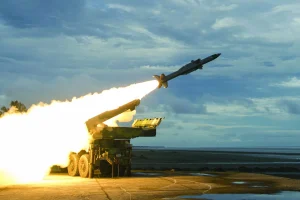
- Three to four launchers — each carries 20 Tamir interceptors in vertical canisters. A battery’s typical inventory is 60–80 ready rounds.
The Tamir interceptor
The Tamir missile is roughly 3 m long, 160 mm in diameter and weighs 90 kg. It uses a solid rocket motor, mid-course command guidance, and a terminal electro-optical seeker. The warhead is a small proximity-fuzed blast-fragmentation charge optimized to detonate within centimeters of the target. Maneuverability — up to 30 g — lets Tamir intercept rocket trajectories whose endpoints can shift by hundreds of meters in flight.
Per round, Tamir costs Israel roughly USD 50,000 — orders of magnitude more expensive than the USD 400–1,000 rockets it intercepts. This cost asymmetry is the system’s most-debated weakness, and the reason Rafael is now developing the laser-based Iron Beam and a longer-burn Tamir-MR as complements.

Operational record
By Israeli Air Force figures, Iron Dome has now neutralized rockets from at least four major air-attack campaigns:
| Conflict | Period | Rockets/UAVs fired at IL | Iron Dome intercepts |
|---|---|---|---|
| Operation Pillar of Defense | Nov 2012 | ~1,500 | ~421 |
| Operation Protective Edge | Jul–Aug 2014 | ~4,500 | ~735 |
| Operation Guardian of the Walls | May 2021 | ~4,360 | ~1,428 |
| Swords of Iron (Gaza war) | Oct 2023 – 2025 | ~13,000+ | ~2,000+ (selective engagement) |
| Iran direct strikes (Apr / Oct 2024) | 2024 | ~530 missiles & UAVs | Co-engaged with Arrow, David’s Sling |
Across all campaigns, the selective-engagement principle has been validated: roughly 75–80 percent of incoming rockets are judged to land in open ground and ignored, with the remaining 20–25 percent engaged at the published >90 percent kill rate.
Limitations and the saturation problem
Iron Dome is optimized for a specific class of threat — unguided rockets, mortars and slow UAVs with apogee under 10 km. Against very short-range trajectories (mortars launched from inside Gaza neighborhoods, for example), reaction time can drop below 4 seconds, near the system’s lower limit. Saturation salvos that mix rockets, decoys, drones and cruise missiles also stretch a battery’s magazine: even at 80 ready rounds, a 200-round Hamas salvo will exhaust two launchers within minutes.
Iran’s April and October 2024 ballistic-missile strikes on Israel demonstrated the integrated nature of Israeli defense: the upper tier (Arrow-2/3 against ballistic missiles, David’s Sling against medium-range), the middle tier (Iron Dome’s longer-reach configurations), and the U.S. Navy’s Aegis BMD and THAAD batteries all engaged simultaneously.
Export and U.S. service
For most of its life, Iron Dome was Israel-only. The first export, to Azerbaijan, was confirmed in 2016 (number of batteries undisclosed). In 2019 the U.S. Army purchased two batteries under an interim C-RAM requirement; they are operated by the 5th Battalion, 4th Air Defense Artillery Regiment and have been forward-deployed to the Indo-Pacific. Romania signed for a battery in 2024, and Slovakia and Finland have programs under negotiation. Cyprus and Germany have evaluated the system.
How Iron Dome compares
| Iron Dome | NASAMS | Pantsir-S1 | Skyranger 30 / 35 | |
|---|---|---|---|---|
| Class | C-RAM + short-range SAM | Short/medium SAM | SHORAD + gun | SHORAD + 30/35 mm gun |
| Max range | 70 km | 25–50 km (AMRAAM-ER) | 20 km | 4 km (gun) / 10 km (Mistral) |
| Designed against rockets/mortars | Yes (primary) | No | Limited | Yes (programmable airburst) |
| Combat record | 5,000+ intercepts | Ukraine: cruise & UAV | Ukraine, Syria | No combat use yet |
The road ahead: Iron Beam and Tamir-MR
To break the cost-per-intercept curve, Rafael is fielding Iron Beam, a 100-kilowatt-class fiber-laser system. Iron Beam delivered its first operational Hezbollah-rocket kill in March 2025 and is projected to reach battery-level deployment by 2027. Each shot costs roughly USD 2 — six orders of magnitude cheaper than a Tamir round.
Alongside Iron Beam, Rafael is qualifying Tamir-MR, a medium-range Tamir with longer-burn motor and dual-pulse design pushing range past 100 km, intended for the same battery footprint. Together with the higher tiers — David’s Sling and Arrow — Iron Beam and Tamir-MR will keep Iron Dome at the heart of Israel’s multilayer shield well into the 2030s.
Why Iron Dome matters
No other air-defense system in history has been tested at Iron Dome’s volume against real, live threats. It validated selective-engagement doctrine, normalized AESA radar in tactical air defense, and proved that a small country with the right software can build a global benchmark in less than four years. As Western armies rediscover air defense after two decades of counterinsurgency neglect, Iron Dome is, for better or worse, the standard everyone now measures against.