ATMOS 2000: Israel’s 155mm Truck-Mounted Howitzer – Technical Analysis, Operators and Comparison with Turkey’s PANTER

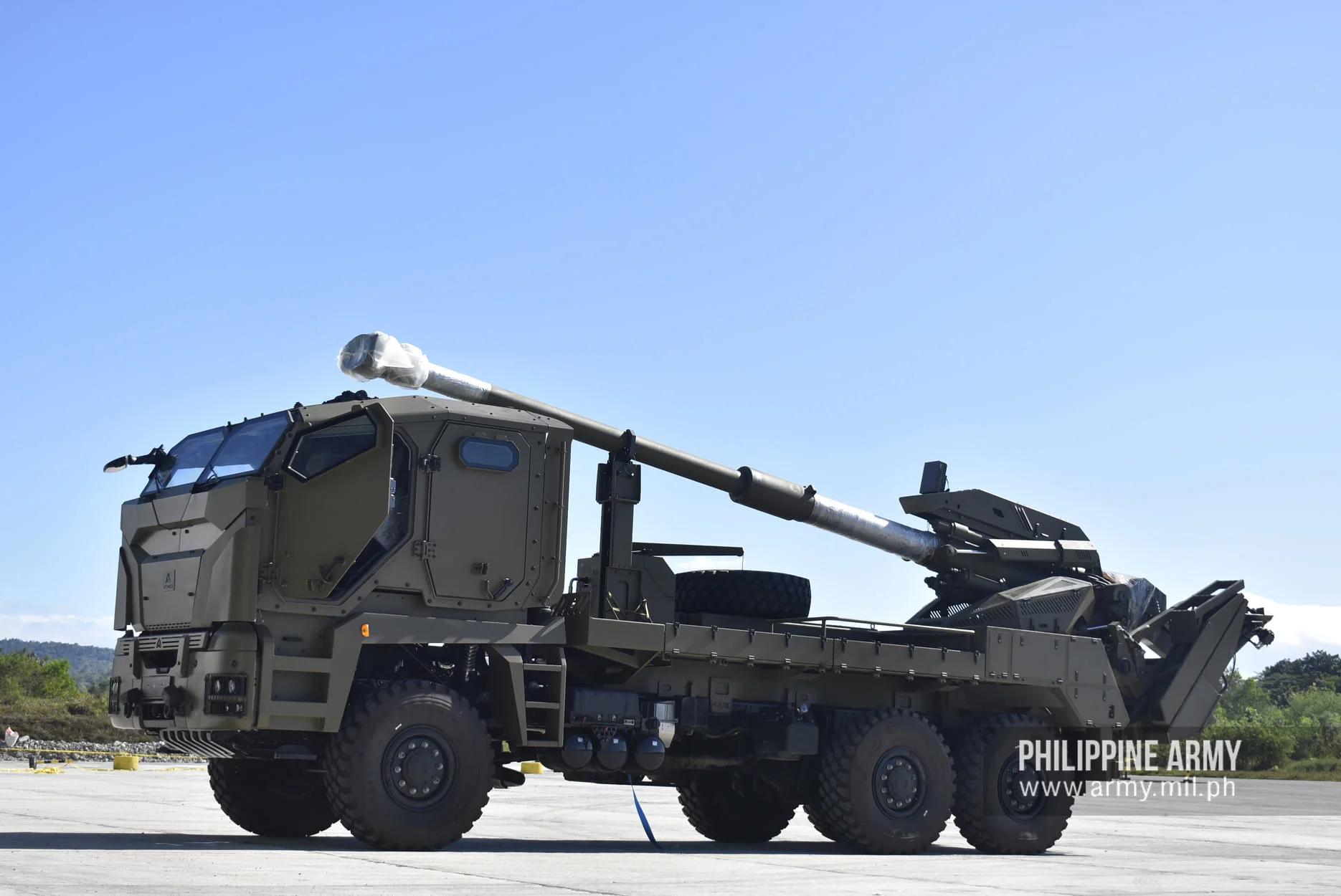
ATMOS 2000 (Autonomous Truck Mounted Artillery System) is a 155mm/52-calibre wheeled self-propelled howitzer developed by Elbit Systems of Israel. Rooted in the decades-long artillery engineering tradition of SOLTAM Systems — acquired by Elbit in 2006 — the ATMOS 2000 has evolved into one of the most commercially successful truck-mounted artillery platforms on the global market. It is currently in service with armed forces across four continents, from Azerbaijan to Colombia, Denmark to Morocco.
System Overview
Unlike tracked self-propelled howitzers such as the PzH 2000 or K9 Thunder, the ATMOS 2000 mounts its ordnance on a standard 6×6 or 8×8 commercial truck chassis. This design philosophy prioritises strategic mobility, lower lifecycle costs and logistical simplicity over heavy armour protection. The system’s core value proposition can be summarised in three points:
- Shoot-and-scoot capability: The crew can deploy, fire and relocate in under 30 seconds, denying enemy counter-battery radars a stationary target.
- Strategic transportability: The wheeled platform can travel on standard roads and be loaded onto standard cargo aircraft or rail flatcars without specialist transporters.
- NATO interoperability: The 155mm/52 barrel complies fully with the NATO Joint Ballistic Memorandum of Understanding (JBMoU), enabling ammunition sharing across the Alliance.
Development History
The origins of ATMOS 2000 trace back to SOLTAM Systems, established in the early 1950s as the Israeli subsidiary of Finland’s Tampella. SOLTAM supplied the Israel Defense Forces with a succession of towed howitzers — the M-68, M-71 and M-120 mortar — before shifting focus in the 1990s towards a wheeled, self-propelled platform that could reduce the logistical burden on a modern, manoeuvre-oriented army.
The ATMOS 2000 concept was finalised around the turn of the millennium, with the designation reflecting its design completion year. Elbit Systems acquired SOLTAM in 2006 and immediately repositioned the platform as an export product, upgrading the fire control software and navigation suite. The first major export success came in Azerbaijan, followed by contracts in Asia-Pacific and Latin America during the 2010s. The post-2022 European rearmament wave, triggered by Russia’s invasion of Ukraine, further accelerated demand.
Technical Specifications
| Parameter | Value |
|---|---|
| Calibre | 155mm / 52 calibres (NATO JBMoU compliant) |
| Maximum range – ERFB-BB | 41 km |
| Maximum range – NATO L15 HE | 30 km |
| Maximum range – M107 HE | 24.5 km |
| Burst rate of fire | 9 rounds/minute |
| Sustained rate of fire | 4 rounds/minute |
| On-board ammunition | 27 × 155mm rounds + charges |
| Crew | 4 personnel |
| Platform chassis | 6×6 or 8×8 truck (Tatra, Scania, MAN etc.) |
| Traverse | ±25 degrees |
| Elevation | Up to +70 degrees |
| Emplacement time | ≤30 seconds |
| Displacement time | ≤30 seconds |
| Fire control | Digital FCS + inertial/GPS navigation + muzzle velocity radar |
| System weight | ~22–26 tonnes (varies by chassis) |
Operational Use and Combat Record
Israel – Gaza Operations
The Israel Defense Forces have operated the ATMOS 2000 since the early 2000s. The system has seen active use in Operation Cast Lead (2008–09), Operation Pillar of Defence (2012), Operation Protective Edge (2014), and the 2023–2024 Gaza campaign. The IDF values the platform for its rapid emplacement and the ability to provide long-range precision fire support from positions well behind the immediate front line. Its low logistical footprint suits Israel’s compact road network and reserve-heavy force structure.
Azerbaijan – 2020 Nagorno-Karabakh War
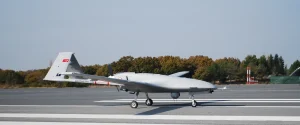
Azerbaijan fielded ATMOS 2000 howitzers during the 44-day Second Nagorno-Karabakh War in 2020. The system provided direct fire support to advancing Azerbaijani ground forces, operating in coordination with Bayraktar TB2 strike drones supplied by Turkey. Military analysts noted that the combined arms approach — drones for precision strikes and ATMOS for volume fire — proved highly effective against Armenian defensive positions. The ATMOS performed well in the rugged, mountainous terrain of the region.
Ukraine – Danish Transfer
Denmark donated a number of its ATMOS 2000 systems to Ukraine in 2022–23, as part of the broader Western effort to bolster Ukrainian artillery capacity against Russian forces. The system joined a diverse coalition of Western artillery platforms on the Ukrainian front, providing long-range fire support. Denmark’s decision underscored the platform’s standing within NATO.
Operators and Export Contracts
| Country | Estimated Units | Year | Notes |
|---|---|---|---|
| Israel | 30+ | 2000+ | Primary user; IDF |
| Azerbaijan | 18+ | 2010s | Active use in 2020 war |
| Denmark | 15 | 2010s | NATO; some donated to Ukraine |
| Colombia | 18 | 2023 | Largest Latin American contract |
| Morocco | 36 | 2025 | Won over CAESAR in open competition |
| Romania | TBD | 2023 | Co-production agreement signed |
| Philippines | 8+ | 2010s | Island defence |
| Thailand | 6+ | 2010s | South-East Asia |
Morocco vs CAESAR – a Landmark Win
Morocco’s 2025 selection of ATMOS 2000 over KNDS CAESAR was widely reported in defence media. Both platforms are broadly comparable in calibre, range and tactical concept; the CAESAR however carries the weight of France’s political relationship with Morocco and an extensive combat record from Ukraine. Elbit’s win was attributed to a combination of competitive pricing, flexibility in technology transfer terms and strong after-sales support commitments — factors that weigh heavily for mid-tier defence buyers.
Brazil Cancellation
Brazil had selected 36 ATMOS 2000 systems in 2024, but cancelled the contract in early 2025 without providing a formal explanation. The cancellation coincided with NATO’s suspension of 13 Elbit-linked contracts in July 2025 amid bribery and insider information allegations, raising questions about political pressure on the Brazilian decision.
Competing Systems
| System | Country | Calibre | Max. Range | Platform |
|---|---|---|---|---|
| KNDS CAESAR 8×8 | France | 155mm/52 | 40+ km | 8×8 wheeled |
| BAE ARCHER | Sweden/UK | 155mm/52 | 40+ km | Wheeled |
| Hanwha K9 Thunder | S. Korea | 155mm/52 | 40+ km | Tracked |
| Rheinmetall PzH 2000 | Germany | 155mm/52 | 56 km (V-LAP) | Tracked |
| PANTER (Roketsan) | Turkey | 155mm/52 | ~40 km | Wheeled |
Turkish Counterpart – PANTER
Turkey’s answer to the ATMOS 2000 is the PANTER system, co-developed by ROKETSAN and FMC-Turkey. The PANTER mounts a 155mm/52 barrel — fully NATO JBMoU compliant — on a 6×6 truck chassis. Its performance envelope closely mirrors the ATMOS: comparable maximum range, similar emplacement times and equivalent crew size. The Turkish Armed Forces operate the PANTER and the system has been used in border security operations.
The key divergence between the two platforms lies not in hardware but in export track record. While the ATMOS 2000 has secured contracts in over twelve countries across four continents with multiple verified combat deployments, the PANTER’s export record remains minimal. This gap reflects structural differences in marketing capability, political support for arms exports and international branding — rather than any fundamental technical inferiority. Turkey has the industrial base to compete; the challenge is building the reference customer network and after-sales infrastructure that converts capability into sustained export revenue.
Advantages
- Proven in combat: Verified operational use in Gaza, Nagorno-Karabakh and Ukraine.
- Strategic mobility: Transportable on standard roads and cargo aircraft.
- Cost efficiency: Lower procurement and lifecycle costs than tracked equivalents.
- Rapid displacement: Under 30-second shoot-and-scoot, minimising counter-battery vulnerability.
- Wide ammunition compatibility: Accepts NATO-standard extended-range and precision-guided munitions.
Disadvantages
- Limited protection: Truck platform offers minimal ballistic and blast protection compared with tracked SPHs.
- Off-road limitations: Wheeled chassis cannot match tracked vehicles in deep mud, steep slopes or heavy snow.
- Political sensitivity: Israeli origin can complicate procurement in certain markets.
- NATO investigation cloud: The July 2025 suspension of 13 Elbit contracts by NATO introduces reputational risk.
Inventory Media Assessment
The ATMOS 2000 is one of the few truck-mounted howitzers that can claim both a broad export portfolio and genuine multi-theatre combat validation. Its Morocco win over CAESAR demonstrated that it can compete on merit even in markets where European competitors enjoy political and diplomatic advantages. For buyers seeking a cost-effective, strategically mobile 155mm capability without the logistical overhead of a tracked platform, ATMOS 2000 remains one of the most complete solutions on the market.
Turkey’s PANTER closely matches the ATMOS on technical parameters. The gap is commercial, not engineering. As Turkish defence exports continue to mature — supported by the success of platforms such as the TB2 and KIZILELMA — there is a realistic pathway for PANTER to challenge ATMOS in the same export markets, particularly in Africa and Central Asia, where Ankara’s diplomatic footprint is growing.