The Navy Finally Shows Its Long-Range Card: AIM-424 Malice Reaches Past 250 Nautical Miles


The U.S. Navy has finally acknowledged the long-range air-to-air missile it spent years developing behind a security wall. The Raytheon-built AIM-424 “Malice” reaches beyond 250 nautical miles — roughly 463 kilometers. By the time it was shown at the Tailhook Association convention in Reno, the weapon was already deep in flight testing. That distinction matters: this was not the announcement of a concept, but the reveal of something close to ready.
At a Glance
- What: AIM-424 LRAAM “Malice” long-range air-to-air missile
- Who: U.S. Navy with Raytheon (RTX) Advanced Technology
- Where/When: 22 August 2026, Tailhook Association convention, Reno, Nevada
- Range: In excess of 250 nautical miles (463+ km)
- Dimensions: 13.5 ft long · 13.5 in diameter · 26.2 in wingspan · ~1,500 lb
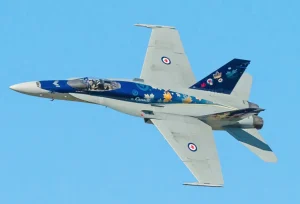
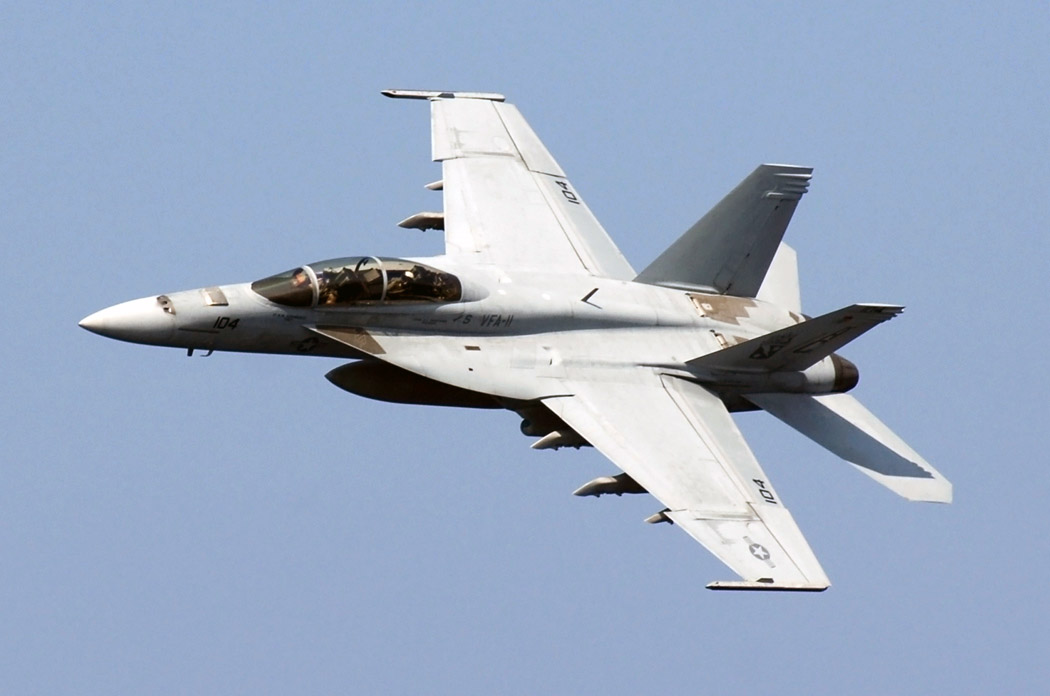
- Carriers: F/A-18E/F Super Hornet, F-35C, F-47, future F/A-XX
- Status: In flight test; weapons-bay trials conducted April 2026
- Why it matters: The threshold for “enough range” in air combat has moved again — and it moved a long way
Air-to-air combat has been drifting in one direction for a decade: outward. The AIM-120 AMRAAM that set the beyond-visual-range standard in the 1990s was a 60-to-70-kilometer weapon. The numbers being discussed today are six or seven times that. The AIM-424 Malice, revealed by the U.S. Navy at Tailhook on 22 August, is the clearest statement yet of where that drift has arrived. The Navy gave exactly one figure for range: more than 250 nautical miles.
The number is striking on its own, but the more revealing question is what gap the weapon fills. The Navy currently holds two ends of a spectrum. At one end sit AMRAAM-class missiles — compact, agile, and small enough for an internal bay. At the other sits the AIM-174B, a carrier-aviation adaptation of the ship-launched SM-6 surface-to-air missile. The AIM-424 lands between them, and it is meant to do what neither can.
The Reveal at Tailhook
The Tailhook Association convention is the annual gathering of American naval aviation — retired aviators, active squadron commanders, industry. In recent years it has also become the venue where the Navy opens classified programs on its own terms. The AIM-424 disclosure followed that pattern. Aviation Week’s Brian Everstine and Steve Trimble reported it first; Naval News and others filled in the specifications.
The Navy’s own statement was measured, noting the missile “directly supports the Department’s contribution to integrated deterrence by increasing range, lethality, and combat effectiveness” for naval and Marine aviation, while withholding fielding timelines on operational-security grounds. Raytheon was less restrained. Phil Jasper described the weapon as delivering “a generational leap in air dominance combat capability that can out range any threat.”
Marketing language aside, the program timeline is substantive. The missile’s origins trace to the mid-2010s, when Chinese long-range air-to-air developments began eroding a range advantage the United States had held for decades. Test instrumentation rounds were loaded into weapons bays during April 2026 trials, and an F-35C fit test followed in August. The weapon that was “just revealed” is considerably further along than the reveal suggests.
What 250 Nautical Miles Actually Buys
Published air-to-air ranges invite misreading. A catalog figure describes the maximum a missile can cover under ideal conditions — high altitude, fast-moving launch aircraft, a target closing head-on. Real engagements shrink that number substantially. Even so, 463 kilometers describes a different category of weapon.
Put in geographic terms, that reach spans the distance from Ankara to a target over Istanbul. In the Pacific context it means something more specific: pushing the air-defense ring around a carrier strike group far enough out that an opposing aircraft cannot reach its own launch point. The AIM-424’s primary function is less about killing the target than about never letting the adversary close to a range where he can shoot back.
Defense planners call this hunting the enablers. Modern air operations do not run on fighters alone; behind them sit airborne early warning aircraft, tankers, and electronic warfare platforms. These are slow, large, and lightly defended — and they are the spine of the entire campaign. A 463-kilometer weapon threatens them from beyond the line they consider safe. Killing one tanker can produce the same operational effect as killing six fighters.
Why 1,500 Pounds? The Physics of the Thing
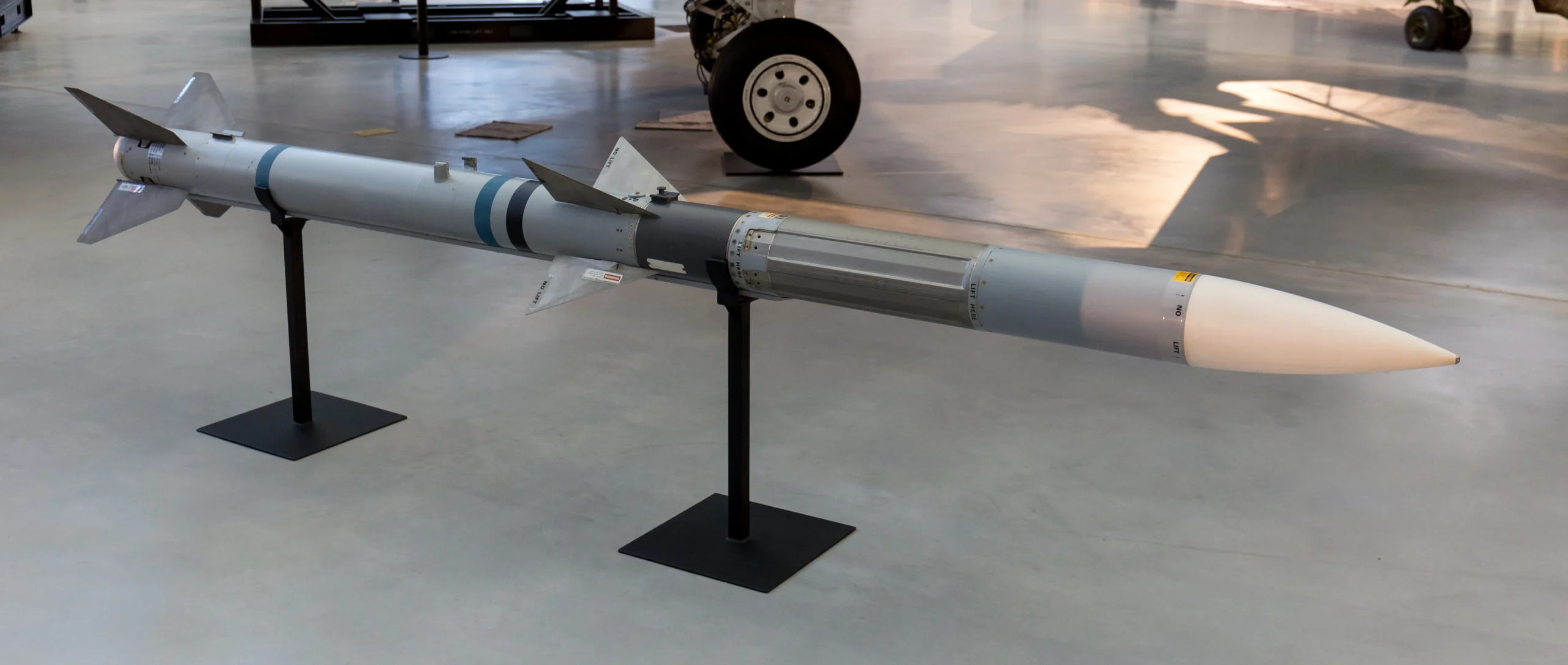
The AIM-424 weighs roughly three times what an AIM-120 AMRAAM does: 1,500 pounds against about 335. It measures 13.5 feet long and 13.5 inches in diameter. None of that is incidental — it is the price of the range figure.
What determines a missile’s reach is, crudely, how much propellant it carries and how efficiently it burns it. The AIM-424 uses a two-stage solid-propellant arrangement. The first motor drives the missile fast and high before burning out and separating; the second ignites nearer the target, restoring energy for the terminal maneuver. Single-stage weapons burn out early and coast through the long middle of the flight, arriving with degraded maneuverability. Two stages exist precisely to close that weakness.
The airframe carries shaped fins and strakes — low-profile lifting surfaces running along the body that generate lift without adding much drag. On a long-range missile this detail is not cosmetic: every unit of additional drag translates directly into lost kilometers.
The Navy also disclosed a datalink tailored for extended-range operations. Over distances beyond 400 kilometers, a missile spends most of its flight unable to see the target with its own seeker, which activates only in the endgame. Until that moment, someone else has to tell it where the target is.
Four Rungs on the Ladder
The cleanest way to place the AIM-424 is alongside what the United States already fields:
| Missile | Range | Weight | Diameter | Carriage | Status |
|---|---|---|---|---|---|
| AIM-120D AMRAAM | ~100+ nm | ~335 lb | 7 in | F-16, F-35, F/A-18 (internal) | In service |
| AIM-260 JATM | Well beyond AMRAAM (classified) | AMRAAM class | 7 in | F-22, F-35 (internal) | Entering production |
| AIM-174B | ~200+ nm (estimated) | ~3,300 lb | 13.5 in | F/A-18E/F (external) | Limited operational capability |
| AIM-424 Malice | 250+ nm | ~1,500 lb | 13.5 in | F/A-18E/F, F-35C, F-47, F/A-XX | In flight test |
The table tells the story on its own. The AIM-174B was a stopgap answer to an urgent requirement: take a missile already in the fleet magazine, hang it on an aircraft, buy range quickly. But a 3,300-pound store cuts hard into a Super Hornet’s combat radius and maneuverability, limits how many can be carried, and rules out internal carriage entirely.
The AIM-424 holds the same 13.5-inch diameter while cutting weight by more than half. That is the signature of a weapon designed from the outset for the air-to-air mission rather than converted from a shipboard interceptor. Rear Adm. Keith Hash had already indicated the AIM-174B was an interim capability with more in the pipeline. The AIM-424 is the visible part of that pipeline.
The F-35C Bay Problem
The most technically arresting claim in the program concerns the F-35C. An August 2026 fit test reportedly demonstrated internal carriage. If accurate, that is a demanding packaging achievement.
The reason is straightforward. Low-observable aircraft must carry weapons inside the fuselage; every externally mounted store enlarges the radar return and negates the point of the design. The F-35’s bay was dimensioned around AMRAAM-class rounds — not around a 13.5-inch, 13.5-foot weapon. The F-35C, with the largest wing in the family and a structure hardened for carrier operations, is the best-placed variant for this. Even so, the fit implies the missile’s dimensions were set against very tight constraints.
The operational payoff is large. A stealth aircraft that can shoot 250 nautical miles without breaking its own signature rewrites the usual division of labor in air combat. It fires from a position the adversary cannot see, and never enters the range at which the adversary could return fire. First look, first shot, first kill has been doctrine for a generation; the AIM-424 aims to deliver all three simultaneously.
Why Now: The Pacific Distance Problem
The program’s origins are explicitly Pacific. From the mid-2010s, Chinese long-range air-to-air developments began closing a gap the United States had treated as permanent. The Pentagon named the shortfall in its own documents — an air-to-air missile gap with China — and made closing it a priority.
Geography compounds the problem. Pacific distances bear no resemblance to European ones. American aircraft fly long routes and depend heavily on aerial refueling. An air force whose tankers are threatened loses its operating radius before the first engagement. The AIM-424 serves both halves of that equation: protecting American enablers while holding the adversary’s at risk.
That the missile is discussed in connection with the Air Force’s sixth-generation F-47 as well as Navy platforms is significant. A weapon integrated across two services gains production scale and a longer institutional life.
The Hidden Problem With Long Range: Who Finds the Target?
Coverage of weapons like this routinely skips the hardest part. Range is not a capability by itself. Shooting 463 kilometers requires knowing where something is at 463 kilometers, and a fighter’s nose radar cannot track at that distance alone.
The answer is networked targeting. The aircraft receives track data from an airborne early warning platform, a satellite, an uncrewed system, or a surface combatant; launches on that picture; feeds the missile updates over the datalink through the cruise; and lets the seeker take over at the end. The emphasis the Navy placed on a purpose-built extended-range datalink says exactly this.
The consequence is worth stating plainly: without a mature sensor architecture behind it, a weapon like the AIM-424 performs far below its brochure figure. Any operator would need not just the missile but the early warning, datalink, and battle-management layer that feeds it. That makes the weapon an institutional threshold as much as a technical one — and constrains export prospects from the outset.
AIM-424 Malice: The Data Sheet
AIM-424 LRAAM (Long Range Air-to-Air Missile) is a two-stage, solid-propellant air-to-air weapon developed by Raytheon’s Advanced Technology division for the U.S. Navy. “Malice” serves as the program’s informal name.
Development: Conceptual origins in the mid-2010s, driven by Pacific range competition. Software and cyber development teams began work in January 2026; test instrumentation rounds entered weapons bays in April 2026; an F-35C fit test followed in August 2026. The weapon was already in flight test when disclosed.
Technical: 13.5 ft length, 13.5 in diameter, 26.2 in wingspan, approximately 1,500 lb. Two-stage solid-propellant rocket motor, blast-fragmentation warhead, purpose-built extended-range datalink. Shaped fins and strakes preserve maneuverability at altitude.
Carriage: F/A-18E/F Super Hornet (reportedly tested with four rounds), F-35C Lightning II (internal carriage demonstrated), the Air Force’s F-47, and the future F/A-XX. Compatibility across fourth-, fifth-, and sixth-generation platforms is a stated design goal.
Status: Flight testing. Production and fielding schedules withheld. (Sources: U.S. Navy statement, Raytheon, Naval News, TWZ, Aviation Week)
Europe Took the Other Road
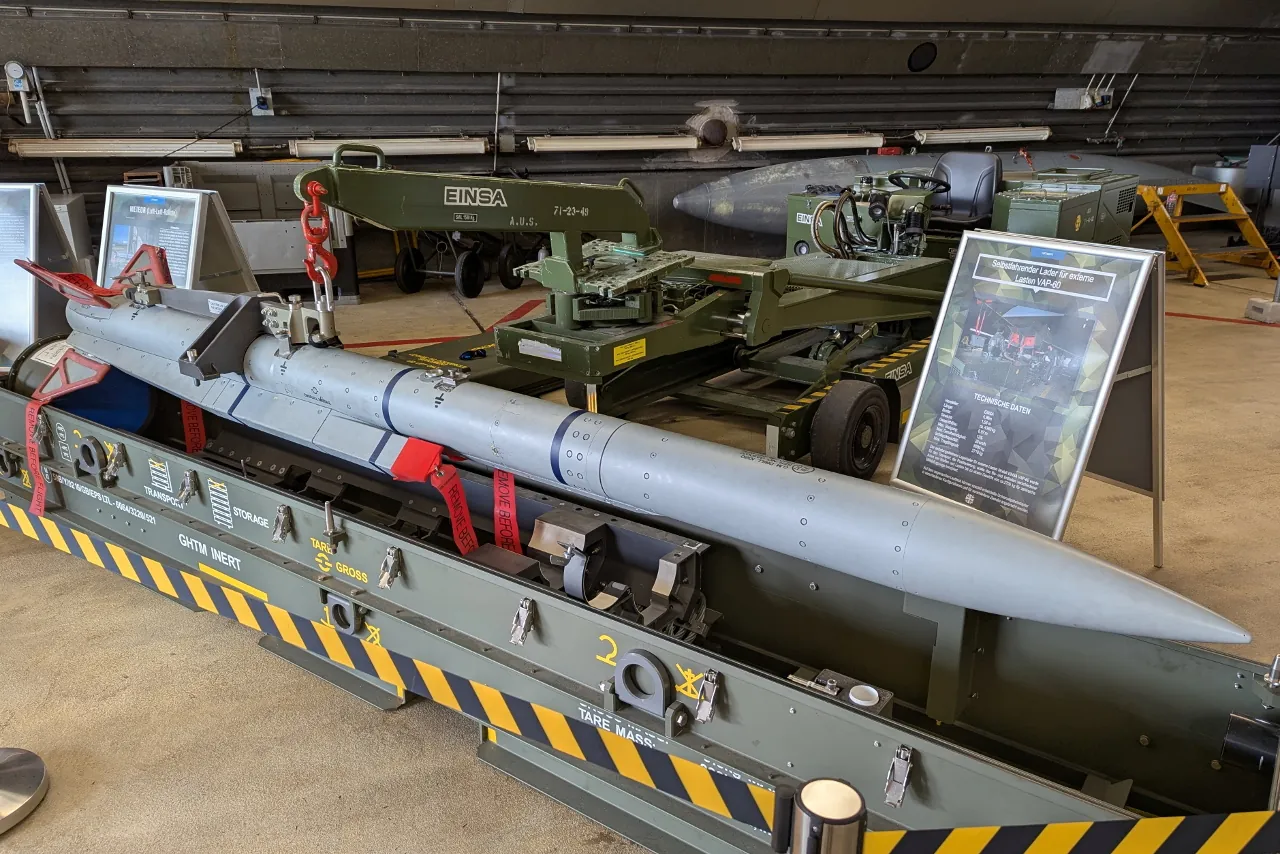
The American choice of a large two-stage solid motor is not the only way to solve this. MBDA’s Meteor uses a ramjet: it draws oxygen from the atmosphere rather than carrying its own oxidizer, sustaining thrust deep into the engagement and arriving with markedly more terminal energy.
The philosophical split is clear. A solid-rocket weapon accelerates hard, then coasts; a ramjet keeps pushing. Against a maneuvering target, the second is advantageous. But ramjets are more complex, more expensive, and their air intakes constrain airframe design. The United States chose to buy range through raw size and propellant volume; Europe chose efficiency. The AIM-424’s 1,500 pounds is the direct consequence of that choice.
Where This Leaves Everyone Else
For air forces outside the United States, the relevant lesson is not that they should acquire a 250-nautical-mile missile. It is that the threshold for “sufficient range” keeps moving. An AMRAAM-class weapon defined air superiority a decade ago; the figures on the table now are several times larger.
Türkiye offers a useful case. Its air-to-air portfolio sits under the GÖKTUĞ program — the infrared-guided BOZDOĞAN and the active-radar GÖKDOĞAN, both fielded and both tested from F-16s and the KIZILELMA uncrewed fighter. GÖKDOĞAN is broadly an AMRAAM-class weapon. With KAAN expected in service in the 2030s, the interesting question is not whether that aircraft will have missiles, but whether its weapons bay and its munitions are being dimensioned together. The AIM-424 squeezing a 13.5-inch round into an F-35C bay is the clearest possible argument that those two designs have to be drawn at the same table.
The harder half of the problem is not the missile at all. Building a rocket motor is easier than building the early warning, datalink, and battle-management layer that lets it shoot at maximum range. Countries that have spent the last decade assembling platform, sensor, and munition capability under one industrial roof are better positioned for the next rung than the headline range figures suggest.
Sources
- Naval News — “U.S. Navy Unveils AIM-424 Malice Long-Range Air-to-Air Missile”, Carter Johnston, 23 August 2026
- The War Zone (TWZ) — “AIM-424 ‘Malice’ Very Long-Range Air-To-Air Missile Emerges From The Shadows”, August 2026
- Aviation Week — Brian Everstine & Steve Trimble, Tailhook 2026 reporting
- Defence Industry Europe — “U.S. Navy reveals Raytheon AIM-424 Malice missile with range beyond 250 nautical miles”, 23 August 2026
- U.S. Navy official statement (Tailhook Association convention, Reno, Nevada, 22 August 2026)
- Raytheon (RTX) corporate statements
- Wikipedia — AIM-424 LRAAM, AIM-120 AMRAAM, AIM-174B, MBDA Meteor