Leidos says its 200-pound cruise missile has already been used in combat

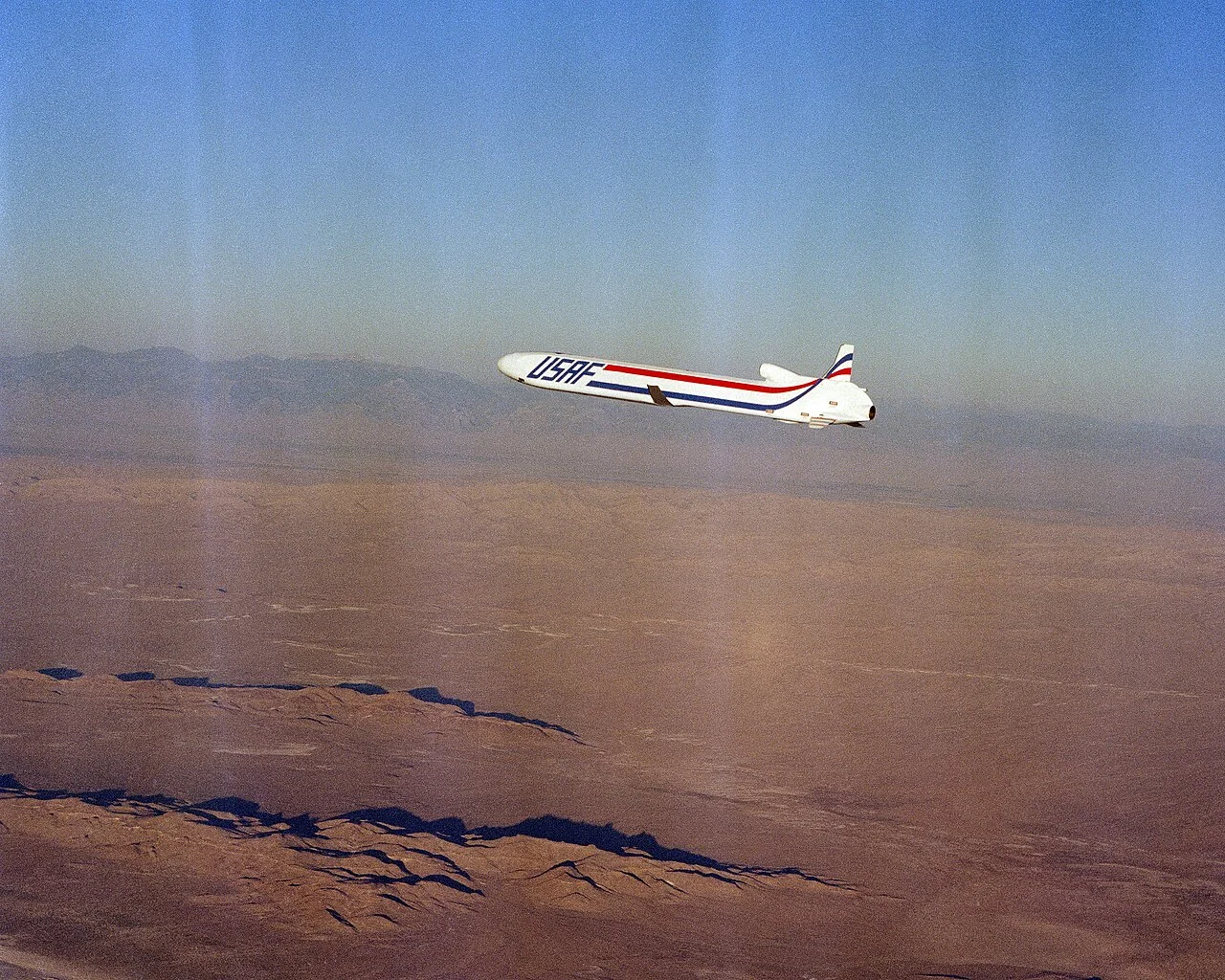
Leidos chief executive Tom Bell offered an unusually plain sentence about the company’s small cruise missile: the AGM-190A Havoc Spear is still undergoing flight tests and has already flown in exercises and in combat. The weapon weighs about 91 kilograms and has demonstrated a range of 740 kilometres. The remark is a marker of how far the American push toward cheap, mass-producible strike weapons has moved past the demonstration phase.
At a Glance
- System: AGM-190A — Leidos (Dynetics) small cruise missile; Black Arrow in development, Havoc Spear to SOCOM.
- What is new: Chief executive Tom Bell confirmed use in exercises and in combat.
- Weight: Roughly 91 kilograms (200 pounds).
- Range: 740 kilometres (400 nautical miles), demonstrated May 2025.
- Propulsion: Pratt & Whitney TJ150-7 turbojet; about Mach 0.8, ceiling 30,000 feet.
- Launch platform: Palletised release from the AC-130J Ghostrider; separation tests December 2023, first guided flight November 2024.
- Customers: US Air Force and Special Operations Command, with scaling talks under way.
- Context: Leidos targets 3,000 rounds by the end of the decade under its low-cost containerised munitions line.
One sentence on an earnings call
Defence earnings calls are usually written in hedged language. Bell’s was not. The programme, he said, is undergoing flight tests and actual deployment in exercises and in combat. He offered no location, no date and no operation. But a weapon reaching combat before it reaches full-rate production is a fair summary of how American munitions procurement now works.
There was a second signal, about scale. Bell said the small cruise missile had found strong customer receptivity and that scaling conversations with both SOCOM and the Air Force were ongoing. The open question is no longer whether the weapon works. It is how many hundreds a year the line can turn out.
When a gunship becomes a stand-off shooter
The AGM-190A is less a munitions story than a doctrine story. Dynetics developed it first as Black Arrow; the Air Force assigned the formal AGM-190A designation, while Special Operations Command calls it Havoc Spear.
The timeline moved quickly. Store separation from an AC-130J Ghostrider succeeded in December 2023, the first full guided flight followed in November 2024, and by May 2025 the missile had demonstrated its 400-nautical-mile range. That is far beyond anything else the AC-130J is known to carry.
The consequence is what matters. The AC-130J was built to loiter above a target with a gun and precision bombs — a profile with poor odds against a modern integrated air defence. Give the same aircraft a 740-kilometre cruise missile and it becomes a stand-off shooter operating well outside the threat ring. Turning cargo-bodied aircraft into long-range strike platforms through palletised systems has matured steadily in the United States since the Rapid Dragon trials.
AGM-190A Havoc Spear — Specifications
| Class | Small, low-cost air-launched cruise missile (SCM) |
| Manufacturer | Leidos (Dynetics) |
| Other names | Black Arrow (development), Havoc Spear (SOCOM) |
| Weight | ~91 kg (200 lb) |
| Propulsion | Pratt & Whitney TJ150-7 turbojet |
| Speed | Mach 0.8 (~988 km/h) |
| Service ceiling | ~30,000 ft (9,144 m) |
| Demonstrated range | 740 km (400 nm), May 2025 |
| Launch aircraft | AC-130J Ghostrider (palletised); further platforms under study |
| Milestones | Separation test Dec 2023 — first guided flight Nov 2024 — AGM-190A designation |
Why cheap munitions dominate the conversation
Ukraine and the Red Sea supplied the answer. Spending a million-dollar missile on a target the other side generated for tens of thousands of dollars is not a sustainable exchange rate. Western militaries watched their magazines empty faster than expected, and the munitions debate shifted from unit performance to total quantity.
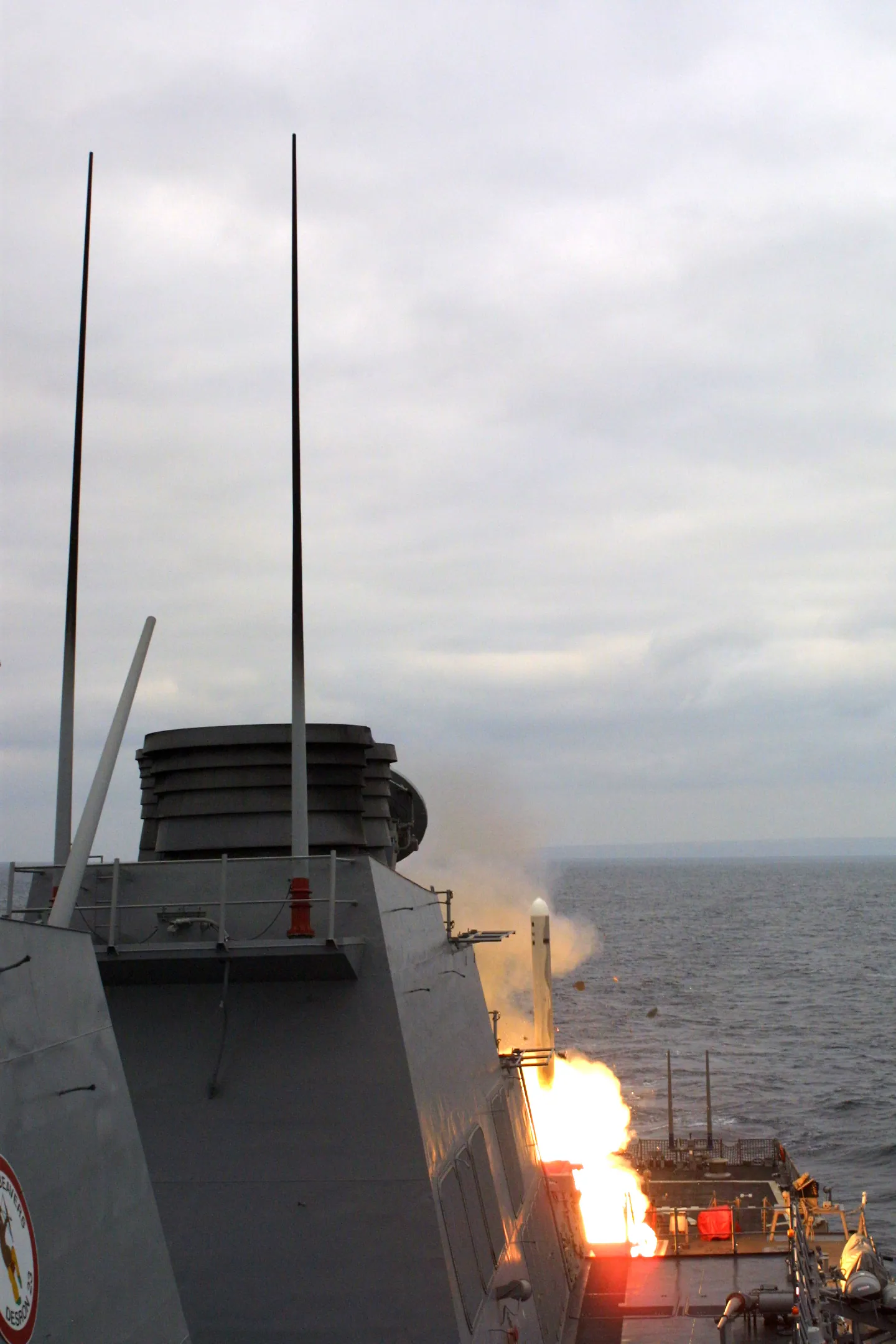
Leidos has turned that shift into a business line. The company aims at 3,000 rounds by the end of the decade under its low-cost containerised munitions framework, and sizes the addressable market above 44 billion dollars over ten years. The appeal of containerisation is that the launch platform can be decided late: the same box goes on a cargo aircraft, a ship’s deck or a flatbed truck.
Turkish systems in the same lane
The small, affordable cruise missile is a lane Turkish industry entered early. Roketsan’s ÇAKIR is a roughly 150-kilogram turbojet-powered missile designed for multi-platform launch and swarming behaviour, released from fixed-wing aircraft, helicopters, ground vehicles and ships alike.
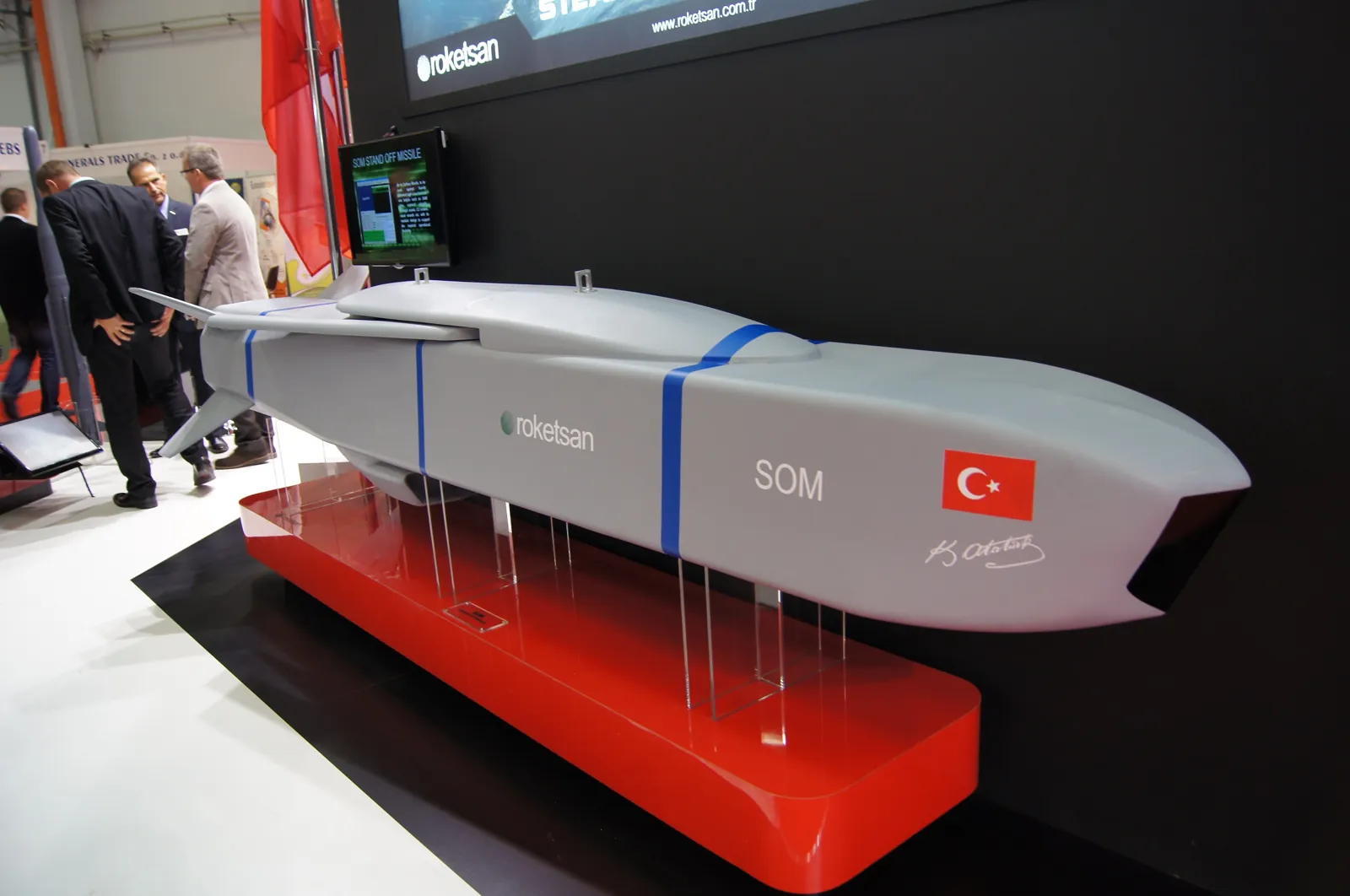
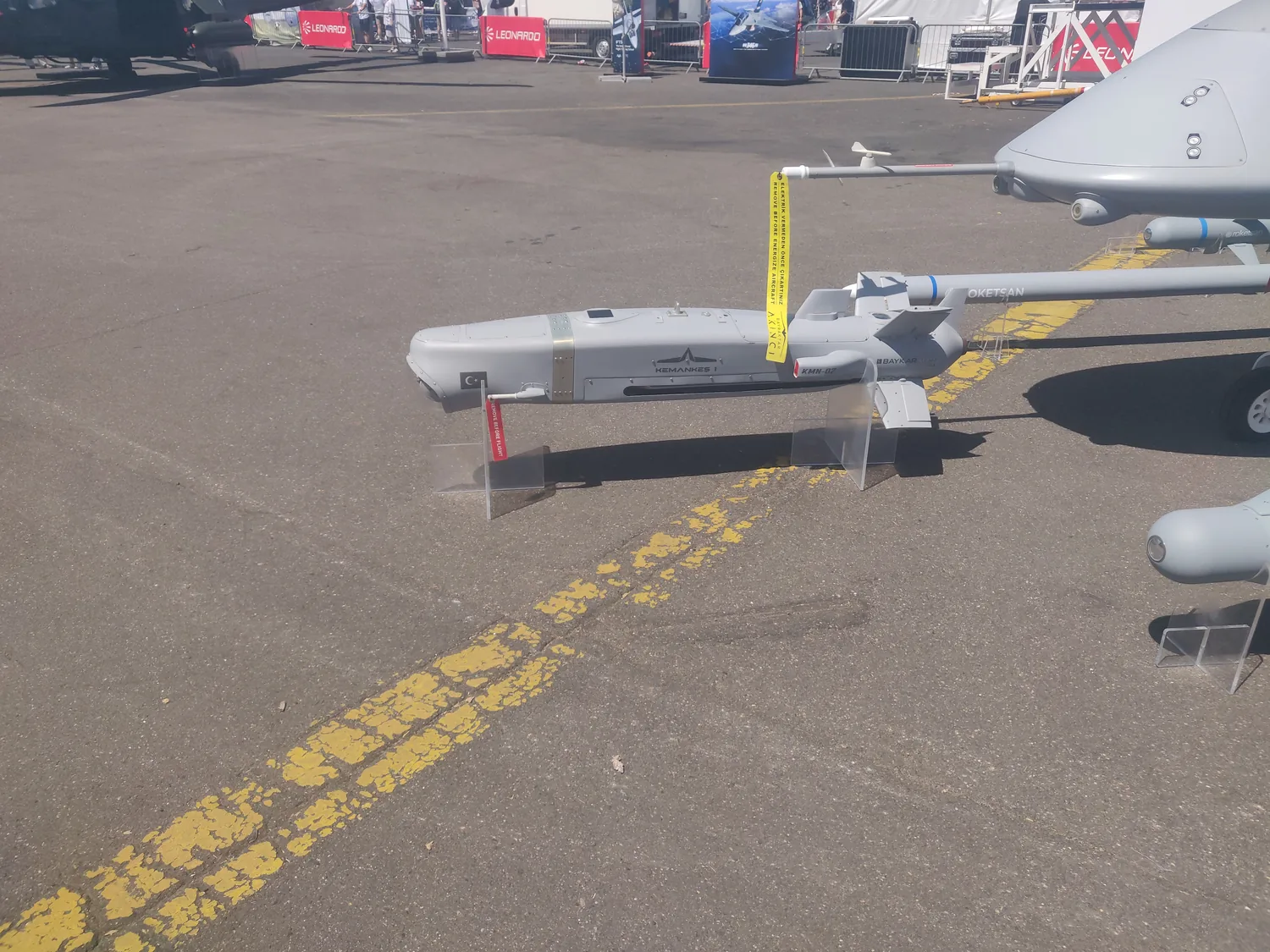
Baykar’s KEMANKEŞ approaches the same problem from the unmanned side. A 30-kilogram-class mini smart munition launched from the Bayraktar TB2 and TB3, it reaches targets hundreds of kilometres away from an aircraft that costs a fraction of a manned platform. Together, the two answer in a different architecture the idea Washington is now trying to scale with the AGM-190A: small, cheap, numerous, and fired from far away.
Design is not what will separate these programmes. Production capacity is. That is the real news buried in Bell’s sentence: announcing that a weapon has seen combat is easy, building thousands a year is not.
Sources
- Defence Industry Europe — remarks by Leidos chief executive Tom Bell, 14 August 2026
- Leidos investor relations — “Leidos small cruise missile designated AGM-190A by U.S. Air Force”
- Army Recognition — AC-130J Ghostrider and AGM-190A Havoc Spear test reporting
- The War Zone — AC-130J mini cruise missile and AESA radar test programme
- Designation-Systems.net — AGM-190 Black Arrow / Havoc Spear entry