The Middle East’s 10 Biggest Defence Budgets in 2026: Saudi Arabia Leads, Turkiye Second
The Middle East spends more on defence per head than any other region on earth. The more interesting question is how much of that money actually converts into military capability.
Global Firepower’s 2026 figures put the region’s ten largest defence budgets at a combined total above $220 billion. The country at the top also ranks inside the global top ten. But the striking part of the table is this: the biggest spender does not lead on most inventory measures. Another state spends less and fields considerably more — and the explanation comes down to a single variable.
This gallery counts down the Middle East’s ten largest defence budgets from tenth to first. For each country we set out the spending figure alongside tanks, aircraft, helicopters, naval assets and personnel, then look at the doctrine behind the numbers, the supply relationships that shaped the inventory and the regional rivalry driving procurement. Türkiye’s position — and how its indigenous programmes could reshape the ranking over the next decade — is examined in detail at number two.
The countdown starts at number ten.
#10 · JORDAN
Jordan enters this list with the smallest defence budget in the Middle East’s top ten — and one of the region’s larger armoured forces. With 1,508 tanks, Amman ranks behind only Türkiye, Iran and Israel in the region, on roughly one-twentieth of Saudi Arabia’s spending.
Two things explain the mismatch. First, much of the inventory arrived as military assistance or second-hand transfers from the United States and Gulf partners; the Challenger 1-derived Al-Hussein tank is the textbook example. Second, Jordanian planning has deliberately favoured border security, special forces and light air support over expensive strategic capabilities.
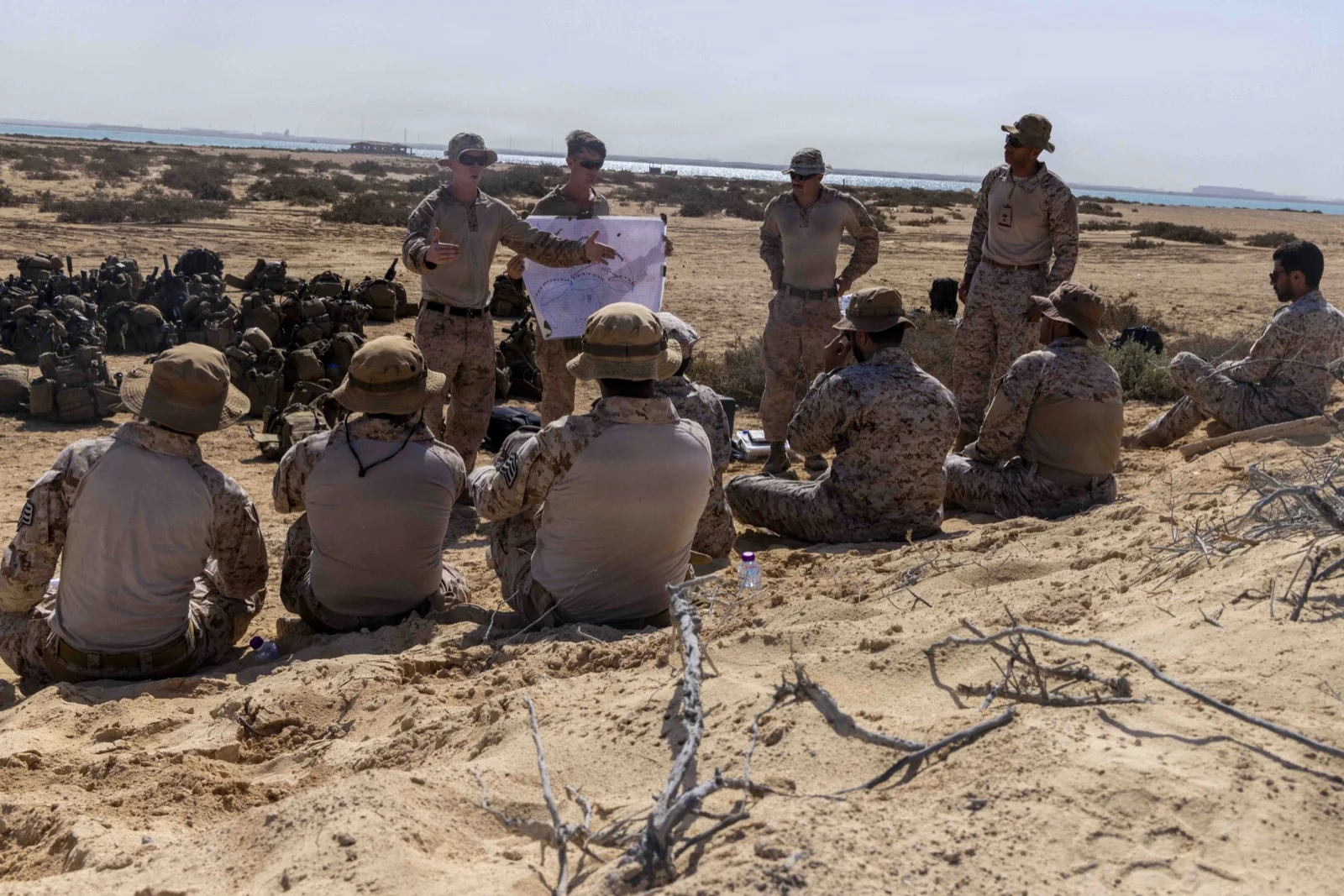
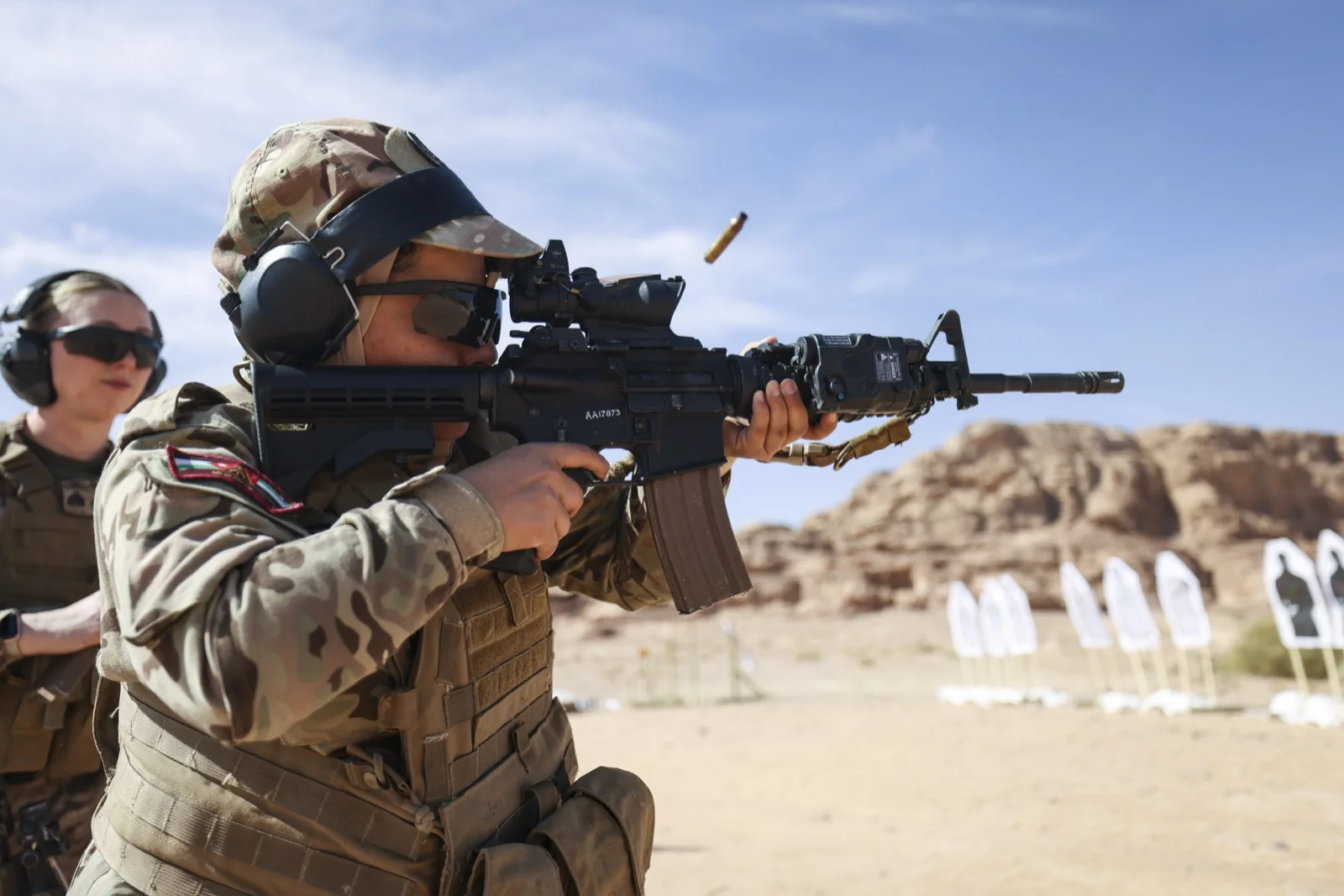
Amman’s strategic weight far exceeds its budget line. Long frontiers with Syria and Iraq, a pivotal position in the Israeli-Palestinian file and a reputation as the West’s steadiest regional partner keep external support flowing. Facilities such as the King Abdullah II Special Operations Training Centre have turned the country into a regional training hub in its own right.
Jordan has also diversified in recent years, adding unmanned aircraft and light attack platforms. Deepening defence-industrial ties with Türkiye have given Amman a partial counterweight to its traditional dependence on American supply.
Jordan runs the smallest budget on this list yet fields more tanks than Saudi Arabia, which spends roughly twenty times as much.
| Force component | Figure |
|---|---|
| Tanks | 1,508 |
| Total aircraft | 279 |
| Helicopters | 159 |
| Naval assets | 27 |
| Active personnel | 114,500 |
Next comes a state whose per-capita defence spending ranks among the highest on earth.
#9 · KUWAIT
Kuwait spends $7.99 billion on a force of 78,000 — an extraordinary figure per head, and one of the highest ratios anywhere. The reason is historical. The 1990 Iraqi invasion permanently reset Kuwaiti thinking about deterrence, and the country has funded that lesson ever since.
Procurement favours technological edge and allied interoperability over mass. Kuwait ordered both the Eurofighter Typhoon and the F/A-18E/F Super Hornet, anchoring its air arm to two separate Western supply chains at once. On land it operates M1A2 Abrams tanks and Patriot air-defence batteries. At sea, 123 naval assets — mostly fast attack craft and coastal patrol vessels — cover a very short but strategically dense coastline.
Kuwaiti doctrine assumes coalition defence rather than self-sufficiency. Defence cooperation agreements underwrite a standing American presence, while the Gulf Cooperation Council’s integrated air-defence architecture ties Kuwait into a wider early-warning network.
The trade-off shows in the numbers: 367 tanks and 133 aircraft are modest against the budget. Kuwait buys capability and sustainment packages, not fleet size.
Kuwait’s budget is close to Iran’s, yet it fields roughly one-seventh as many tanks.
| Force component | Figure |
|---|---|
| Tanks | 367 |
| Total aircraft | 133 |
| Helicopters | 68 |
| Naval assets | 123 |
| Active personnel | 78,000 |
Eighth place belongs to a military that had to be rebuilt from nothing.
#8 · IRAQ
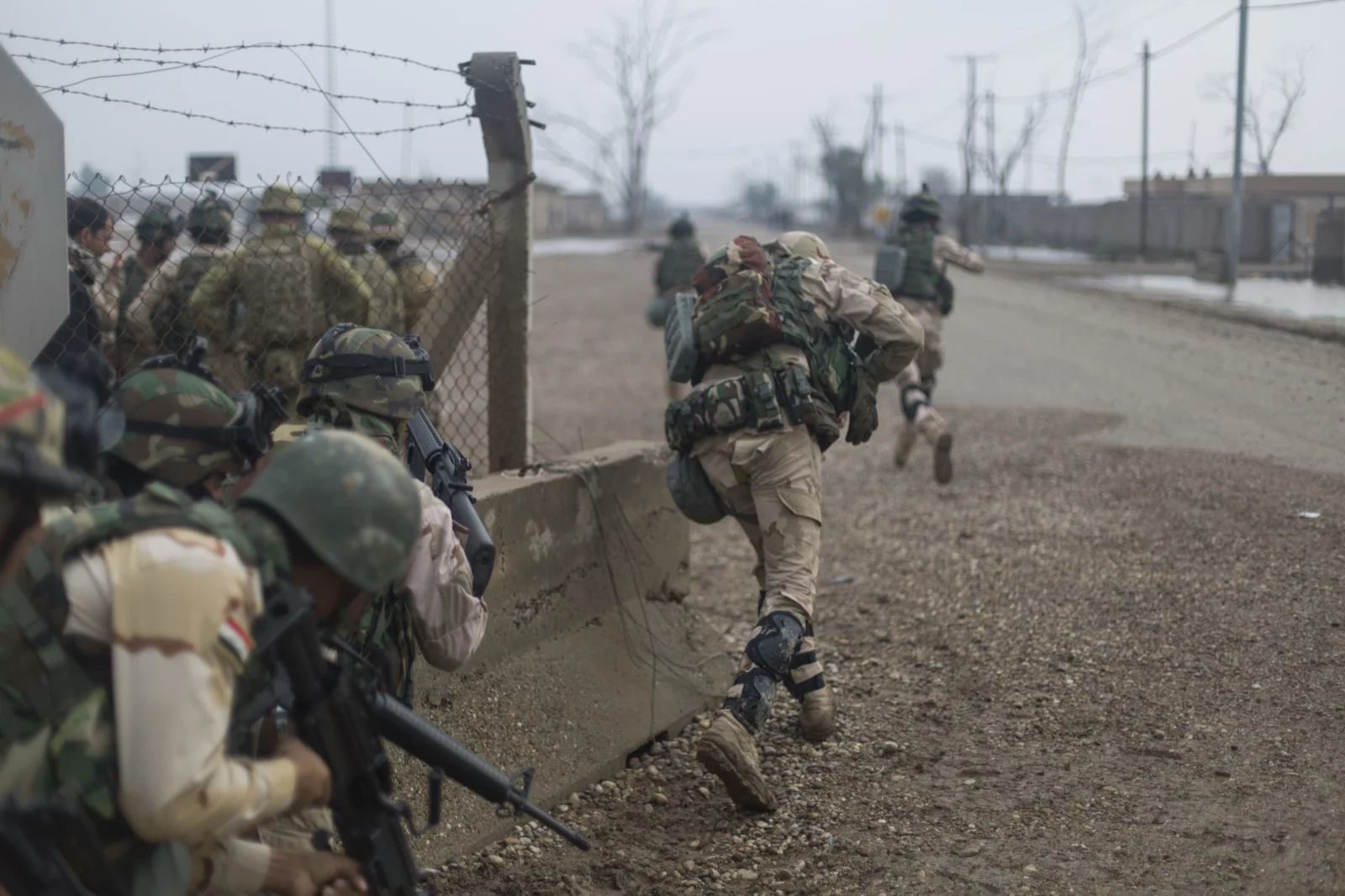
Iraq’s $8 billion budget reflects the running cost of an army rebuilt from zero after 2003. Most of it goes to salaries, base infrastructure and maintaining what already exists rather than to new acquisitions; 193,000 active personnel is the single largest line item.
The inventory is among the most mixed in the region. American M1A1 Abrams tanks and F-16IQ fighters sit alongside Russian T-72 and T-90S tanks and Mi-28 gunships, plus South Korean T-50IQ light attack and training aircraft. The diversity reduces dependence on any one supplier but multiplies the logistics and training burden.
Baghdad’s priorities remain internal security and border control. The post-Daesh force structure emphasises air support and ISR, and the 183-strong helicopter fleet — third largest in the region after Türkiye and Iran — is a direct product of that requirement.
The structural gap is air defence. Iraq has repeatedly deferred a decision on long-range systems, leaving its airspace effectively dependent on others. Closing that gap is the defining procurement question of the coming decade.
Iraq spends about the same as Kuwait but operates three times the tanks and nearly three times the aircraft — though sustainment quality is a separate argument.
| Force component | Figure |
|---|---|
| Tanks | 1,188 |
| Total aircraft | 360 |
| Helicopters | 183 |
| Naval assets | 67 |
| Active personnel | 193,000 |
Seventh place goes to the Gulf’s quietest and most balanced defence policy.
#7 · OMAN
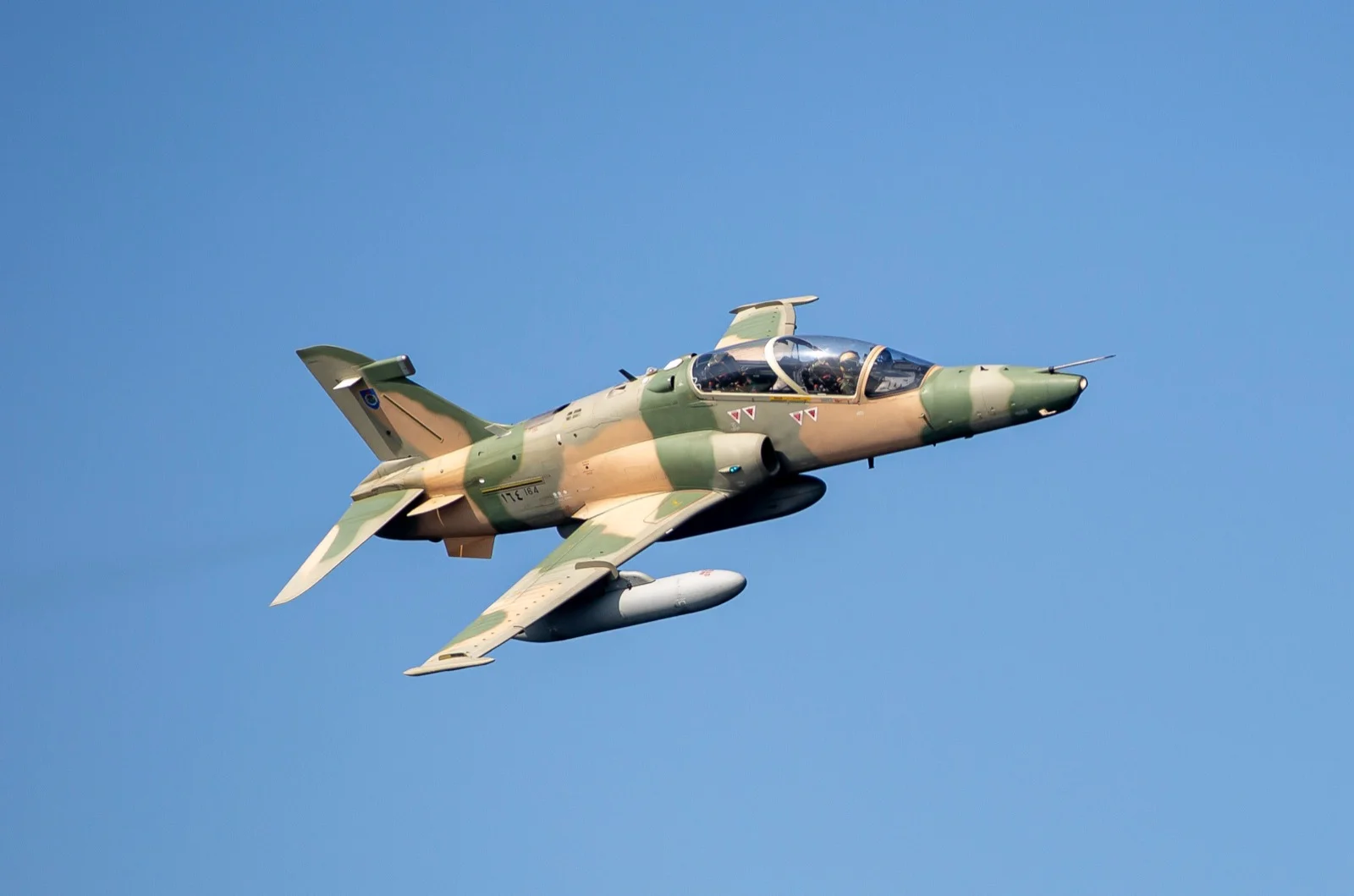
Oman runs the lowest-profile and most consistent defence policy in the Gulf. An $8.36 billion budget is high for a 100,000-strong force, but Muscat spends it on what its geography demands rather than on prestige platforms.
That geography is the point. The southern shore of the Strait of Hormuz and the Musandam Peninsula sit astride the most critical chokepoint in global energy trade. Maritime surveillance, coastal defence and airspace control therefore dominate procurement: Eurofighter Typhoon and F-16C/D fighters, BAE Hawk trainers and light attack aircraft, and NSM coastal defence missiles.
Oman’s foreign policy is unique in the region. Muscat maintains working relationships with Iran and the GCC simultaneously and has brokered talks on files ranging from the Iranian nuclear programme to Yemen. That neutrality is visible in procurement too — the inventory belongs to no single bloc.
On paper 264 tanks, 128 aircraft and 31 helicopters look thin. But Oman is not planning for a land campaign. For sea-lane security and deterrence, 17 naval assets and modern anti-ship missiles deliver more than a larger armoured force would.
Oman outspends Iraq yet fields a quarter of its tanks — because its doctrine is maritime and aerial, not territorial.
| Force component | Figure |
|---|---|
| Tanks | 264 |
| Total aircraft | 128 |
| Helicopters | 31 |
| Naval assets | 17 |
| Active personnel | 100,000 |
Sixth place has the region’s largest army and its lowest spending per soldier.
#6 · IRAN
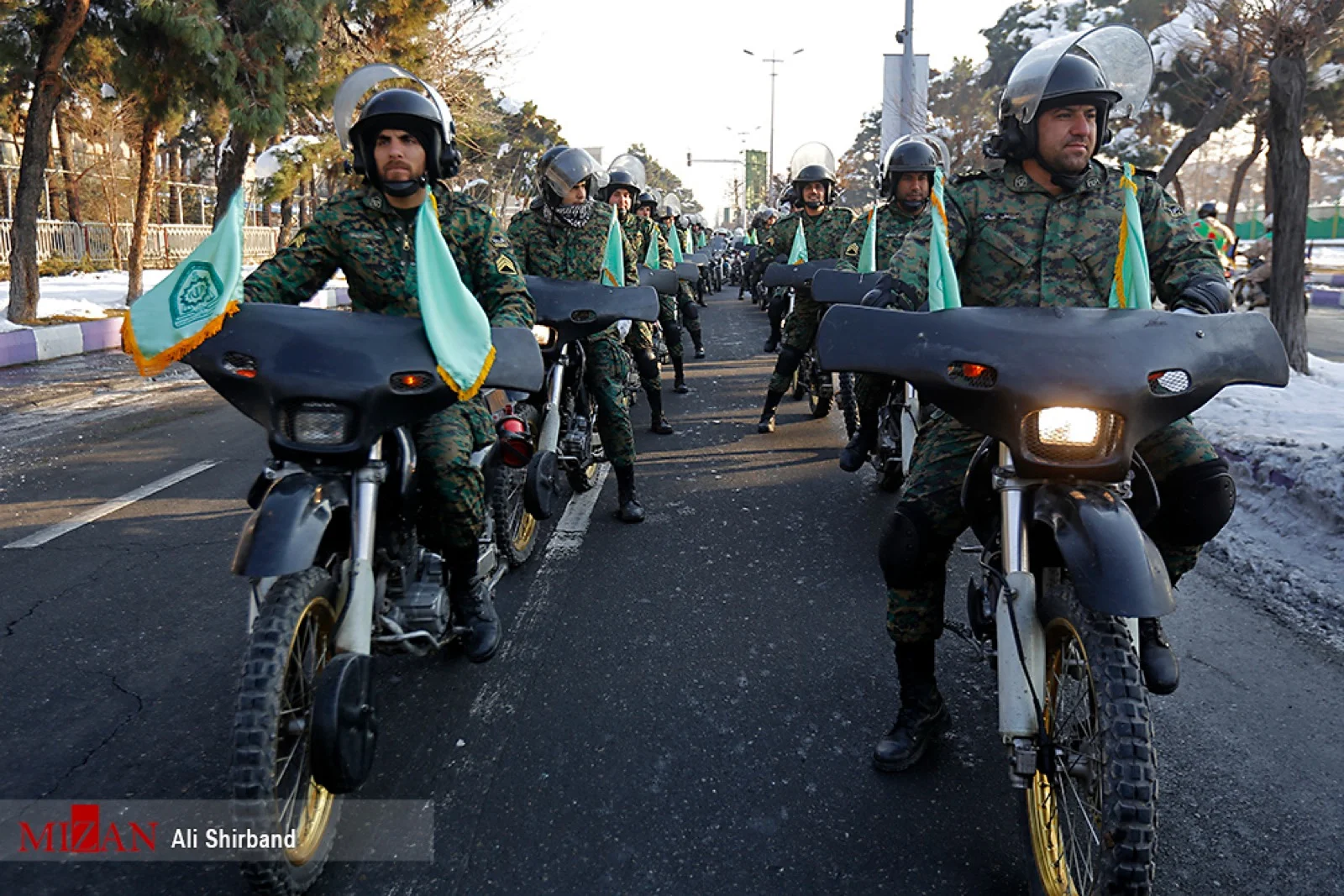
Iran fields the Middle East’s largest army at 610,000 active personnel, yet reports a defence budget of just $9.23 billion — the lowest spending per soldier on this list by a wide margin, roughly a fifteenth of Saudi Arabia’s ratio.
Two caveats matter. Decades of international sanctions have largely excluded Tehran from the global arms market, so modern Western or even current-generation Russian platforms are effectively unavailable. And the headline figure does not fully capture the Islamic Revolutionary Guard Corps’ separate budget lines and economic activities, which is why Iranian data warrants caution in any comparative analysis.
The inventory is ageing. Most of the 2,675 tanks are Soviet-era T-72s and domestic derivatives; the 551-aircraft air force still relies on F-4, F-5 and F-14 airframes delivered in the 1970s. Tehran has compensated by investing in ballistic missiles, cruise missiles and unmanned aircraft — asymmetric capability sits at the centre of Iranian doctrine precisely because conventional modernisation is closed off.
Air defence rests on Russian S-300 batteries and the indigenous Bavar-373. Recent events have exposed the limits of that architecture against modern air operations. Iran’s constraint is not the size of its budget but its inability to build a modernisation chain under sanctions.
Iran has the region’s largest army but spends less than a seventh of Saudi Arabia’s defence budget — the lowest per-soldier figure on this list.
| Force component | Figure |
|---|---|
| Tanks | 2,675 |
| Total aircraft | 551 |
| Helicopters | 129 |
| Naval assets | 109 |
| Active personnel | 610,000 |
Fifth place spends more per soldier than almost any country on earth.
#5 · QATAR
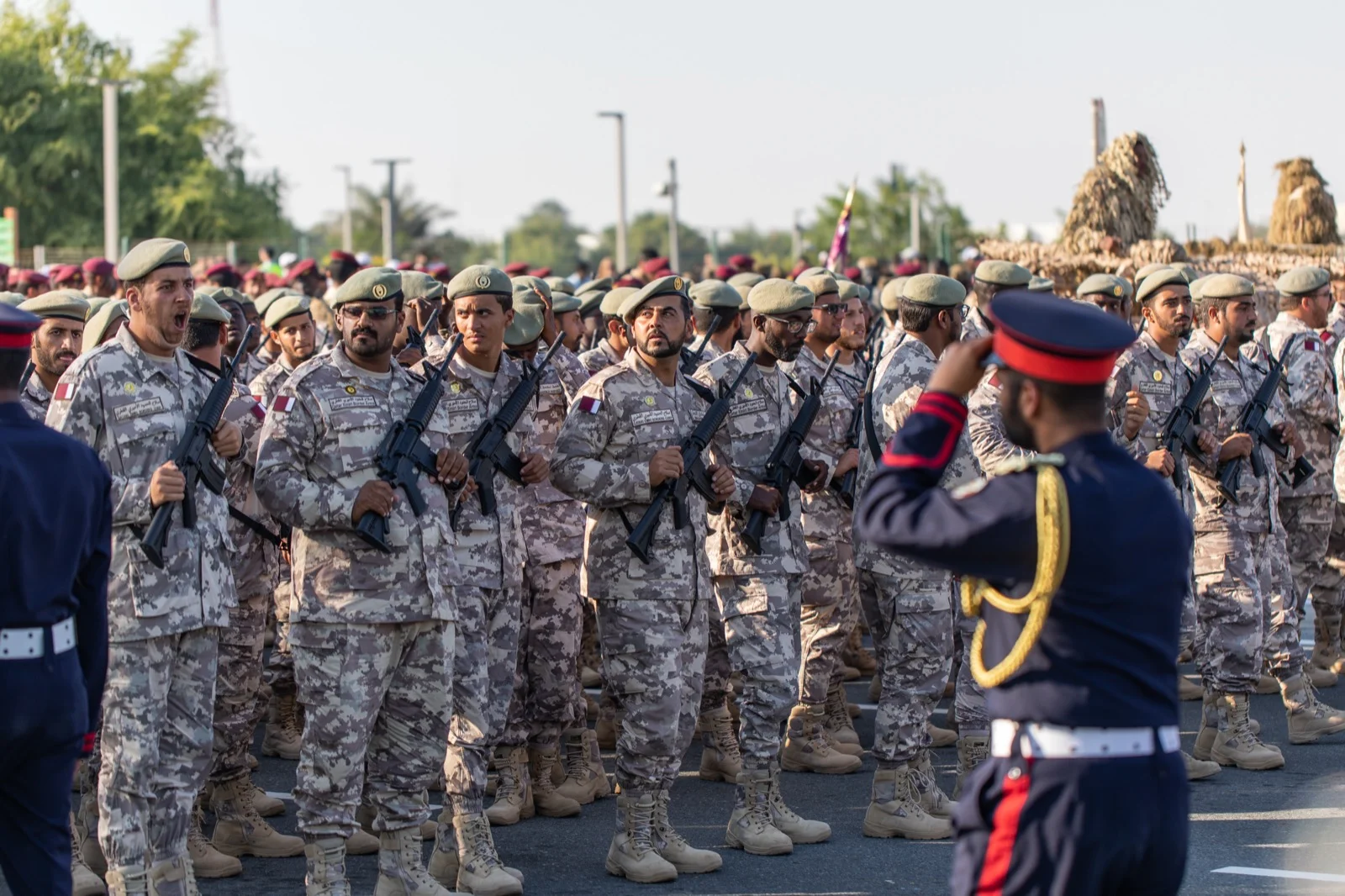
Qatar spends $11.95 billion on an active force of just 26,550 — among the highest per-capita defence expenditures in the world. Doha’s model builds deterrence through technology and alliance density rather than manpower, funded by liquefied natural gas revenue.
The Qatar Emiri Air Force is one of very few operators anywhere flying three separate Western fighter types at once: French Rafales, American F-15QA Ababils and British Eurofighter Typhoons. The logistics burden is severe, but that is not the objective. Each order binds Doha to a different major power, and each aircraft contract doubles as a security guarantee.
The 2017–2021 Gulf blockade shaped this strategy permanently. During that period Qatar deepened military cooperation with Türkiye — the Turkish base outside Doha and regular joint exercises are the visible part — and Turkish armoured vehicles, naval platforms and unmanned systems have remained on the procurement agenda since.
At sea, a programme with Italy’s Fincantieri delivered Al Zubarah-class corvettes and amphibious vessels. With 125 naval assets against just 62 tanks, the force structure states its doctrine plainly: air and maritime deterrence, not ground manoeuvre.
Qatar outspends Iran by roughly 30 per cent while fielding an army twenty-three times smaller.
| Force component | Figure |
|---|---|
| Tanks | 62 |
| Total aircraft | 263 |
| Helicopters | 85 |
| Naval assets | 125 |
| Active personnel | 26,550 |
Fourth place is running the Gulf’s most ambitious defence-industrial push.
#4 · UNITED ARAB EMIRATES
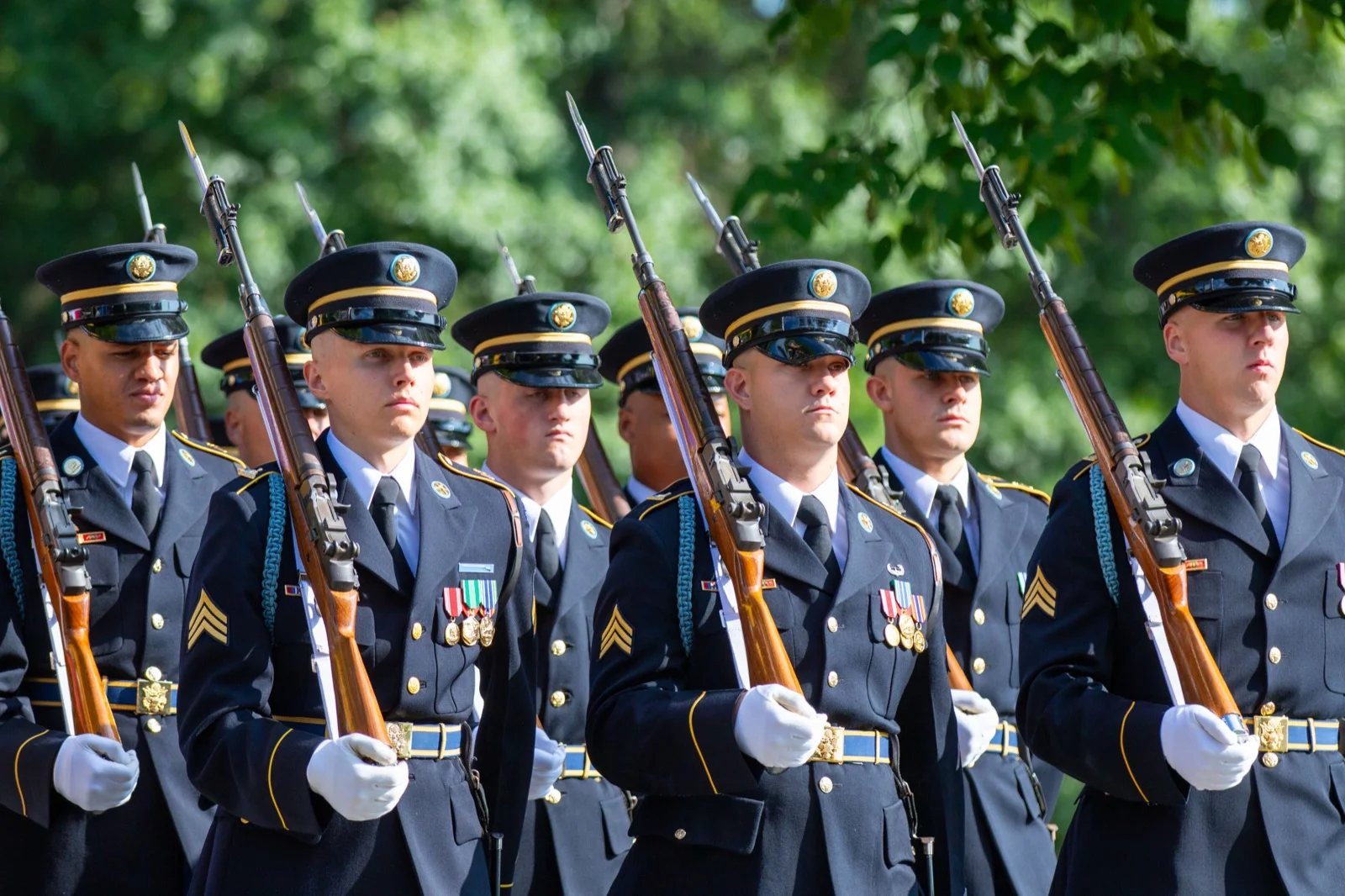
The UAE ranks fourth with $23.48 billion, but what separates Abu Dhabi from the other Gulf states on this list is where the money goes. Over the past decade the Emirates has moved further than any of its neighbours from buyer to builder.
EDGE Group sits at the centre of that shift. Formed in 2019 by consolidating more than 25 national defence companies, it spans munitions, unmanned systems, electronic warfare and naval platforms, and now appears in global defence-company rankings. The UAE is no longer only an importer; it exports into African and Asian markets.
The inventory is correspondingly modern: 581 aircraft and 250 helicopters give the Emirates one of the region’s most capable air arms, built around F-16E/F Desert Falcons, Mirage 2000-9s, AH-64E Apaches and THAAD ballistic missile defence. Ground forces are structured around 354 Leclerc tanks.
Doctrine is expeditionary by regional standards. Operations in Yemen, engagement in Libya and a persistent naval presence in the Red Sea reflect an ambition to project force well beyond national borders — a demanding posture for a 65,000-strong professional force, and one that keeps the emphasis firmly on technology.
The UAE spends roughly twice what Qatar does and has become one of the few states in the region exporting its own defence products.
| Force component | Figure |
|---|---|
| Tanks | 354 |
| Total aircraft | 581 |
| Helicopters | 250 |
| Naval assets | 84 |
| Active personnel | 65,000 |
Third place converts its budget into the highest technology density in the region.
#3 · ISRAEL
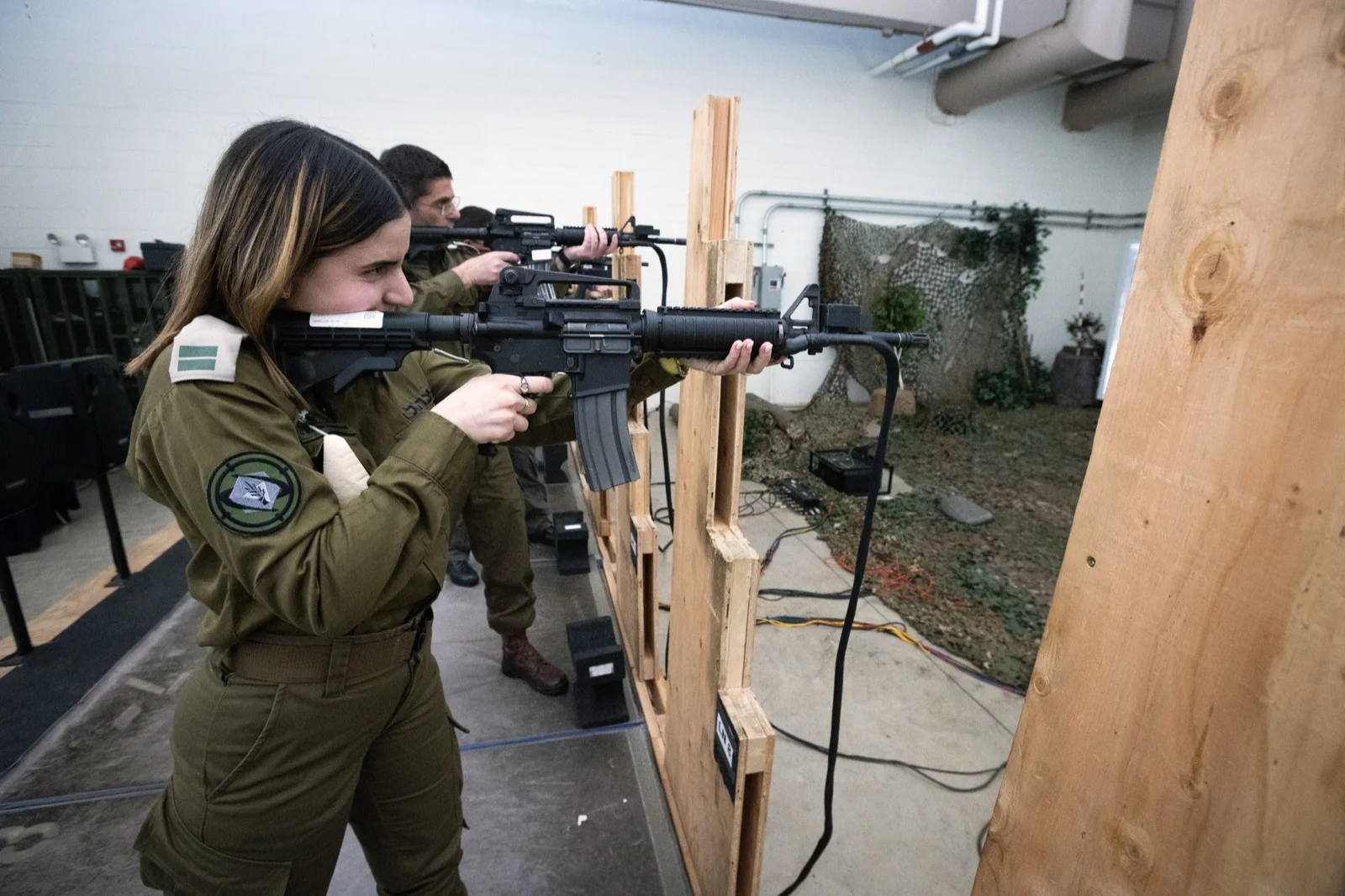
Israel’s $34.6 billion budget supports 169,500 active personnel — again among the highest per-head figures in the region. But the more useful measure is composition: a substantial share goes to research and development, electronic warfare and layered air defence rather than to platform counts.
Israel is the only operator permitted to modify the F-35 with its own electronic warfare and avionics packages, delivering the F-35I Adir — a marker of an exceptional technology relationship with the United States. Its air-defence architecture, combining Iron Dome, David’s Sling and Arrow-3, was the first integrated multi-layer system fielded at this scale anywhere. The armoured force is built around the indigenous Merkava family, 1,300 tanks strong.
The defence industry acts as a multiplier on that spending. Elbit Systems, IAI and Rafael have made Israel one of the world’s largest arms exporters, so a portion of every shekel spent returns as export revenue. Very few countries in the region have closed that loop.
In pure quantity Israel does not lead: 597 aircraft, 127 helicopters and 82 naval assets place it behind Türkiye and Egypt. Israeli planning has never been built on mass but on technological edge and rapid mobilisation — roughly 465,000 reservists are the invisible half of the equation.
Israel spends about 47 per cent more than the UAE, yet the two are remarkably close on total aircraft numbers.
| Force component | Figure |
|---|---|
| Tanks | 1,300 |
| Total aircraft | 597 |
| Helicopters | 127 |
| Naval assets | 82 |
| Active personnel | 169,500 |
Second place converts defence spending into hardware more efficiently than anyone else in the region.
#2 · TÜRKİYE
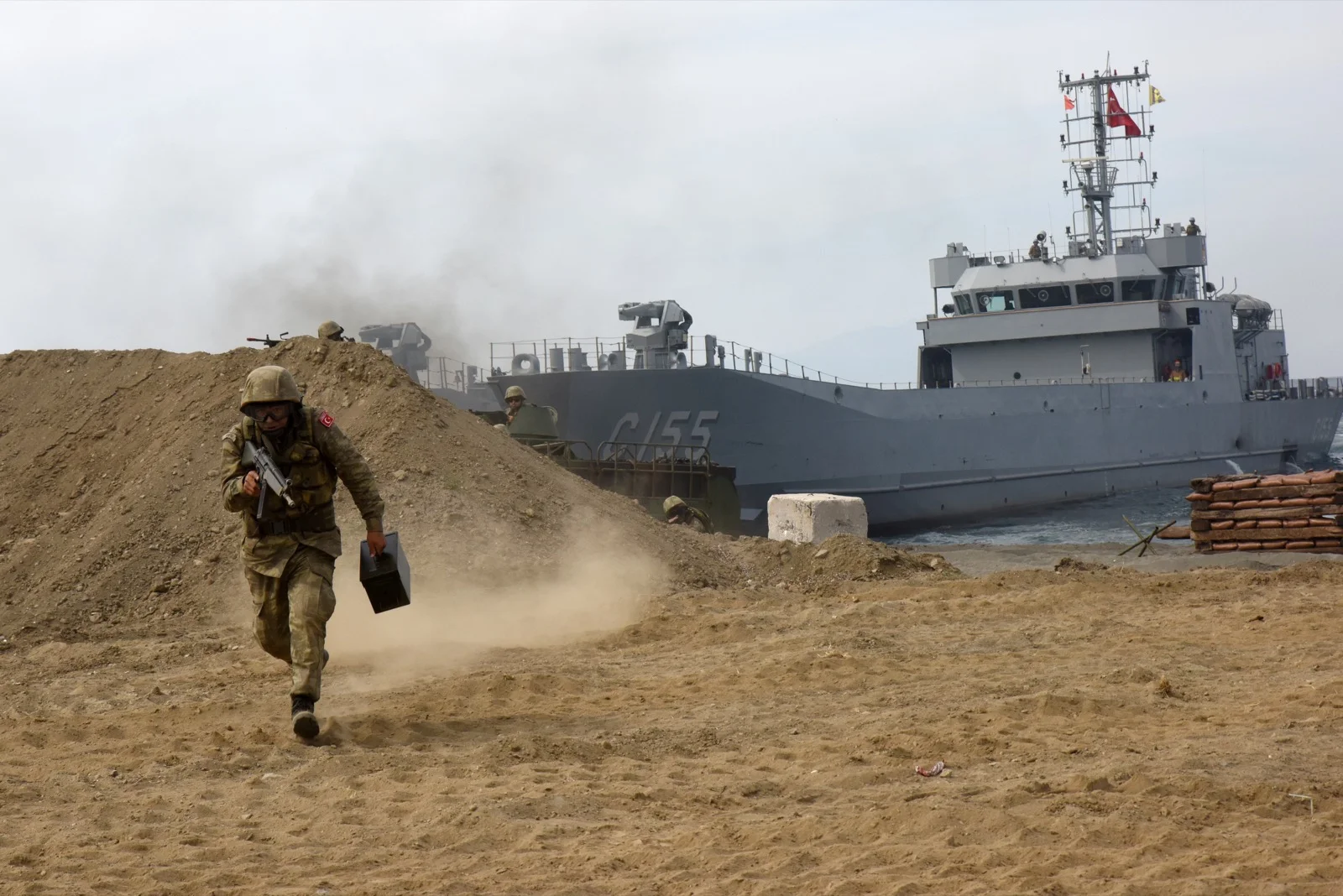
Türkiye’s $51.4 billion budget makes it the Middle East’s second-largest spender and the twelfth largest worldwide. What distinguishes Ankara from everyone else on this list is how much of that money stays inside the country: the overwhelming majority of Turkish Armed Forces requirements are now met by domestic industry, so defence spending functions as industrial investment rather than an import bill.
The inventory makes the difference visible. 2,284 tanks (first in the region), 1,101 total aircraft (first), 509 helicopters (first regionally, seventh globally), 192 naval assets (first) and 481,000 active personnel. Türkiye is the only Middle Eastern state that leads on all five of those measures simultaneously.
That balance is a doctrinal requirement, not a preference. Maritime jurisdiction disputes in the Aegean and Eastern Mediterranean, cross-border operations along the Syrian and Iraqi frontiers, a stabilising role in the Black Sea under the Montreux regime, and alliance obligations as NATO’s second-largest army together produce an unusually broad mission set. A force built for all of it cannot afford a weak link in any single domain.
The industrial base is the multiplier. ASELSAN, TUSAŞ, ROKETSAN, HAVELSAN, STM, BAYKAR, FNSS, OTOKAR and MKE form an ecosystem that supplies the Turkish military and exports to more than 130 countries — spanning unmanned aircraft, armoured vehicles, electronic warfare and naval platforms. The result is a country that holds both the largest inventory and the largest defence export volume in the region.
Türkiye spends roughly $12.6 billion less than Saudi Arabia while operating more than twice the tanks, more than twice the helicopters and six times the naval assets.
| Force component | Figure |
|---|---|
| Tanks | 2,284 |
| Total aircraft | 1,101 |
| Helicopters | 509 |
| Naval assets | 192 |
| Active personnel | 481,000 |
Second on budget, first on almost every inventory line
Türkiye ranks second on spending and first in the region on tanks, total aircraft, helicopters and naval assets. Ankara spends roughly 20 per cent less than Riyadh yet operates more than twice the tanks, more than twice the helicopters and six times the naval platforms. No other Middle Eastern state converts defence spending into hardware at that rate.
The reason is domestic production. Building a tank, a helicopter or a corvette at home rather than importing it means more platforms for the same budget — and it moves sustainment, spares and upgrade costs out of hard currency and into a domestic supply chain that also generates employment and export revenue.
The programmes that will move these numbers again are already flying or in test: the KAAN national combat aircraft, the KIZILELMA unmanned fighter, the HÜRJET jet trainer and light attack aircraft, the ALTAY main battle tank, and the MİLGEM line running through the Istif class to the TF-2000 air-defence frigate. Above them sits the ÇELİK KUBBE layered air-defence architecture and the long-range SİPER system.
Each of these raises capability without requiring a proportional budget increase, because export sales offset part of their development cost. Turkish defence exports now amount to a meaningful fraction of the national defence budget itself. Ranking second on spending in the Middle East does not mean ranking second on capability — Türkiye’s inventory line is the clearest evidence of that distinction.
And the country at the top holds the region’s largest budget — with an inventory that does not match it.
#1 · SAUDI ARABIA
The Middle East’s largest defence budget belongs to Saudi Arabia: $63.99 billion. That places Riyadh eighth globally, in the same bracket as Germany, India and the United Kingdom, and among the world’s highest spenders as a share of GDP.
Most of it goes abroad. Saudi Arabia was for years the world’s largest arms importer, and the inventory reflects it: F-15SA fighters, AH-64E Apache gunships and Patriot/THAAD air defence from the United States; Eurofighter Typhoon and Tornado from the United Kingdom; armoured vehicles from France and Canada. With 917 aircraft and 264 helicopters, Riyadh operates one of the region’s most modern air arms.
Other lines do not scale with the budget. 1,085 tanks is fewer than half Türkiye’s total, and 32 naval assets is among the lowest figures here — a striking gap for a country with extensive Red Sea and Gulf coastlines. Corvette and frigate programmes with Spain and the United States are intended to close it.
The most consequential recent move is industrial. Under Vision 2030, Riyadh set a target of localising half of all defence spending, working through Saudi Arabian Military Industries (SAMI) and signing joint-production and technology-transfer agreements with several partners including Türkiye. How quickly that transition delivers will shape the region’s defence-industrial map.
The long campaign in Yemen also exposed a mismatch between an expensive conventional inventory and asymmetric threats. Using multi-million-dollar interceptors against low-cost drones and rockets is not sustainable, and that arithmetic has pushed Riyadh toward cost-effective solutions — opening the door to regional suppliers.
Saudi Arabia outspends Türkiye by about 24 per cent yet fields half the tanks and a sixth of the naval assets.
| Force component | Figure |
|---|---|
| Tanks | 1,085 |
| Total aircraft | 917 |
| Helicopters | 264 |
| Naval assets | 32 |
| Active personnel | 247,000 |
So what does this table say about the region’s next decade? The assessment follows.
Why Saudi Arabia Leads
- Hydrocarbon financing: Oil revenue sustains defence spending at one of the highest shares of GDP in the world.
- Multi-front threat perception: The Yemeni border, Gulf tensions and Red Sea maritime security each demand a distinct force structure.
- High unit-cost procurement: F-15SA, Typhoon, Apache, Patriot and THAAD consume a disproportionate share of the budget regardless of fleet size.
- Sustainment and training contracts: Maintenance, spares and training packages for imported equipment are a permanent and large annual line item.
- Vision 2030 localisation: Building an industrial base through SAMI raises spending in the short term while aiming to cut import dependence over the long term.
Assessment: Money or Industry?
The Middle East’s budget table does not by itself describe the regional balance of power, but it does show where to look. The top three — Saudi Arabia, Türkiye and Israel — account for more than $150 billion between them, exceeding the combined total of everyone else on this list. What they share is an approach that treats defence as industrial policy rather than a procurement line.
The link between budget and inventory is weakening. Saudi Arabia is the region’s biggest spender yet fields half Türkiye’s tanks and a sixth of its naval assets. Qatar spends $11.95 billion and operates 62 tanks. Jordan runs the region’s fourth-largest armoured force on $2.67 billion. Three variables explain the inconsistencies: import cost, external military assistance and domestic production capacity. Importing a platform and building one are entirely different propositions for the same headline figure.
Localisation has become the shared agenda. Türkiye’s ecosystem is the most mature example; the UAE’s EDGE Group is the fastest mover; Saudi Arabia’s SAMI programme under Vision 2030 points the same way; Israel has run this model for decades. Over the coming ten years the decisive question will not be who spends the most, but who keeps the largest share of that spending inside their own industrial base.
Cost-effectiveness is the new benchmark. Events in Yemen and the Red Sea demonstrated that firing multi-million-dollar interceptors at drones costing tens of thousands is not sustainable. That has created a common procurement priority across the region: layered and affordable air defence, low-cost interceptors and electronic warfare. Türkiye’s ÇELİK KUBBE architecture and the ROKETSAN and ASELSAN product lines behind it answer that requirement directly.
Sanctions distort the picture. Iran has the region’s largest army but cannot buy modern platforms, and much of its inventory has been in service for more than forty years. Tehran’s turn to asymmetric capability is a consequence of supply restriction rather than budget restriction — the clearest evidence that spending figures alone cannot measure the regional balance.
What changes next? Saudi Arabia’s lead is secure while energy revenues hold. But as Türkiye’s KAAN, ALTAY, MİLGEM and ÇELİK KUBBE programmes reach serial production, the capability gained per dollar spent will rise at a rate no one else in the region can match. The UAE’s move into export markets through EDGE could establish a second Gulf industrial centre. Israel will concentrate on holding its technological edge. The Middle East’s defence map over the next decade will be redrawn by industrial depth, not budget size.
Comparison Table: The Middle East’s Ten Largest Defence Budgets (2026)
| # | Country | Defence budget | Tanks | Total aircraft | Helicopters | Naval assets | Active personnel |
|---|---|---|---|---|---|---|---|
| 1 | Saudi Arabia | $63.99bn | 1,085 | 917 | 264 | 32 | 247,000 |
| 2 | Türkiye | $51.4bn | 2,284 | 1,101 | 509 | 192 | 481,000 |
| 3 | Israel | $34.6bn | 1,300 | 597 | 127 | 82 | 169,500 |
| 4 | United Arab Emirates | $23.48bn | 354 | 581 | 250 | 84 | 65,000 |
| 5 | Qatar | $11.95bn | 62 | 263 | 85 | 125 | 26,550 |
| 6 | Iran | $9.23bn | 2,675 | 551 | 129 | 109 | 610,000 |
| 7 | Oman | $8.36bn | 264 | 128 | 31 | 17 | 100,000 |
| 8 | Iraq | $8bn | 1,188 | 360 | 183 | 67 | 193,000 |
| 9 | Kuwait | $7.99bn | 367 | 133 | 68 | 123 | 78,000 |
| 10 | Jordan | $2.67bn | 1,508 | 279 | 159 | 27 | 114,500 |
Source: Global Firepower 2026. Official defence budget figures may exclude off-budget military expenditure in some states.
More rankings coming
Next up: Europe’s most powerful navies, Africa’s most powerful navies and the strongest armies of the Organization of Turkic States.
Frequently Asked Questions
Which Middle Eastern country has the largest defence budget?
According to Global Firepower’s 2026 data, Saudi Arabia leads with $63.99 billion, followed by Türkiye at $51.4 billion and Israel at $34.6 billion.
How large is Türkiye’s defence budget?
Türkiye’s 2026 defence budget is $51.4 billion — second in the Middle East and twelfth worldwide. Türkiye also ranks first in the region for tanks, total aircraft, helicopters and naval assets.
Why doesn’t the largest budget produce the largest inventory?
Imported platforms carry far higher unit costs than domestically produced ones, and sustainment, spares and training contracts for imported equipment consume a large share of annual spending. States with a domestic industrial base acquire more hardware for the same budget.
Why does Iran’s defence budget look so low?
Iran reports a defence budget of $9.23 billion, but that figure does not fully capture the Islamic Revolutionary Guard Corps’ separate budget lines and economic activities. Long-standing sanctions also prevent Tehran from procuring modern platforms on the international market.
Which Gulf states spend the most per soldier?
Qatar spends $11.95 billion on just 26,550 active personnel, one of the highest per-capita defence expenditures in the world. Kuwait and the UAE follow a similar pattern of small forces with large budgets.
Which Middle Eastern countries have their own defence industries?
Türkiye and Israel have the region’s most developed defence-industrial ecosystems. The UAE entered the field rapidly through EDGE Group, founded in 2019, while Saudi Arabia is pursuing localisation through SAMI under Vision 2030.
Sources and Related Coverage
- Global Firepower 2026 — defence budget, tank, aircraft, helicopter, naval and personnel rankings: https://www.globalfirepower.com/
- SIPRI Military Expenditure Database
- IISS The Military Balance
- National defence ministry statements and the Republic of Türkiye Presidency of Defence Industries