FCAS Collapse Hands Türkiye’s KAAN a Sixth-Gen Opening Europe Can No Longer Ignore


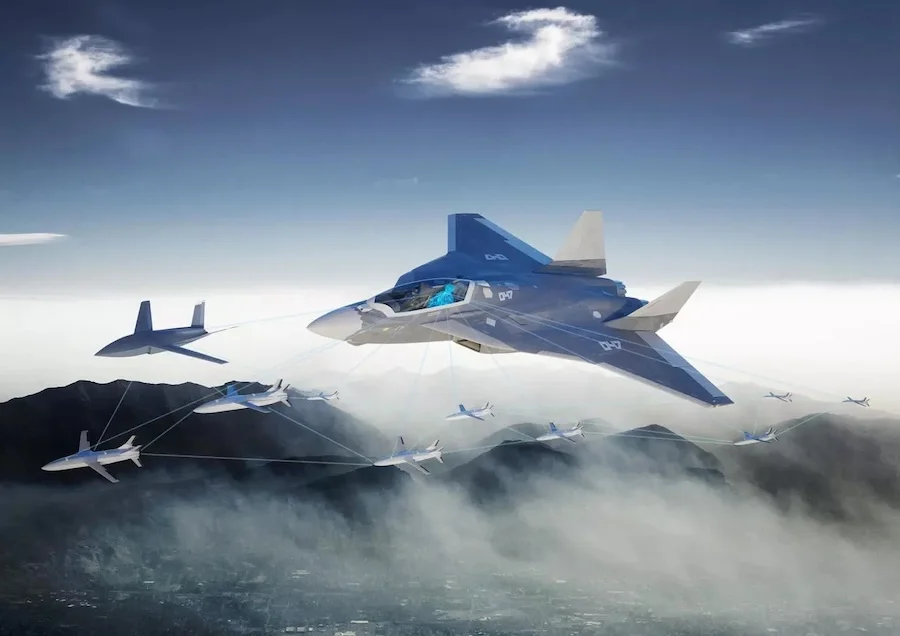
The crewed-fighter pillar of Europe’s €100 billion Future Combat Air System has collapsed after nine years, undone not by technology but by a fight over who gets to lead. With Berlin and Paris now drifting toward separate national paths, the most credible new fighter still flying toward serial production is the one built in Ankara — TAI’s KAAN.
At a glance
- Chancellor Friedrich Merz told President Emmanuel Macron the joint manned fighter is over, confirmed around the ILA Berlin air show on 8 June 2026.
- Root cause: Dassault pushed for an 80% workshare and prime-contractor status; Airbus, backing Germany and Spain, refused to be a junior partner.
- France wanted a nuclear-capable, carrier-borne jet; Germany did not — a requirement gap no committee could close.
- Only the unmanned “combat cloud” may survive; the manned aircraft, the heart of the programme, is dead.
- Meanwhile KAAN has been flying since February 2024, with a 48-aircraft Indonesian order already signed.
For nearly a decade the Future Combat Air System — SCAF in French, FCAS in English — was sold as the aircraft that would keep European air power sovereign into the second half of the century. Launched by Macron and Angela Merkel in 2017 and joined by Spain in 2020, it promised a stealthy crewed jet flying alongside drones and a battlefield data cloud by the early 2040s. Last week it quietly fell apart. What killed it was not a rival fighter or a failed prototype, but the oldest problem in European defence: nobody could agree on who was in charge.
How a hundred-billion-euro dream broke apart
The dispute had been festering for years before it finally detonated. Dassault Aviation, the house that builds the Rafale, insisted it should hold design authority and something close to 80 percent of the work, arguing that only it had ever delivered a modern combat aircraft on its own. Airbus — carrying the interests of Germany and Spain — was never going to accept the role of well-funded subcontractor on a jet it was helping pay for. Mediation attempts through the spring went nowhere; a final bilateral round in late April produced nothing but confirmation that the two sides were not talking about the same aeroplane.
There was a deeper fault line underneath the workshare row. France needed a fighter that could carry a nuclear weapon and operate from the deck of the carrier Charles de Gaulle; Germany needed neither. Once you require a navalised, nuclear-capable airframe for one partner and a conventional land-based one for another, you are no longer designing a single aircraft — you are funding two under one logo. Chancellor Merz reportedly tried in person to talk Dassault chief Eric Trappier into parity. It did not work, and on the margins of the ILA Berlin air show the German side signalled that the manned programme was finished.
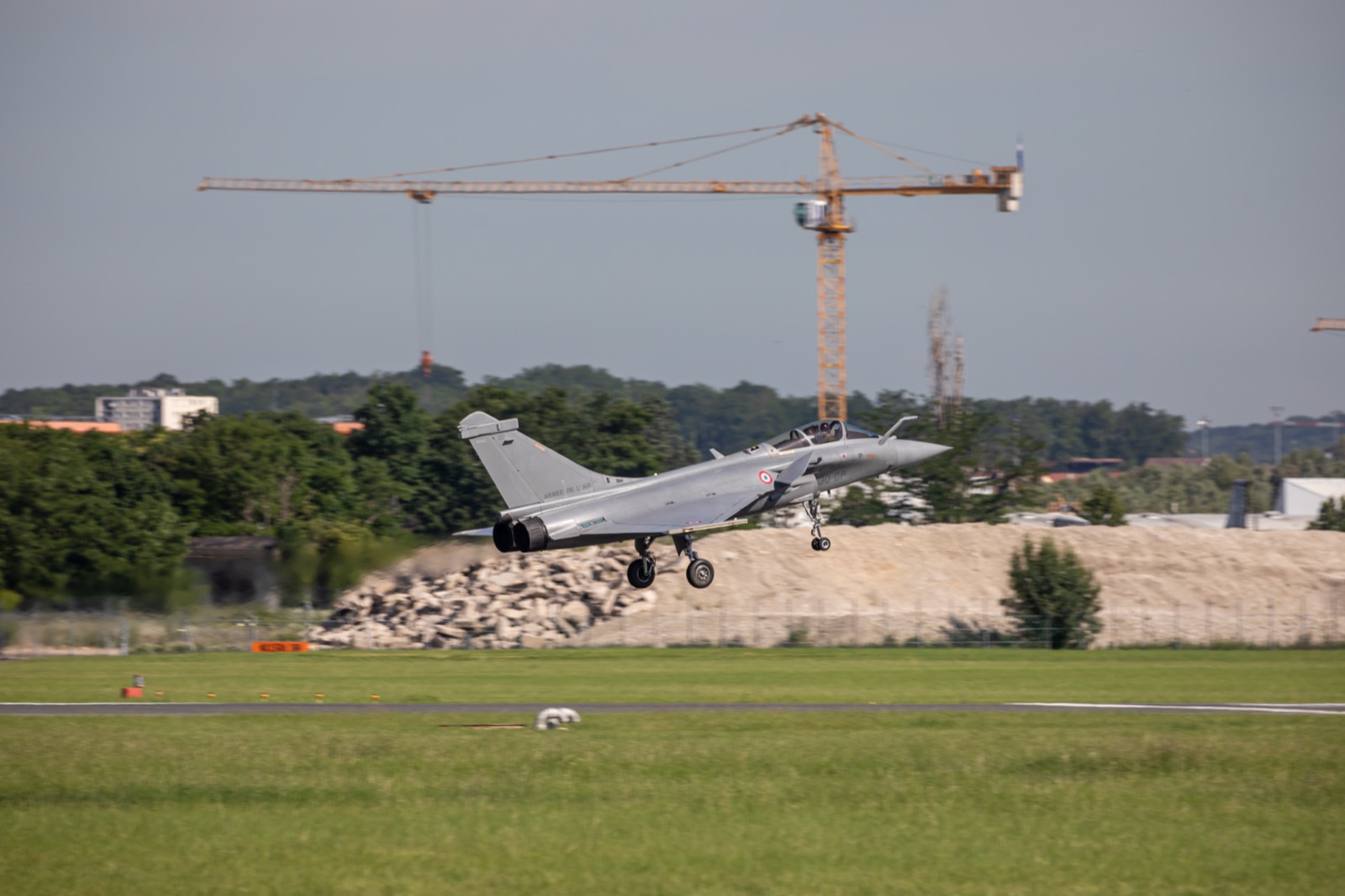
The fallout is already visible. Paris looks set to press ahead on its own, leaning on an evolved Rafale and a Dassault-led design backed by several billion euros of national defence money. Airbus, for its part, has been seen courting Sweden’s Saab about an alternative European fighter — the very fragmentation FCAS was created to prevent. Belgium, never more than a watchful onlooker, declared the project dead and ordered eleven more American F-35s instead. Nine years and a hundred billion euros of ambition have left Europe with two camps where there was meant to be one.
While Europe argued, KAAN kept flying
Here is the part Brussels will find uncomfortable. Through the same years that FCAS spent locked in boardroom arithmetic, Turkish Aerospace Industries was quietly putting metal in the air. KAAN, the twin-engine stealth fighter developed in Ankara, made its maiden flight in February 2024 and has been expanding its envelope since. Early aircraft fly on a pair of General Electric F110 engines — the same family that powers the F-16 — while TEI develops the fully indigenous TF-35000 turbofan meant to take over in later blocks. It is a pragmatic sequence: get the airframe flying now, swap in the sovereign engine as it matures.
KAAN is, strictly speaking, a fifth-generation platform — but one designed from the outset with the growth path that defines the sixth. Türkiye intends it to fly as the manned hub of a teaming network, controlling unmanned wingmen such as Baykar’s jet-powered KIZILELMA and feeding off the same sensor-fusion and AI philosophy that FCAS and Britain’s GCAP only ever promised on slides. In other words, while the Franco-German effort collapsed at the requirements stage, Ankara has been building the architecture FCAS described — and doing it with a flying aircraft rather than a PowerPoint.
The commercial signal matters just as much as the technical one. In 2025 Indonesia signed for 48 KAANs, the type’s first export commitment, with local production and technology transfer baked in — a model that has already drawn interest across the Gulf and beyond. For a continent suddenly short of a unified next-generation answer, the awkward truth is that a credible, affordable, export-ready fighter is maturing on NATO’s southeastern flank, and it is not waiting for a Franco-German ministerial council to decide who holds the pencil.
Three camps in the air, one consortium on the ground
Step back and the global sixth-generation map looks very different than it did a month ago. The United States is pushing its NGAD/F-47 effort; Britain, Italy and Japan press on with GCAP — itself wrestling with a funding cliff — and China keeps flight-testing its own tail-less designs. Europe’s great collaborative bet has now split into a French national jet and an Airbus-Saab maybe. Into that vacuum steps a Turkish programme that, whatever generational label one prefers, has the one thing none of the European paper projects can claim this summer: an aircraft that is already in the sky and a customer already on the books.
None of this guarantees KAAN the European market — politics, engine sovereignty and serial-production maturity all still have to be proven. But the collapse of FCAS removes the one argument that always kept Ankara at arm’s length: that Europe would build its own. For now it will not, at least not together. And the longer Paris and Berlin spend deciding who leads, the more KAAN looks less like an outsider and more like the continent’s most uncomfortable Plan B.
Sources
- The Aviationist — “France and Germany Set to End Future Combat Air System Program” (8 June 2026)
- AeroTime — “Germany, France abandon joint FCAS fighter” (June 2026)
- Breaking Defense — “‘SCAF is dead’: Sixth-gen Franco-German fighter is all but over”
- Envanter Medya archive — KAAN programme and Indonesia export file