Fincantieri-Leonardo Sign DDX Destroyer Contract for Italy

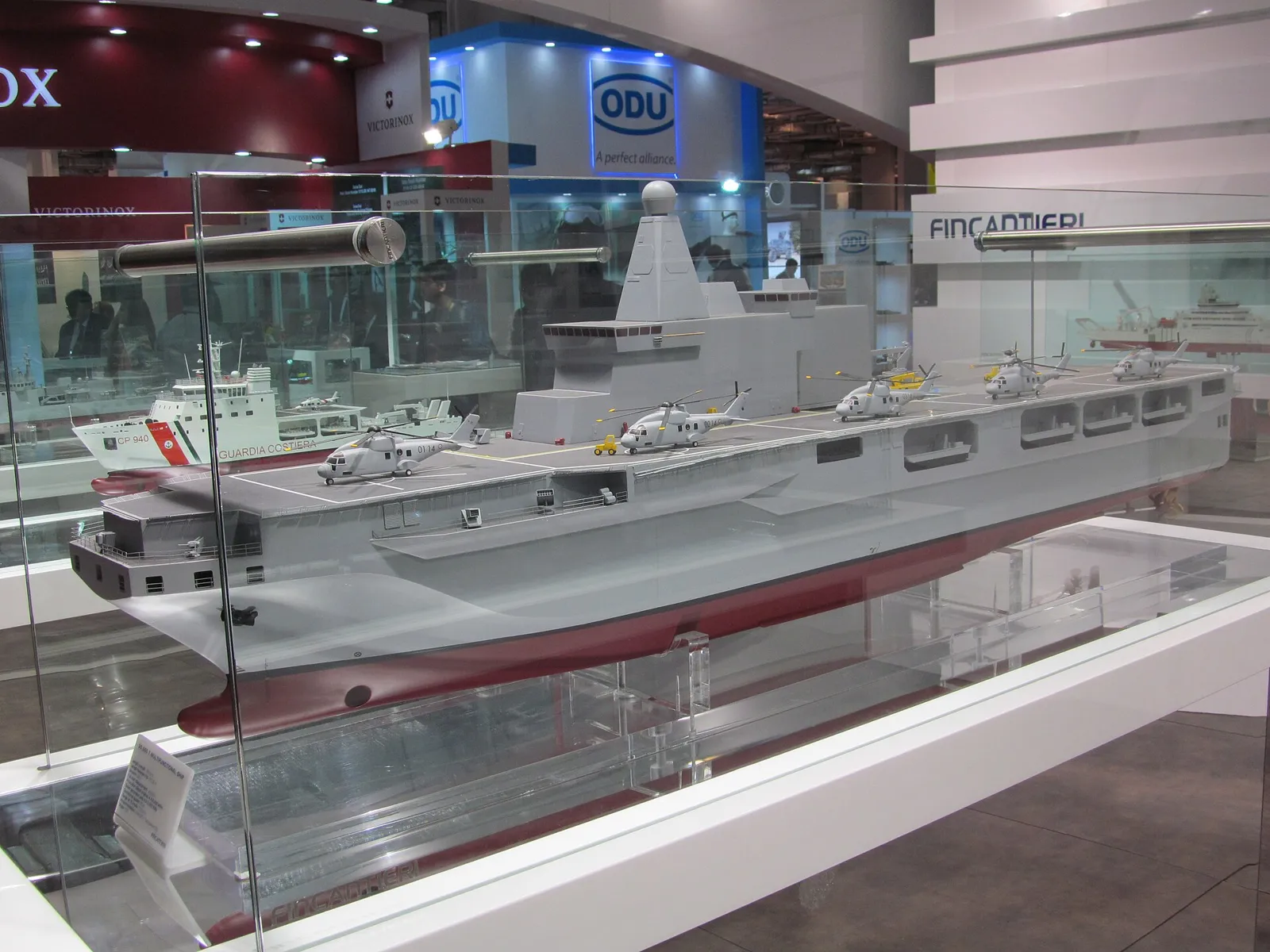
Orizzonte Sistemi Navali, the Fincantieri-Leonardo joint venture, signed a 3.7-billion-euro contract with OCCAR on 24 September to build two DDX destroyers for the Italian Navy. The first ship is due for delivery in 2033, the second in 2035.
How the contract is structured
The agreement was signed between Orizzonte Sistemi Navali — owned 51% by Fincantieri and 49% by Leonardo — and OCCAR, Europe’s multinational defence procurement agency. The total value reaches 3.7 billion euros including 1.3 billion euros in options. Of that, 1.8 billion euros (including 800 million euros in options) goes to Fincantieri, and 1.7 billion euros (including 480 million euros in options) to Leonardo. The first of the two DDX destroyers is scheduled for delivery to the Italian Navy in 2033, the second in 2035. OCCAR’s role as counterparty means the program runs under a multinational oversight and financing framework rather than purely national procurement channels, a structure increasingly common for large European naval programs.
What the ship looks like
The DDX-class destroyers will run 180 metres long with a displacement of roughly 13,500 tonnes, carry a crew of 251 and have a range of 4,000 nautical miles. They are designed to provide integrated air and missile defence against ballistic and hypersonic threats. The core of that capability is Leonardo’s SADOC 5 command, control, communications, computers and intelligence (C5I) system paired with a fully digital S-band AESA radar, with weapon systems supplied by MBDA. That combination of size and armament places DDX among the most capable air-defence platforms the Italian Navy has ever put into construction.
What it means for Italy
Fincantieri’s CEO described the contract as one of the most significant naval programs launched in Italy in recent years. The DDX program is meant to raise the Italian Navy’s air and missile defence capacity at a moment when the perceived growth of ballistic and hypersonic threats is pushing European navies toward exactly this kind of integrated defence investment. The 2033-2035 delivery window places the program within Italy’s medium-term naval planning, running alongside the renewal of its existing destroyer and frigate fleet.
An industrial model built for scale
The Orizzonte Sistemi Navali structure is notable for bringing Italy’s shipbuilding and electronics/defence-systems industries under a single program umbrella. That arrangement lets the platform and its sensors and weapons be developed inside the same national industrial ecosystem — an integration model that large naval programs often aim for but rarely achieve this cleanly. Combining Fincantieri’s hull and shipyard capacity with Leonardo’s sensor and command-and-control expertise inside one corporate structure also reduces the number of interfaces in the supply chain, limiting a category of program risk that tends to grow with every additional contractor involved.
Where Turkey fits
Italy’s DDX program offers a useful comparison point for Turkey’s own naval platform development. Turkey’s indigenous shipbuilding line, which began with the MİLGEM project and continues with the İstif-class frigates, runs alongside the TF-2000 air-defence destroyer program led by ASELSAN and STM, which aims to field a larger platform with stronger air and missile defence capability. Italy’s approach of folding platform and systems integration under a single Fincantieri-Leonardo structure runs parallel to the industrial integration model Turkey pursues through its ASELSAN-STM-led programs — both countries are working to expand their navies’ air-defence capacity through domestic industrial capability. In both cases, developing the hull and the sensor and weapon suite inside the same national supply chain reduces external dependency while preserving long-term flexibility for maintenance and future upgrades.
Where it sits in Europe’s naval build-up
The DDX contract belongs to a broader run of air and missile defence investments that European navies have accelerated in recent years. A number of NATO member navies on the continent have pushed integrated defence against ballistic and hypersonic threats to the top of their priority lists, and Italy’s move here tracks similar decisions being made by neighbouring navies facing comparable motivations. The 2033-2035 delivery window places the program among the medium-to-long-term links in a European naval modernization wave that began gathering pace in the second half of the 2020s.
Sources
- Leonardo — press release, 24 September 2026
- Defence Industry Europe, “Fincantieri-Leonardo joint venture signs DDX destroyer contract,” 24 September 2026
- Naval News — DDX contract coverage, 24 September 2026