‘Koalicja’ Drill Begins; Turkey Runs Istanbul Mine Drill

The France- and Britain-led Multinational Force-Ukraine (MNF-U) launched its first major exercise, codenamed “Koalicja” (Polish for “Coalition”), on November 9. The drill’s land and air component runs through November 22 in southeastern Poland, centred on the Nowa Deba area roughly 100 kilometres from the Ukrainian border.
Around 2,800 troops from ten European countries are taking part. France has sent the largest contingent, 1,100 personnel, while Britain has committed 300 troops plus RAF Typhoon jets. Belgium, Estonia, Germany, Lithuania, the Netherlands, Poland, Spain and Sweden are also contributing air and land elements.
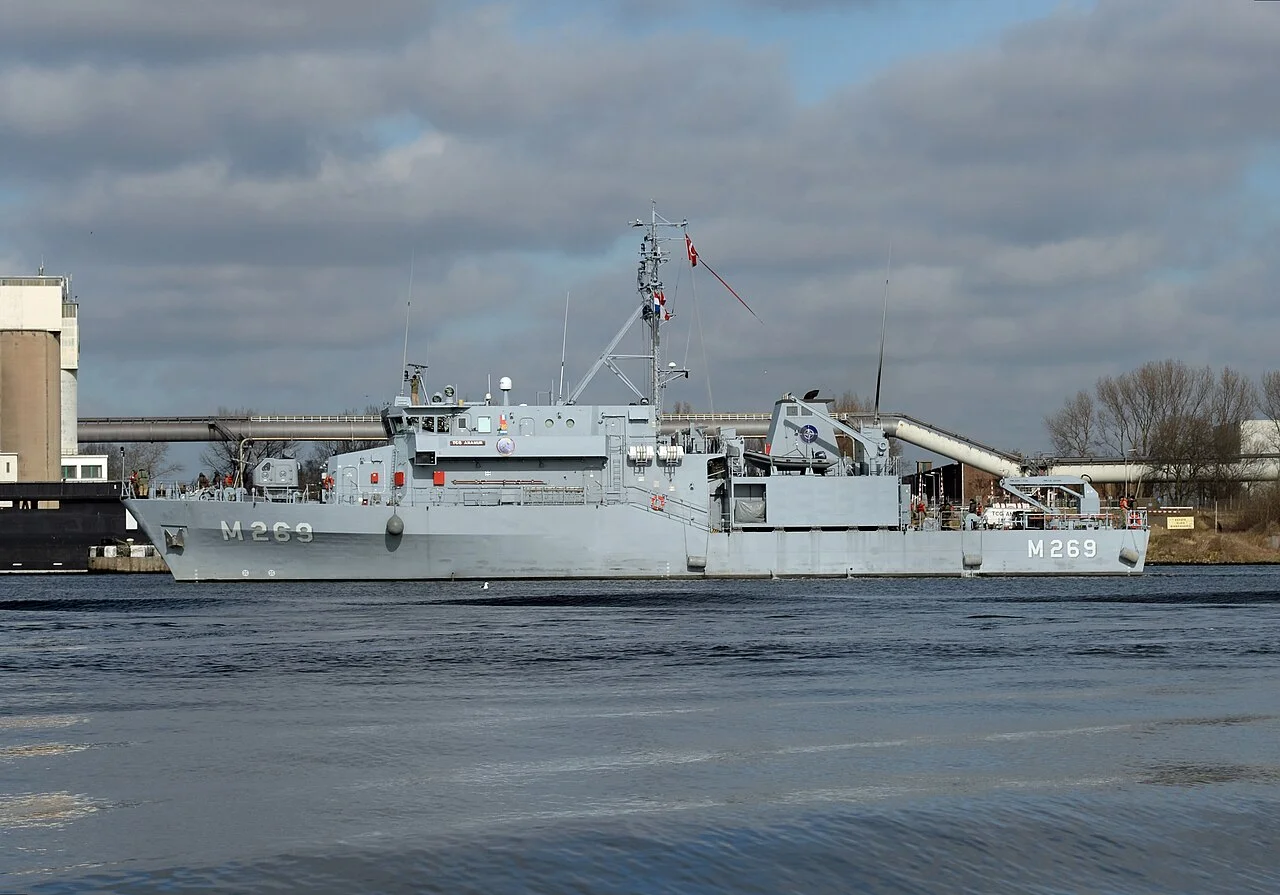
Turkey is not sending troops to the Polish land drill. Instead, Ankara is running a separate maritime simulation from Istanbul, rehearsing a possible mine-clearing operation in the Black Sea as the naval component of the same first MNF-U exercise.
Turkey had earlier established a maritime command in Istanbul for the Ukraine mission, tasked with overseeing the force’s prospective Black Sea component with support from littoral states Romania and Bulgaria. That command structure is distinct from “Mine Countermeasures Black Sea,” a separate, non-NATO initiative Turkey previously set up with Romania and Bulgaria — but both reflect Ankara’s increasingly institutionalised leadership role on regional mine threats.
MNF-U was established in 2025 with an operational headquarters in Paris. Its stated goals are to help rebuild Ukraine’s armed forces after a ceasefire, help secure Ukrainian airspace, and allow economic activity — including Black Sea shipping — to resume. The force is not a NATO operation, and the United States has little direct involvement.
France’s defence ministry said the exercise is meant to test how quickly and efficiently multiple nations can deploy forces on land, at sea and in the air. UK Defence Secretary Wes Streeting said: “This isn’t a hypothetical plan, it’s a real force, ready to help Ukraine once the fighting stops.” British Lt. Gen. Tom Bateman, who co-leads the exercise, said the force “is not designed for offensive operations,” while French Maj. Gen. Armel Dirou called it “not a show of force.”
Officials say the force carries no offensive mission and will deploy only once a ceasefire takes hold; the exercise involves only light equipment such as drones, with no tanks. Even so, some Western officials say rules of engagement are being prepared in case Russian forces attack the deployed troops.
Turkey’s role draws on its unique position as the sole state regulating transit through the Turkish Straits under the Montreux Convention. Amid rising attacks on commercial shipping in the Black Sea, Ankara has stepped up regional maritime-security diplomacy on two tracks: the Romania-Bulgaria mine-countermeasures initiative and now the Istanbul leg of the MNF-U exercise.
Some observers warn the exercise’s scale risks provoking Moscow, though organisers stress the force would activate only after fighting ends and that the current phase is limited to planning and procedure testing. Turkey’s naval mine-warfare experience is not new: its navy runs an annual “Nusret” exercise, whose 2025 edition (October 24-31) drew participants from 25 countries — a track record organisers see as feeding directly into the Istanbul simulation.
Sources
- Defense News — “European troops set to train in Poland for postwar Ukraine deployment” (November 7, 2026).
- Turkiye Today — “Türkiye to lead Black Sea mine-clearing drill for post-war Ukraine force.”