US Backs Poland’s Tomahawk and Typhon Missile Request

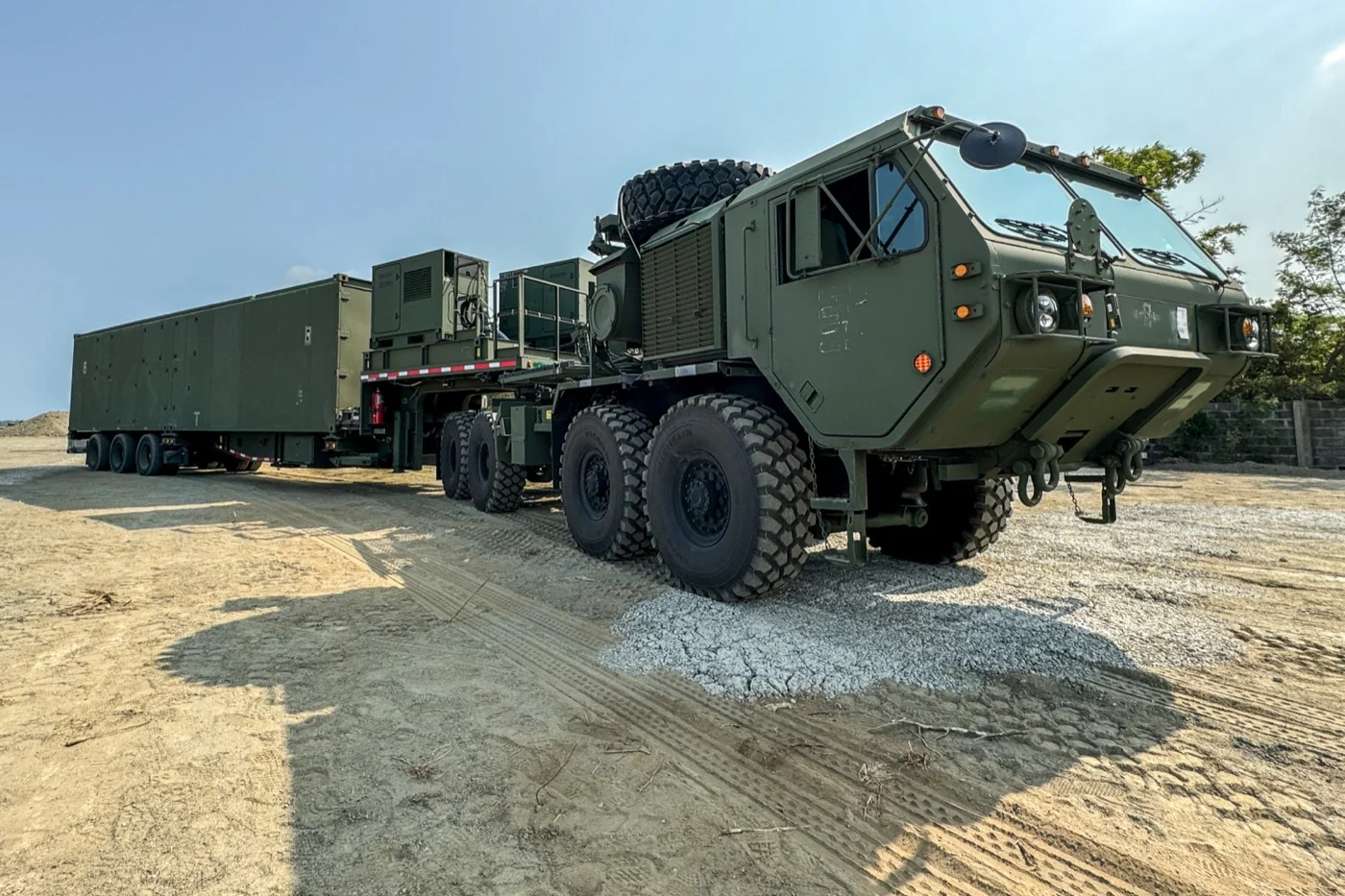
The Pentagon has given a positive internal assessment of Poland’s request to purchase Tomahawk cruise missiles and Typhon Mid-Range Capability launchers, Polish Defence Minister Władysław Kosiniak-Kamysz said after talks in Washington with US Secretary of Defense Pete Hegseth. The request, submitted by Warsaw several months earlier, covers the BGM-109 Tomahawk, a missile with a nominal range of 1,600 kilometers, along with the ground systems needed to fire it.
Deputy Defence Minister Paweł Bejda said on 11 November that the US Congress could take up the deal in early 2027. Executive branch and Pentagon backing does not amount to final authorization: under US arms-export rules, Congress has the last word, and no missile quantities, launcher numbers, price tag or delivery schedule have been disclosed yet.
What Poland is asking to buy
Tomahawk is a subsonic, Raytheon-built cruise missile. The conventional Block IV variant (RGM/UGM-109E) carries a 313-kilogram WDU-36/B warhead with 120 kilograms of explosive, is powered by a Williams F415 turbofan, and combines inertial, GPS, TERCOM and DSMAC guidance with a two-way satellite link that allows in-flight retargeting. The newer Block V family, in service with the US Navy since 2021, includes the anti-ship Block Va and the Block Vb variant fitted with a JMEWS warhead for hardened land targets.
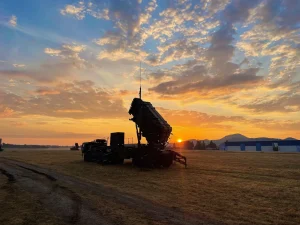
The Typhon Mid-Range Capability system fires from Mk 70 Mod 1 launchers, each a 12.19-meter container holding four Mk 41 vertical-launch cells. A battery fields four launchers for 16 ready-to-fire cells, each able to hold either a Tomahawk or an SM-6. Poland also has a naval option: three Miecznik-class frigates under construction are planned to carry 32 vertical-launch cells apiece, which could in principle accommodate the same missile family at sea.
Industrial capacity and regional context
Meeting demand from Poland and other buyers will require Raytheon to scale annual Tomahawk production from roughly 200 units to more than 1,000. Raytheon and the Pentagon signed a seven-year production arrangement in February 2026 aimed at that target. Germany is pursuing a parallel path, seeking three Typhon batteries and up to 400 Tomahawk Block Vb missiles in a program estimated at around €3.4 billion, including roughly €220 million for launchers and €1.15 billion for missiles.
US forces reportedly fired more than 850 Tomahawks during the 2026 conflict with Iran, and Japan’s separate purchase of 400 missiles has already run into delivery delays — both data points that illustrate how stretched current production is. For now, Poland’s long-range strike options are limited to HIMARS and Homar-K rocket artillery, plus AGM-158A JASSM carried by its F-16C/D fleet and the longer-ranged AGM-158B-2 JASSM-ER, ordered in 2024 with a stated range of about 1,000 kilometers. Warsaw operates 48 F-16C/D jets and has 32 F-35A aircraft on order, and it also takes part in the European Long-range Strike Approach (ELSA) initiative, which does not currently offer a substitute for Tomahawk-class range.
Why it matters
If the sale goes through, Poland would become one of the first NATO members in Europe to field a ground-launched strike system with this kind of reach, adding a layer of deterrence on the alliance’s eastern flank independent of its air force. The next concrete milestone to watch is whether the request advances into a formal congressional notification, which would be the first point at which real numbers — missiles, launchers and cost — become public.
Sources
- Army Recognition, “US backs Poland’s request to buy Tomahawk cruise missiles and Typhon MRC launchers to strike targets 1,600 km away”, 13 November 2026 — armyrecognition.com — primary source for the officials’ statements and technical specifications used in this article.