Australian Army Declares NASAMS Air Defence System Fully Operational

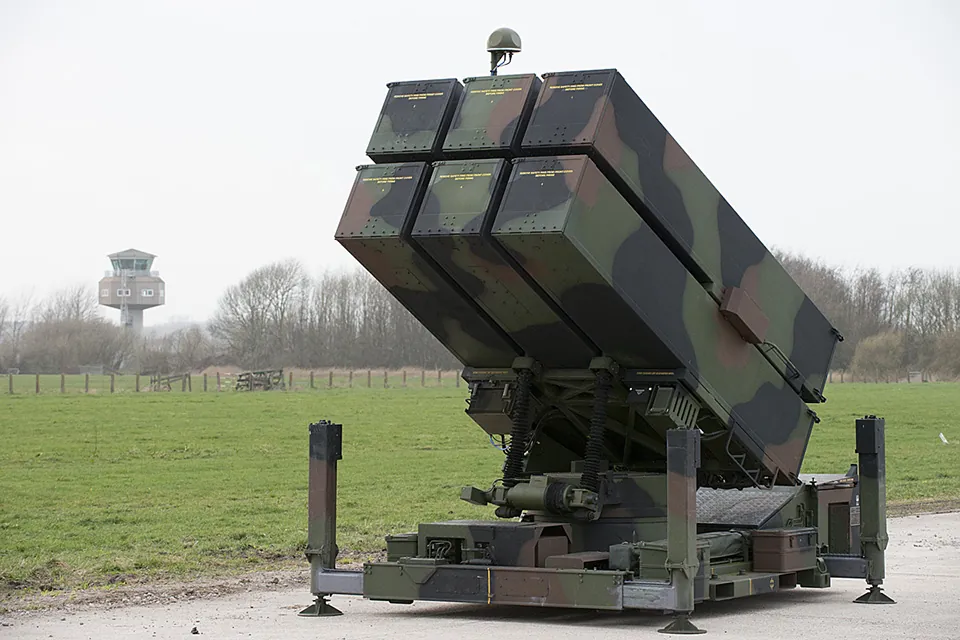
The Australian Army’s National Advanced Surface-to-Air Missile System (NASAMS) capability reached Final Operational Capability (FOC) on 10 September 2026, confirming the system has completed all testing, training and sustainment requirements and is ready to support Australian Defence Force (ADF) operations.
At a Glance
- NASAMS is operated by Army’s 16 Regiment, Royal Australian Artillery, based at Edinburgh near Adelaide
- System integration was led by Raytheon Australia, with major components from Kongsberg Australia, CEA Technologies and Thales Australia
- The enhanced NASAMS variant reached Initial Operational Capability (IOC) in late June; the September FOC declaration completes the process
- The system can detect and defeat a wide range of airborne threats, including cruise missiles, aircraft, helicopters and drones
- Its networked architecture links multiple sensors and shooters under a shared picture
Background
NASAMS is a medium-range air defence system developed jointly by Kongsberg and RTX (formerly Raytheon), firing AMRAAM-class missiles. Originally developed in Norway in the 1990s, it is now fielded by numerous NATO members, the United States, and Ukraine — whose combat use of the system has sharply increased global demand.
Australia’s NASAMS programme aims to close a gap in short-range ground-based air defence for its land forces. The Australian configuration integrates radars from domestic sensor maker CEA Technologies and command-and-control elements from Thales Australia, turning the acquisition into more than a simple platform purchase — it also builds domestic defence-industrial capacity. With FOC now declared, the system is fully ready for operational service.
What It Means for the Region
Australia’s move to full NASAMS readiness fits a broader Indo-Pacific trend of strengthening short-to-medium range air defence, as allies respond to a growing perception of cruise-missile and drone threats in the region. From a Turkish perspective, NASAMS’ combat record in Ukraine and its operational maturation in Australia offer a useful benchmark: Turkey’s own medium-range systems, such as HİSAR-O and SİPER, are being developed with similar export ambitions, and both countries are investing in networked, multi-sensor air-defence architectures — a convergence that could shape how such systems compete in third-country markets.
FAQ
What threats can NASAMS counter?
It can detect and defeat a wide range of airborne threats, including cruise missiles, fixed- and rotary-wing aircraft, and drones.
Who operates the system?
Army’s 16 Regiment, Royal Australian Artillery, from Edinburgh base near Adelaide.
What’s the difference between IOC and FOC?
IOC (Initial Operational Capability) means the system can begin limited operational use; FOC (Final Operational Capability) confirms all testing, training and sustainment requirements are complete and the system is ready for full-scale use.