How Long Does It Take to Replace a Lost Fighter Jet?

Replacing a fighter jet lost in combat takes anywhere from about two years to never, and the deciding factor is whether the production line is still open. For a type still in production, such as the F-35 or the F-16 Block 70, a new order simply joins the back of an existing queue — and that queue currently runs two to four years long. For a type whose line closed years ago, such as the Su-27, there is no queue to join at all: nobody builds a replacement airframe anymore. This piece walks through the hard numbers on open and closed production lines, sets today’s output against the World War II benchmark, and looks at what a new line like Turkey’s KAAN adds to a tight global picture.
How long is the queue on an open production line?
As of mid-2026, Lockheed Martin is holding F-35 output at 156 aircraft a year — 85 for the US military and 71 for international customers — with an order backlog of 317 aircraft at the end of the second quarter. At the current build rate, that backlog is worth roughly two years of production. In practice, that means a lost F-35 does not simply get “reordered”: the replacement order takes a place at the back of a line that is already about two years deep, and priority within that line depends heavily on existing contracts and customer status.
The F-16 case: an open line, but still not fast
The F-16 Block 70/72 line shows that an open line is not the same as a fast one. Lockheed Martin reported a 119-aircraft backlog in its Q2 2026 results, and executives confirmed 2026 deliveries would exceed 2025’s, without giving a firm annual number. The individual cases are more telling: Taiwan’s order for 66 F-16V Block 70s has slipped toward the end of 2026 and into 2027, while Bulgaria’s second batch of eight jets — originally due by the end of 2027 — has been pushed back to the second quarter of 2030, a roughly two-and-a-half-year slip that Lockheed attributes to production difficulties. For an allied air force sitting further back in that same queue, “the line is open” is not, by itself, a fast solution.
Can a retired production line ever be replaced at all?
Here the answer is far more absolute: no. Ukraine’s Su-27 losses since 2022 are the clearest illustration. The Soviet Union never exported the Su-27 to any state outside China, so no NATO-aligned country holds spare airframes to hand over, and the production line closed decades ago. The second-hand F-16s and Mirage 2000s filling the gap carry roughly half the Su-27’s range and a fraction of its radar size. A closed line, in other words, does not just mean a longer wait — sometimes it means the specific capability is gone for good, replaced by something smaller.
Why can’t modern jets be built at wartime speed?
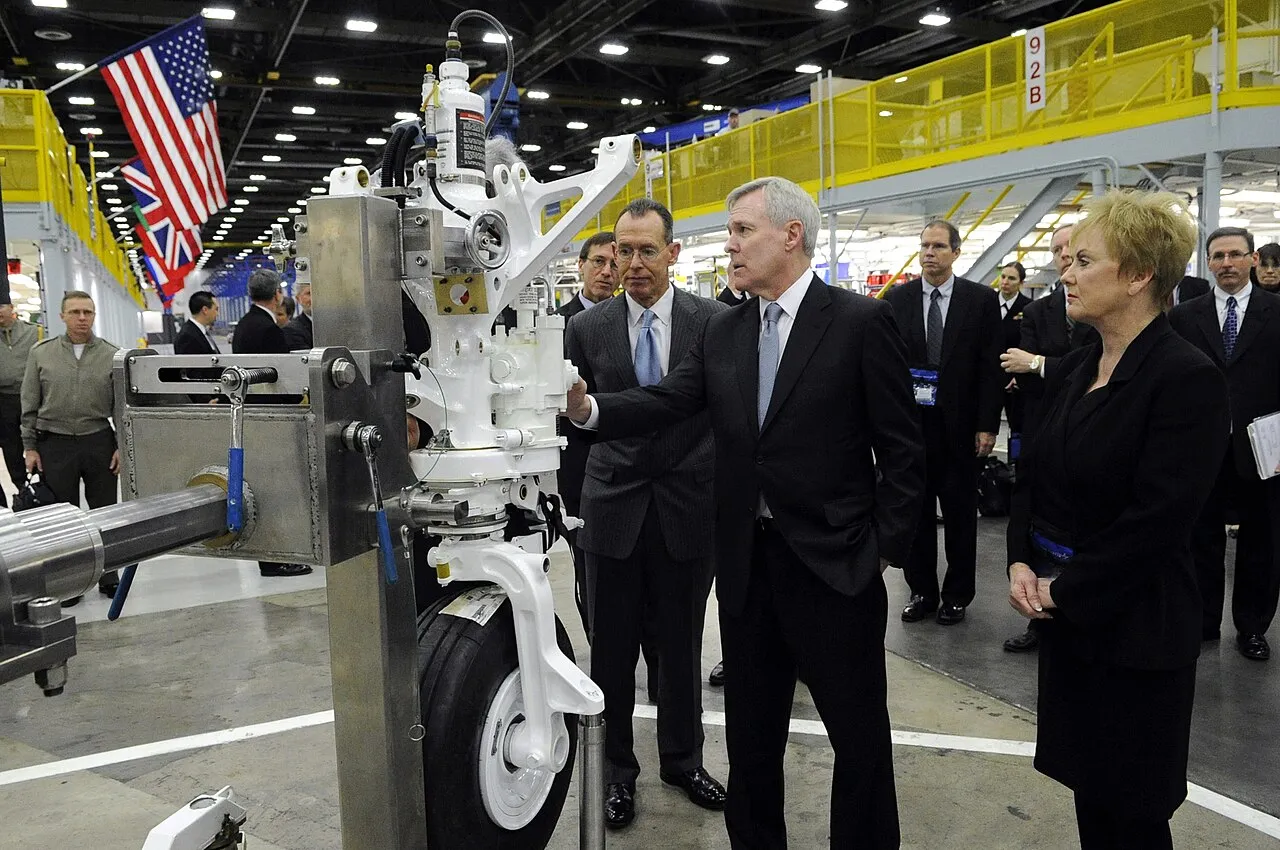
The historical gap is stark. Ford’s Willow Run plant delivered 428 B-24 Liberator heavy bombers in April 1944 alone — one roughly every 63 minutes. In 2025, the three F-35 final-assembly lines on three continents delivered a combined 191 aircraft, or one about every 46 hours. Complexity explains most of the gap: a 1944 bomber was a comparatively simple airframe, while a modern fighter integrates thousands of sensor, software and composite-material components sourced from a specialized, consolidated supply base. A July 2026 CSIS analysis, drawing on recent conflict experience, put manufacturing lead times for critical weapons systems at 25 to 51 months — meaning a wartime decision to “just build more” typically shows up on the ramp years, not months, later.
A new line enters the picture: Turkey’s KAAN
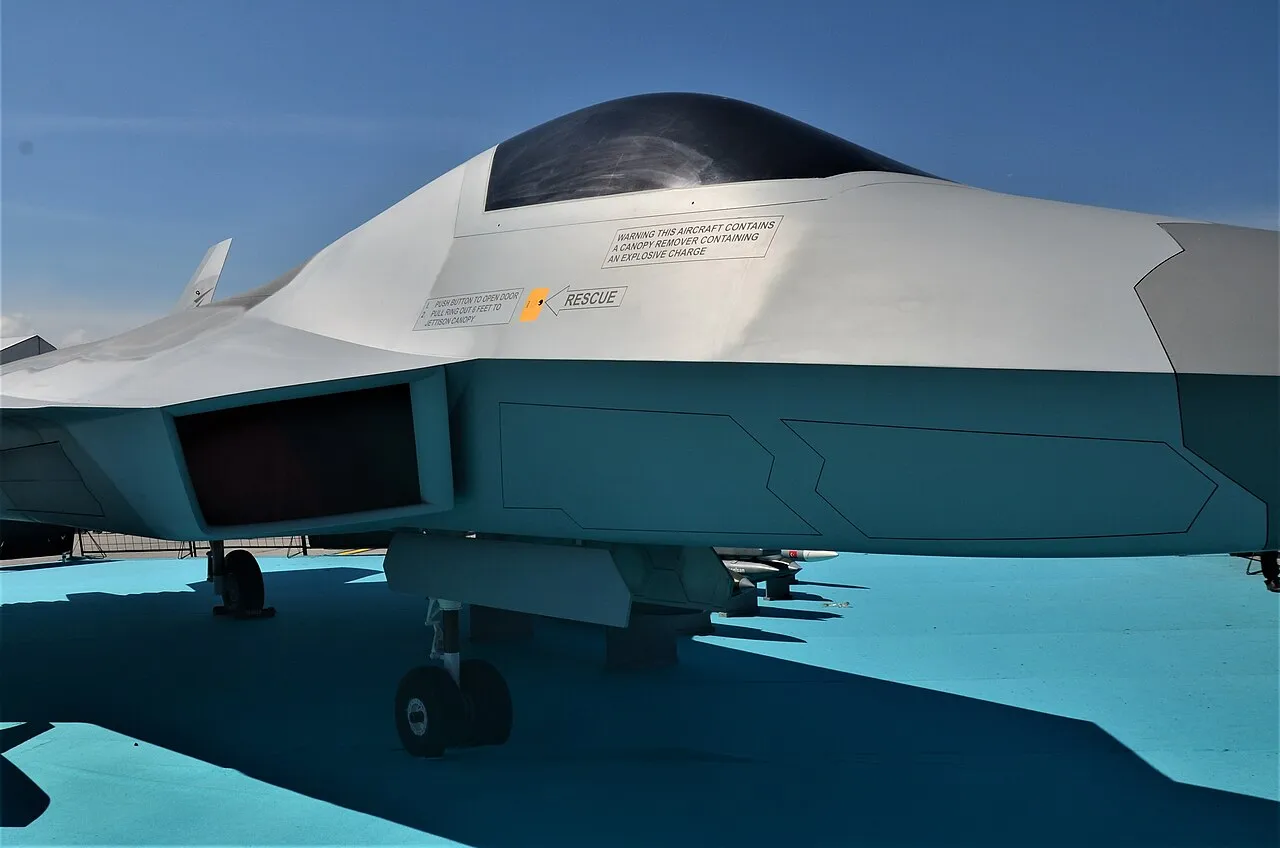
One development worth watching against this backdrop is Turkey’s next-generation KAAN fighter. According to TUSAŞ General Manager Dr. Mehmet Demiroğlu, serial-production deliveries originally targeted for 2028 may slip to 2029 given the program’s scale and ongoing test requirements. The initial Block 10/20 run is set to cover 20 to 40 aircraft powered by US-made F110 engines, ahead of the indigenous TF35000 engine expected around 2032 for full sixth-generation capability. With existing F-35 and F-16 backlogs already stretching years, a new line coming online — whatever its own schedule risk — adds incremental capacity to a global supply picture that currently has very little slack. For more on how the existing queue math works, see our related piece, “Order an F-35 Today: How Long Is the Real Wait?”
Comparison table: a queue, or nothing at all?
| Aircraft / Program | Status | Figure | Period |
|---|---|---|---|
| F-35 (Lockheed Martin) | Line open | 156/year output, 317-aircraft backlog (~2 years) | Q2 2026 |
| F-16 Block 70/72 | Line open, delayed | 119-aircraft backlog; Bulgaria’s 2nd batch slipped 2027→2030 | 2026 |
| Su-27 (Ukraine’s fleet) | Line closed | Never exported outside China; no spare airframes exist | Since 2022 |
| KAAN (TUSAŞ) | New line, pre-serial | First batch 20-40 aircraft (Block 10/20); 2028 target may slip to 2029 | 2028-2029 (planned) |
Note: figures are compiled from different manufacturer, government and press sources; order backlog, build rate and planned delivery dates are distinct concepts and should not be summed directly.
Bottom line
There is no single answer to how fast a lost fighter jet gets replaced. For an in-demand, currently produced type, the realistic range today is two to four years, and supply-chain trouble can stretch that further, as Bulgaria’s case shows. For a retired type, the honest answer is that it won’t be replaced at all — the gap gets filled, if at all, by a different and usually less capable platform. New lines such as KAAN represent additional capacity for the years ahead, even as their own schedules carry risk.
Frequently asked questions
How long would it take to replace a lost F-35?
There’s no fixed figure, but with a 317-aircraft backlog and annual output of 156 as of 2026, a new order enters a queue worth roughly two years. Actual wait time depends on contract priority.
What’s the wait time for a new F-16 Block 70?
The line carries a 119-aircraft backlog. Some customers wait one to two years; Bulgaria’s second batch slipped from an original 2027 date to the second quarter of 2030 due to production issues.
Can a retired aircraft type ever be replaced like-for-like?
No. As with Ukraine’s Su-27s, once a line closes and the type was never widely exported, no spare airframes exist anywhere to fill the gap — only a different platform can.
Why can’t fighters be mass-produced like in World War II?
Complexity has grown enormously. Willow Run built a B-24 every 63 minutes in 1944; in 2025 the three F-35 lines combined managed roughly one aircraft every 46 hours. CSIS puts current lead times for critical weapons systems at 25-51 months.
When will KAAN reach Turkey’s air force?
TUSAŞ has indicated the originally planned 2028 serial-production delivery date may slip to 2029, given program scale and testing. The first batch covers 20-40 F110-powered aircraft.
Sources
- Army Recognition, “U.S. Keeps F-35 Fighter Jet Production at 156 Aircraft as Global Demand Stays Strong”, 2026 — armyrecognition.com
- Defence-Industry.eu, “Lockheed Martin CEO Says F-16 Deliveries Resumed, With 119 Block 70/72 Fighters in Backlog”, 2026 — defence-industry.eu
- The Defense Post, “Bulgaria’s Second Batch of F-16 Block 70s Faces Delivery Delays Until 2030”, August 19, 2026 — thedefensepost.com
- Flight Global, “Taiwan F-16 Block 70 Deliveries Delayed Into 2027 Amid Lockheed Martin Production Issues” — flightglobal.com
- Military Watch Magazine, “Ukraine Loses Two of its Last Su-27 Fighters and a MiG-29 in New Air Battles”, September 15, 2024 — militarywatchmagazine.com
- MiGFlug, “WWII Aircraft Production vs Today: A Bomber an Hour” — migflug.com
- CSIS, Jerry McGinn and A.J. Dilts, “Is the Industrial Base on a Wartime Footing? A Progress Report”, July 6, 2026 — csis.org
- SavunmaSanayiST, “KAAN İçin Güncel Takvim Açıklandı” — savunmasanayist.com
Last updated: September 13, 2026