CIRIT vs APKWS vs DAGR: 70 mm Laser-Guided Rocket Rivals

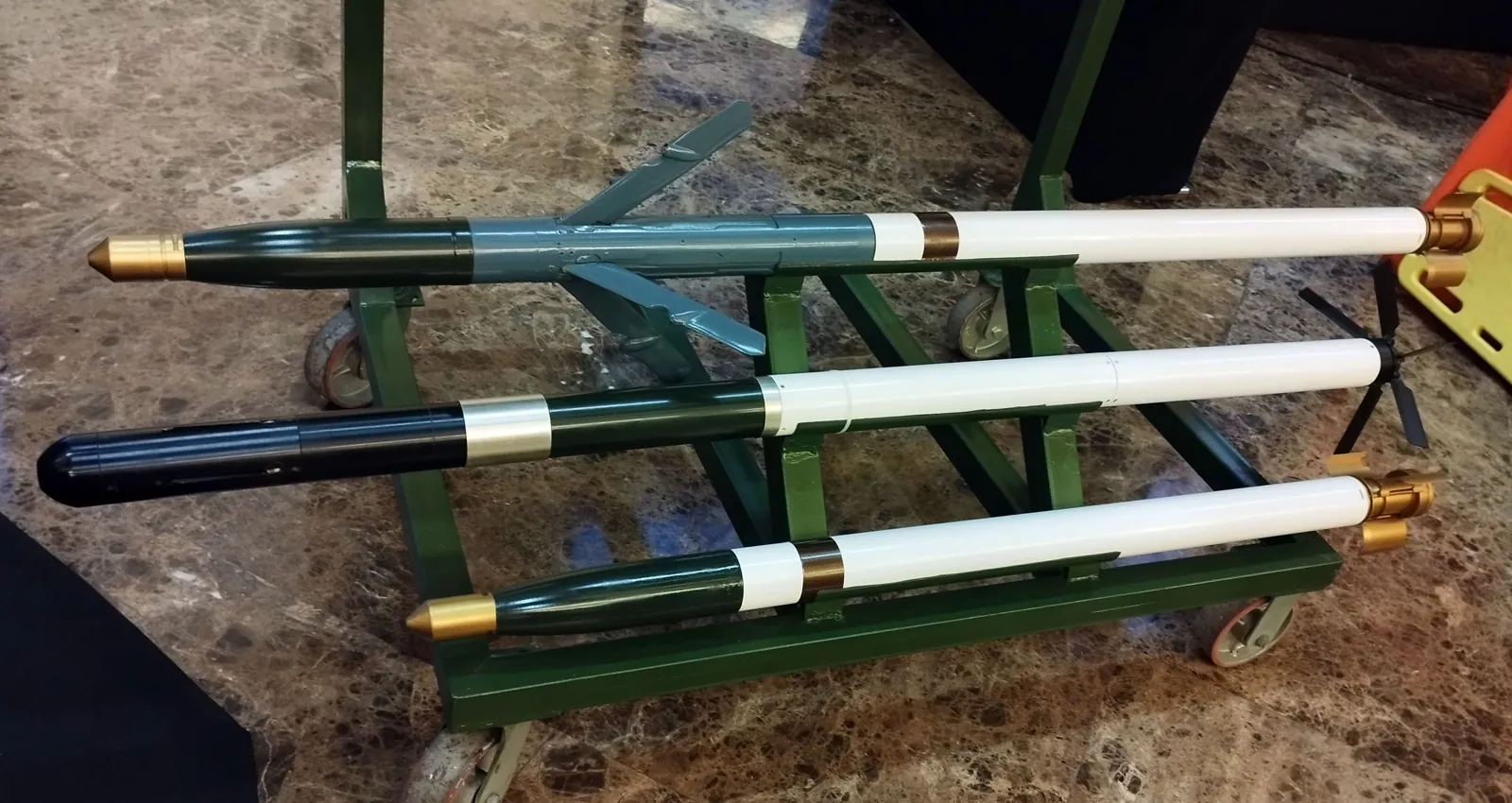
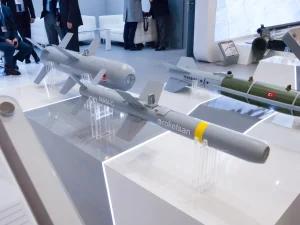
CIRIT, ROKETSAN’s 2.75-inch (70 mm) laser-guided missile, competes with two American systems: BAE Systems’ APKWS guidance kit and Lockheed Martin’s DAGR. The key difference is concept — CIRIT is a purpose-built missile, while APKWS converts existing Hydra-70 unguided rockets. With a range of 1.5-8 km, CIRIT sits at the top of its class; more than 5,000 rounds have been delivered and the weapon has been exported to over six countries.
| 70 mm Laser-Guided Class — At a Glance | |
|---|---|
| Class | 2.75-inch / 70 mm laser-guided rockets and missiles |
| Turkish contender | CIRIT (ROKETSAN) |
| US rivals | APKWS (BAE Systems), DAGR (Lockheed Martin) |
| CIRIT concept | Purpose-built guided missile |
| APKWS concept | Guidance kit fitted to Hydra-70 rockets |
| DAGR concept | 70 mm missile with Hellfire-compatible interface |
| Common guidance | Semi-active laser homing |
| Typical targets | Light armour, fortified positions, moving targets |
| CIRIT users | Turkish Armed Forces, UAE; exports incl. Albania, Bahrain, Bangladesh, Chad, Spain, Philippines (open sources) |
Why the 70 mm laser-guided class exists
For decades, 2.75-inch (70 mm) unguided rockets served as a cheap but inaccurate area weapon for helicopters and aircraft. At the other end of the spectrum, Hellfire-class anti-tank missiles offered precision at a price and weight that made them wasteful against light vehicles, bunkers or single insurgent positions. The counter-insurgency campaigns of the 2000s exposed this gap and created demand for a new category: low-cost precision weapons in the 70 mm class, guided by laser.
Three main products answered that demand. In the United States, BAE Systems developed APKWS (Advanced Precision Kill Weapon System), a guidance section that converts the enormous existing stockpile of Hydra-70 rockets into precision weapons. Lockheed Martin fielded DAGR (Direct Attack Guided Rocket), a 70 mm weapon designed to plug into Hellfire launch infrastructure. In Türkiye, ROKETSAN developed CIRIT from a clean sheet; series production began around 2011.
All three share the same basic engagement principle — semi-active laser homing, in which the munition steers towards laser energy reflected from a designated target. Where they differ sharply is design philosophy, and that difference drives their performance and cost trade-offs.
Purpose-built missile versus guidance kit
The fundamental split in this class is conceptual. APKWS is not a missile but a kit: the WGU-59/B guidance section is inserted between the motor and warhead of a standard Hydra-70 rocket, with laser seeker optics mounted on the control fins (the DASALS arrangement). This approach is remarkably cost-efficient for users sitting on large Hydra-70 inventories, but overall performance remains bounded by a rocket motor and airframe conceived in the 1970s.
CIRIT, by contrast, was designed end-to-end as a guided missile. Its low-smoke solid-propellant motor, aerodynamics and guidance architecture were optimised as a single package. The clearest result is range: CIRIT engages targets at 1.5 to 8 km, while APKWS’s typical rotary-wing envelope is roughly 1-5 km and DAGR sits in the ~1.5-5 km band. CIRIT’s 8 km ceiling lets the launch platform stay further outside the reach of short-range air defences and heavy machine guns around the target.
- CIRIT: purpose-built; 15 kg; INS/MEMS-IMU midcourse plus terminal semi-active laser (STANAG 3733); ~3 kg multi-purpose warhead.
- APKWS: Hydra-70 plus WGU-59/B guidance section; complete round around 15 kg with the M151 warhead; fin-mounted DASALS seeker.
- DAGR: purpose-designed 70 mm round of roughly 15-16 kg with plug-and-play compatibility with the Hellfire M299 launcher and digital interface.
DAGR’s distinguishing feature is that a Hellfire-capable platform can carry it with minimal integration work. Yet DAGR never won a large production order: the US military chose APKWS for this requirement, leaving Lockheed Martin’s rocket in limited production.
The table below compares the three weapons across the criteria that matter most. CIRIT figures come from ROKETSAN’s official releases; APKWS and DAGR figures are drawn from manufacturer literature and open sources, and some values vary with platform and firing profile.
Users, exports and market position
By sheer volume, APKWS dominates the class: led by the US Navy, tens of thousands of kits have been produced and sold to a long list of allied nations. The economics explain why — the United States and its partners hold vast Hydra-70 stockpiles that the kit converts into precision weapons at a fraction of a missile’s cost. APKWS is less a missile sale than an inventory-modernisation programme.
CIRIT is sold as a complete missile and has become one of Türkiye’s most widely exported guided munitions, with more than 5,000 rounds delivered. Beyond the Turkish Armed Forces and the United Arab Emirates, open sources record Albania, Bahrain, Bangladesh, Chad, Spain and the Philippines as customers. Spain’s choice is a notable reference: a NATO and EU member with full access to US alternatives selected the Turkish weapon in this class.
DAGR remains the cautionary tale of the segment. Technically mature and elegantly integrated with Hellfire infrastructure, it lost the decisive US procurement contest to the cheaper APKWS kit and never scaled. Its story shows that outcomes in this class are decided as much by inventory economics and procurement politics as by engineering.
Assessment: which weapon fits which scenario?
A fair reading is that the three weapons are optimised for different customers. An operator with deep Hydra-70 stocks and access to US supply chains gets unmatched value from APKWS. A Hellfire operator seeking minimal integration effort was DAGR’s intended customer. CIRIT stands out on two counts: the longest range in the class at 8 km, and supply-chain independence.
The range margin is operationally meaningful. A helicopter attacking with a 5 km-class weapon must press closer to the short-range air defences and heavy weapons that typically protect a target; CIRIT’s 8 km ceiling widens the stand-off buffer. On the supply side, CIRIT is not subject to US export-control approval, which has proved decisive for customers seeking precision weapons without ITAR dependencies — a legitimate advantage, though one that matters more to some buyers than others.
APKWS answers with scale and breadth: it is certified on fixed-wing fighters such as the F-16 and A-10, flies on more platform types than any rival, and has recently been tested in an air-to-air role against drones and cruise missiles. CIRIT’s fixed-wing integration so far centres on the Hürkuş light attack aircraft. In short: CIRIT leads on range and independence, APKWS on scale and platform diversity, DAGR on Hellfire commonality.
CIRIT figures (1.5-8 km range, 15 kg, 5,000+ deliveries) are based on ROKETSAN official statements. APKWS and DAGR figures are compiled from manufacturer literature and open sources (Janes, US Navy and Army publications); ranges vary with platform, altitude and firing profile. Export-customer lists rest on open-source reporting and should be treated with caution where contracts have not been officially confirmed. This page is an independent editorial comparison with no commercial ties to any manufacturer.
Frequently Asked Questions
What are CIRIT’s main rivals?
In the 70 mm laser-guided class, CIRIT’s main competitors are BAE Systems’ APKWS guidance kit and Lockheed Martin’s DAGR rocket. All three use semi-active laser homing.
What is the key difference between CIRIT and APKWS?
CIRIT is a purpose-built guided missile designed from scratch, while APKWS is a guidance kit inserted into existing Hydra-70 unguided rockets. CIRIT reaches 1.5-8 km, whereas APKWS’s typical rotary-wing range is about 1-5 km.
Does CIRIT outrange its competitors?
Within the class, yes: CIRIT’s 8 km maximum exceeds the roughly 5 km rotary-wing reach of both APKWS and DAGR, giving the launch platform a wider stand-off buffer. From fixed-wing jets, APKWS can achieve longer ranges.
Why did DAGR never enter large-scale production?
DAGR is technically mature and plugs directly into Hellfire launchers, but the US military selected the cheaper APKWS kit for its precision-rocket requirement, so DAGR remained in limited production without a major anchor order.
Which countries operate CIRIT?
The main users are the Turkish Armed Forces and the United Arab Emirates. Open sources also record Albania, Bahrain, Bangladesh, Chad, Spain and the Philippines as customers, with total deliveries exceeding 5,000 rounds.
What do all three weapons have in common?
All are 70 mm (2.75-inch) class weapons of roughly 15 kg using semi-active laser homing, built to give helicopters, aircraft and UAVs a low-cost precision option against light armour and point targets.
Sources
- ROKETSAN official — roketsan.com.tr
- BAE Systems APKWS product literature and US Navy releases
- Lockheed Martin DAGR product literature
- Open-source defence publications (Janes and trade-press compilations)
- Company and open-source records verified as of 23 July 2026