US Army Narrows Mid-Tier Interceptor Race to Two: Boeing-Anduril vs Lockheed Martin

At a Glance
- What happened: The US Army moved two bidders into Phase 2 — the demonstration phase — of the IFPC Increment 2 second interceptor competition.
- Who advanced: The Boeing-Anduril team and Lockheed Martin.
- Who was cut: Rafael Systems Global Sustainment, the US subsidiary of Israel’s Rafael.
- When: Boeing announced its selection on 9 September 2026; the Army confirmed Lockheed’s advance on 10 September.
- Target set: Low-flying supersonic cruise missiles, armed drones, and rocket, artillery and mortar fire.
- Money: The program’s first interceptor award (Dynetics plus RTX) carried a ceiling of up to $4.1 billion in late 2024.
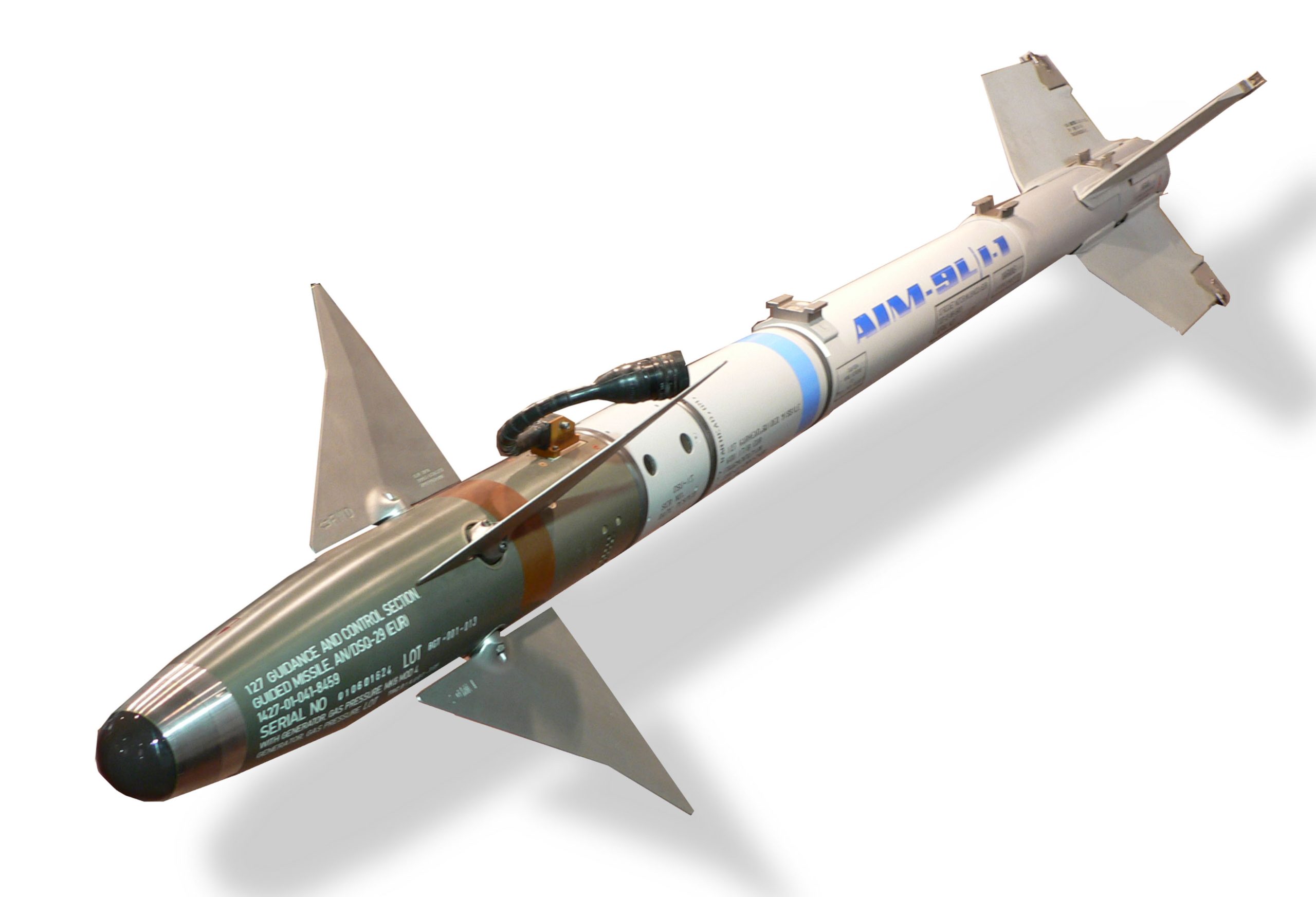
- The binding constraint: The new round must not exceed the AIM-9X form factor, so the launcher keeps its 18-round magazine depth.
- Why it travels: The cost-per-kill arithmetic driving this competition now shapes base air defense budgets across NATO.
Three bidders become two
The US Army has spent years trying to close a specific seam in its air defenses: the band between short-range systems built around Stingers and 30 mm cannon, and long-range systems such as Patriot and THAAD. That seam is where low-flying cruise missiles, swarming armed drones and indirect fire do the most damage. The program built to close it is called IFPC Increment 2, or Indirect Fire Protection Capability, Increment 2.
In the first half of September the Army finished culling the field for the program’s second — and deliberately more capable — interceptor. Boeing said on 9 September 2026 that its team with Anduril had been selected to continue. An Army spokesperson confirmed the following day that Lockheed Martin had also advanced. Together, those two selections mean Rafael Systems Global Sustainment, the US subsidiary of the Israeli manufacturer, is out of the running.
The pace has been brisk. Lockheed Martin took the opening phase in October 2025. The Boeing-Anduril team entered in December 2025. Rafael joined in February 2026. Inside a year, three bidders became two. The Army declined to go further, saying only that more information about the competitive effort would be released when appropriate; contract values and formal designations for either missile remain unpublished.
What comes next is where paper claims meet hardware. Phase 2 covers detailed design, system development, integration and — decisively — a competitive capability demonstration against the Army’s requirements. Both companies will have to shoot.
Today’s answer: Enduring Shield and a ground-launched Sidewinder
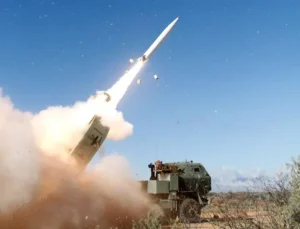
IFPC Increment 2 as it exists today rests on an award made in late 2024 with a ceiling of up to $4.1 billion. Two names sit inside it. Dynetics, a Leidos subsidiary, builds the palletized Enduring Shield launcher. RTX supplies a ground-launched version of the AIM-9X Sidewinder air-to-air missile.
Enduring Shield’s headline number is not range but magazine depth. The palletized launcher can carry up to 18 AIM-9X rounds, each in its own canister. In modern air defense that figure can matter more than radar reach: against cheap drones arriving in numbers, how many shots you hold says more than how good any single shot is.
The system is entering operational service now. But the Army is not satisfied with the AIM-9X in this role. Sidewinder is an infrared-guided, within-visual-range air-to-air weapon, and against supersonic cruise missiles hugging the deck it cannot engage early enough or reliably enough. That dissatisfaction is precisely why a second interceptor is being competed.
The real engineering problem: AMRAAM performance, Sidewinder dimensions
The Army’s requirement fits into two sentences that pull against each other. First: performance roughly comparable to the AIM-120D AMRAAM — active radar guidance, far greater reach, high-agility endgame. Second: stay within the AIM-9X form factor.
The second sentence exists to block the obvious response to the first, which is simply to build a bigger missile. Grow the round and the same pallet holds eight instead of eighteen — more than half the battery’s magazine depth gone. Senior US commanders have hammered this point over the past two years. Across the Red Sea, Ukraine and the Middle East, the limiting factor in sustained air defense engagements has rarely been interceptor quality. It has been running out.
So the assignment handed to both teams is a volumetric compression problem: fit an AMRAAM-class energy budget, boost profile and seeker into a Sidewinder-diameter tube. That means solving solid propellant density, seeker miniaturization, fin-folding mechanics and thermal management at once, and solving them together rather than in sequence.
A third requirement runs underneath, rarely quantified in public but present in every briefing: unit cost. Spending a several-hundred-thousand-dollar interceptor on a fifty-thousand-dollar drone is an equation the defender loses even while winning every engagement.
Lockheed Martin: Cuda lineage and PAC-3 pedigree
Lockheed Martin’s entry visually recalls Cuda, the compact interceptor concept the company floated in the 2010s — itself an answer to the same question this competition now asks: small body, high performance, many rounds per launcher. The company says it is combining mature technology with new development work.
Its deeper advantage comes from PAC-3 MSE. The PAC-3 family is among the most mature expressions of hit-to-kill interception, destroying a target by striking it rather than by detonating near it. For the new round Lockheed has signaled openness to both hit-to-kill and blast-fragmentation warheads — a hedge that makes sense as the threat set widens from cruise missiles to slow, small, low-signature drones.
Lockheed’s position is straightforward: a proven kill chain, a mature production base, and deep integration into the Army’s existing air and missile defense architecture. It is the low-risk half of this competition.
Boeing-Anduril: clean sheet, open architecture, mass production
The Boeing-Anduril approach is different in kind. Rather than adapt an existing missile, the team offers a clean-sheet design. The division of labor is clear: Boeing contributes seeker technology and a compact airframe, while the solid rocket motor comes from Anduril Rocket Motor Systems.
Two claims carry the design. The first is a modular open systems architecture, meaning the seeker, guidance software and warhead can be refreshed without redesigning the whole round. The second is cost and producibility, which the team frames not as a by-product but as the starting point of the design. A model was displayed at the 2026 Space and Missile Defense Symposium; renderings show a dual fin set.
Anduril’s presence signals something larger than one missile. US solid rocket motor production has long been concentrated in a very small number of suppliers, and that concentration became one of the most visible constraints on Western munitions output after 2022. Putting a new motor line into a live competition is a concrete step toward widening that bottleneck.
In other words, this is not only a contest between two missiles. It is a choice between a proven-performance school and a cheap-mass school — and the winner will set the price curve for Western base air defense for a decade.

The layers and the bidders, side by side
| Layer / bidder | System or missile | Prime | Defining feature |
|---|---|---|---|
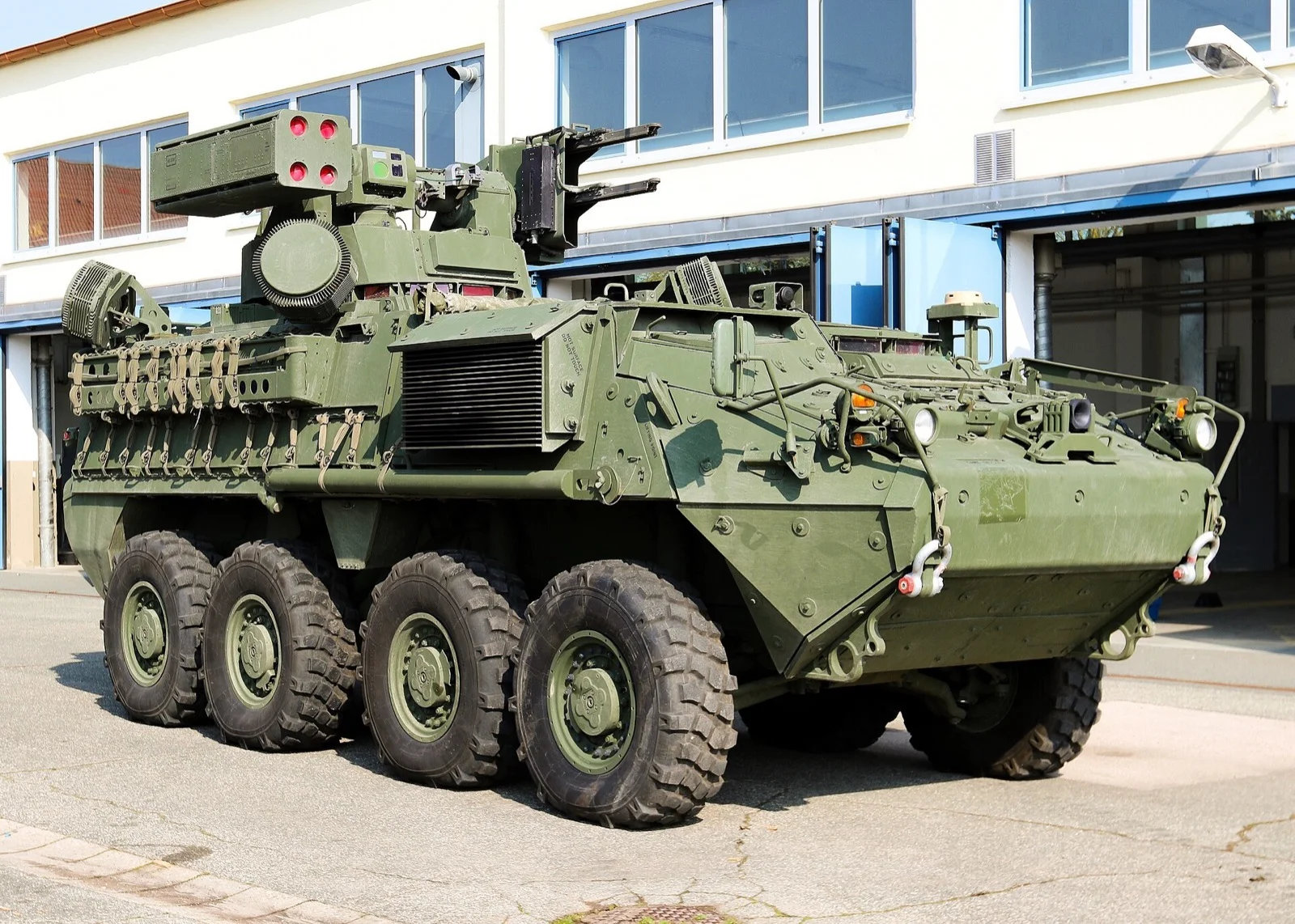
| Short range (SHORAD) | M-SHORAD (Sgt. Stout) | General Dynamics / RTX | 30 mm cannon plus Stinger on a Stryker hull |
| Mid tier — fielded | Enduring Shield plus ground-launched AIM-9X | Dynetics (Leidos) and RTX | Up to 18 rounds per palletized launcher; award ceiling $4.1bn |
| Mid tier — bidder 1 | Undesignated interceptor (Cuda-like) | Lockheed Martin | PAC-3 MSE lineage; hit-to-kill or blast-fragmentation |
| Mid tier — bidder 2 | Undesignated interceptor (clean sheet) | Boeing and Anduril | Boeing seeker, Anduril solid rocket motor; MOSA, mass production |
| Mid tier — eliminated | Offer undisclosed | Rafael (US subsidiary) | Not selected for Phase 2 |
| Long range | Patriot / THAAD | RTX / Lockheed Martin | Ballistic and high-altitude threats |
What IFPC Increment 2 actually is
Indirect Fire Protection Capability is the umbrella name for the US Army’s effort to protect fixed sites and forward operating bases. Increment 2 was scoped specifically against cruise missiles, unmanned aircraft, and rocket, artillery and mortar fire.
The architecture has three parts: sensors, a command-and-control layer, and shooters. On the shooter side today sits Enduring Shield with the ground-launched AIM-9X. The Army’s aim is to add a second, more capable round to the same launcher, broadening the threat set it can handle. The winner of this competition will not replace the fielded interceptor; it will sit beside it.
The program’s origins lie in a decade of rocket and drone attacks on US bases across the Middle East. Those attacks are repeatable because they are cheap; the defensive shots answering them are not repeatable because they are expensive. IFPC Increment 2 is the name given to reversing that asymmetry.
In the demonstration phase, both candidate rounds will be flown against representative threat profiles and target drones. The gap between a missile that performs on paper and one that intercepts a manoeuvring target is settled in exactly these shots.
Sidewinder: a seventy-year-old airframe with a new job
The ground-launched AIM-9X is, at bottom, an air-to-air missile repurposed for ground defense. The Sidewinder family was developed by the US Navy in the 1950s and became the global standard for infrared-guided air-to-air weapons. The AIM-9X variant adds thrust vector control, a high-resolution imaging infrared seeker and wide off-boresight lock-on.
Adapting it to ground launch was a decision about availability and cost: a large, mature, in-production stockpile was already there. But infrared guidance depends on the target’s heat signature, and at low altitude over warm ground in cluttered weather it reaches its limits. That is the technical case for moving to an actively radar-guided interceptor.
At the same time, the AIM-9X’s dimensions have become a fixed reference for the entire program. Requiring the new round to respect that envelope protects magazine depth — and it also avoids rewriting the launcher, the canister and the logistics chain that already exist around it.
An architecture problem others have already framed differently
The seam the US Army is competing to close is a universal one, and not everyone has approached it as a standalone competition. Turkey, for instance, built its layers as a single family from the outset: SUNGUR and HISAR-A+ at low altitude, HISAR-O+ in the middle band, SIPER at long range, with the KORKUT 35 mm gun system and the GOKBERK laser holding the cheap end of the cost curve. The CELIKKUBBE architecture ties those elements into one command-and-control network.
The supply chain point Anduril’s entry underlines is equally transferable. Solid rocket motors and seekers are the two classic chokepoints in any missile program; where they are produced domestically, a competition does not have to be used as a mechanism for widening them.
Whichever round wins, its unit cost, production rate and rounds-per-launcher figure will become a reference point for NATO base defense investment. European states now writing emergency budgets against drone and cruise missile threats have good reason to watch the outcome closely.

What happens next
Neither the demonstration schedule nor the contract values have been made public. The Army says details will follow when appropriate. The expected sequence has both companies completing detailed design, building prototypes and entering a competitive live-fire demonstration.
The outcome will produce more than a procurement decision. Unit cost, production throughput and magazine depth per launcher are the numbers allied planners will copy into their own requirements documents — which is why a mid-tier interceptor competition is being read well beyond the US Army.
Sources
- Breaking Defense — Army selects Lockheed, Boeing-Anduril team for next phase in IFPC Inc 2 competition
- Anduril — Boeing and Anduril’s Midrange Interceptor Advances in U.S. Army Competition
- Defense Daily — Army Confirms Lockheed Also Advances To Demo Phase Of IFPC Inc. 2 Second Interceptor Competition
- The War Zone — One Of These Missiles Is Set To Be The Army’s Next Mid-Tier Anti-Air Interceptor
- Army Recognition — U.S. Army Advances Boeing-Anduril Mid-Tier Interceptor to Counter Cruise Missiles and Drones