CIRIT Missile: ROKETSAN’s 2.75-inch Laser-Guided Rocket

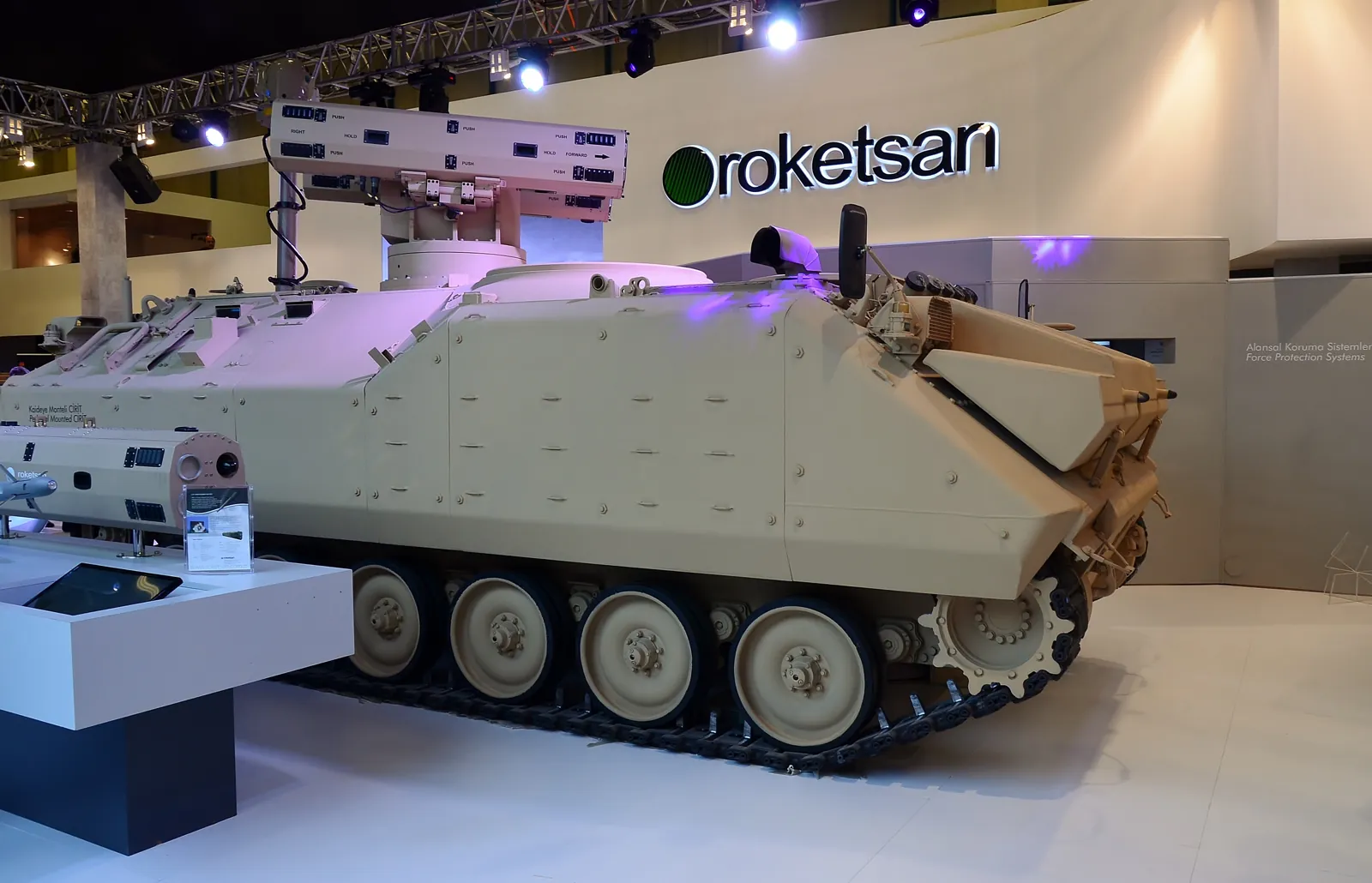
CIRIT is a 2.75-inch (70 mm) laser-guided missile developed by ROKETSAN. It has a range of 1.5-8 km, weighs about 15 kg and measures 1.9 m in length. Using semi-active laser guidance, it delivers precision strikes against lightly armored and moving targets and is launched from the T129 ATAK, Cobra helicopters and unmanned aircraft. Serial production began around 2011, with more than 5,000 rounds delivered.
| CIRIT — At a Glance | |
|---|---|
| Category | Laser-guided missile (2.75 in / 70 mm) |
| Developer | ROKETSAN |
| Serial production | ~2011 (5,000+ delivered) |
| Range | 1.5-8 km |
| Weight | 15 kg |
| Length / caliber | 1.9 m / 70 mm |
| Warhead | ~3 kg multi-purpose / HE |
| Guidance | INS/MEMS-IMU + terminal semi-active laser (STANAG 3733) |
| Propulsion | Low-smoke solid propellant |
| Platform | T129 ATAK, Cobra/Super Cobra, UAV, Hurkus, land/sea |
| Operators | Turkish Armed Forces, UAE and export customers |
What is CIRIT?
CIRIT is a system born from the need to turn ROKETSAN’s standard 2.75-inch (70 mm) unguided rockets into a precision laser-guided missile. The classic 2.75-inch rocket has been salvo-fired from helicopters and aircraft for decades, but its accuracy was limited. CIRIT adds a semi-active laser seeker and inertial guidance to this caliber, enabling single-shot precision strikes against moving and lightly armored targets.
Named after the traditional Turkish cavalry javelin sport, the missile fills the gap between the unguided 2.75-inch rocket and heavy anti-tank missiles. A Hellfire-class missile is far heavier and more expensive than CIRIT, while an unguided rocket is cheap but imprecise. At 15 kg and medium range, CIRIT offers a cost-effective middle option between these two extremes, letting a single platform carry many precision rounds within the same payload capacity.
Serial production began around 2011, and more than 5,000 missiles have since been delivered. CIRIT is widely fielded by the Turkish Armed Forces and has become one of ROKETSAN’s most-produced and most-exported guided munitions.
Technical specifications and how it works
CIRIT’s operating principle relies on semi-active laser guidance. The target is illuminated by a laser designator, either on the launch platform or externally; the seeker in the missile’s nose detects the reflected laser energy and steers the missile onto that point. After launch, an INS/MEMS-IMU inertial unit governs the initial cruise phase, and the laser seeker locks on during the terminal phase. Guidance conforms to NATO’s STANAG 3733 laser coding standard, ensuring interoperability with allied designators and different platforms.
The missile’s range spans 1.5 to 8 km. (The “15-8” figure on ROKETSAN’s official page is a typo; the correct lower bound is 1.5 km.) The lower limit reflects the minimum stand-off needed for safe launch and seeker lock, while the upper limit is the maximum effective laser-illumination distance. This range covers most mission profiles of attack helicopters and UAVs.
- Warhead: About 3 kg multi-purpose / high-explosive (HE); effective against lightly armored vehicles, positions and personnel.
- Propulsion: Low-smoke solid rocket motor, reducing the chance the launch position is detected.
- Dimensions: 1.9 m length, 70 mm caliber, 15 kg weight — compatible with standard 2.75-inch launcher infrastructure.
- Guidance: Inertial cruise plus terminal semi-active laser, operating on a lock-on-after-launch logic.
CIRIT’s compatibility with the 2.75-inch caliber means existing rocket launcher pods can be modified and reused. This is a significant advantage both for leveraging legacy infrastructure and for packing many precision rounds onto a single platform.
CIRIT sits in the international 2.75-inch laser-guided missile class. The best-known equivalents in this class are the U.S.-origin APKWS and DAGR systems. The table below compares CIRIT with these rivals at class level; because exact performance figures are disclosed differently by each manufacturer, the comparison is intended at the class/role level.
Platforms, operators and exports
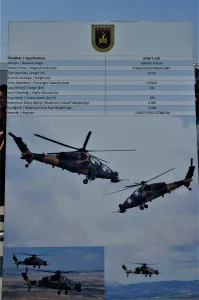
CIRIT is designed for integration across a broad range of platforms. Its primary air platform is the T129 ATAK attack helicopter; it can also be fired from Cobra / Super Cobra (AH-1) helicopters, various unmanned aircraft and the Hurkus armed trainer / light-attack aircraft. Beyond air platforms, the system can be adapted to land and naval mounts, letting a single munition family serve different force elements.
The main operator is the Turkish Armed Forces. Another state operator is the United Arab Emirates. According to open sources, CIRIT export customers include Albania, Bahrain, Bangladesh, Chad, Spain and the Philippines. Total deliveries have exceeded 5,000 rounds, indicating strong acceptance both domestically and abroad.
By the nature of defense exports, the quantities and configurations sold to each country are rarely detailed publicly. The country list above is based on open sources; contract sizes and delivery schedules should be treated with caution where not officially confirmed.
Role in the Turkish defense industry and advantages
CIRIT is one of the flagship products of Turkey’s indigenous precision-guided munition capability. By bringing laser guidance to the 2.75-inch class, it raised the per-round probability of hit while reducing collateral damage. Being far more precise than unguided rockets yet far more economical than heavy anti-tank missiles makes it a preferred option in both asymmetric and conventional scenarios.
Its clearest advantages are: compatibility with widespread 2.75-inch launcher infrastructure, a low-cost / high-accuracy balance, integration flexibility across many platforms, and STANAG 3733 guidance compatible with allied designators. More than 5,000 deliveries and numerous export customers show a mature, combat-proven system.
In terms of limitations, CIRIT depends on semi-active laser guidance, which requires the target to be laser-illuminated throughout the engagement. Heavy dust, smoke or adverse weather can reduce laser guidance effectiveness. Its ~3 kg warhead is optimized against lightly armored and moving targets rather than heavily protected ones such as the frontal armor of main battle tanks. For those missions, ROKETSAN offers heavy anti-tank missiles such as the tandem-HEAT UMTAS/L-UMTAS as a separate family.
CIRIT’s class (2.75-inch laser-guided), range (1.5-8 km), weight (15 kg) and delivery count (5,000+) are based on official and open sources. The “15-8 km” figure on ROKETSAN’s official page is a typo; the correct lower range bound is 1.5 km. Export countries (Albania, Bahrain, Bangladesh, Chad, Spain, Philippines) are based on open sources; contract details should be treated with caution where not officially disclosed.
Frequently Asked Questions
What is the range of the CIRIT missile?
CIRIT’s range is 1.5 to 8 km. The “15-8” figure seen on ROKETSAN’s official page is a typo; the correct lower bound is 1.5 km.
From which platforms is CIRIT launched?
The primary platform is the T129 ATAK attack helicopter. It can also be fired from Cobra/Super Cobra helicopters, unmanned aircraft, the Hurkus armed trainer, and land and naval platforms.
How is CIRIT guided?
CIRIT uses an INS/MEMS-IMU inertial unit in the initial cruise phase and a semi-active laser seeker in the terminal phase. The target is laser-illuminated and the missile homes on the reflected energy. Guidance conforms to NATO STANAG 3733.
What are CIRIT’s equivalents?
CIRIT belongs to the 2.75-inch laser-guided missile class. Its best-known equivalents are the U.S.-origin APKWS (AGR-20) and DAGR systems.
Which countries have imported CIRIT?
According to open sources, CIRIT export customers include Albania, Bahrain, Bangladesh, Chad, Spain and the Philippines. The main operators are the Turkish Armed Forces and the United Arab Emirates.
When did CIRIT enter service and how many were produced?
CIRIT entered serial production around 2011. More than 5,000 missiles have been delivered to date, making it one of ROKETSAN’s most-produced guided munitions.
Sources
- ROKETSAN official — roketsan.com.tr
- STANAG 3733 laser guidance coding standard (NATO)
- Open-source defense publications and export records (Janes, defense-news compilations)
- Company and open-source records, verified as of 22 July 2026