ROKETSAN Suppliers: 106 Strategic Partners and the Ecosystem

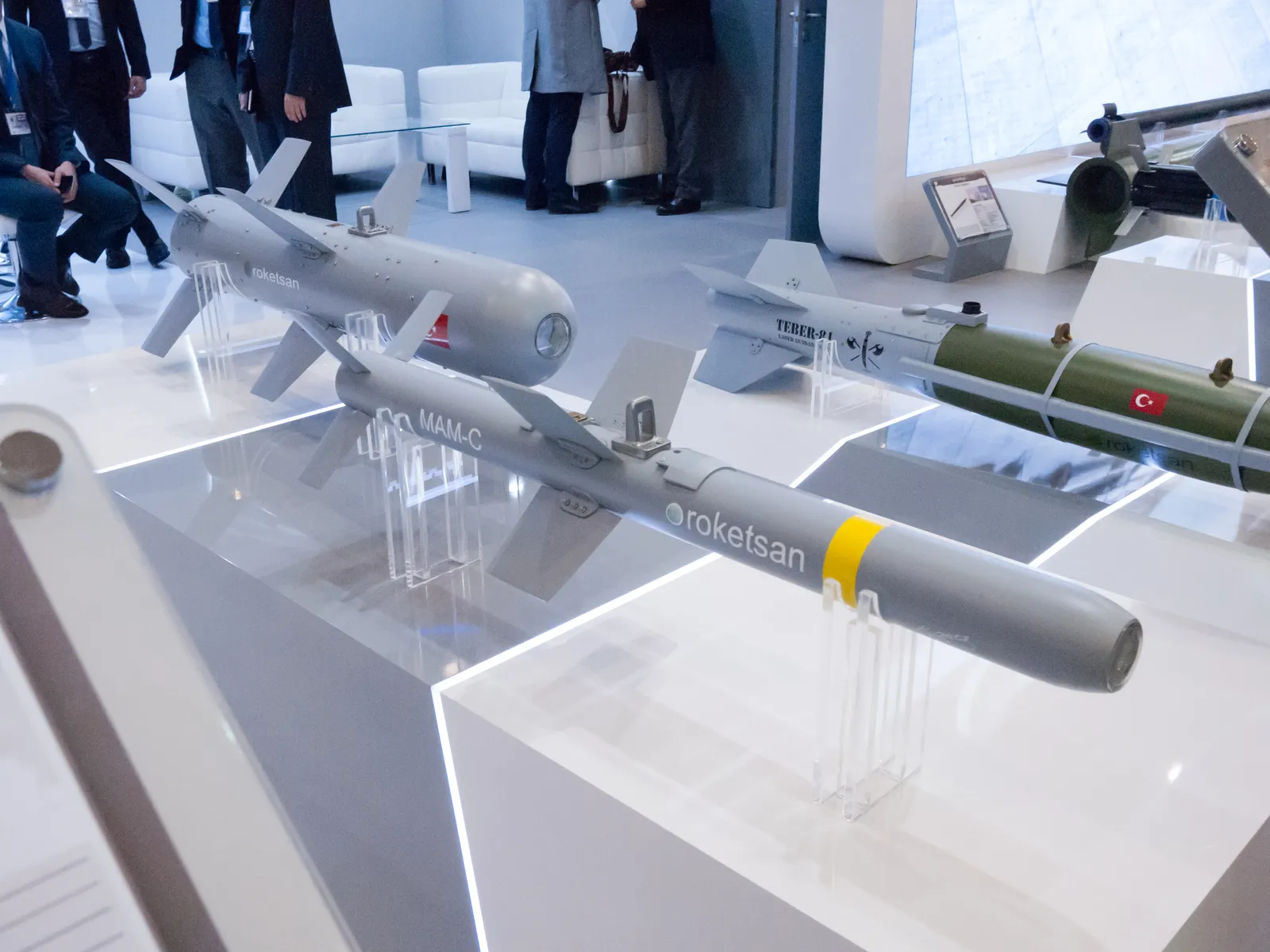
As of April 2026, 106 business partner firms are enrolled in ROKETSAN’s Strategic Supplier Management Programme. The company procured 665 million dollars of products through these partners in 2024, a figure that approached 1 billion dollars in 2025, and partners now account for roughly half of ROKETSAN’s total purchasing. Domestic and national sourcing in production stands at 92 percent.
| ROKETSAN Supply Chain at a Glance | |
|---|---|
| Programme | Strategic Supplier Management Programme |
| Partnership tiers | Strategic · tactical · operational |
| Firms in the programme | 106 (April 2026); 88 (February 2025); 45 (September 2023) |
| Ecosystem breadth | More than 250 supplier firms attend the summits |
| 2024 procurement (business partners) | 665 million $ |
| 2025 procurement (business partners) | Close to 1 billion $ |
| Local content | 92 percent domestic and national sourcing |
| Application channel | Supply Chain Portal — candidate supplier application |
| Portal launched | 14 November 2018 |
| Quality framework | ISO 9001, AS 9100, AQAP 2110, AQAP 2310, ISO 27001 and others |
| Largest disclosed supply contract | ASELSAN — €1.234 billion (KAP filing, 23 September 2026) |
Who are ROKETSAN’s suppliers?
ROKETSAN designs and builds its missile and rocket systems under one roof, but a large share of what goes inside them, from mechanical parts and composite airframes to electronic boards, cable harnesses, precision-machined components and specialised materials, is bought from domestic supply industry firms. The company’s supplier base is therefore managed not as a published catalogue of named vendors but as a tiered ecosystem.
That base can be divided into three broad groups:
- Prime-industry suppliers: large organisations such as ASELSAN and MKE. Each of the two also holds 15 percent of ROKETSAN, so they act as both shareholder and supplier.
- Strategic business partners: the core group certified under the Strategic Supplier Management Programme, which reached 106 firms as of April 2026.
- The wider supply industry: a broad, SME-heavy pool, with more than 250 firms attending the partner summits. ROKETSAN does not publish the names of these firms individually.
Because no firm-by-firm list of the programme is published, this article relies on figures, volumes and process data; company names are limited to those confirmed by official announcements or stock exchange filings.
How does the Strategic Supplier Management Programme work?
ROKETSAN set up the Strategic Supplier Management Programme to move supplier relations away from one-off purchase orders and towards long-term partnership. The programme ranks firms on three tiers, strategic, tactical and operational; the higher the tier, the greater a firm’s business volume, technology responsibility and involvement in planning.
The visible side of the programme is the Strategic Business Partners Summit, held every two years. The first took place on 21 September 2023, when 45 firms were designated strategic business partners at different tiers. At the second summit in February 2025, 63 firms received partnership certificates, the programme total rose to 88 and 25 firms received a Stakeholder Seniority Award. At the third summit, held in Ankara on 1 April 2026, the company announced that the number of business partners had risen from 88 to 106.
The summit agenda goes beyond the usual supply chain topics to cover digitalisation, sustainability, risk management, innovation and the localisation of critical components. Chairman Prof. Dr. Faruk Yigit stresses that in a field such as defence, which shapes national independence, lasting success is only possible with a strong industrial ecosystem.
The growth in supplier numbers shows up directly in the purchasing budget. The table below brings together the procurement volume ROKETSAN channels through its business partners and its local content indicators.
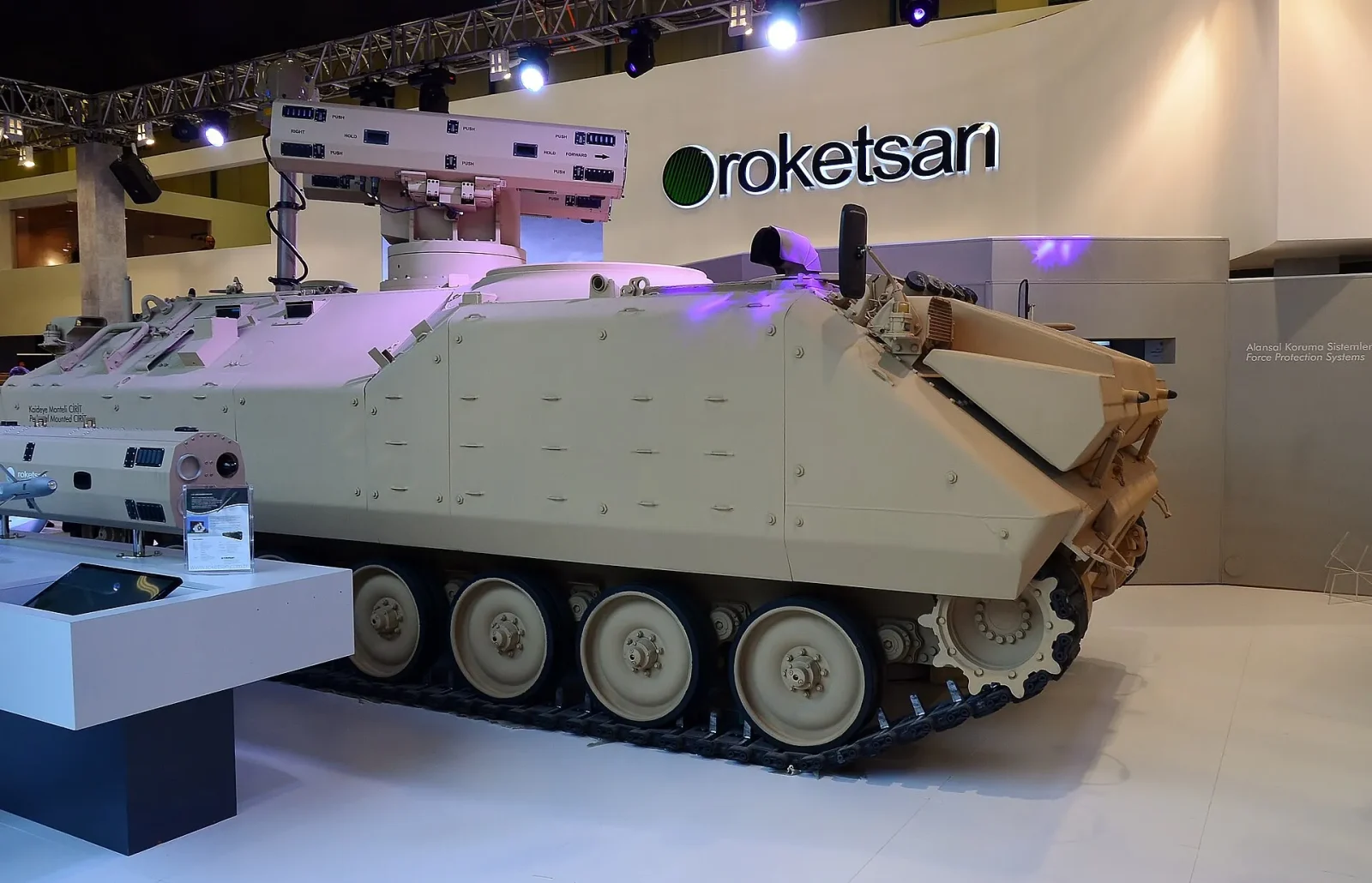
ASELSAN: ROKETSAN’s largest publicly disclosed supplier
Most of ROKETSAN’s supplier relationships stay out of public view for reasons of commercial confidentiality. The exception is the disclosure obligation of listed companies, and the largest item confirmed this way belongs to ASELSAN. In a KAP filing dated 23 September 2026, ASELSAN announced a contract with ROKETSAN for the supply of sub-components for air defence systems, with a total value of 1,234,210,000 euros.
The direction of the contract matters: ROKETSAN is the customer and ASELSAN the supplier. Radar, electro-optical systems, seekers and fire control elements sit on the ASELSAN side, while the missile, motor and warhead remain with ROKETSAN. Because ASELSAN also holds 15 percent of ROKETSAN, the relationship runs on three layers at once: shareholding, supply and the Strategic Cooperation Agreement signed on 12 March 2008.
On the ammunition and propellant side MKE plays a central role, while in fuze technology the decisive capability is the one inherited from Tapasan, which merged into ROKETSAN in 2012. The goal of reducing foreign dependence in critical sub-components has made domestic production capability a core criterion in how ROKETSAN selects its suppliers.
What does capacity expansion mean for suppliers?
ROKETSAN’s plan to multiply its missile production capacity by bringing the Lalahan Missile Integration and Kirikkale Propellant Production facilities on line alongside its Elmadag campus generates demand that flows straight into the supply industry. An investment in facilities exceeding 1 billion dollars expands not only ROKETSAN’s own lines but also the order books of the hundreds of firms that feed them.
General Manager Murat Ikinci says production capacity will rise sharply in the coming period, not only for the TAYFUN ballistic missile and the SOM cruise missile but across all systems including ATMACA, SIPER and HISAR. In long-range air defence, development of SIPER-2 is continuing, with serial production as the target.
The 92 percent domestic and national sourcing rate adds a second advantage: delays and constraints in global supply chains affect ROKETSAN less than many of its competitors, because most critical components are sourced at home.
Quality certifications and requirements for suppliers
ROKETSAN’s own quality framework sets the benchmark it expects from suppliers. The company operates a management system certified to ISO 9001 (quality), AS 9100 (aerospace quality management), AQAP 2110 and AQAP 2310 (NATO quality assurance), ISO 14001, ISO 45001, ISO 27001 and ISO 50001.
In practice, candidate suppliers are expected to meet the following:
- Quality management certification: AS 9100 on top of ISO 9001 for firms making aerospace and defence parts, and AQAP compliance for work that touches the NATO supply chain.
- Traceability and configuration control: the ability to track each part’s production history, material certificates and process records.
- Information security: a facility security clearance and information security discipline in order to work on classified projects.
- Capacity and continuity: capacity to keep pace with the rising production plan, measurable delivery performance and sustainability.
Certification is not the end of the relationship: the programme’s tier structure allows firms to move up according to performance, and the seniority awards presented at the summits give visibility to long-standing cooperation.
How to become a ROKETSAN supplier
The process runs through ROKETSAN’s Supply Chain Portal. The company launched its supplier portal on 14 November 2018 to move supplier interaction onto a digital platform. Company information and documents are recorded through the portal, and purchase orders, quality procedures, invoices and payment information are all tracked on the same platform.
Candidate suppliers reach the Supply Chain Portal via roketsan.com.tr and open the application form through the Candidate Supplier Application step. The form asks for company details, contact information, fields of activity, ownership structure, certifications held and references. Support is provided through the portal’s own e-mail address.
Completing the application gives a firm candidate supplier status; approved supplier status, and later strategic business partner status, are earned after audit and performance assessment. The table below sets out the process step by step.
ROKETSAN does not publish a complete firm-by-firm list of its suppliers; the figures in this article are based on ROKETSAN’s official announcements, statements made at the Strategic Business Partnership Summits and stock exchange filings. Details of supplier selection criteria, the duration of audit processes, the distribution of firms across tiers and the number of firms certified at the third summit have not been officially disclosed. This article will be updated when new public data becomes available.
Frequently Asked Questions
How many suppliers does ROKETSAN have?
The number of business partners in the Strategic Supplier Management Programme stood at 106 as of April 2026, up from 88 in February 2025 and 45 in September 2023. The wider supply industry base outside the programme is larger: more than 250 supplier firms attend the summits. The total number of suppliers has not been officially disclosed.
How do you become a ROKETSAN supplier?
Applications are made through the Candidate Supplier Application step on the Supply Chain Portal, reached via roketsan.com.tr. The form asks for company details, contacts, fields of activity, ownership structure, certifications held and references. Firms that complete the subsequent assessment and audit stages are added to the approved supplier list.
Which company is ROKETSAN’s largest supplier?
The largest single publicly disclosed contract belongs to ASELSAN. In a KAP filing dated 23 September 2026, ASELSAN announced a contract with ROKETSAN worth 1,234,210,000 euros for the supply of sub-components for air defence systems. ASELSAN is also a shareholder holding 15 percent of ROKETSAN.
What certifications does ROKETSAN require from suppliers?
ROKETSAN’s own management system is certified to ISO 9001, AS 9100, AQAP 2110, AQAP 2310, ISO 14001, ISO 45001, ISO 27001 and ISO 50001. Candidate suppliers making aerospace and defence parts are expected to hold AS 9100 on top of ISO 9001, to ensure traceability and configuration control, and to hold a facility security clearance for classified work. The full list of documents is set by contract on a project basis.
What is ROKETSAN’s local content rate?
According to General Manager Murat Ikinci’s statement in April 2026, domestic and national sourcing in ROKETSAN’s production stands at 92 percent. This rate means disruptions in global supply chains affect the company less than many of its competitors.
How much does ROKETSAN buy through its business partners?
The value of products procured through business partners was 665 million dollars in 2024 and close to 1 billion dollars in 2025. Business partners account for approximately 50 percent of ROKETSAN’s total purchasing volume.
Sources
- ROKETSAN, Roketsan Continues to Grow Together With Its Business Partners, second Strategic Business Partners Summit, February 2025: roketsan.com.tr
- ROKETSAN, Moving Confidently Into the Future With Our Strategic Partners, first summit, 21 September 2023, 45 firms: roketsan.com.tr
- ROKETSAN, Supplier Portal Launched, 14 November 2018: roketsan.com.tr
- ROKETSAN, Our Policies and management system certifications (ISO 9001, AS 9100, AQAP 2110/2310): roketsan.com.tr
- ROKETSAN, Supply Chain Portal and candidate supplier application guide: tedarikzinciriportali.roketsan.com.tr
- Anadolu Agency, Capacity Expansion Messages at ROKETSAN’s Strategic Business Partnership Summit, 1 April 2026 (88 to 106 firms, 665 million $ and 1 billion $ procurement, 92 percent local content): aa.com.tr
- Dunya / KAP, ASELSAN’s 1,234,210,000 euro sub-component contract with ROKETSAN, 23 September 2026: dunya.com