The World’s 10 Biggest Defence Budgets in 2026

A defence budget says more about a country’s future than its current inventory ever could. Tank counts and aircraft totals are a snapshot; the budget is the only number that tells you what that snapshot will look like a decade from now. Next-generation fighter programmes, submarine build lines, layered air defence and unmanned fleets all draw from the same account.
2026 is shaping up as one of the steepest spending cycles since the end of the Cold War. Europe is rebuilding stockpiles emptied by the war in Ukraine. In the Indo-Pacific, the pace of Chinese naval construction is pulling every neighbour along with it. In the Gulf, oil revenue is being routed back into domestic defence industry.
So which ten countries spend the most on defence in 2026? How many of them are European, how far has Asia climbed — and where exactly does Türkiye sit in this table? The countdown starts at number ten.
The ranking below draws on GlobalFirepower’s 2026 dataset. The figures reflect announced annual allocations and are not adjusted for purchasing power parity — a dollar buys very different things in Moscow and in Washington.
#10Australia
Defence budget · Indo-Pacific

For a country of just over 27 million people, Australia carries a strikingly large defence budget. The reason is geography. As an island continent, Canberra’s defence problem is not a land border but sea and air approaches, which is why the bulk of the money flows to the navy and the air force rather than the army.
The spine of the budget is AUKUS. Under the trilateral pact with Washington and London, Australia is preparing to become the first non-nuclear-weapon state to operate nuclear-powered attack submarines. The decades-long cost of that programme alone guarantees the budget stays elevated. Alongside it sit a completed F-35A fleet, the Hunter-class frigate programme and a land force acquiring long-range artillery and missile reach for the first time.
The land inventory looks small against all that money: 46 tanks and just under 59,000 active personnel. But Canberra is not buying a land war. It is buying deterrence across vast maritime distances, and its doctrine assumes it will fight alongside the United States rather than alone.
Australia spends only $650 million less than Japan — yet funds a fraction of the Japanese inventory with it.
| Capability | Total |
|---|---|
| Defence budget | $57.35 bn |
| Active personnel | 58,910 |
| Tanks | 46 |
| Total aircraft | 348 |
| Naval vessels | 45 |
One place higher sits an Asian power sustaining a far larger force on almost the same money.
#9Japan
Defence budget · East Asia
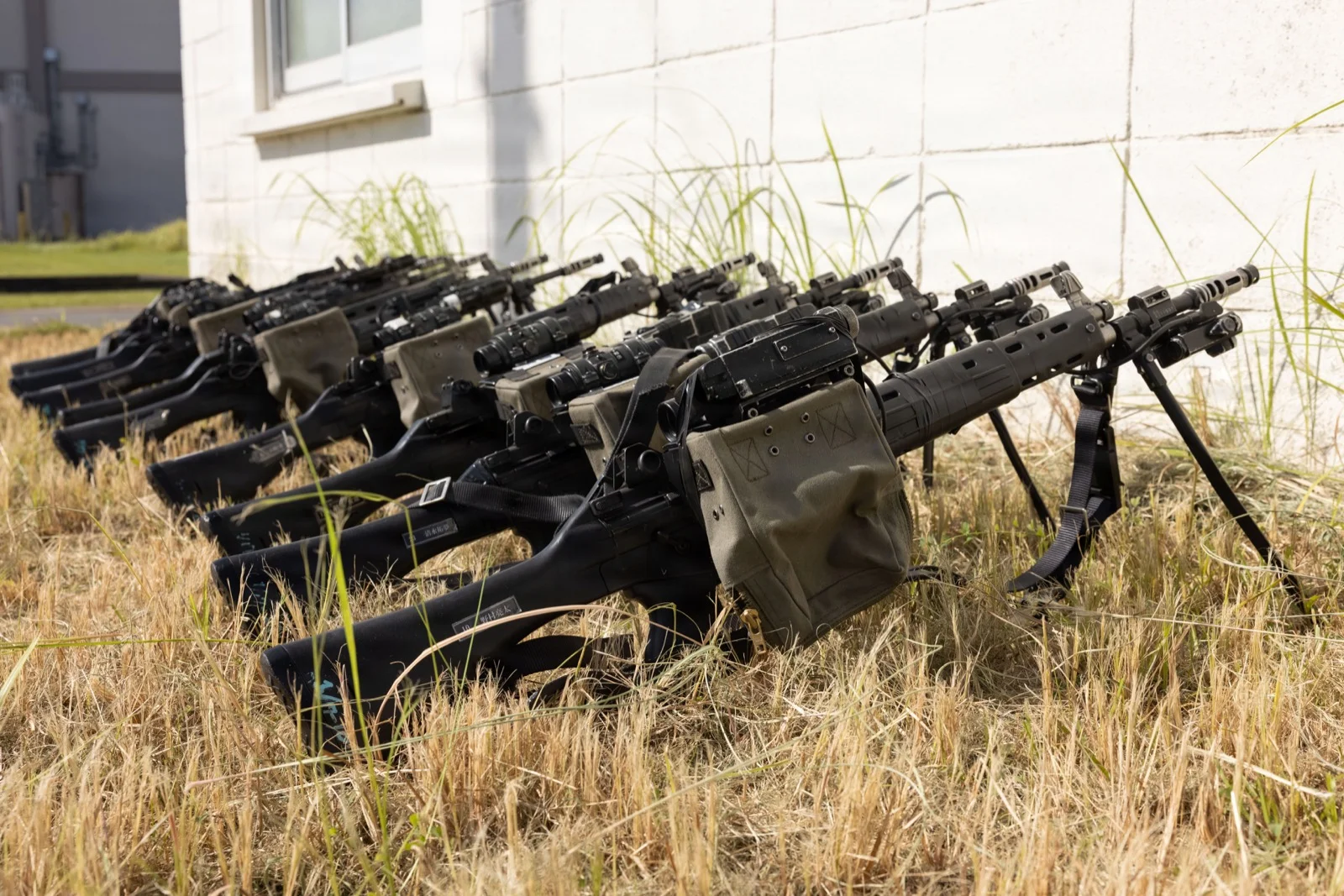
Japan’s defence budget marks the sharpest break with its own post-war history. The informal ceiling that held spending near one per cent of GDP for decades has effectively been abandoned, and Tokyo has committed to a two per cent target. In an economy of Japan’s size, that is a very large sum of money.
Where it goes matters as much as how much it is. Japan is now buying counter-strike capability, not only defence: Tomahawk cruise missiles, an extended-range version of the indigenous Type 12 and an active hypersonic research line. At sea, the Maya-class Aegis destroyers and the conversion of the Izumo-class helicopter carriers to operate the F-35B dominate the acquisition list.
An inventory of 1,429 aircraft and 158 naval vessels reflects decades of accumulated spending, and Japan still operates one of the world’s most capable conventional submarine fleets. Chinese activity in the East China Sea and North Korean missile testing explain why this budget has stopped being domestically controversial.
Japan outspends Australia by barely one per cent, yet flies four times as many aircraft and sails more than three times as many warships.
| Capability | Total |
|---|---|
| Defence budget | $58.00 bn |
| Active personnel | 251,500 |
| Tanks | 734 |
| Total aircraft | 1,429 |
| Naval vessels | 158 |
The next country shapes its budget around an entirely different threat map.
#8Saudi Arabia
Defence budget · Gulf
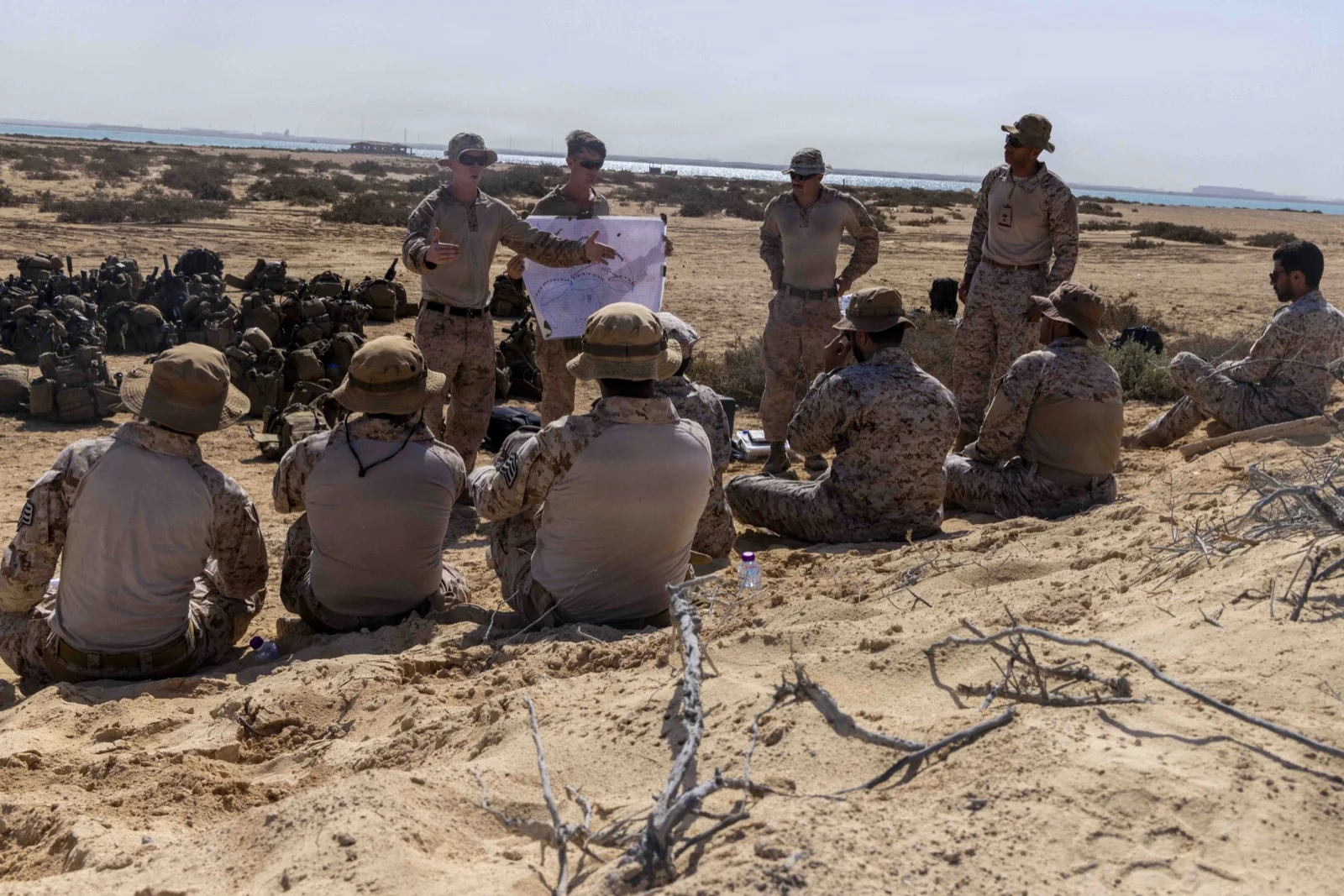
Measured against national income, Saudi Arabia remains one of the heaviest defence spenders on earth. Two concerns have shaped Riyadh’s budget for years: regional competition with Iran and security along the Yemeni frontier. Together they have tilted spending heavily toward air power and air defence.
An inventory of 917 aircraft, including 283 fighters, puts the kingdom in a tier only a handful of regional states reach. F-15SA, Typhoon and Tornado fleets are backed by Patriot and THAAD layers. The naval picture is the mirror image: 32 vessels and no submarines make it hard to be effective in the Red Sea and the Gulf at once, a gap Riyadh is trying to close with the Avante 2200 corvette programme.
The most ambitious line in Vision 2030 is the pledge to localise half of all military spending. SAMI is the vehicle, and Riyadh has opened co-production talks with a range of partners, Türkiye among them. If it works, it redraws the region’s industrial map within a decade.
Saudi Arabia outspends Japan by $6 billion yet sails roughly one-fifth as many warships — the clearest possible signal of where the money actually goes.
| Capability | Total |
|---|---|
| Defence budget | $63.99 bn |
| Active personnel | 247,000 |
| Tanks | 1,085 |
| Total aircraft | 917 |
| Naval vessels | 32 |
From here on, nuclear powers begin to dominate the table.
#7France
Defence budget · Europe
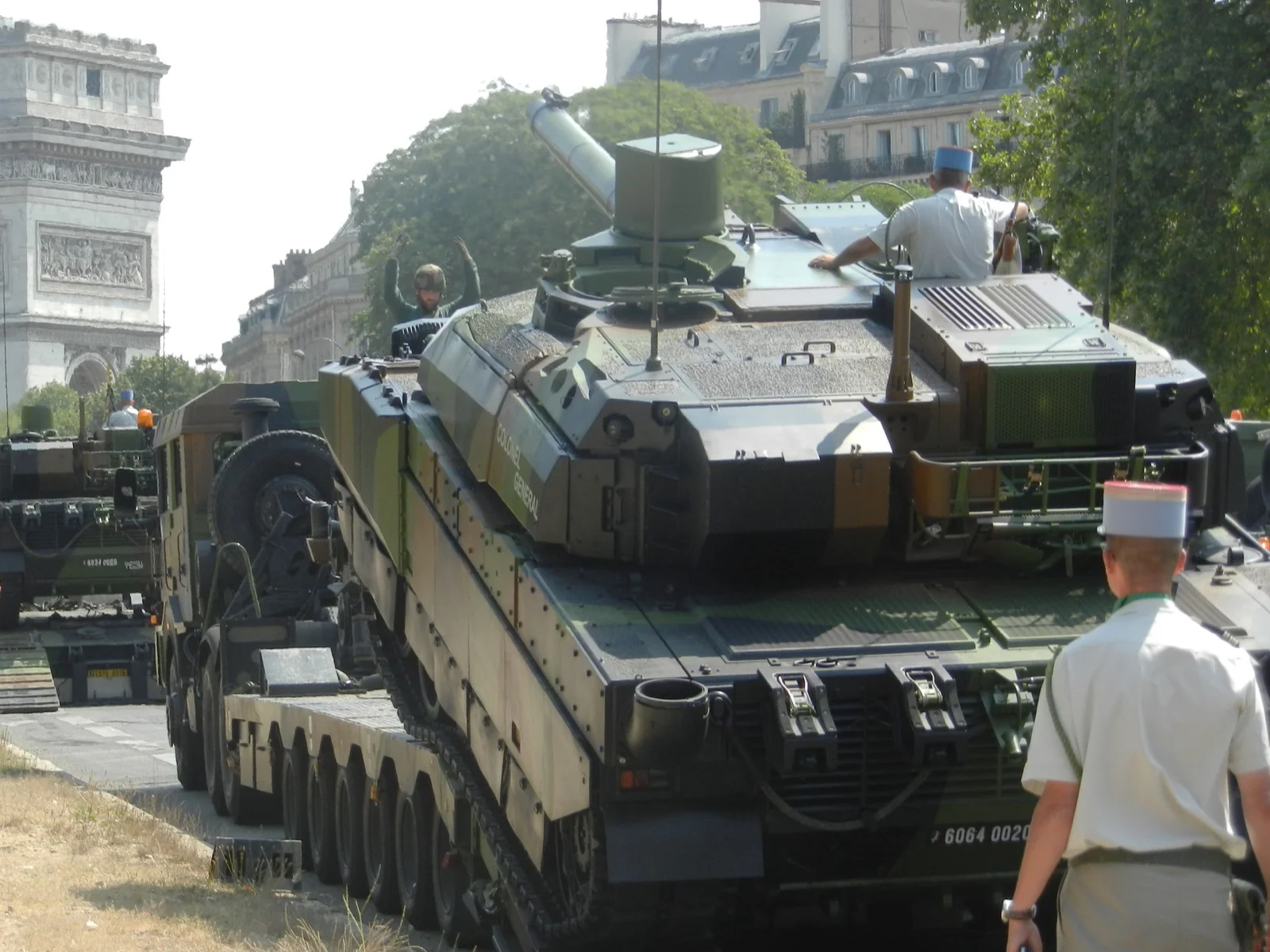
France is the European Union’s only nuclear power and one of very few states that produces its deterrent entirely at home. A substantial share of the budget funds a two-legged posture: M51 submarine-launched ballistic missiles and the air-launched ASMP-A carried by the Rafale. That single line approaches a fifth of total spending.
Paris’s military programming law envisages doubling the budget over a decade, and the priorities are explicit: a next-generation nuclear aircraft carrier to replace the Charles de Gaulle, Barracuda-class submarines, the Rafale F5 standard and the FCAS combat air programme. On land, the Scorpion programme is delivering Jaguar and Griffon vehicles into service.
France’s real advantage is industrial depth. Dassault, Thales, Naval Group, Safran and MBDA between them let the country build almost anything it needs, from submarines to radars to missiles. That keeps most of the budget inside the domestic economy and returns part of it through exports. Overseas territories in Africa and the Indo-Pacific give the French navy genuine global reach.
France spends just $3 billion more than Saudi Arabia — and sustains nuclear submarines, an aircraft carrier and an independent combat aircraft industry with it.
| Capability | Total |
|---|---|
| Defence budget | $67.23 bn |
| Active personnel | 264,000 |
| Tanks | 427 |
| Total aircraft | 974 |
| Naval vessels | 166 |
The next entry is Europe’s biggest spender — and it is not France.
#6United Kingdom
Defence budget · Europe / NATO
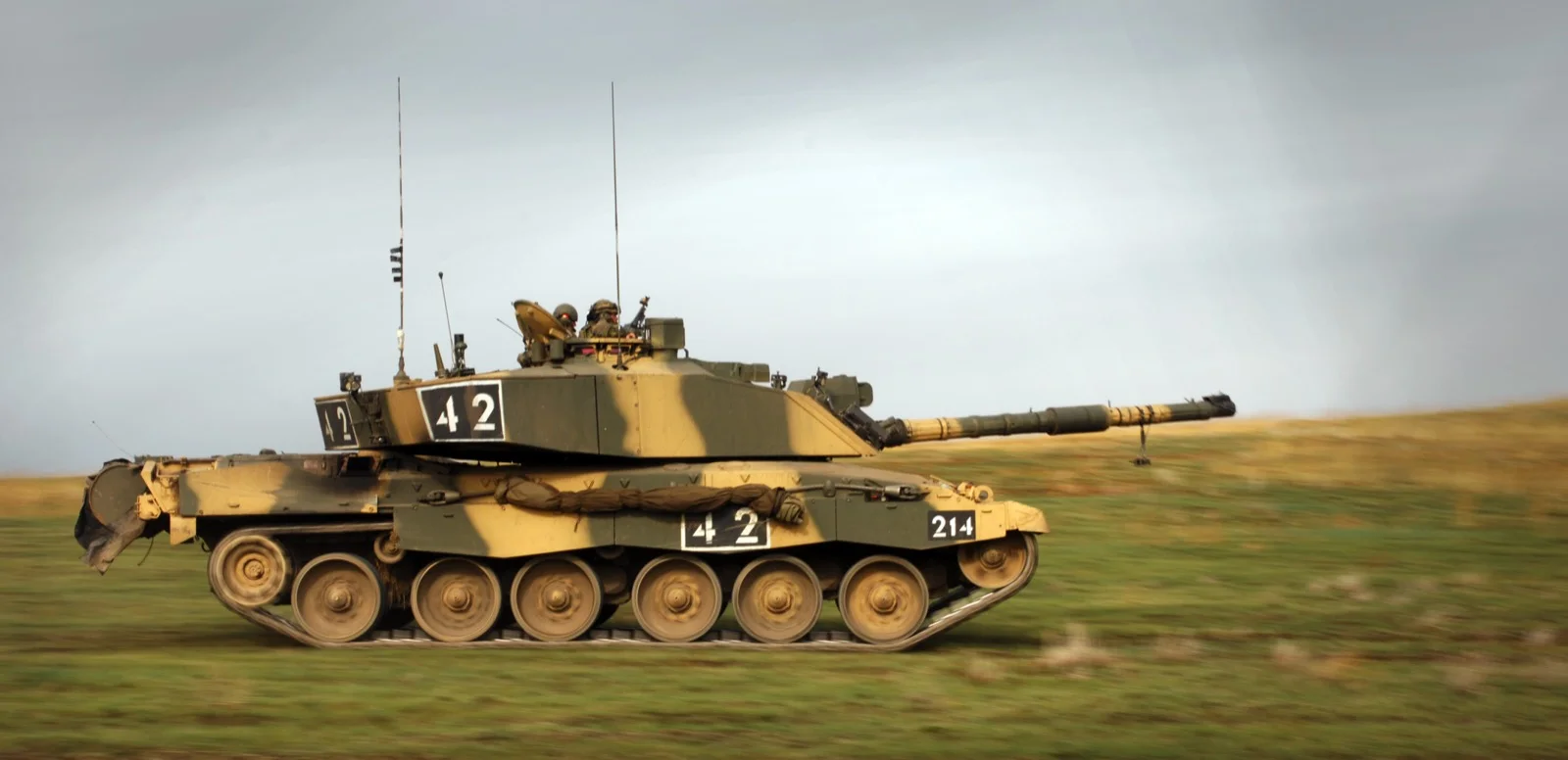
The United Kingdom runs one of Europe’s largest defence budgets and concentrates it on a small number of very expensive lines. Two Queen Elizabeth-class carriers, the Dreadnought-class ballistic missile submarines and the F-35B fleet absorb the lion’s share. London’s deterrent is entirely submarine-based; there is no air or land leg.
The army, meanwhile, has contracted sharply. With 288 tanks and just over 141,000 active personnel, it is among the smallest in its modern history. The Challenger 3 upgrade and the Ajax reconnaissance vehicle are meant to substitute quality for mass, but the numerical depth is gone. London has instead chosen to lead in cyber, space and intelligence.
Britain’s other asset is its alliance network. It is transferring nuclear submarine technology to Australia through AUKUS, developing a sixth-generation fighter with Japan and Italy under GCAP, and leading the Joint Expeditionary Force on NATO’s northern flank. Those partnerships buy influence the budget alone would not.
The UK outspends France by $21 billion while fielding 139 fewer tanks and 50 fewer warships.
| Capability | Total |
|---|---|
| Defence budget | $88.53 bn |
| Active personnel | 141,330 |
| Tanks | 288 |
| Total aircraft | 625 |
| Naval vessels | 116 |
Entering the top five, the next country supports one of the largest standing armies on the list.
#5India
Defence budget · South Asia
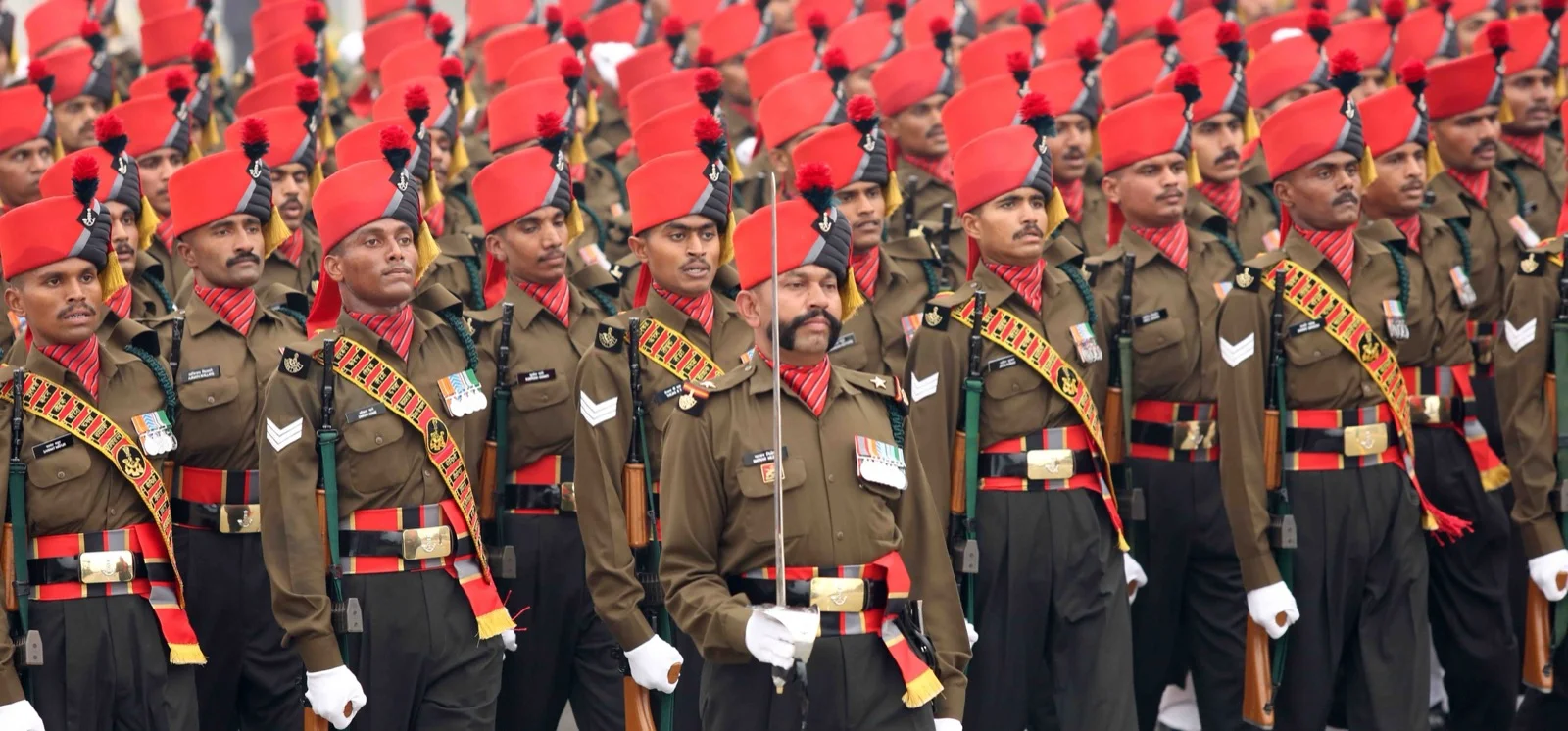
India’s budget has to feed 1.43 million active personnel, and that single fact dictates its structure. Salaries and pensions consume a very large share; the slice left for modernisation is far smaller than the headline figure suggests. Closing that gap has been New Delhi’s central defence problem for years.
The inventory is nonetheless formidable: 3,913 tanks, 2,183 aircraft and 343 naval vessels. India plans against two fronts simultaneously — the Himalayan line with China to the north and the Pakistani border to the west — which forces investment in land and sea power at the same time. The carrier Vikrant, the Arihant-class nuclear submarines and the Rafale fleet are the visible results.
The “Atmanirbhar Bharat” self-reliance policy is steadily redirecting procurement toward domestic industry, with the Tejas light fighter, the Arjun tank and the BrahMos cruise missile as its showcases. Much of the existing fleet remains Russian in origin, however, and managing that transition will define the coming decade.
India spends 23 per cent more than the United Kingdom while fielding ten times the personnel, thirteen times the tanks and three times the aircraft.
| Capability | Total |
|---|---|
| Defence budget | $109.00 bn |
| Active personnel | 1,431,000 |
| Tanks | 3,913 |
| Total aircraft | 2,183 |
| Naval vessels | 343 |
The next country climbed this list by nearly doubling its budget in three years.
#4Germany
Defence budget · Europe / NATO
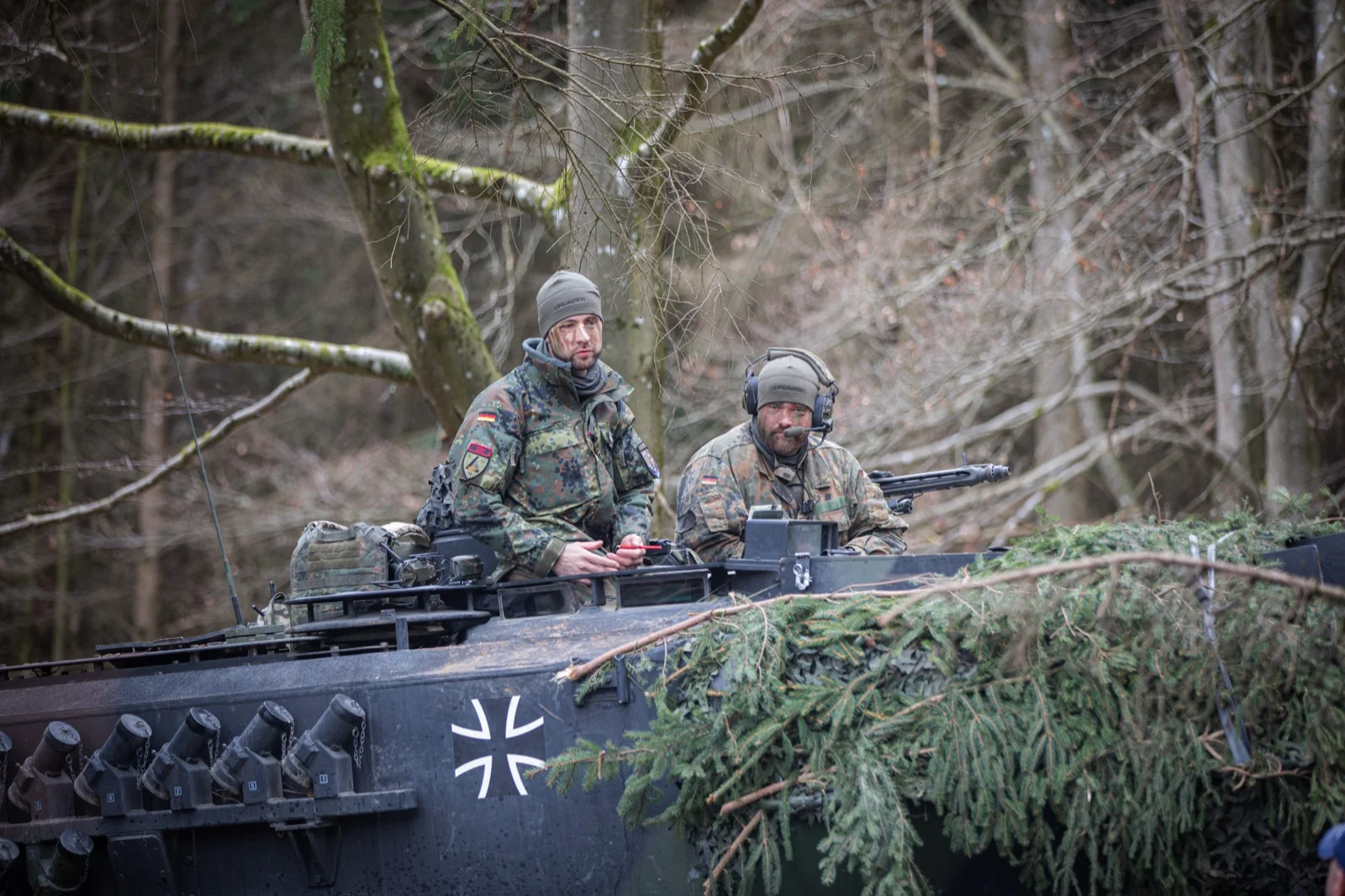
Germany is the fastest riser on this list. The “Zeitenwende” declared after Russia’s invasion of Ukraine, together with a €100 billion special fund, lifted Berlin into the position of Europe’s largest defence spender in the space of a few years. Germany now runs a budget approaching the French and British totals combined.
The shopping list is clear: F-35A aircraft to preserve the nuclear sharing mission, the Arrow 3 upper-tier air defence system, serial procurement of Puma and Boxer armoured vehicles, and the refilling of ammunition stockpiles. For years the Bundeswehr made headlines for helicopters that could not fly and ships that could not sail; raising readiness is now the central effort.
The inventory has yet to catch up with the money. With 296 tanks and 184,000 personnel, the numbers look modest for Europe’s largest economy. Germany’s real strength lies on the industrial side, where Rheinmetall, KNDS and Diehl supply a significant share of Europe’s land systems and ammunition. Converting budget into fielded capability will take several more years.
Germany outspends India by 17 per cent while fielding roughly eight per cent as many tanks.
| Capability | Total |
|---|---|
| Defence budget | $127.40 bn |
| Active personnel | 184,324 |
| Tanks | 296 |
| Total aircraft | 569 |
| Naval vessels | 96 |
In the top three, the next budget is one shaped by an ongoing war.
#3Russia
Defence budget · Eurasia
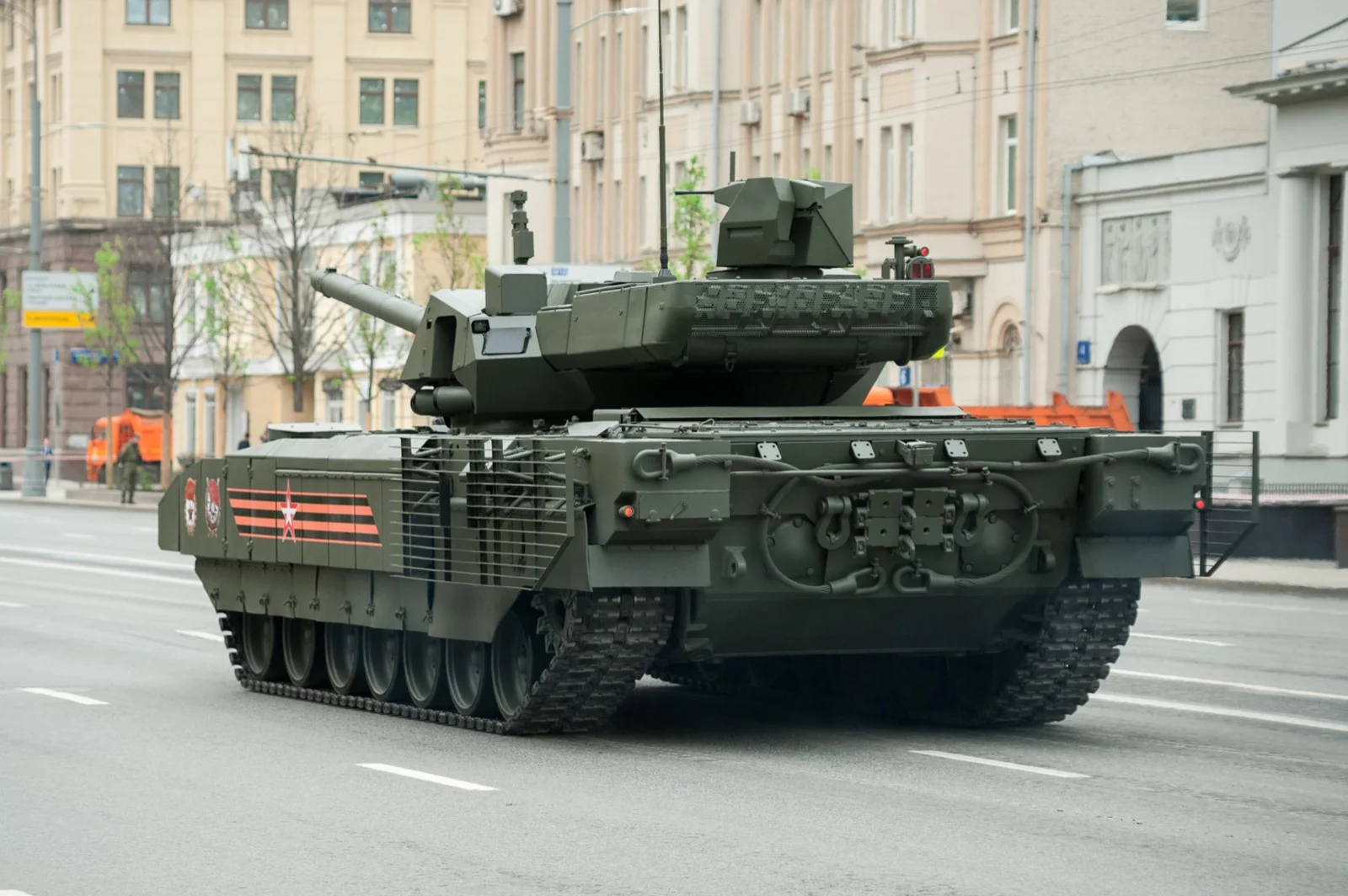
Russia’s defence budget is that of a state on a war footing. Military spending has climbed toward a third of the federal budget, a share without precedent in modern Russian history. The dollar figure understates the effect: measured at purchasing power parity, the military output Moscow buys is considerably larger.
Most of the money goes into production lines. Tank plants are running triple shifts, artillery ammunition output has been pushed past the combined NATO total and Shahed-type loitering munitions have entered serial manufacture. Modernisation of the nuclear triad continues in parallel, with the Sarmat ICBM, Borey-A submarines and upgraded Tu-160M bombers.
Russia genuinely holds one of the world’s largest inventories: 5,630 tanks, 4,237 aircraft and 747 naval vessels. A substantial part of it, however, consists of stored legacy platforms, and wartime losses are being replaced by refurbished older systems rather than new build. Sanctions continue to bite hardest in high-technology components.
Russia outspends Germany by 67 per cent while fielding nineteen times as many tanks and seven times as many warships.
| Capability | Total |
|---|---|
| Defence budget | $212.64 bn |
| Active personnel | 1,320,000 |
| Tanks | 5,630 |
| Total aircraft | 4,237 |
| Naval vessels | 747 |
Second place belongs to the country that has run the fastest naval build programme of the past decade.
#2China
Defence budget · East Asia
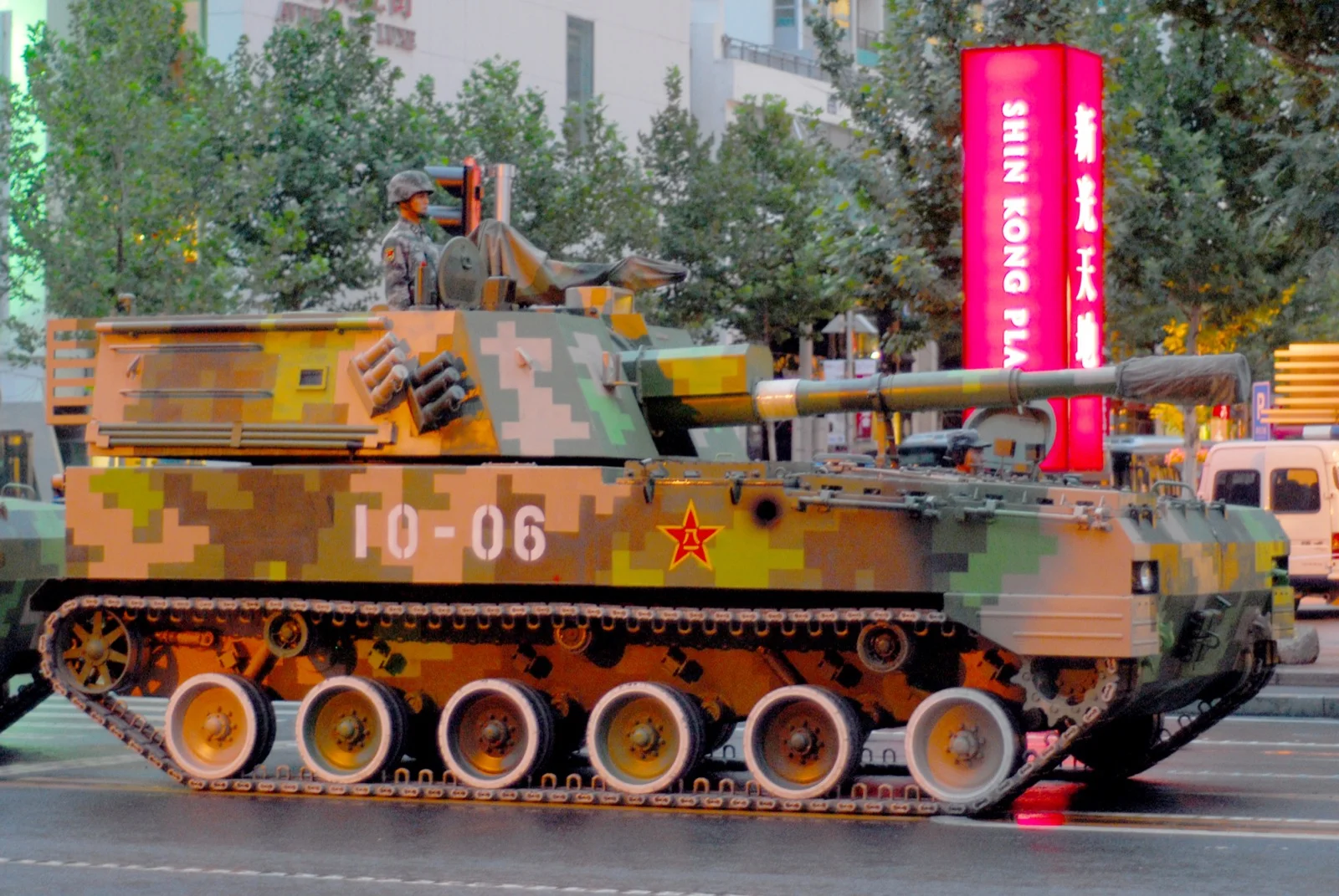
China’s declared defence budget is $303 billion, and many independent institutes assess real spending to be meaningfully higher, with parts of research, coast guard funding and military infrastructure carried outside the official line. Even the declared figure places Beijing firmly in second place.
The most visible result is at sea. The PLA Navy is now the world’s largest by hull count, with 841 vessels. The carrier Fujian entered service with electromagnetic catapults, Type 055 destroyers are in serial production and the nuclear submarine fleet is expanding. On land there are 5,870 tanks; in the air, 3,529 aircraft.
What sets China apart is a supply chain closed almost entirely inside its own borders, from ship steel and chips to aero engines and missile propellant. The J-20 and J-35 fighters, the DF-series ballistic missiles and its hypersonic programmes are products of that industrial base. Long-range power projection remains the gap: the overseas basing network is still thin.
China outspends Russia by 42 per cent and funds the world’s largest standing army — 2.03 million personnel — out of the same budget.
| Capability | Total |
|---|---|
| Defence budget | $303.00 bn |
| Active personnel | 2,035,000 |
| Tanks | 5,870 |
| Total aircraft | 3,529 |
| Naval vessels | 841 |
The country at number one spends almost three times as much as number two.
#1United States
Defence budget · Global
The United States defence budget approaches the combined total of the next nine countries on this list. At $831.5 billion it is less the military budget of a single state than the running cost of a global security architecture: more than 750 overseas facilities, eleven carrier strike groups and standing fleets in every ocean.
The inventory follows: 13,032 aircraft, 5,913 helicopters, 4,666 tanks, 465 naval vessels and 66 submarines. The US Air Force alone flies more aircraft than most countries hold in total. The B-21 Raider bomber, Columbia-class ballistic missile submarines, the Sentinel ICBM programme and Constellation-class frigates are the big-ticket items of the coming decade.
There is a less visible side to that number. Pay, healthcare and pensions absorb a very large share, so the slice actually buying new platforms is not proportional to the headline. Washington also has to sustain readiness in Europe, the Indo-Pacific and the Middle East simultaneously. That is precisely the question the Pentagon has been arguing over for years: how many theatres can even the largest budget cover at once?
The United States alone spends close to the combined defence budgets of every other country in this top ten.
| Capability | Total |
|---|---|
| Defence budget | $831.50 bn |
| Active personnel | 1,333,030 |
| Tanks | 4,666 |
| Total aircraft | 13,032 |
| Naval vessels | 465 |
Türkiye ranks 12th worldwide with a defence budget of $51.4 billion — ahead of Canada ($45.8bn), South Korea ($44.8bn), Spain ($39bn), Italy ($37.3bn) and Israel ($34.6bn). In the overall military strength ranking it sits 9th, three places above its budget position.
The explanation is domestic industry. Most of every lira spent stays inside the country: 2,284 tanks, 1,101 aircraft, 509 helicopters and 192 naval vessels are sustained in large part through national programmes. Developing KAAN rather than importing a fifth-generation fighter, and building KIZILELMA rather than buying a combat drone, converts budget directly into industrial capacity.
Over the coming decade, serial production of the KAAN fighter, export orders for the HÜRJET trainer, ALTAY tank deliveries and the MİLGEM family culminating in the TF-2000 air defence destroyer will all bear directly on this table. Defence exports have become a second revenue stream that returns part of the budget to the state.
What the budget table actually tells us
The first conclusion is unambiguous: defence spending has become a global race. Six of the ten countries here have grown their budgets by double digits over three years, a pattern not seen since the 1990s, and the drivers are the war in Ukraine and rising tension in the Indo-Pacific.
The second is that Europe is back. Three European states sit in the top ten — Germany, the United Kingdom and France — and Germany’s arrival in fourth place would have been hard to predict a few years ago. Europe’s constraint, though, is time rather than money. A budget can be raised in a year; shipyard capacity and ammunition lines cannot. That is why European inventories still lag European budgets.
Third, the link between money and power is not linear. India outspends the UK by 23 per cent yet supports ten times the personnel. Russia spends 1.7 times Germany’s budget and fields nineteen times as many tanks. Labour costs, domestic production share and purchasing power parity can invert the picture entirely. A dollar ranking is one indicator of combat power, not the measure of it.
Fourth, domestic industry is a multiplier. States that build their own platforms — France, China and Türkiye among them — convert far more of each dollar into fielded capability and domestic employment. Countries that import buy less capability for the same money. That, in a sentence, is why Riyadh has made localisation the centrepiece of Vision 2030.
Finally, asymmetric capability is starting to bend the curve. Unmanned aircraft, cruise missiles and electronic warfare can hold billion-dollar platforms at risk for a fraction of the cost. The states that lead in those fields — Türkiye, Israel and Iran included — punch well above their budget ranking. The defining question of the next decade is not who spends the most, but who converts spending into capability fastest.
Comparison table: the ten largest defence budgets (2026)
| # | Country | Defence budget | Active personnel | Tanks | Aircraft | Naval vessels |
|---|---|---|---|---|---|---|
| 1 | United States | $831.50 bn | 1,333,030 | 4,666 | 13,032 | 465 |
| 2 | China | $303.00 bn | 2,035,000 | 5,870 | 3,529 | 841 |
| 3 | Russia | $212.64 bn | 1,320,000 | 5,630 | 4,237 | 747 |
| 4 | Germany | $127.40 bn | 184,324 | 296 | 569 | 96 |
| 5 | India | $109.00 bn | 1,431,000 | 3,913 | 2,183 | 343 |
| 6 | United Kingdom | $88.53 bn | 141,330 | 288 | 625 | 116 |
| 7 | France | $67.23 bn | 264,000 | 427 | 974 | 166 |
| 8 | Saudi Arabia | $63.99 bn | 247,000 | 1,085 | 917 | 32 |
| 9 | Japan | $58.00 bn | 251,500 | 734 | 1,429 | 158 |
| 10 | Australia | $57.35 bn | 58,910 | 46 | 348 | 45 |
| 12 | Türkiye | $51.40 bn | 481,000 | 2,284 | 1,101 | 192 |
A new ranking tomorrow
Coming next: Europe’s largest helicopter fleets, Africa’s biggest defence budgets and the Middle East’s largest standing armies.
Frequently Asked Questions
Which country has the largest defence budget in the world?
The United States, at $831.5 billion in 2026 — a figure approaching the combined total of the next nine countries on the list.
Where does Türkiye rank by defence spending?
Türkiye ranks 12th globally with $51.4 billion. In the overall military strength ranking it sits 9th, reflecting an inventory and industrial base larger than its budget position alone suggests.
Which European country spends the most on defence?
Germany, at $127.4 billion, followed by the United Kingdom ($88.5bn) and France ($67.2bn).
Does a bigger budget always mean a stronger military?
No. Personnel costs, the share of domestic production, purchasing power parity and the age of the existing inventory all change the picture. Russia spends 1.7 times what Germany does yet fields nineteen times as many tanks.
What is the source of these figures?
The ranking is based on GlobalFirepower’s 2026 defence spending dataset. Figures reflect announced annual allocations and are not adjusted for purchasing power parity.
Sources
- GlobalFirepower 2026 defence spending ranking
- NATO Defence Expenditure reports
- SIPRI Military Expenditure Database
- IISS The Military Balance
- National defence ministry budget statements
- Source: https://www.globalfirepower.com/