SİPER vs Patriot PAC-3 MSE: Türkiye’s Sovereign Answer Meets the NATO Benchmark (2026)

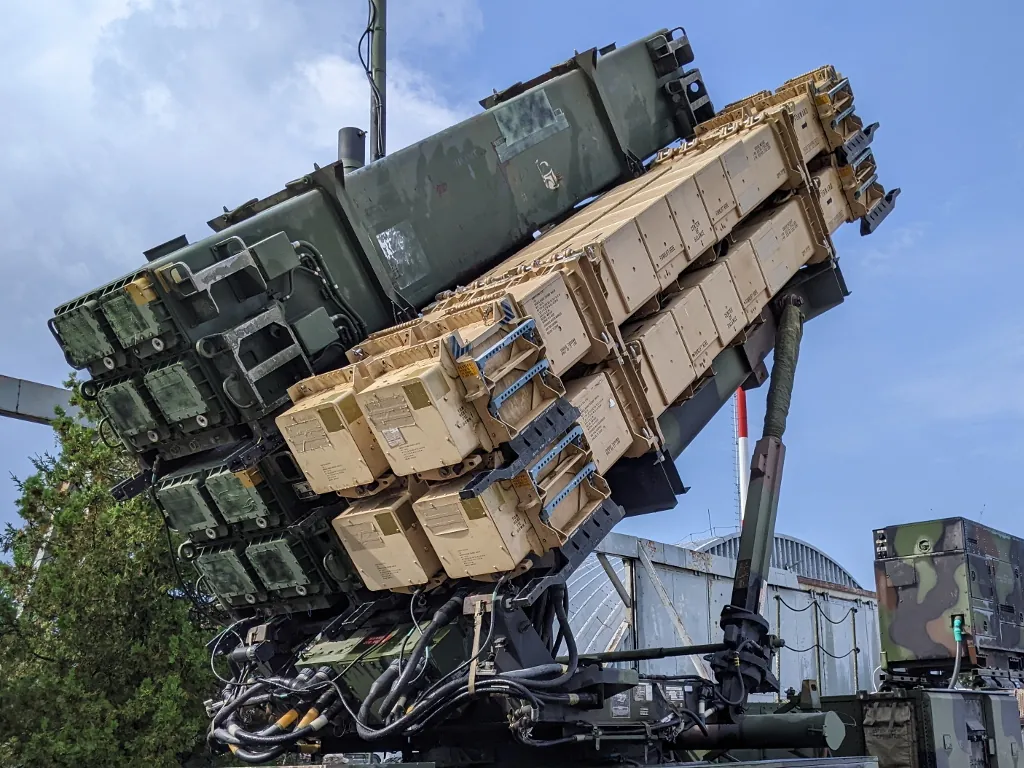
In January 2026 the Turkish Armed Forces inducted the SİPER-1 long-range surface-to-air missile system into the Steel Dome integrated air defense network — the first delivered battery of an indigenous long-range SAM designed to fill the gap left by the failed US Patriot deal and the frozen S-400 integration. The same year, the US Army awarded Lockheed Martin a fresh $4.76 billion Patriot PAC-3 MSE production contract, driven by Ukraine’s high consumption rate. Both systems occupy the upper-tier air-defense role, yet they answer different questions: SİPER is a sovereignty program, PAC-3 MSE is a proven combat-tested interceptor with a global supplier network. This side-by-side comparison uses verifiable open-source data.
Head-to-Head Specifications
| Parameter | SİPER Block-1 | Patriot PAC-3 MSE |
|---|---|---|
| Range | 100+ km (Block-1) / 150+ km (Block-2 goal) | Up to 160 km (aircraft) |
| Maximum altitude | 25+ km (Roketsan brochure) | 24 km |
| Guidance | Active radar + INS + data link | Active Ka-band seeker (hit-to-kill) |
| Missile length | ≈ 5.4 m | ≈ 5.2 m |
| Missile diameter | 370 mm | 255 mm |
| Warhead | Directional fragmentation | Hit-to-kill + lethality enhancer |
| Launcher | Truck-mounted vertical canisters | Truck-mounted M901 (16 MSE per launcher) |
| Primary radar | ASELSAN long-range AESA (Steel Dome node) | AN/MPQ-65, transitioning to LTAMDS |
| Ballistic-missile defense | Limited (Block-2 target) | Combat-proven |
| Operator count | 1 (Türkiye) | 18+ nations |
| First unit delivered | January 2026 (Turkish Armed Forces) | 1994 (PAC-3), 2015 (MSE) |
| Sovereignty | High — motor, seeker, software indigenous | US export control (ITAR) |
| Estimated unit price | Not publicly disclosed | ~$3.9-4M (US Army budget) |
| Full battery cost | Not publicly disclosed | ~$1.1B (full package) |

Two doctrines converging on the same altitude band
The Patriot family emerged from the Cold-War MIM-104 line; the PAC-3 track was defined by the ERINT effort of the early 1990s, aimed at tactical ballistic-missile defense. PAC-3 MSE entered service in 2015 and abandoned the traditional blast-fragmentation approach for a pure hit-to-kill kinetic kill vehicle — the missile physically strikes the target. This choice was made to defeat Scud-class TBMs; the same active seeker also delivers high accuracy against manned aircraft.
SİPER’s genesis is entirely different. After Türkiye’s removal from the F-35 program following the S-400 dispute, the Presidency of Defense Industries accelerated a fully indigenous long-range SAM effort. Block-1 was optimized for aircraft and cruise-missile defense; ballistic-missile defense is the Block-2 goal. Architecturally the two systems resemble each other; capability-wise, SİPER Block-1 today sits closer to Patriot GEM-T than to MSE’s kinetic-kill niche.
Similar reach, different upgrade paths
Roketsan’s brochure cites 100+ km for Block-1; open-source reporting confirms this figure. Block-2, using a booster, is expected to extend range 1.5-2×, targeting 150+ km. Patriot PAC-3 MSE reaches out to about 160 km against aircraft; against ballistic threats, the effective engagement envelope is much smaller (25-30 km).
Altitude figures are close: Roketsan lists 25+ km for SİPER; the MSE claims 24 km. Above that layer, the US relies on THAAD to hand off; Türkiye’s next-generation upper-tier concept is still on the drawing board.
Radar sovereignty vs radar transition
SİPER batteries operate on ASELSAN’s long-range 3D AESA radars; the C2 software stack is fully domestic. Under Steel Dome, targets tracked by HİSAR-A+ or HİSAR-O+ radars can be handed to the SİPER battery in real time — a single national picture.
Patriot has historically relied on the passive electronically scanned AN/MPQ-65. The US Army is moving to the Raytheon LTAMDS, a GaN-based AESA offering 360° coverage. The transition will take years; export customers today are still receiving MPQ-65 hardware.
Unit cost visibility differs
US Army budget documents list PAC-3 MSE flyaway cost at roughly $3.9 million per interceptor. Export packages run higher — Germany’s 2024 case for up to 600 MSE rounds was notified at ~$5 billion, or ~$8.3M per missile including training and support. A full Patriot battery, with radar, C2, generators and launchers, comes in around $1.1 billion.
SİPER unit price has not been disclosed. Based on ROKETSAN-ASELSAN contract volumes and delivery cadence, the sovereign production model appears to sit below imported alternatives — but the more important metric is inventory sovereignty: Türkiye can scale production without external approval.
Combat record and consumption risk
Patriot has been in combat since Desert Storm 1991. PAC-3 MSE has confirmed intercepts of Russian ballistic and cruise missiles in Ukraine, including the Kh-47M2 Kinzhal. However, the high consumption rate — with Poland transferring five MSEs to Ukraine in 2026 and the US Army warning of a replenishment gap through 2028 — has exposed the industrial base to stress.
SİPER Block-1 completed serial production firing tests in 2025 and was delivered to the Turkish Armed Forces in January 2026. It has no combat record. This is a data weakness — but it also means the industrial base has not been stress-tested. The true value of Türkiye’s inventory will only be known in a crisis.
Sovereignty: the raison d’être of SİPER
Following the S-400 fallout, ITAR and CAATSA mechanisms reshaped how Ankara viewed dependency on US-controlled systems. SİPER was launched specifically to remove that dependency: motor, seeker, warhead and software are all indigenous. No foreign supplier can block deliveries. Roketsan and Aselsan have signed follow-on contracts to expand inventory.
Patriot deliveries are subject to US State Department approvals. Poland’s transfer of MSE rounds to Ukraine was a political decision; Middle East customers now hold export priority. Türkiye reiterated interest in Patriot in the mid-2020s but no delivery is expected without political thaw. This shifts the debate beyond “which is better?” — it becomes “which country can grow its inventory when it needs to?”

Which Fits Which Scenario?
Where both systems are technically comparable, the decision drivers become political and industrial rather than purely military.
- Aircraft & cruise-missile defense only: Both are adequate. SİPER Block-1’s 100+ km reach can cover Türkiye’s eastern and western borders; Patriot has done the same for a quarter century.
- Primary need is ballistic-missile defense: Patriot PAC-3 MSE’s proven hit-to-kill record is ahead. SİPER Block-2 aims to close the gap but is not yet operational.
- High-embargo-risk environment: The SİPER model is the reference case. Domestic production removes dependency on foreign approvals — but the model requires a strong indigenous defense industry.
- Rapid fielding & NATO integration: Patriot has been Link 16 native for decades. SİPER operates on Turkish national data links; NATO integration requires additional work.
FAQ
Is SİPER a Patriot alternative?
Class-wise, yes. Doctrine-wise, they differ. Block-1 currently sits closer to Patriot GEM-T than MSE; Block-2 targets the ballistic-missile defense niche where MSE excels.
When will SİPER Block-2 arrive?
SSB is advancing Block-2 firing tests in 2025-2026. Serial production and TAF delivery are anticipated between late 2026 and 2027.
How much does PAC-3 MSE cost?
US Army budget lists ~$3.9M per interceptor. Export packages with training and support can exceed $8M per missile.
Which radar guides SİPER?
ASELSAN long-range 3D AESA radars. Within Steel Dome, HİSAR-family radars and national C2 software share the picture with SİPER batteries.
Will Türkiye still buy Patriot?
Ankara raised interest again in the mid-2020s, but no delivery is on the calendar. SİPER’s serial production has reduced the urgency.
Has PAC-3 MSE performed in Ukraine?
Yes. Confirmed intercepts against Russian ballistic and cruise missiles including the Kh-47M2 Kinzhal. Consumption has outpaced production, creating a 2028 replenishment gap.
Can SİPER Block-1 intercept ballistic missiles?
Block-1 was optimized for aircraft and cruise missiles. Limited ballistic capability is reported; true ballistic-missile defense is a Block-2 objective.
How many nations operate Patriot?
Over 18: USA, Germany, Netherlands, Japan, South Korea, Spain, Greece, Israel, Saudi Arabia, UAE, Kuwait, Qatar, Bahrain, Oman, Poland, Romania, Sweden, Taiwan (on order).
Will SİPER be exported?
SSB has confirmed export potential. Middle East and North Africa are seen as first customer regions. No export contract has been publicly announced.
What is Steel Dome?
Türkiye’s multi-layer air-defense architecture. SİPER, HİSAR-U, HİSAR-O+, HİSAR-A+, KORKUT, GÖKKUBBE and GÖKDEMİR feed one national command network.
Conclusion
- Roketsan, SiPER Long-Range Air & Missile Defense System brochure, 2024.
- Turkish Presidency of Defense Industries (SSB) press releases, January 2026.
- Lockheed Martin PAC-3 MSE product page and $4.76 billion contract announcement, 2026.
- Army Recognition, “Türkiye integrates SİPER-1 long-range air defense system into Steel Dome network”, January 2026.
- The Defense Post, “Turkey’s Siper Long-Range Missile Completes Serial Production Testing”, August 2025.
- US Army budget documents, PAC-3 MSE unit cost data, 2026.