The Middle East’s 10 Largest Armies in 2026

Headcount no longer decides modern wars on its own. A brigade’s combat power today rests less on its manning roster than on its sensor network, fire control, communications backbone and logistical endurance. Even so, active personnel still tells you a great deal: how many fronts a country can hold at once, how long it can keep fighting, and how much ground it can control in peacetime.
Nowhere is that equation more concentrated than the Middle East. Across fifteen states packed into one region, some armies still run the mass land force model, others have shifted to small high-technology structures, and others rely on reserves. A force of 610,000 and one of 80,000 sit on the same list.
So which countries field the Middle East’s ten largest standing armies? Is Israel in the top three, where does Saudi Arabia sit — and what position does Türkiye hold? The countdown starts at ten.
The ranking uses active military personnel from GlobalFirepower’s 2026 dataset. Reserves, paramilitary formations and gendarmerie are excluded — a distinction that matters most for countries such as Israel and Iran with very large reserve systems.
#10Lebanon
Active military personnel
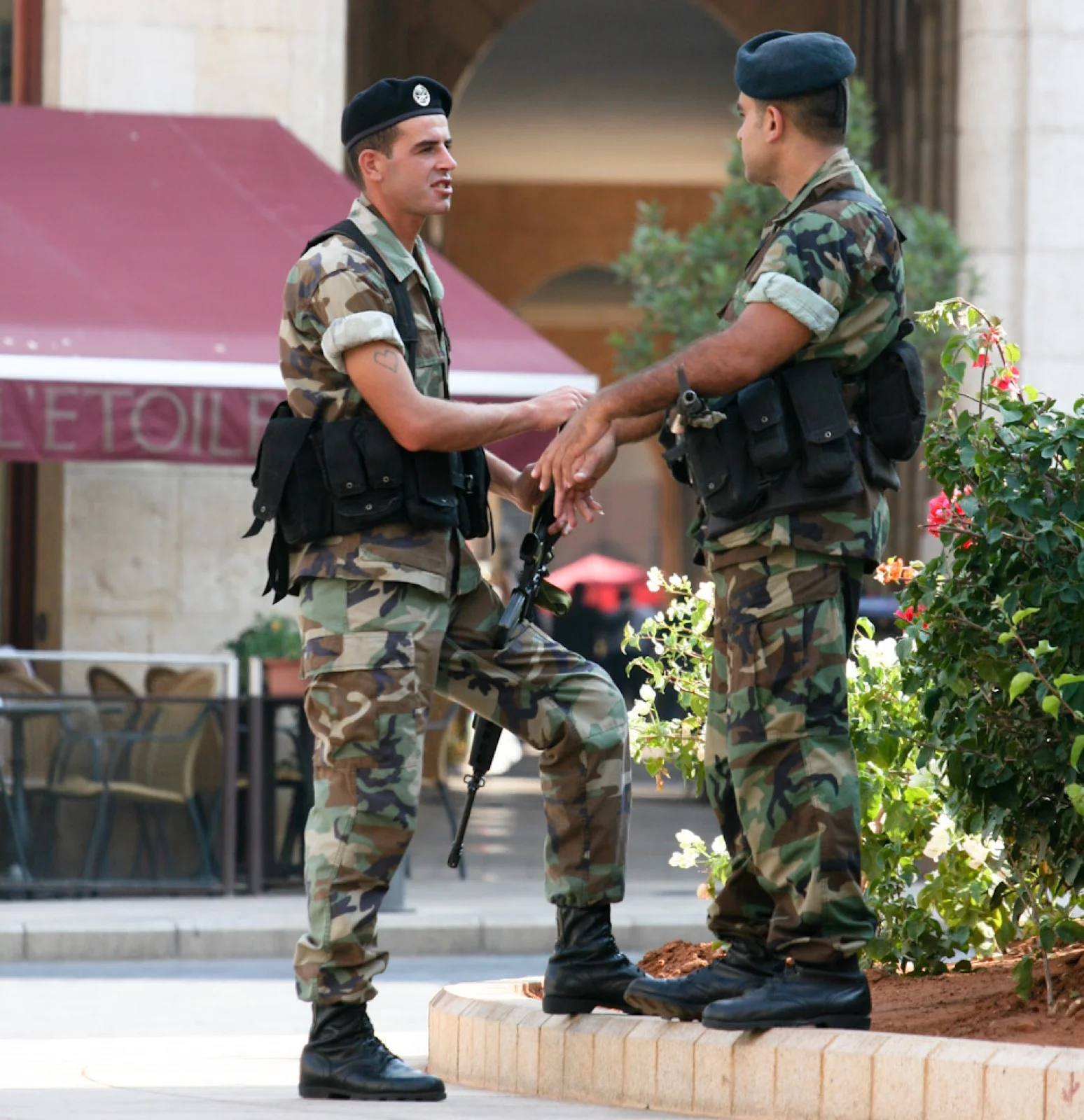
The Lebanese Armed Forces operate on the tightest resources in the region. An $800 million defence budget is the second smallest on this list, and the economic crisis running since 2019 hit the institution directly: the dollar value of military salaries collapsed, creating serious retention problems.
The inventory comprises 334 tanks, 80 aircraft, 68 helicopters and 48 naval craft. The armoured force is largely M60 and M48 vehicles received as US grants, while the air force’s striking power rests on A-29 Super Tucano light attack aircraft. There is no modern air defence system and no combat fighter fleet.
Lebanon’s central difficulty is institutional rather than military. The country’s political structure and the presence of armed actors operating on its territory complicate the army’s position as the sole legitimate force. Despite this it remains among the most trusted state institutions in Lebanon, carrying the weight of border control, counter-terrorism and internal security. International donor support is decisive in keeping the inventory running.
Lebanon has the smallest army on the list — yet fields more than twice as many tanks as Syria.
| Capability | Total |
|---|---|
| Active personnel | 80,000 |
| Tanks | 334 |
| Total aircraft | 80 |
| Helicopters | 68 |
| Defence budget | $0.80 bn |
One place higher, a Gulf state spends its resources on an entirely different strategy.
#9Oman
Active military personnel
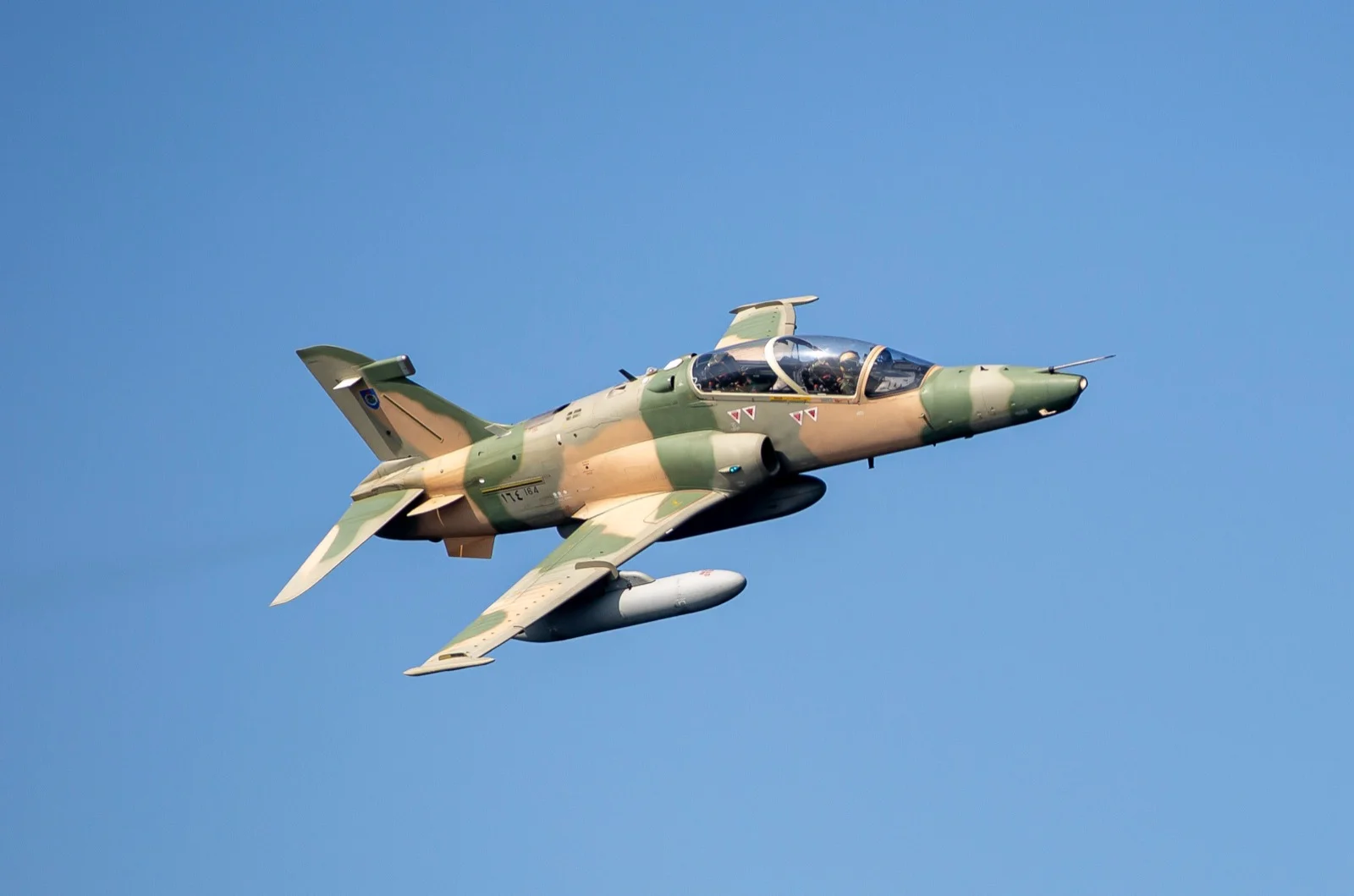
Oman fields the Gulf’s second-largest army at 100,000 and funds it with $8.36 billion — more than ten times Lebanon’s spending per soldier. The shape of that force is deliberately small and well equipped rather than large.
Its strategic value comes from position. Controlling the southern shore of the Strait of Hormuz, Oman sits astride the most critical chokepoint in global oil trade. The inventory is weighted accordingly toward air and naval forces: 128 aircraft including F-16 Block 50 and Typhoon fleets, and 17 naval vessels. On land there are 264 tanks, largely of the Challenger 2 family.
Omani foreign policy stands apart in the region. Muscat is one of very few actors able to work with Iran, Saudi Arabia and the West simultaneously, and it has mediated in numerous regional negotiations. That balancing act extends into procurement, where diversification of supply is a deliberate choice — defence-industrial talks with Türkiye fall within the same logic.
Oman fields 20,000 more troops than Lebanon on more than ten times the defence budget.
| Capability | Total |
|---|---|
| Active personnel | 100,000 |
| Tanks | 264 |
| Total aircraft | 128 |
| Helicopters | 31 |
| Defence budget | $8.36 bn |
The next army is going through the most fundamental restructuring in the region.
#8Syria
Active military personnel
The Syrian army is the institution on this list undergoing the greatest transformation. A country that once fielded one of the Middle East’s largest armoured forces lost the overwhelming majority of its inventory across thirteen years of civil war. GlobalFirepower now records 168 tanks, 104 aircraft and 39 helicopters — far below pre-war figures.
The defence budget of $146 million is the smallest here by a wide margin, not even a twentieth of the next country’s. That reflects both the state of the economy and the reconstruction process. The army’s institutional structure is being rebuilt, and consolidating disparate armed formations under a single chain of command remains among the most critical issues of the transition.
Türkiye is among the prominent actors in that rebuilding, with talks between Ankara and Damascus covering military training, institutional capacity building and defence-industrial cooperation. Syria’s geography — bordering Türkiye, Iraq, Jordan, Israel and Lebanon — makes every military development inside the country a regional question. How the inventory takes shape over the coming years will bear directly on the regional balance.
Syria fields the same number of troops as Oman on just 1.7 per cent of the Omani defence budget.
| Capability | Total |
|---|---|
| Active personnel | 100,000 |
| Tanks | 168 |
| Total aircraft | 104 |
| Helicopters | 39 |
| Defence budget | $0.15 bn |
The next country holds the region’s largest armoured force relative to its population.
#7Jordan
Active military personnel
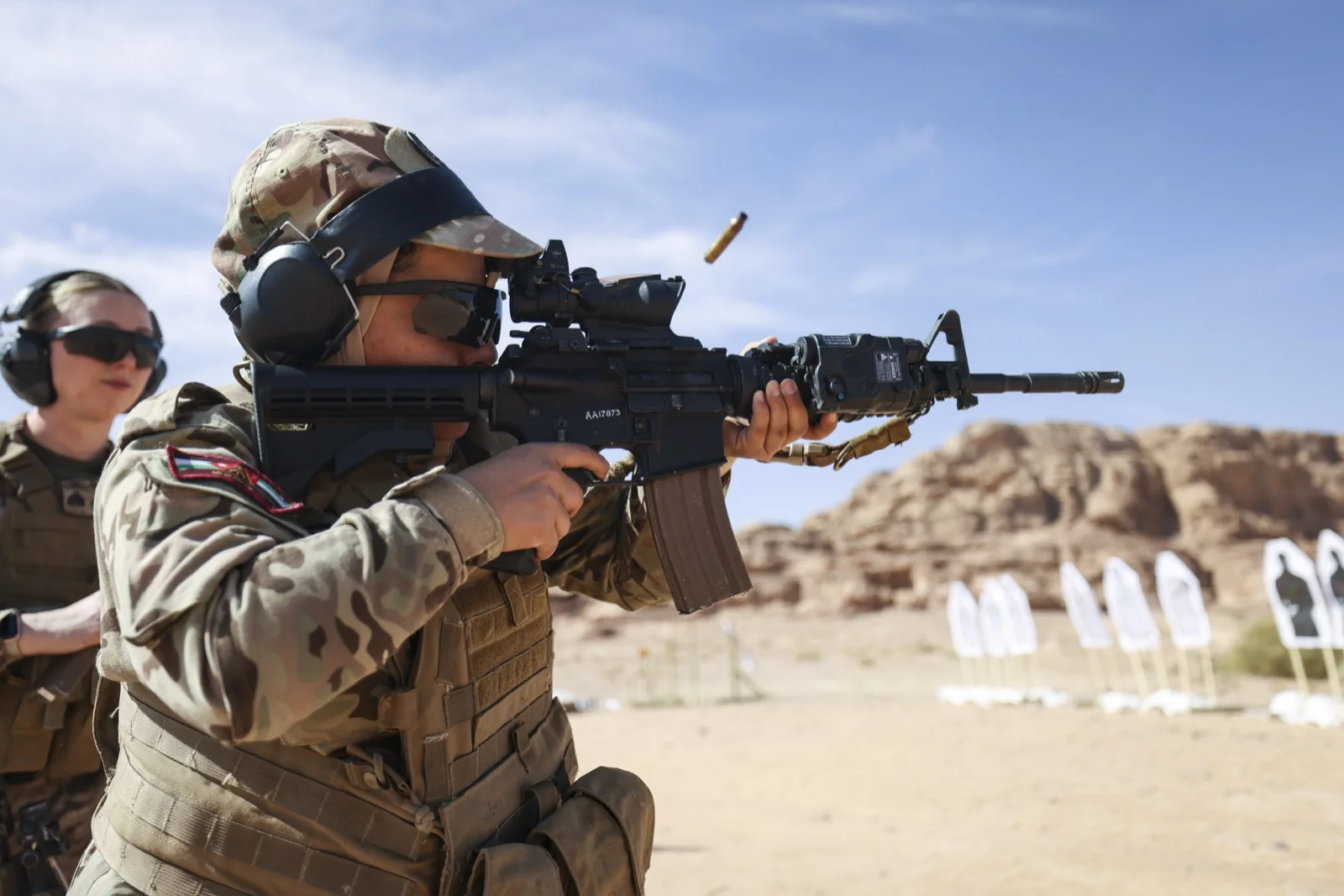
With a population of 11 million, Jordan sustains 114,500 active troops and 1,508 tanks — more armour than Israel, Saudi Arabia or Iraq. Measured against population, it is among the most militarised countries in the Middle East.
Geography explains it. Jordan is ringed by Syria, Iraq, Saudi Arabia, Israel and the Palestinian territories, and is affected directly by every regional crisis. It has absorbed several major refugee waves since 1948, and border security has become a permanent priority. Most of the armoured inventory consists of Challenger 1-derived Al-Hussein tanks and upgraded M60s.
The Jordanian Armed Forces have also become a regional centre for special forces training, with the King Abdullah II Special Operations Training Centre hosting units from many countries. Jordan was an early regional investor in unmanned systems and builds armoured vehicles domestically under the KADDB umbrella. Sustaining that inventory on a $2.67 billion budget also explains its reliance on external military assistance.
Jordan fields 208 more tanks than Israel — on roughly eight per cent of the Israeli defence budget.
| Capability | Total |
|---|---|
| Active personnel | 114,500 |
| Tanks | 1,508 |
| Total aircraft | 279 |
| Helicopters | 159 |
| Defence budget | $2.67 bn |
Entering the top six, we reach an army built on technology rather than numbers.
#6Israel
Active military personnel
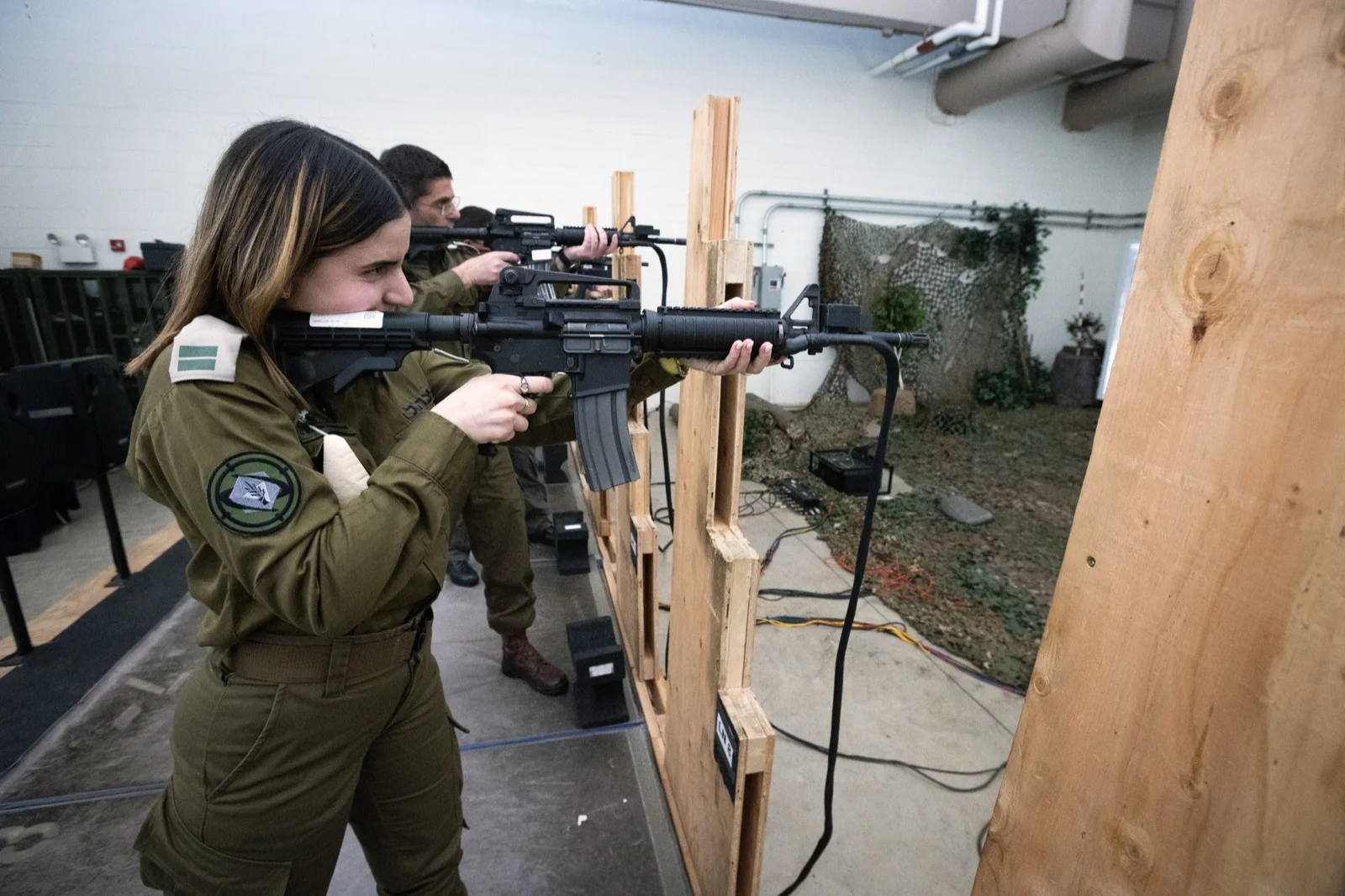
Israel’s 169,500 active personnel may look modest for its regional position, but reading that figure alone misrepresents the model. The IDF is built on conscription and an unusually deep reserve system; on mobilisation the active total multiplies several times over, and that reserve structure sits at the heart of Israeli doctrine.
A $34.6 billion budget puts Israel at the top of this list for spending per soldier, and the money goes into technology. The 597-aircraft inventory includes F-35I Adir, F-15I and F-16I fleets, while Iron Dome, David’s Sling and Arrow form a layered air and missile defence. The Merkava main battle tank and the Namer heavy armoured personnel carrier are entirely domestic designs.
Israel’s defence industry — Elbit, IAI, Rafael — has made the country one of the world’s largest arms exporters. But the operational tempo of recent years, the economic cost of mobilising reserves and the task of replenishing munitions stocks have opened a serious debate about the sustainability of the model. Expanding the active force and widening conscription have been live domestic political questions for some time.
Israel fields 55,000 more troops than Jordan and 208 fewer tanks — a force built on air power and precision munitions rather than mass armour.
| Capability | Total |
|---|---|
| Active personnel | 169,500 |
| Tanks | 1,300 |
| Total aircraft | 597 |
| Helicopters | 127 |
| Defence budget | $34.60 bn |
The next army was rebuilt from nothing.
#5Iraq
Active military personnel
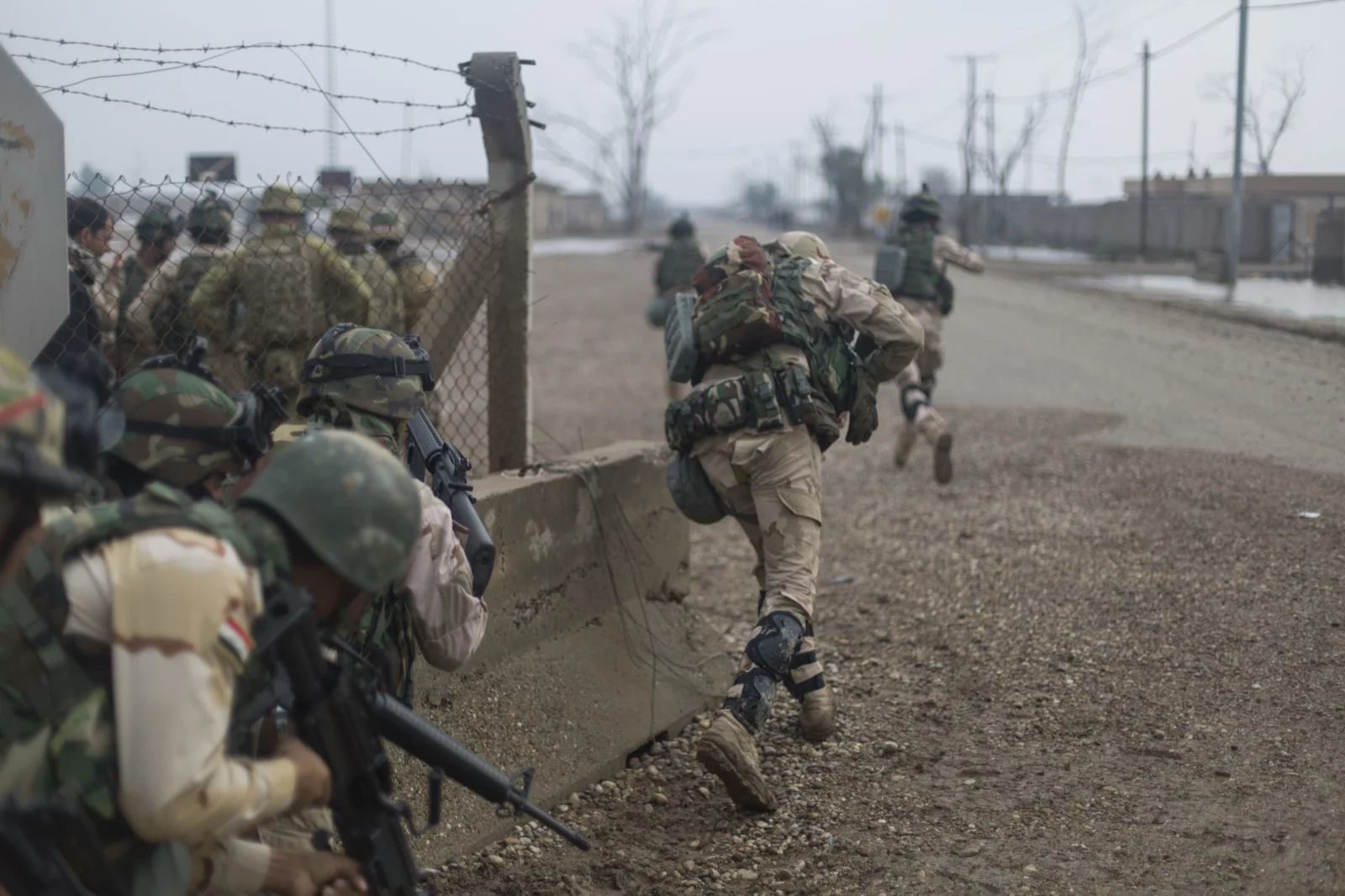
The Iraqi army is one of the most radical reconstruction cases in modern military history. Disbanded entirely in 2003, the institution has been rebuilt over two decades and now fields 193,000 active personnel, 1,188 tanks and 360 aircraft — the region’s fifth-largest force.
The inventory carries the marks of that history. American M1A1 Abrams tanks sit alongside Russian T-90S. The air force flies F-16IQ fighters, Russian-built Su-25s and Mi-28 helicopters, and Chinese CH-4 unmanned aircraft. That diversity imposes a heavy burden on logistics and training.
An $8 billion defence budget tied largely to oil revenue leaves modernisation sensitive to energy prices. The army’s principal challenges include sustaining operations against armed groups, security arrangements in the north and integrating non-state armed formations into the chain of command. Security cooperation with Türkiye runs largely through joint mechanisms along the border.
Iraq fields 23,500 more troops and 112 fewer tanks than Israel — on about a quarter of the Israeli budget.
| Capability | Total |
|---|---|
| Active personnel | 193,000 |
| Tanks | 1,188 |
| Total aircraft | 360 |
| Helicopters | 183 |
| Defence budget | $8.00 bn |
The top four opens with the region’s largest defence budget.
#4Saudi Arabia
Active military personnel
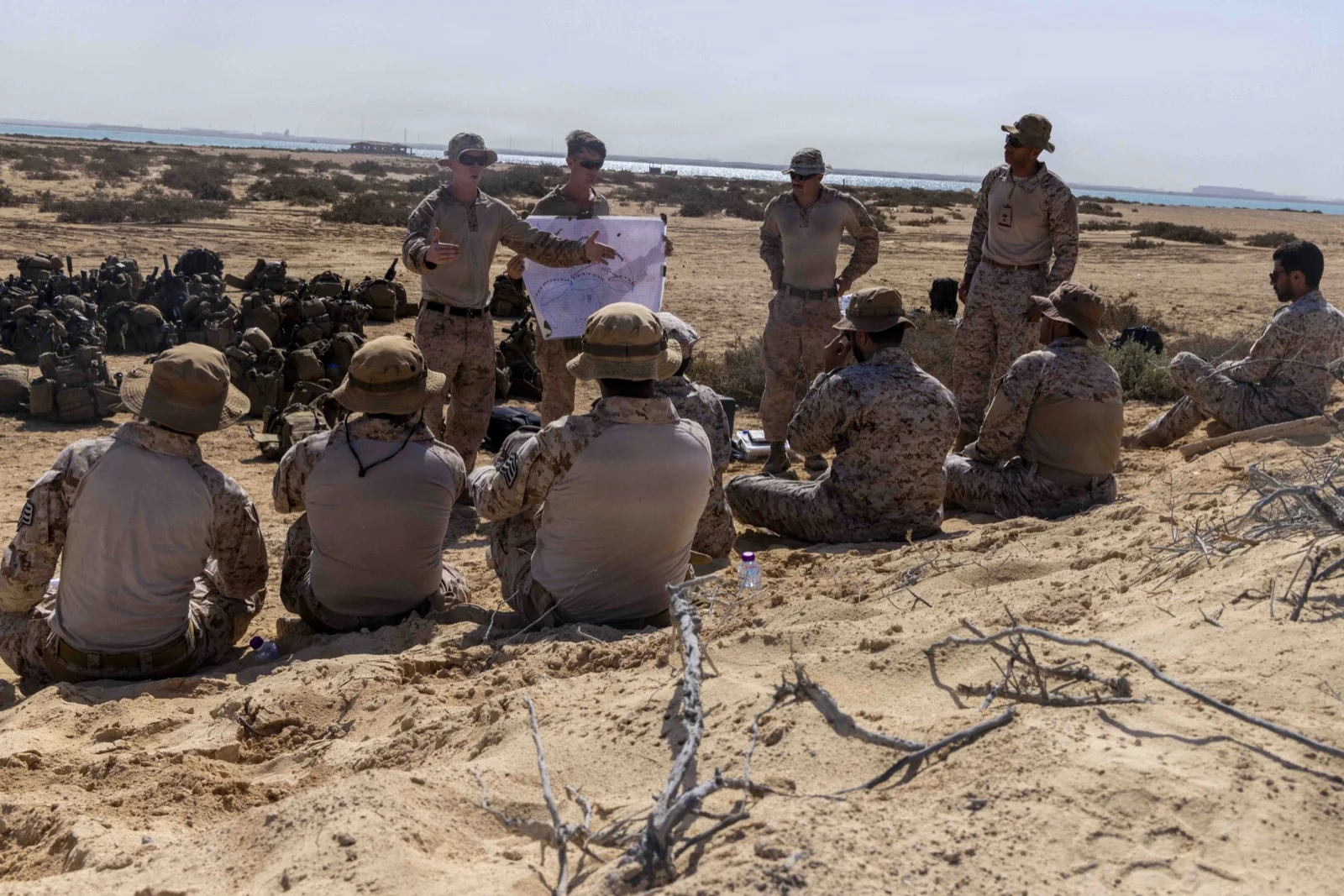
Saudi Arabia fields the region’s fourth-largest army at 247,000, yet spends the most of any Middle Eastern state at $63.99 billion. Spending per soldier exceeds even Israel’s, a clear signal that Riyadh’s force structure is entirely technology and platform intensive.
Air power sits at the centre: 917 aircraft including 283 fighters, with F-15SA, Typhoon and Tornado fleets backed by Patriot and THAAD layers. Years of countering ballistic missile and drone attacks from Yemen have driven Saudi Arabia to build one of the most comprehensive missile defence networks in the region.
One structural detail stands out: alongside the regular army, the Saudi Arabian National Guard operates under a separate chain of command and carries significant personnel and heavy armoured capacity of its own. The naval picture is comparatively weak — 32 vessels and no submarines. Vision 2030’s localisation goal, pursued through SAMI, has brought co-production talks with a number of partners including Türkiye.
Saudi Arabia fields 54,000 more troops than Iraq on eight times the defence budget.
| Capability | Total |
|---|---|
| Active personnel | 247,000 |
| Tanks | 1,085 |
| Total aircraft | 917 |
| Helicopters | 264 |
| Defence budget | $63.99 bn |
The top three are the countries that dominate the region by sheer inventory size.
#3Egypt
Active military personnel
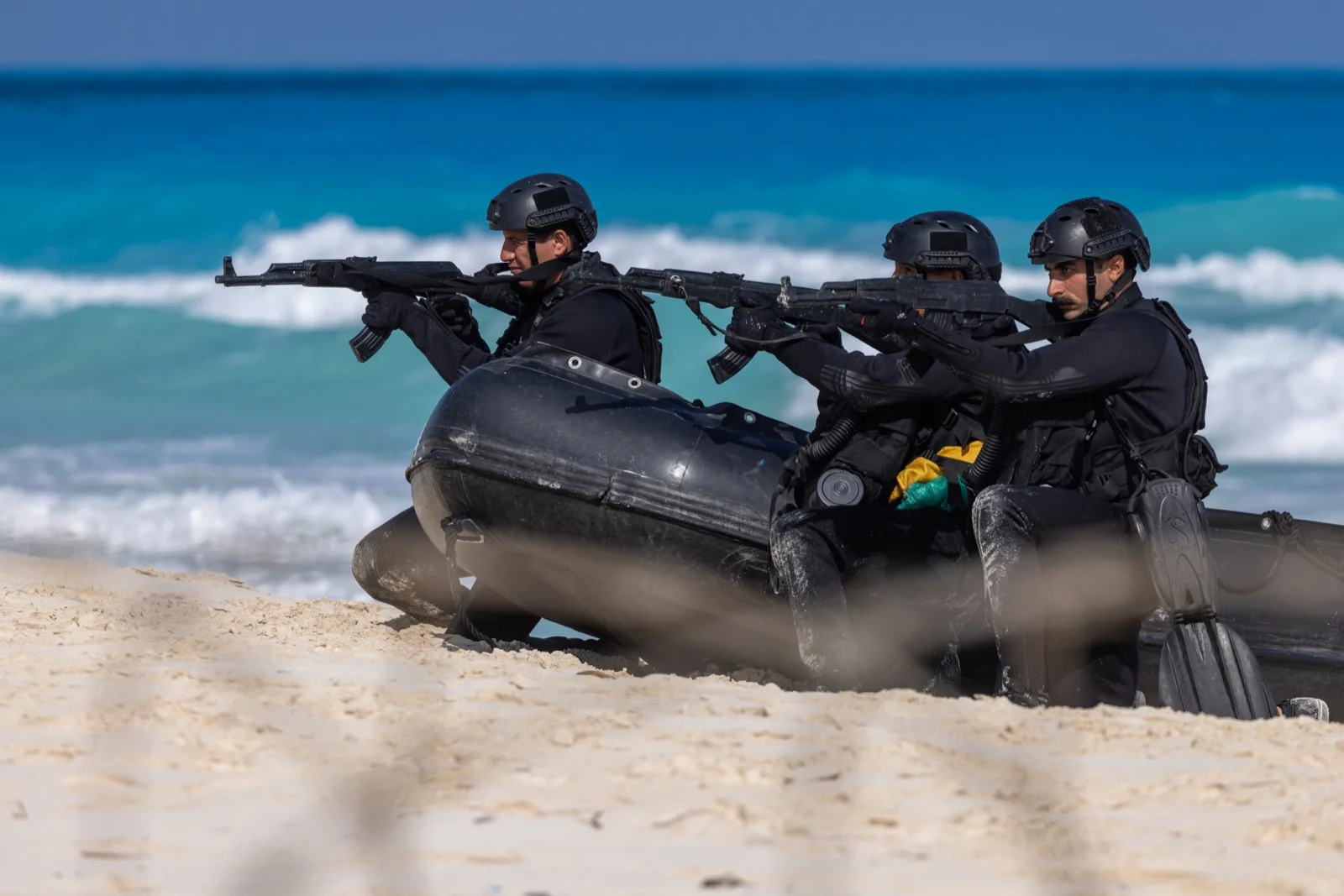
Egypt fields the Middle East’s third-largest army at 438,500 active personnel and is the region’s clear leader by inventory size: 3,620 tanks, 1,088 aircraft, 348 helicopters, 149 naval vessels and 8 submarines make it a militarily significant state well beyond its region.
That force structure follows from having to cover three strategic directions at once. To the east, the Sinai and the Israeli border; to the west, a long and unstable frontier with Libya; to the south, the Nile waters dispute and the conflict in Sudan. Add to that maritime security in the Red Sea and the Suez Canal, one of the country’s most important sources of foreign currency.
Egyptian procurement is distinctive in its own right. Alongside annual US military assistance, Cairo has bought Rafale fighters and FREMM frigates from France, Type 209 submarines from Germany, MiG-29M fighters and Ka-52 helicopters from Russia and further FREMMs from Italy. That diversity spreads embargo risk but creates a complex training and sustainment picture. Localisation efforts continue through the Kader plant and other military production facilities.
Egypt fields 191,500 more troops than Saudi Arabia and more than three times the tanks — on roughly a twelfth of the Saudi budget.
| Capability | Total |
|---|---|
| Active personnel | 438,500 |
| Tanks | 3,620 |
| Total aircraft | 1,088 |
| Helicopters | 348 |
| Defence budget | $5.19 bn |
Second place belongs to the regional army that builds the largest share of its own inventory.
#2Türkiye
Active military personnel
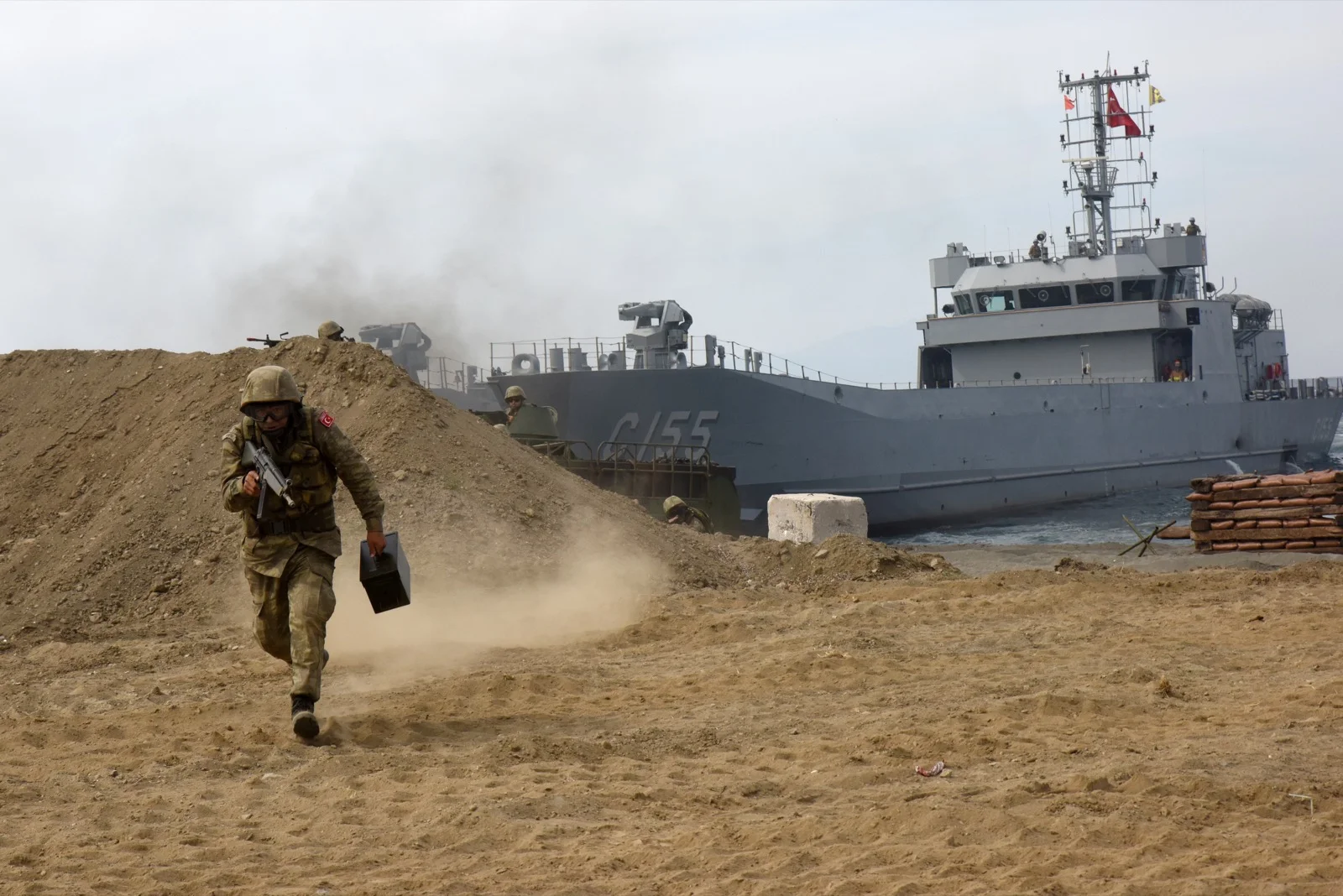
Türkiye fields the Middle East’s second-largest army at 481,000 active personnel and the second-largest force in NATO after the United States. What sets the Turkish Armed Forces apart on this list, though, is not headcount but the composition of the inventory and the procurement model behind it.
The numbers make the regional balance plain: 2,284 tanks, 1,101 aircraft, 509 helicopters and 192 naval vessels. In helicopters Türkiye operates not merely the region’s largest fleet but the largest in Europe outside Russia. It also leads the region in naval vessel count. This is the force structure of a country with coastlines on two seas, maintaining readiness simultaneously in the Aegean, the Eastern Mediterranean, the Black Sea and along its southern border.
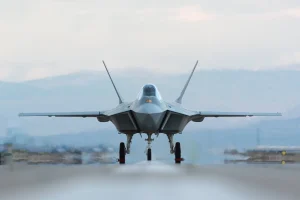
The real difference is in supply. A steadily growing share of the inventory is built at home: the ALTAY main battle tank has entered serial production; the MİLGEM family of frigates and corvettes forms the backbone of the navy; the T129 ATAK and T929 ATAK-2 helicopters are domestic designs; and the Bayraktar TB2, Akıncı and KIZILELMA unmanned aircraft compete globally in their classes. The KAAN national combat aircraft continues prototype flight testing.
The operational consequence is a different kind of endurance. Because maintenance, upgrades and munitions supply can be handled domestically, embargo exposure is substantially reduced and the logistics chain in a prolonged operation depends far less on outside suppliers. Türkiye has also converted that capacity into exports, and maintains defence-industrial cooperation with several countries on this very list.
Türkiye fields 42,500 more troops than Egypt and, with 509 helicopters and 192 naval vessels, the region’s largest rotary and naval forces.
| Capability | Total |
|---|---|
| Active personnel | 481,000 |
| Tanks | 2,284 |
| Total aircraft | 1,101 |
| Helicopters | 509 |
| Defence budget | $51.40 bn |
The country at the top has the region’s largest army — and a serious question mark over the age of its inventory.
#1Iran
Active military personnel
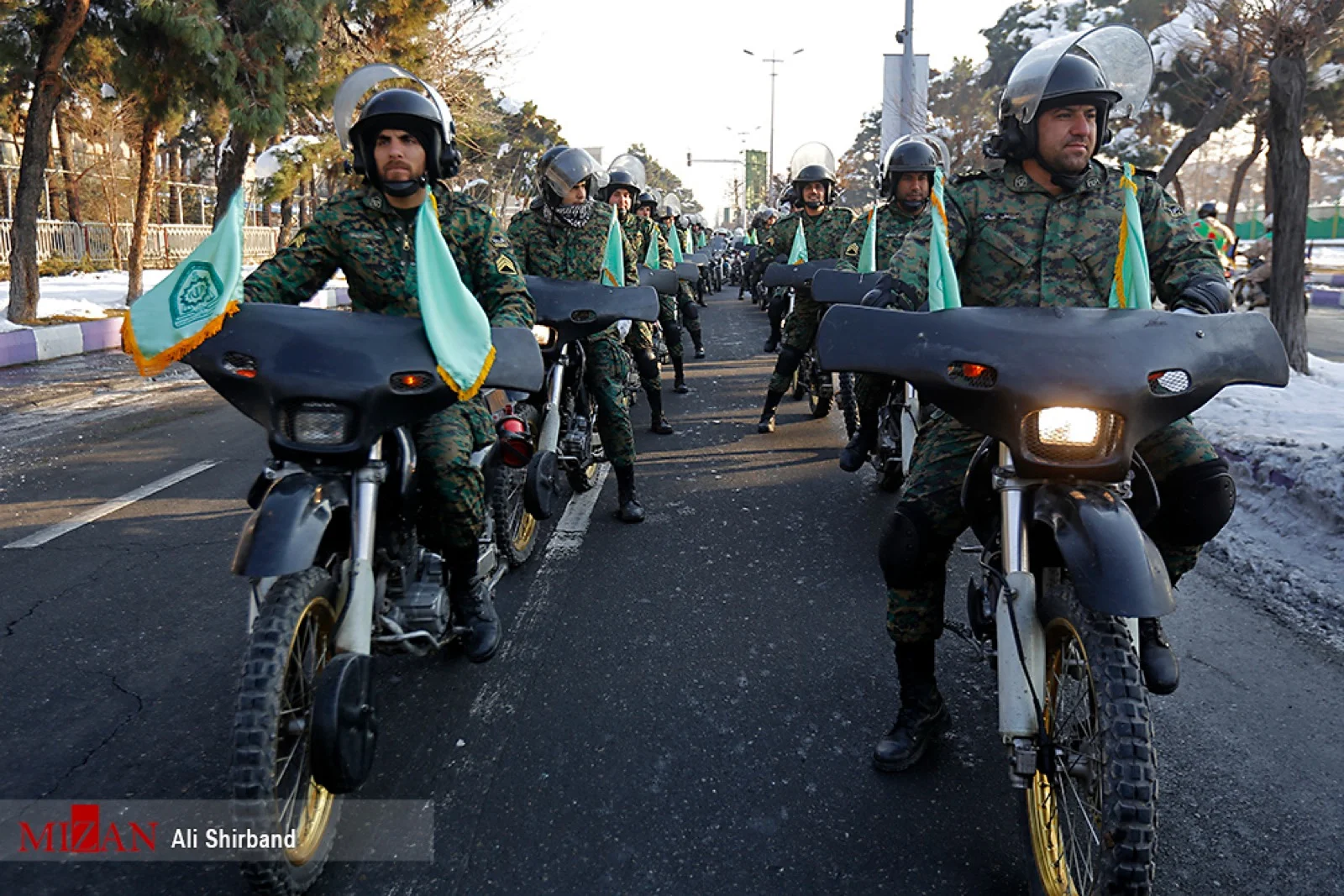
Iran fields the Middle East’s largest army at 610,000 active personnel. Reading that figure requires understanding the country’s dual force structure: the regular Artesh and the Revolutionary Guard operate under separate chains of command as parallel organisations — a design criticised on coordination grounds but deliberate from a regime security perspective.
The inventory holds 2,675 tanks, 551 aircraft, 129 helicopters and 109 naval craft. Its critical problem is age. After decades of arms embargo, the backbone of the air force still consists of F-14, F-4 and F-5 airframes acquired in the 1970s, sustained with domestically manufactured parts. Most of the armoured force consists of Soviet-era T-72s and locally upgraded variants.
Iran tries to offset that gap asymmetrically. Its ballistic missile programme constitutes one of the largest inventories in the region, and the Shahed family of unmanned aircraft is built around low-cost mass employment. At sea, 25 submarines and a large number of fast attack craft are positioned to pose an asymmetric threat in the Strait of Hormuz. A $9.23 billion budget is extremely tight for a force this size — spending per soldier is the lowest on this list.
Iran fields 129,000 more troops than Türkiye on just 18 per cent of the Turkish defence budget, and operates roughly a quarter as many helicopters.
| Capability | Total |
|---|---|
| Active personnel | 610,000 |
| Tanks | 2,675 |
| Total aircraft | 551 |
| Helicopters | 129 |
| Defence budget | $9.23 bn |
A headcount ranking places Türkiye behind Iran. Read alone, that is misleading. In GlobalFirepower’s overall military strength ranking Türkiye stands 9th in the world and 1st in the Middle East, while Iran sits 16th globally. The gap comes not from personnel numbers but from the modernity of the inventory, readiness rates and industrial capacity.
The concrete comparison: Türkiye operates 509 helicopters against Iran’s 129, 192 naval vessels against 109, and 1,101 aircraft against 551. Most of the Turkish air inventory consists of upgraded F-16 Block 30/40/50 airframes, with indigenous avionics being integrated through the Özgür modernisation programme.
National programmes will decide the coming decade. Serial production of the KAAN fighter will shift the air superiority equation; KIZILELMA, operating alongside TCG Anadolu, adds sea-based strike; ALTAY deliveries will lower the average age of the armoured force; and the MİLGEM family with the TF-2000 air defence destroyer will underpin a durable naval position in the Eastern Mediterranean. Being second by headcount does not prevent being first by power.
How much does headcount actually decide in the Middle East?
The central lesson of this table is how weak the link between personnel numbers and military power is in this region. Iran tops the list but sits seven places behind Türkiye in overall strength. Egypt is third yet leads the region in inventory size. Israel is sixth yet tops the list in spending per soldier. Reading the headcount alone means treating three entirely different defence models as if they were the same.
The second lesson is that three force models coexist here. The first is mass land power: Iran, Egypt and Jordan follow it, with large personnel numbers, large armoured inventories and comparatively low technology density. The second is the small technology-intensive force: Israel and the Gulf states, with few troops, high budgets and advanced platforms. The third is the hybrid model Türkiye has pursued — large personnel strength, a high-technology inventory, and a domestic industry that feeds both.
Third, reserve systems change the picture. This ranking counts only active personnel. Israel can multiply its strength several times over on mobilisation; Türkiye’s reserve pool far exceeds its active force; Iran’s paramilitary structures such as the Basij constitute a separate manpower reservoir. In a real conflict scenario the order would look meaningfully different.
Fourth, the vast budget gaps do not translate directly into inventory. Saudi Arabia spends $63.99 billion and Egypt declares $5.19 billion — yet Egypt fields more than three times as many tanks. Financing models, external military assistance and the average age of equipment account for the difference. Reading a budget requires knowing how it is funded.
The final lesson is that domestic industry is the fastest-widening dividing line in the region. Türkiye, Israel and, to a limited degree, Iran can build their own platforms; Saudi Arabia and the UAE are taking early steps along the same road. Armies that build their own equipment are less exposed to embargoes and supply crises, and they set their own modernisation timetables. Over the next decade the real dividing line in the Middle East will not be army size — it will be who can make their own munitions, their own platforms and their own spare parts.
Comparison table: the Middle East’s ten largest armies (2026)
| # | Country | Active personnel | Tanks | Aircraft | Helicopters | Defence budget |
|---|---|---|---|---|---|---|
| 1 | Iran | 610,000 | 2,675 | 551 | 129 | $9.23 bn |
| 2 | Türkiye | 481,000 | 2,284 | 1,101 | 509 | $51.40 bn |
| 3 | Egypt | 438,500 | 3,620 | 1,088 | 348 | $5.19 bn |
| 4 | Saudi Arabia | 247,000 | 1,085 | 917 | 264 | $63.99 bn |
| 5 | Iraq | 193,000 | 1,188 | 360 | 183 | $8.00 bn |
| 6 | Israel | 169,500 | 1,300 | 597 | 127 | $34.60 bn |
| 7 | Jordan | 114,500 | 1,508 | 279 | 159 | $2.67 bn |
| 8 | Syria | 100,000 | 168 | 104 | 39 | $0.15 bn |
| 9 | Oman | 100,000 | 264 | 128 | 31 | $8.36 bn |
| 10 | Lebanon | 80,000 | 334 | 80 | 68 | $0.80 bn |
A new ranking tomorrow
Coming next: the ten European countries Türkiye has overtaken in the military strength ranking.
Frequently Asked Questions
Which Middle Eastern country has the largest army?
Iran, with 610,000 active personnel, ahead of Türkiye (481,000) and Egypt (438,500).
Where does Türkiye rank by army size in the Middle East?
Second, with 481,000 active personnel. In GlobalFirepower’s overall military strength ranking Türkiye is first in the Middle East and ninth in the world.
Does this ranking include reserves?
No. It covers active military personnel only. Reserves, gendarmerie and paramilitary formations are excluded — a distinction that matters most for countries such as Israel and Iran.
Which Middle Eastern country has the largest military inventory?
Egypt, with 3,620 tanks, 1,088 aircraft, 348 helicopters, 149 naval vessels and 8 submarines. Türkiye leads the region in helicopters and naval vessels.
What is the source of these figures?
GlobalFirepower’s 2026 active military personnel dataset, with inventory and budget figures drawn from the same source.
Sources
- GlobalFirepower 2026 active military manpower ranking
- IISS The Military Balance
- SIPRI Military Expenditure Database
- Turkish Presidency of Defence Industries (SSB) statements
- National defence ministry statements
- Source: https://www.globalfirepower.com/