Africa’s 10 Largest Standing Armies (2026)

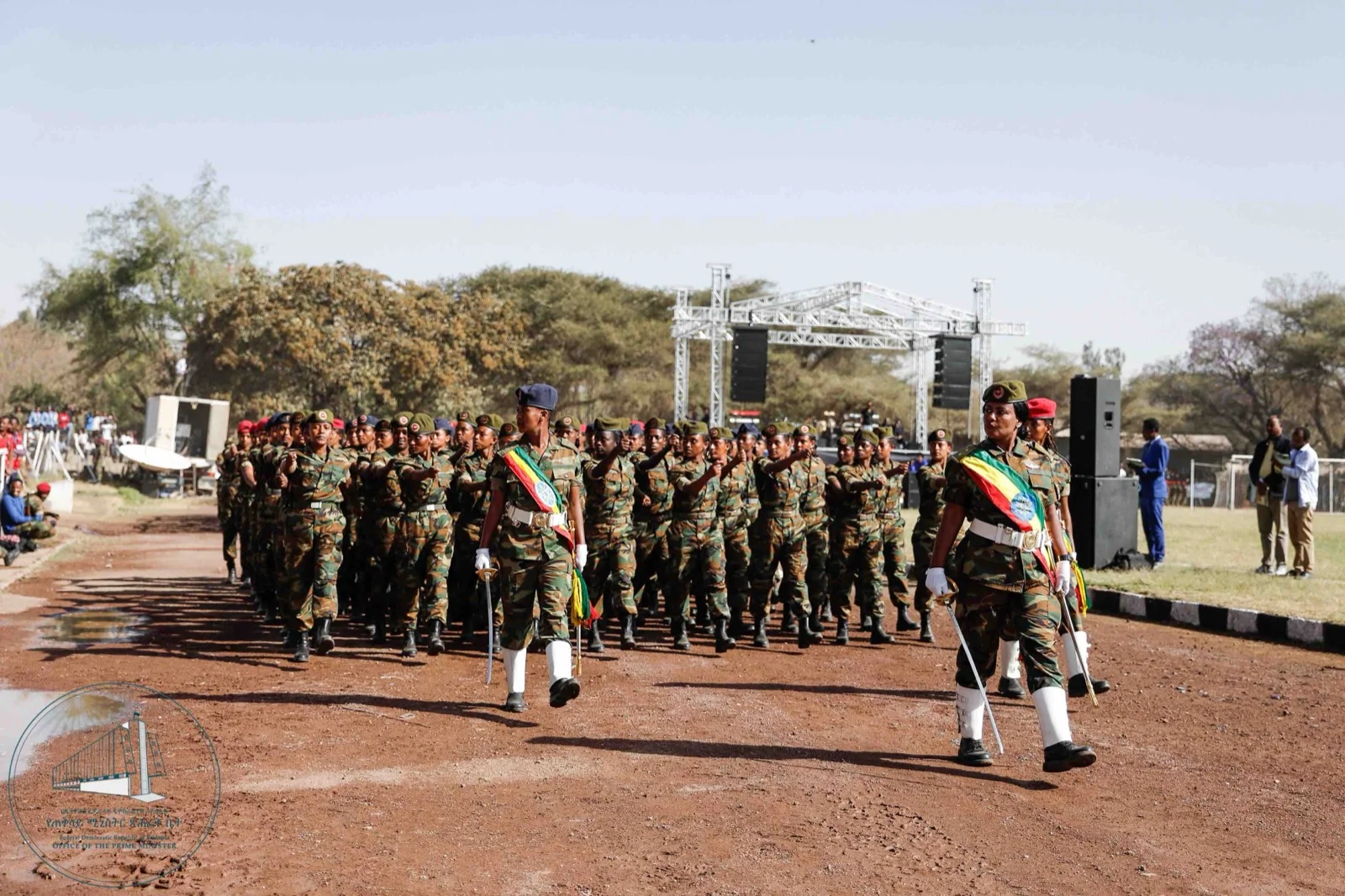
Headcount is the most argued-over metric in modern warfare. Technology-heavy militaries keep shrinking their establishments, yet across much of the world large standing armies remain the foundation of national security. Africa is the clearest example of the second model: long borders, long histories of internal conflict and limited air and naval capacity all put manpower at the centre.
Reading those numbers, though, takes more than arithmetic. In some countries a large army is the product of an active war; in others, of indefinite conscription; in others again, of regional rivalry. The same figure of 300,000 can mean entirely different things in two neighbouring states.
So which ten African countries field the largest standing armies in 2026? Is Egypt at the top or someone else, how does one country keep nearly a tenth of its population under arms, and where would Türkiye rank if it were included? The countdown starts at ten.
The ranking uses GlobalFirepower’s 2026 active military personnel data. The figures count serving regulars only; reserves and paramilitary forces are excluded. That distinction matters, because in several African states paramilitary formations outnumber the regular army.
#10Angola
Active military personnel · Central Africa
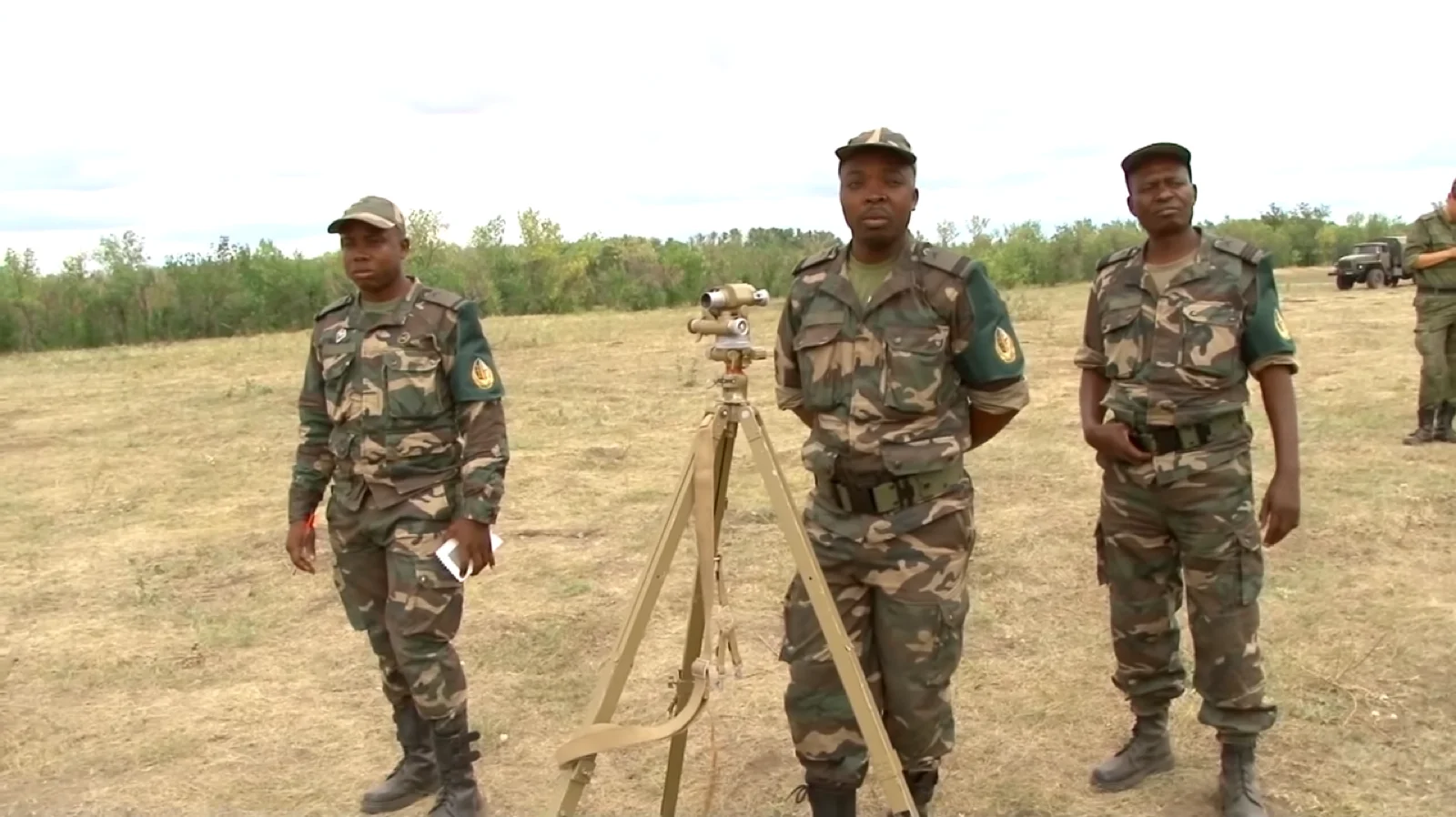
Angola opens the list with 107,000 active personnel. Its armed forces are built on the legacy of a civil war that ended in 2002; large-scale demobilisation followed, but the army remained strong by regional standards.
A defence budget of $31.2 billion is remarkable for sub-Saharan Africa, and oil revenue pays for it. The inventory includes 319 tanks, 278 aircraft and 67 fighters — an air capability few countries in southern Africa can match, reinforced by the acquisition of Su-30K aircraft.
Luanda’s security agenda centres on internal stability and protecting energy infrastructure. Oil facilities in Cabinda and the security of a long coastline make naval investment unavoidable. Angola also contributes personnel to regional peace operations.
Angola fields 23,000 fewer troops than Algeria, yet spends $6.2 billion more on defence.
| Capability | Total |
|---|---|
| Active personnel | 107,000 |
| Tanks | 319 |
| Total aircraft | 278 |
| Helicopters | 115 |
| Defence budget | $31.20 bn |
One place higher sits one of the most modern inventories on the continent.
#9Algeria
Active military personnel · North Africa
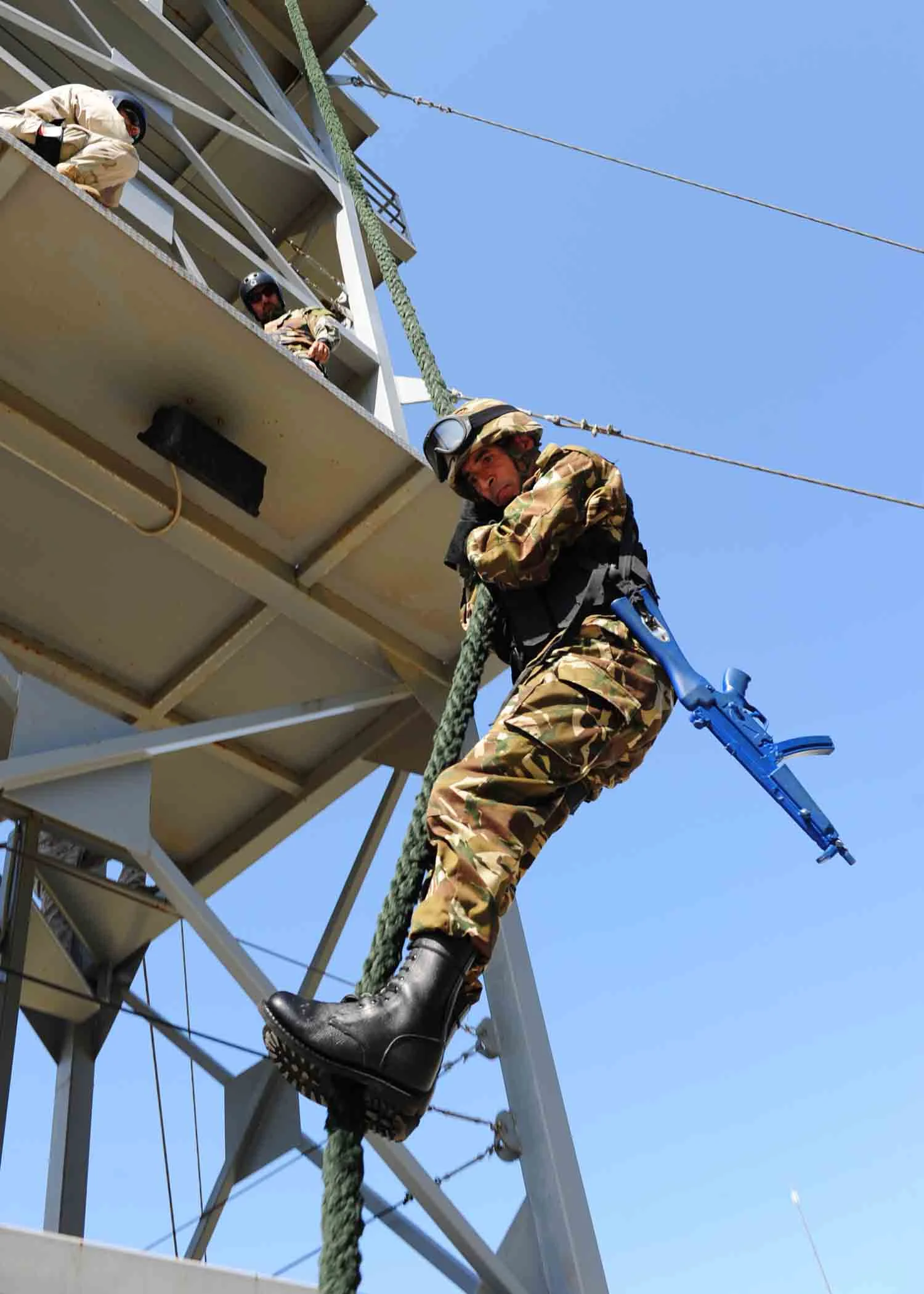
Algeria ranks ninth with 130,000 troops — a figure that badly understates its actual strength. Algeria fields one of Africa’s most modern inventories: 1,485 tanks, 620 aircraft, 300 helicopters and six submarines.
The Algerian model substitutes firepower and technology for mass infantry. Most of the inventory is Russian in origin: T-90SA tanks, Su-30MKA fighters, the S-400 air defence system and Kilo-class submarines. With $25 billion in defence spending, Algeria is among the continent’s biggest spenders.
Two issues drive Algerian planning: long-running rivalry with Morocco, and the security vacuum in the Sahel. Instability along the Malian and Nigerien borders has pushed heavy investment into frontier security. Algiers has also begun diversifying suppliers, with Chinese and European systems entering service.
Algeria has 36,000 fewer troops than the Democratic Republic of the Congo, but seven times the tanks and eleven times the aircraft.
| Capability | Total |
|---|---|
| Active personnel | 130,000 |
| Tanks | 1,485 |
| Total aircraft | 620 |
| Helicopters | 300 |
| Defence budget | $25.00 bn |
The next country has to hold one of Africa’s largest territories.
#8Democratic Republic of the Congo
Active military personnel · Central Africa
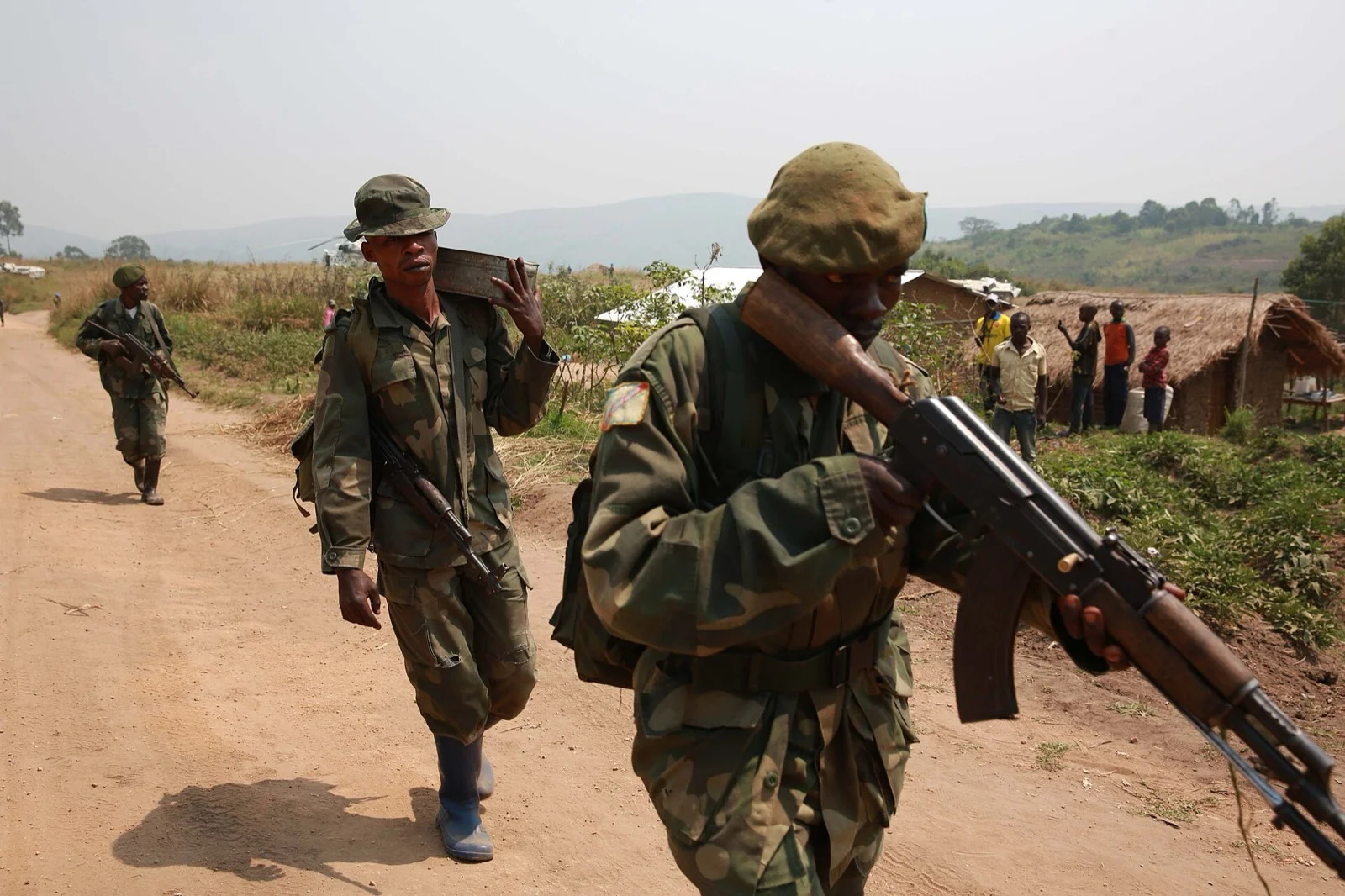
The Democratic Republic of the Congo takes eighth place with 166,580 troops. It is the second-largest country in Africa by area, and state authority is thin across much of that territory. Sheer geography and a long-running conflict in the east explain the size of the force.
The FARDC is essentially a light infantry army. An inventory of 212 tanks and 56 aircraft is extremely modest for a country this large. The air force operates no fighter aircraft at all, and 38 helicopters carry almost the entire burden of mobility.
Fighting armed groups in the east remains the army’s primary task. Kinshasa has begun allocating budget to modernisation, including unmanned aerial systems and defence cooperation agreements with several countries including Türkiye. A defence budget of $960 million, however, is very small against the territory and threat profile involved.
The DRC fields 36,000 more troops than Algeria on roughly four per cent of the defence budget.
| Capability | Total |
|---|---|
| Active personnel | 166,580 |
| Tanks | 212 |
| Total aircraft | 56 |
| Helicopters | 38 |
| Defence budget | $0.96 bn |
The next country has never reduced its army since independence.
#7South Sudan
Active military personnel · East Africa
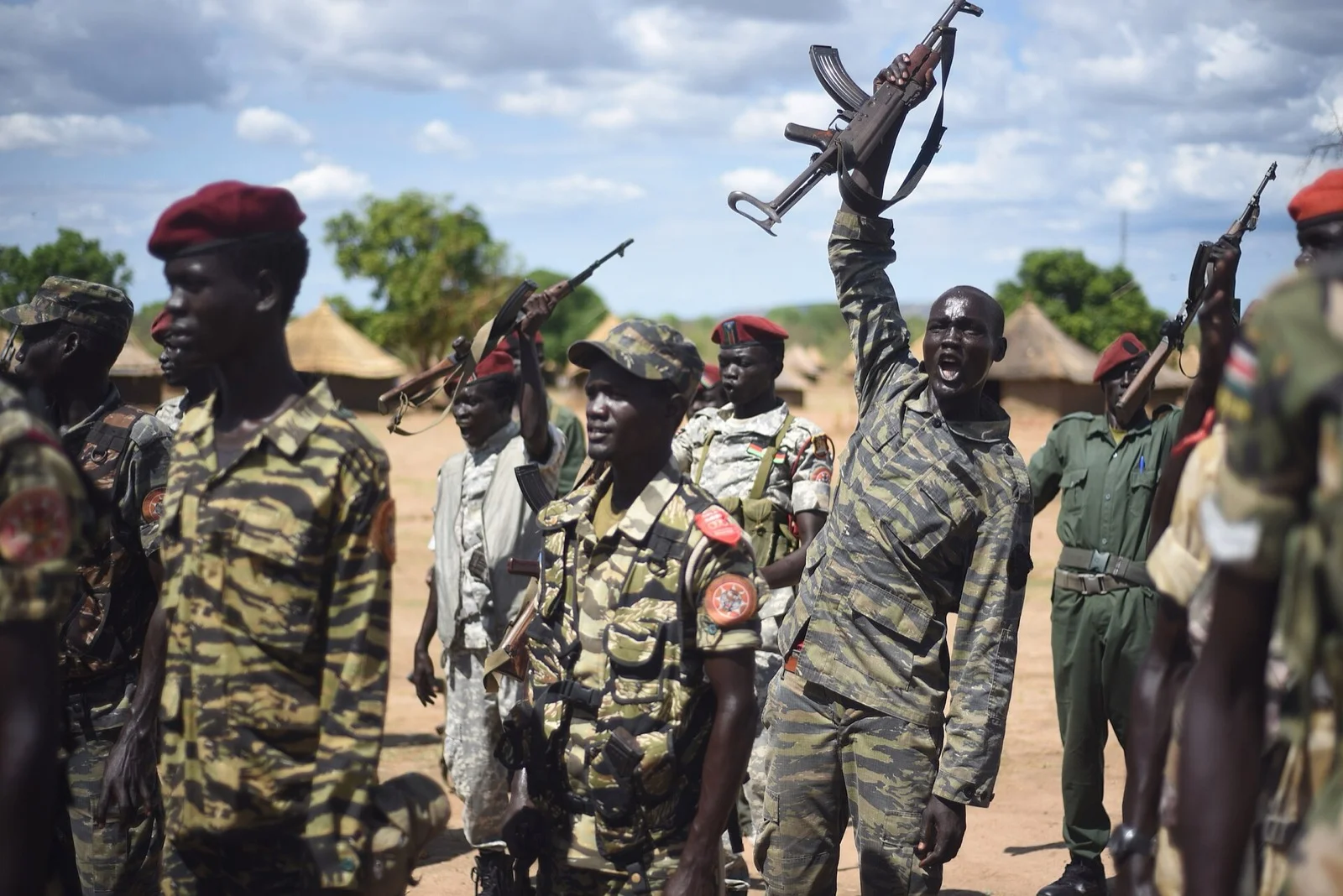
South Sudan, independent only since 2011, ranks seventh with 185,000 active personnel. Against a population of roughly 12 million, that makes it one of the most heavily militarised societies on the continent.
The size of the force follows directly from how the state was formed. The SPLA, a guerrilla movement before independence, became the regular army at statehood; the subsequent civil war then absorbed additional armed groups into its ranks. Peace agreements envisage consolidating those factions into a single unified national army.
The inventory is minimal: 122 tanks, 19 aircraft, 15 helicopters, no fighters and no navy. A defence budget of $30.7 million — the lowest on this list — confirms that this is an almost entirely light infantry force. Swings in oil revenue have at times disrupted even salary payments.
South Sudan fields more troops than the DRC on roughly one-thirtieth of its defence budget.
| Capability | Total |
|---|---|
| Active personnel | 185,000 |
| Tanks | 122 |
| Total aircraft | 19 |
| Helicopters | 15 |
| Defence budget | $0.03 bn |
Into the top six — starting with Africa’s most populous country.
#6Nigeria
Active military personnel · West Africa
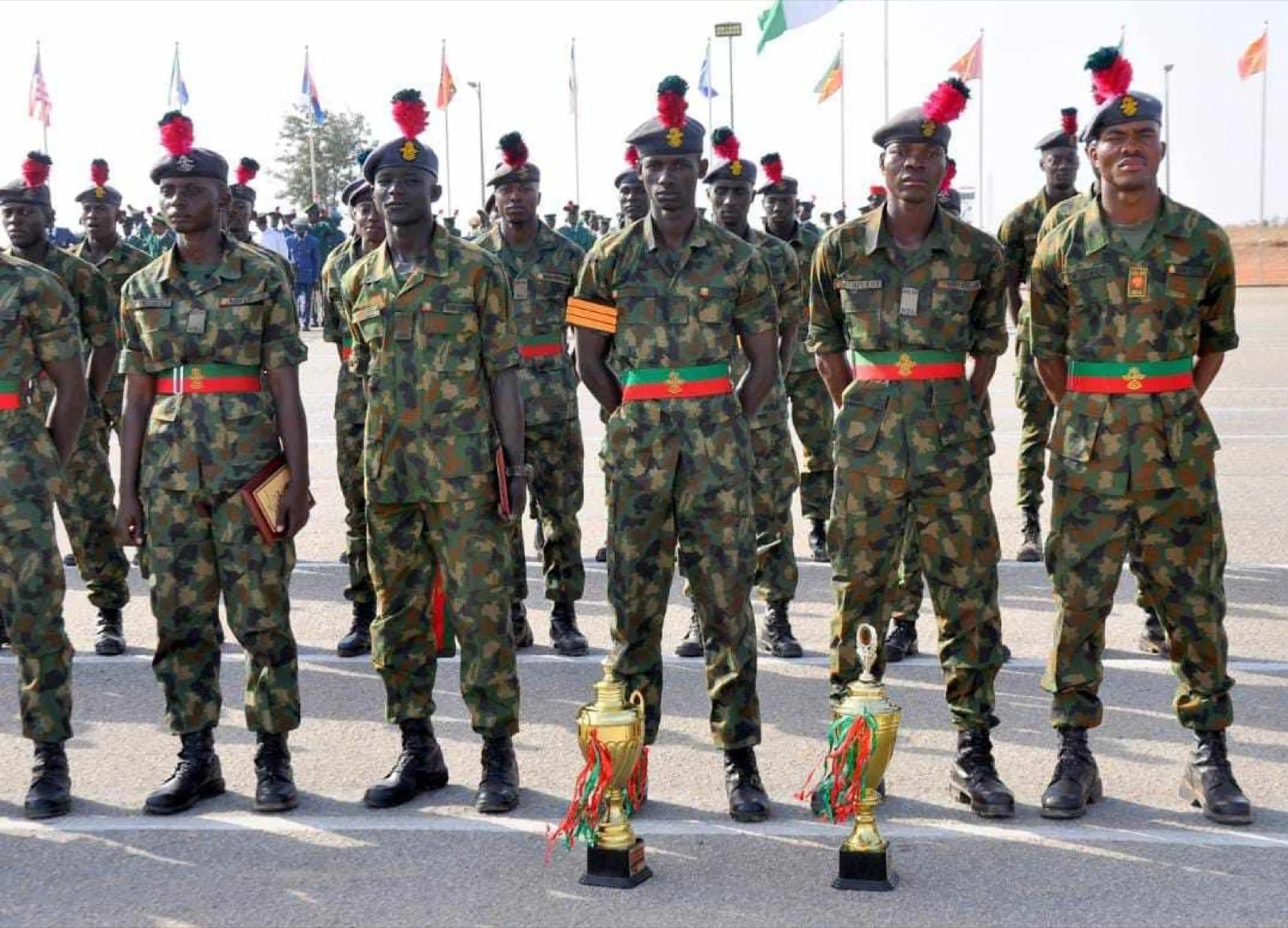
Nigeria, with more than 230 million people, is Africa’s most populous country and ranks sixth here with 230,000 active personnel. Its force structure is shaped by internal security rather than external threat.
Four missions define the daily agenda: countering Boko Haram and its offshoots in the northeast, organised criminal groups in the northwest, protecting oil infrastructure in the Niger Delta, and countering piracy in the Gulf of Guinea. A navy of 152 vessels, mostly patrol types, is among the largest in Africa.
The Nigerian air force has changed significantly in recent years. Unmanned aircraft procured from Türkiye transformed reconnaissance and strike reach across a vast country, and Abuja has added light attack aircraft to expand close air support. A $3.9 billion budget remains modest against the population and threat picture, and serviceability rates are a persistent problem.
Nigeria fields 45,000 more troops than South Sudan on a defence budget 127 times larger.
| Capability | Total |
|---|---|
| Active personnel | 230,000 |
| Tanks | 330 |
| Total aircraft | 159 |
| Helicopters | 69 |
| Defence budget | $3.90 bn |
The next army is fighting a war right now.
#5Sudan
Active military personnel · Northeast Africa

Sudan holds fifth place with 300,000 active personnel, a figure driven directly by the armed conflict under way since 2023. Facing a paramilitary force, the Sudanese Armed Forces have had to expand continuously.
The inventory includes 1,055 tanks, 183 aircraft and 37 fighters — serious land power by sub-Saharan standards. Most of it is previous-generation Soviet and Chinese equipment, and the ongoing fighting places severe strain on maintenance and resupply.
Geography makes Sudan strategically consequential: a Red Sea coastline, the Nile corridor with Egypt, and routes into the Sahel. That position attracts outside actors and has given the conflict a regional dimension. The official defence budget of $394.7 million bears little relation to the real cost, much of which is financed off-budget.
Sudan fields 70,000 more troops than Nigeria and three times as many tanks, on roughly a tenth of the budget.
| Capability | Total |
|---|---|
| Active personnel | 300,000 |
| Tanks | 1,055 |
| Total aircraft | 183 |
| Helicopters | 64 |
| Defence budget | $0.39 bn |
Fourth place goes to one of the most militarised societies on earth.
#4Eritrea
Active military personnel · East Africa
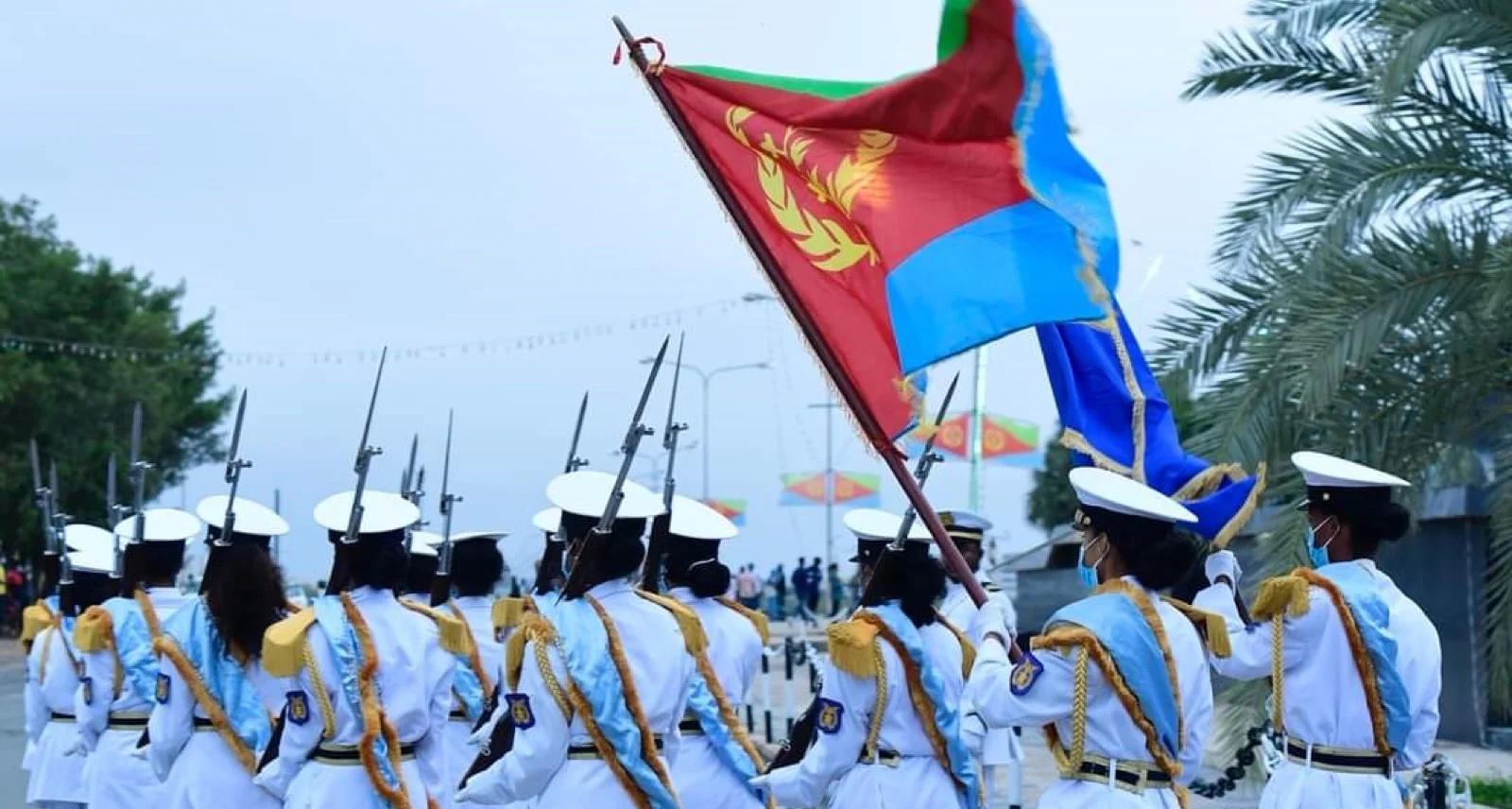
Eritrea has a population of roughly 3.7 million and keeps 350,000 people under arms — close to a tenth of its citizens. Almost no other country in the world approaches that ratio.
The explanation is indefinite national service. Conscription in Eritrea is not bounded by a fixed term, and large parts of the population serve for many years in military or civilian national service roles. The system became permanent after the border war with Ethiopia.
The inventory is correspondingly thin: 148 tanks, 20 aircraft, a single fighter and 13 helicopters. A defence budget of $219 million confirms that this army is sustained by manpower rather than technology, structured around light infantry and border security.
The 2018 peace agreement with Ethiopia reshaped regional dynamics, but developments in Tigray and the wider argument over Red Sea access keep Asmara’s readiness posture high.
Eritrea fields 50,000 more troops than Sudan with a seventh of the tanks and a twentieth of the aircraft.
| Capability | Total |
|---|---|
| Active personnel | 350,000 |
| Tanks | 148 |
| Total aircraft | 20 |
| Helicopters | 13 |
| Defence budget | $0.22 bn |
Into the top three, and one of North Africa’s biggest land forces.
#3Morocco
Active military personnel · North Africa
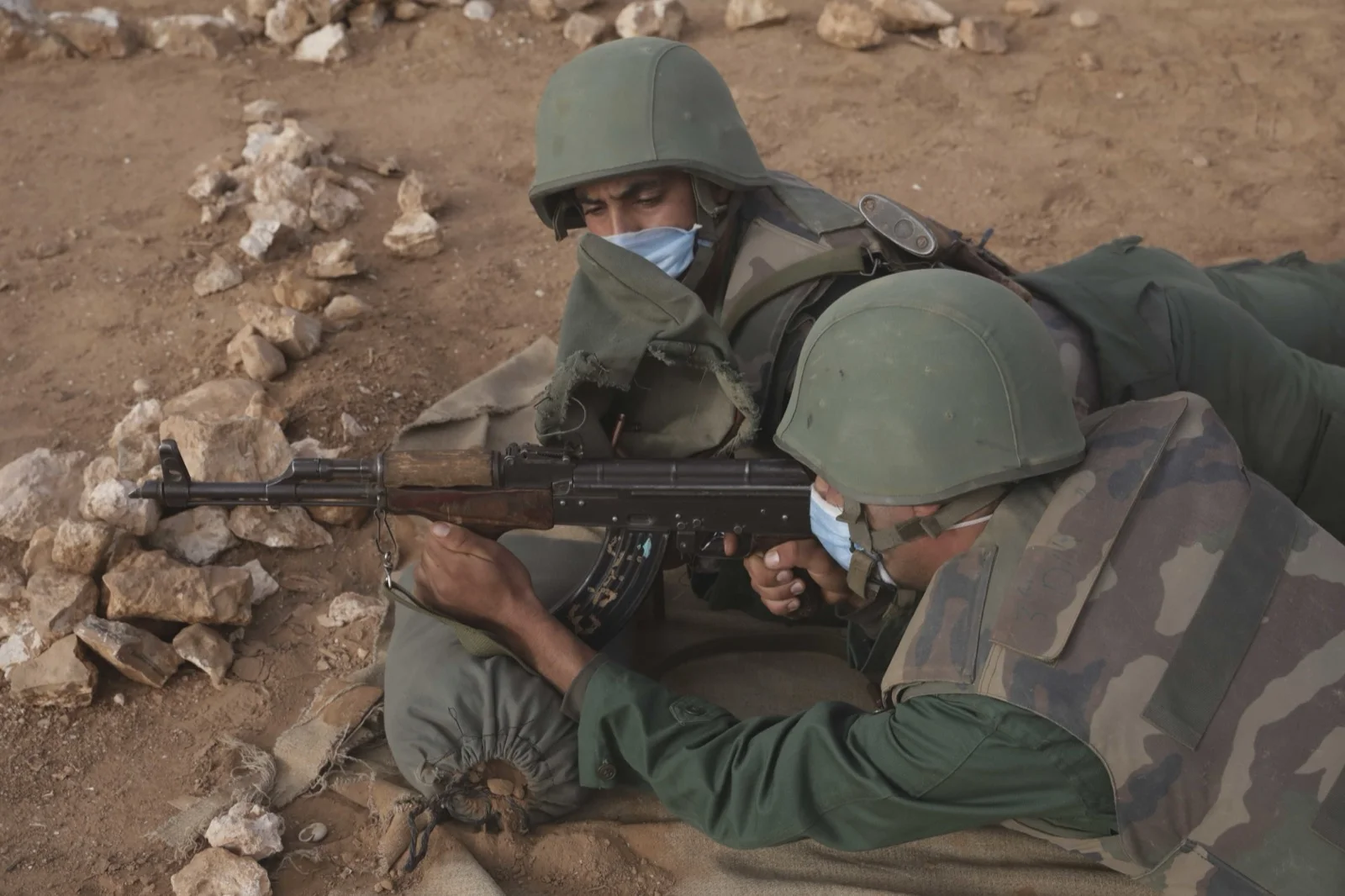
Morocco fields Africa’s third-largest army at 400,000 active personnel, sized against the long-running Western Sahara question and regional rivalry with Algeria. Moroccan forces have to hold an extended defensive line in permanent readiness.
An inventory of 1,346 tanks makes Morocco the third-largest armoured force on the continent after Egypt and Algeria. Rabat has been modernising quickly: Abrams tanks, F-16 Block 72 fighters, HIMARS systems and expanding defence cooperation with Israel are all part of that programme.
Moroccan defence industry is growing too. The country has created dedicated industrial zones and signed co-production agreements with foreign manufacturers. Relations with Türkiye have developed along the same lines, with Morocco among the African operators of Turkish unmanned aircraft. Its $16.1 billion budget is the second largest in North Africa after Algeria.
Morocco fields 50,000 more troops than Eritrea, with nine times the tanks and thirteen times the aircraft.
| Capability | Total |
|---|---|
| Active personnel | 400,000 |
| Tanks | 1,346 |
| Total aircraft | 271 |
| Helicopters | 73 |
| Defence budget | $16.10 bn |
Second place belongs to the largest military in the Arab world.
#2Egypt
Active military personnel · North Africa
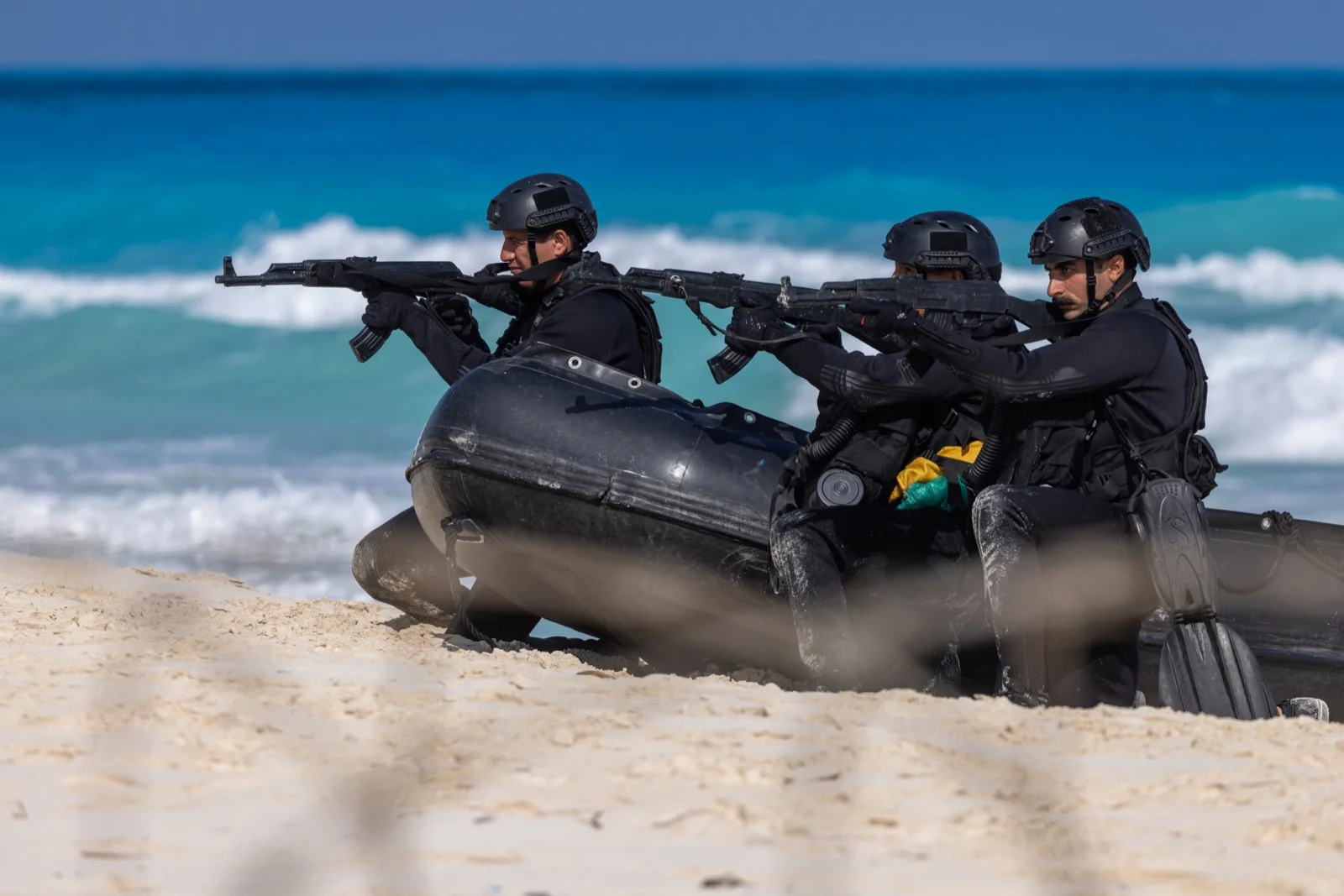
Egypt fields 438,500 active personnel — second in Africa by headcount and first by a wide margin on inventory depth. With 3,620 tanks, 1,088 aircraft, 149 naval vessels and eight submarines, no other African country comes close.
The size of the Egyptian military reflects a multi-directional security equation rather than a single threat: instability in Libya to the west, civil war in Sudan to the south, security operations in Sinai to the east, and the Nile dam dispute upstream. Securing the Suez Canal adds a global dimension.
Supplier diversity is the inventory’s defining trait, with American, French, Russian, German, Italian and Chinese systems all in service. That brings political flexibility and a complicated sustainment picture. Egypt is also the only African operator of helicopter carriers, with two Mistral-class ships.
Egypt fields 38,500 more troops than Morocco, with more than twice the tanks and four times the aircraft.
| Capability | Total |
|---|---|
| Active personnel | 438,500 |
| Tanks | 3,620 |
| Total aircraft | 1,088 |
| Helicopters | 348 |
| Defence budget | $5.19 bn |
And at the top, the country that outnumbers Egypt — on manpower, not hardware.
#1Ethiopia
Active military personnel · East Africa
Ethiopia leads Africa with 503,000 active personnel, 64,500 more than Egypt. It is the clearest illustration on this list that the continental balance of power cannot be read off inventory alone.
The force grew to this size during the Tigray conflict of 2020–2022 and stayed large after the fighting ended. A population of more than 130 million provides the manpower base to sustain an army on this scale.
The inventory is not proportionate: 338 tanks, 104 aircraft, 25 fighters and 33 helicopters. Ethiopia is also landlocked, having lost sea access with Eritrean independence in 1993, and has no navy — which is why Red Sea access sits at the centre of Addis Ababa’s foreign policy.
Ethiopia has started investing in air capability, and unmanned aircraft procurement has transformed reconnaissance and strike reach across rugged terrain. Addis Ababa is also trying to build a domestic defence industry. But a $3.72 billion budget is a very thin resource for modernising a 503,000-strong army. This force’s strength lies in scale and defensive depth in mountainous terrain, not in technology.
Ethiopia fields 64,500 more troops than Egypt with about a tenth of the tanks and a tenth of the aircraft.
| Capability | Total |
|---|---|
| Active personnel | 503,000 |
| Tanks | 338 |
| Total aircraft | 104 |
| Helicopters | 33 |
| Defence budget | $3.72 bn |
What Africa’s manpower map actually shows
The first conclusion is how weakly troop numbers correlate with military power on this continent. Ethiopia tops the list with roughly a tenth of Egypt’s inventory. Eritrea ranks fourth while operating a single fighter aircraft. Algeria sits ninth with one of the most modern inventories in Africa.
The second is that most of these large armies are products of conflict. Ethiopia’s 503,000 came out of the Tigray war, Sudan’s 300,000 out of the current civil war, South Sudan’s 185,000 out of independence and the fighting that followed. These are forces built by necessity, not by peacetime planning.
The third is the sharp divide between North Africa and the sub-Saharan states. Egypt, Algeria and Morocco hold the bulk of the continent’s modern equipment: 6,451 tanks between them, against 2,524 for the other seven countries on this list combined. Hydrocarbon revenue, proximity to European markets across the Mediterranean and more established state structures explain the gap.
The fourth is how quickly unmanned systems are changing the equation. Nigeria, Ethiopia, Morocco and the DRC have all added armed UAVs in recent years. These platforms deliver reconnaissance and strike capability at a fraction of the cost of standing up a fighter fleet. Africa is the continent where drones have shifted military balances fastest, and Turkish systems sit at the centre of that shift.
The fifth conclusion is that the real test facing African militaries is financing modernisation. Sustaining a large army and building a modern inventory compete directly for the same money. Ethiopia supports 503,000 troops on $3.72 billion; South Sudan supports 185,000 on $30.7 million. Technology investment is nearly impossible at those levels. What will decide the military balance on the continent over the next decade is not who fields the most troops, but who directs a limited budget into the right capabilities — reconnaissance, unmanned systems, air defence and border security.
Comparison table: Africa’s ten largest standing armies (2026)
| # | Country | Active personnel | Tanks | Aircraft | Helicopters | Defence budget |
|---|---|---|---|---|---|---|
| 1 | Ethiopia | 503,000 | 338 | 104 | 33 | $3.72 bn |
| 2 | Egypt | 438,500 | 3,620 | 1,088 | 348 | $5.19 bn |
| 3 | Morocco | 400,000 | 1,346 | 271 | 73 | $16.10 bn |
| 4 | Eritrea | 350,000 | 148 | 20 | 13 | $0.22 bn |
| 5 | Sudan | 300,000 | 1,055 | 183 | 64 | $0.39 bn |
| 6 | Nigeria | 230,000 | 330 | 159 | 69 | $3.90 bn |
| 7 | South Sudan | 185,000 | 122 | 19 | 15 | $0.03 bn |
| 8 | DR Congo | 166,580 | 212 | 56 | 38 | $0.96 bn |
| 9 | Algeria | 130,000 | 1,485 | 620 | 300 | $25.00 bn |
| 10 | Angola | 107,000 | 319 | 278 | 115 | $31.20 bn |
| — | Türkiye (for comparison) | 481,000 | 2,284 | 1,101 | 509 | $51.40 bn |
A new ranking tomorrow
Coming next: the world’s largest air inventories, Europe’s biggest defence budgets and Asia’s largest helicopter fleets.
Frequently Asked Questions
Which African country has the largest army?
Ethiopia, with 503,000 active personnel, followed by Egypt (438,500) and Morocco (400,000).
Why is Eritrea’s army so large relative to its population?
Eritrea operates an indefinite national service system with no fixed term of duty, which keeps roughly a tenth of the population under arms.
Which African military has the strongest inventory?
Egypt, by a wide margin: 3,620 tanks, 1,088 aircraft, 149 naval vessels and eight submarines. Algeria and Morocco follow.
Where would Türkiye rank if included?
Second, with 481,000 active personnel, ahead of Egypt. On inventory, Türkiye holds capability approaching the combined total of the top three countries listed.
Does this ranking include reserves?
No. The figures count active serving personnel only; reserves and paramilitary forces are excluded.
Sources
- GlobalFirepower 2026 active military manpower ranking
- IISS The Military Balance
- SIPRI Military Expenditure Database
- African Union peace and security reporting
- National defence ministry statements
- Source: https://www.globalfirepower.com/