HÜRJET and the FA-50: How the Export Order Changed in the Jet Trainer Band

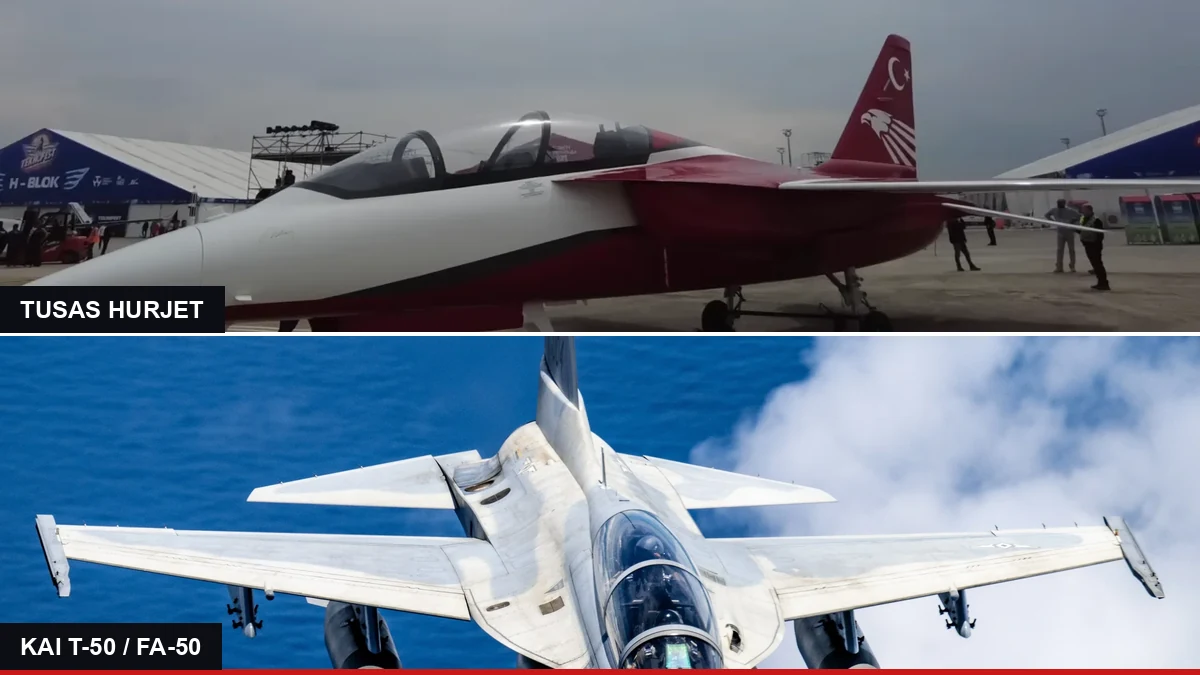
We step down a class from the fighter programmes: the advanced jet trainer and light attack band. It is one of the busiest corners of defence exports, because buyers want both to train pilots and to build a light air force on a limited budget. South Korea moved early in this band: the T-50 family first flew in 2002 and has reached six countries. The HÜRJET flew in 2023 and found a NATO member in December 2025. This file asks why the two curves are drawn so differently.
In the tenth and eleventh files we saw an export contract come before inventory in fighter programmes. This file looks for the same pattern one class down — and this time the comparison is with a rival that moved early. The six-threshold model remains the frame.
The argument
In the advanced jet trainer band South Korea’s advantage is time: although nine years separated first flight from first export contract, it has accumulated uninterrupted deliveries since 2002. The HÜRJET covered the same distance in under three years — but through a European partner. In the Spanish contract the prime is Airbus. These are two different roads: an export record built up over time, and a threshold shortened by an alliance relationship.
What this file counts, and what it does not
This file keeps contract, delivery and inventory apart. A country placing an order does not mean delivery is complete, and completed delivery does not show the aircraft is in operational service. Export numbers are confused especially often in this band because the same country can sign several contracts in different years.
The class is also clear: advanced jet trainer and light attack. Fighters such as KAAN and the KF-21, heavy unmanned systems such as AKINCI and unmanned combat aircraft such as KIZILELMA are not placed in this file’s tables.
Excluded from this file
- Unit costs and contract values not published by a manufacturer or a buying state.
- The total value of the Spanish contract: sources report different figures.
- Spanish delivery schedules that contradict one another across sources.
- Platforms of different classes compared in a single performance table.
The two families on one timeline
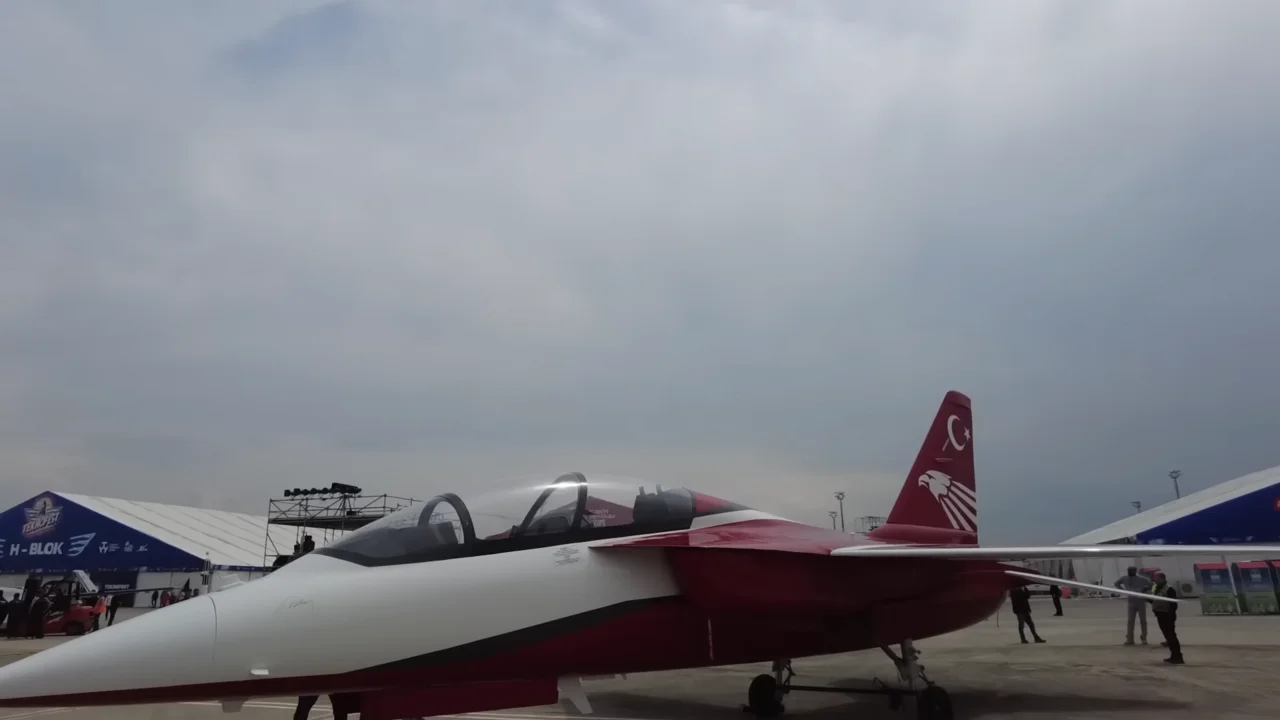
Left column HÜRJET, right column the T-50/FA-50 family. Only verified items appear, and the chart shows at a glance that the two programmes did not start in the same year: there is a gap of nearly twenty years between them.
The chart shows two distinct rhythms. The right column is long and sparse: first flight, a first contract nine years later, deliveries two years after that, then further contracts over the years. The left column is short and compressed: two prototypes, a partnership agreement, a contract, a production aircraft — all within three years and four months.
The HÜRJET: the manufacturer’s published figures
Only values published on Turkish Aerospace’s own product page appear below. That is the file’s general principle: in this band, figures are often reported differently in secondary sources. The HÜRJET’s technical specifications and an explainer are covered separately.
| Metric | Value |
|---|---|
| Length | 13.6 m |
| Wingspan | 9.5 m |
| Height | 4.1 m |
| Wing area | 25 m² |
| Maximum speed | Mach 1.4 |
| Service ceiling | 45,000 ft |
| Range | 1,060 nautical miles |
| Rate of climb | 48,500 ft/min |
| Load limits | +8 g / −3 g |
| Engine | GE F404-104, 17,700 lb thrust |
| Payload | 7,500 lb |
| Prototype first flights | 25 April 2023 (P1), 12 November 2024 (P2) |
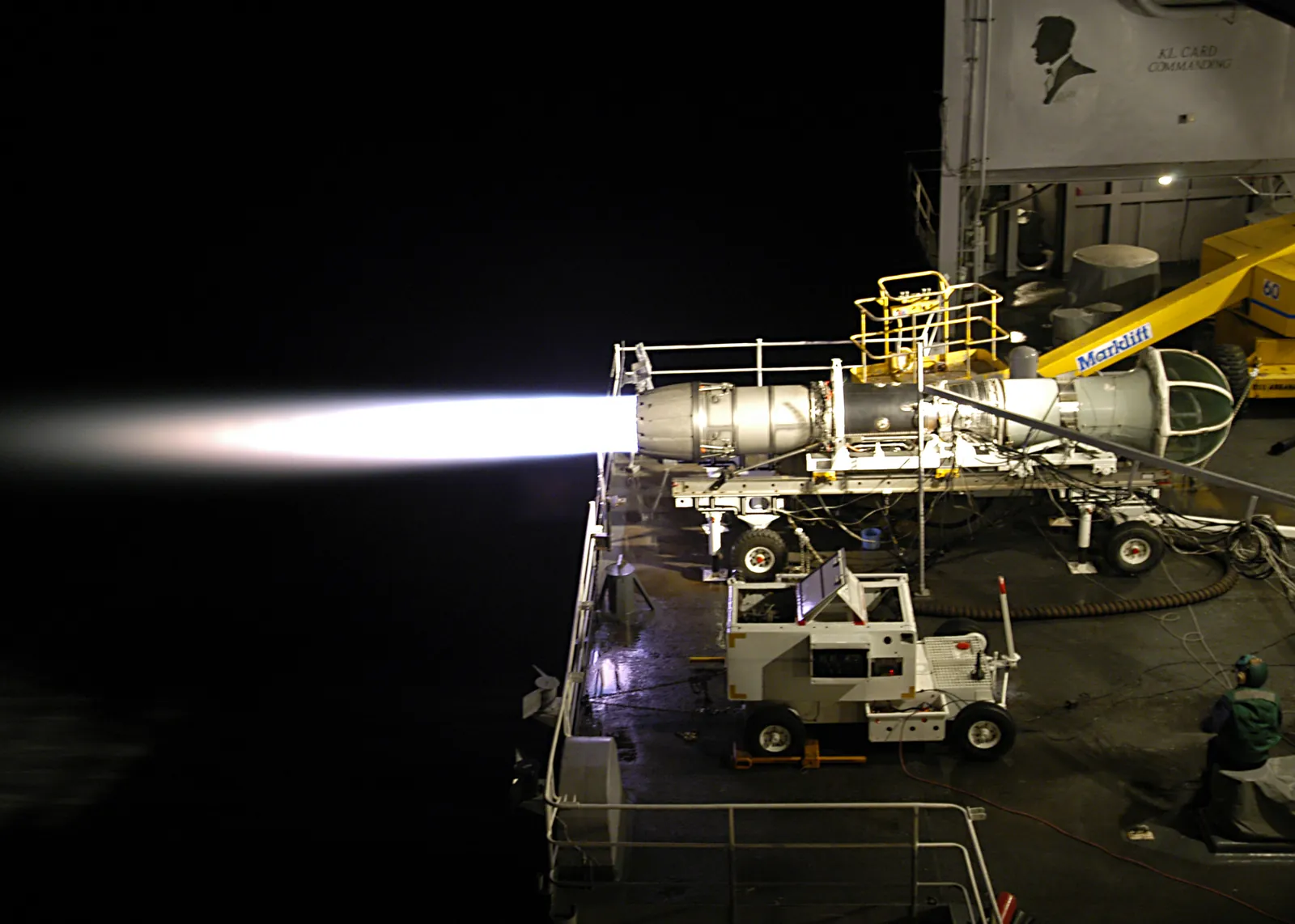
The engine row is the file’s most critical datum. The HÜRJET flies on a foreign engine — the General Electric F404. That bears directly on the fifth threshold in the sixth file: if a critical component depends on another state’s export licence, the system is not an export product but a conditional assembly line. The GE agreement announced at IDEF 2025 covers F404 engines for flight tests and technical infrastructure development; the same source reports Türkiye intending to procure 100 F404s. The engine question has its own file.
The Spanish contract: what is verified, what is not
On 24 July 2025 Turkish Aerospace announced it had signed a strategic cooperation agreement with Airbus for the export of the HÜRJET to Spain. In late December 2025 Spain’s Directorate General for Armament and Material contracted Airbus Defence and Space for 30 HÜRJETs; the programme meets Spain’s advanced jet trainer and integrated training system requirement, and the Spanish variant is designated SAETA II. Airbus is prime contractor and Turkish Aerospace the co-development partner. The delivery question is covered in a separate file.
| Item | Status |
|---|---|
| Number of aircraft | 30 — consistent across several sources |
| Contracting party | Airbus Defence and Space (prime contractor) |
| Timing of the contract | late December 2025 |
| Aircraft replaced | The F-5 fleet |
| Total value | Sources report different figures — not written |
| Delivery schedule | Sources report 2028–2029 and 2031–2035 windows — not written |
Why there is no value or schedule
Two different total values and two different delivery windows circulate for the same contract. No official source could be found that decides between them, so neither is written into a table. What can be verified is the contract’s existence, its quantity and its parties. How many HÜRJETs Türkiye itself will buy is another matter, for which only an initial batch of six is reported.
The structure of the contract is the most important part for the export model. Spain took the HÜRJET not directly from Turkish Aerospace but through Airbus, together with its own industry. That is another form of the pattern seen for KAAN in the tenth file: at the upper end a sale is built with the buyer’s industrial participation. The co-production logic set out for the heavy class in the seventh file here runs through a European prime contractor for a NATO member.
The T-50 family’s export record
South Korea’s advantage is not a contract but an accumulation. The table shows the quantities that stand out in the public record. They are contract quantities; delivery status must be verified separately for each row.
| Buyer | Quantity | Note |
|---|---|---|
| Indonesia | 16 T-50i | May 2011 contract; deliveries 2013–early 2014 |
| Indonesia (additional) | 6 T-50i | July 2021 contract; deliveries February–June 2026 |
| Iraq | 24 T-50IQ | — |
| Malaysia | 18 FA-50M | — |
| Philippines | 12 aircraft | 2025 contract |
| Poland | 48 aircraft | 12 FA-50GF + 36 FA-50PL |
| Thailand | — | On the buyer list; quantity not verified in this file |
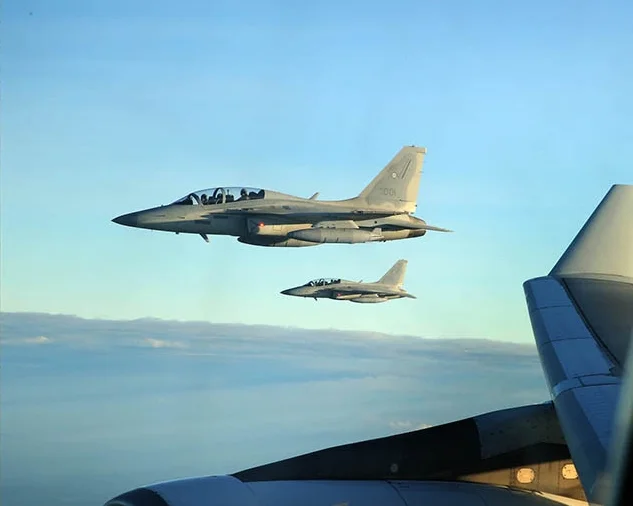
What the table says is that this band’s exports were built not on one contract but on repeat contracts. Indonesia bought 16 aircraft in 2011 and contracted six more a decade later; the Philippines also appears in the record with more than one contract. When a buyer is satisfied it buys again — the strongest sign a product has become an export product. The Malaysia–Türkiye defence relationship shows the same buyer geography from the other side.

The Poland row is the family’s largest single contract and a NATO member. It shows that the fourth threshold of the sixth file — an allied customer — was cleared long ago in this band. The HÜRJET cleared the same threshold with Spain before its first production aircraft had flown.
Two roads: accumulation and partnership
The two programmes fill the same band with different strategies. The difference can be put in one sentence: one built export proof over time, the other shortened that proof through an alliance relationship.
| Metric | T-50 / FA-50 | HÜRJET |
|---|---|---|
| First flight | 20 August 2002 | 25 April 2023 |
| First export contract | May 2011 (Indonesia) | December 2025 (Spain) |
| First customer profile | South-East Asia | NATO member, Europe |
| Sale structure | Direct export | Joint industry: Airbus as prime |
| Export proof | Two decades of repeat contracts | One large contract |
| Inventory proof | Many operators | First production aircraft flew August 2026 |
The last row should be read honestly. The HÜRJET’s export contract is strong, but its inventory proof is still very fresh: the first production aircraft for the Air Force made its 18-minute maiden flight on 30 August 2026 and an initial batch of six HÜRJETs is planned. Turkish Aerospace’s product page foresees delivery to the Air Force Command in 2026. On this row the T-50 family holds a twenty-year advantage.
Where are the six thresholds in this band?
Applying the six-threshold model to the jet trainer band, the two programmes stand as follows.
| Threshold | T-50 / FA-50 | HÜRJET |
|---|---|---|
| 1. Home inventory | Cleared (accumulated) | Begun — first production aircraft flew |
| 2. Operational use | Cleared | Not begun |
| 3. First export contract | 2011 | December 2025 |
| 4. Allied customer | Poland | Spain |
| 5. Supply-chain independence | Not verified in this file | Engine is foreign (GE F404) |
| 6. Production abroad | Not verified in this file | Spanish contract includes joint industry |
The most interesting part is the order. The HÜRJET cleared the third and fourth thresholds before the first: export and an allied customer came before entry into service was complete. That is the fighter-class reversal seen for KAAN, repeated one class down. The financing logic set out for KAAN in the eleventh file — an early export contract gives a programme revenue and legitimacy — applies here too.
Who else is in the band?
The band is not limited to two products. Other manufacturers also have programmes in the advanced jet trainer and light attack market; we do not list them here because the verified data set built for these two was not built for the others. The HÜRJET’s comparisons with direct rivals are in separate files: the HÜRJET and M-346 Master comparison is an example.
One observation can still be made: what decides sales in this band is not the aircraft’s maximum speed or range but how easily it fits the buyer’s existing training system. Simulators, course syllabus, maintenance infrastructure and spares chain are not part of a jet trainer but of a training system. That is why contracts in this band are often described not as an «aircraft» but as an «integrated training system» — and the Spanish programme is built exactly that way.
The training system: three rings around the aircraft
In the jet trainer band an export decision is less an aircraft decision than a system decision. Three rings are bought together and all three set the programme’s calendar.
| Ring | Contents | Why it is decisive |
|---|---|---|
| Aircraft | Advanced jet trainer and light attack platform | The system’s most visible part |
| Ground training | Simulators, classroom equipment, syllabus | Sets the pace of pilot production |
| Support | Maintenance, spares, logistics | Sets fleet availability |
The structure makes visible the systems-integration skill built up over the manufacturer’s rise in the global ranking: being able to offer training and support rings alongside the aircraft. The HÜRKUŞ deliveries and the HÜRJET form the same manufacturer’s trainer line; the HÜRJET’s brake parachute has its own article.
EM-PDI assessment
The Envanter Medya Programme Development Index (EM-PDI) is used across the series to score programmes against common criteria. It is an editorial assessment, not an official ranking; the weightings are set out in the first file. The T-50 family leads the HÜRJET on operational service, production scale and user diversity; the HÜRJET scores on programme speed and the allied-customer item.
The gap is one of time, not capability: the T-50 family carries two decades of deliveries and user accumulation, while the HÜRJET’s first production aircraft flew only very recently. The score measures the stage a programme is at and changes as the stage advances.
The limits of this comparison
This file compares export sequence and programme architecture; it does not rank the aircraft’s capabilities. The limits need stating plainly:
- The T-50 family is early and broad in this band. It has reached six countries, built up repeat contracts and holds a twenty-year delivery record. That is a verified fact and is recorded as such.
- The HÜRJET’s proof is still fresh. The first production aircraft flew on 30 August 2026; delivery to the Air Force and operational service steps are ongoing.
- The Spanish contract’s value and schedule are unsettled. Sources report different figures; this file chooses none.
- No performance comparison. Manufacturer data for the T-50 family was not included in this file’s source set, so the table carries HÜRJET figures only.
Conclusion: the same band, two different orders of thresholds
The jet trainer band offers one of the cleanest comparisons in this series, because both programmes aim at the same audience: air forces building a training system. South Korea built an export record that accumulated over time. Türkiye shortened the same distance with a European partner. Both are valid; their risks differ. Proof accumulated over time is an advantage that is hard to replicate; a threshold shortened by a partnership is an advantage that depends on the partner’s decisions.
The series’ central argument works here too: the difference appears not in the first flight but in the decisions after it. The next file changes band and moves to land systems, where the same question recurs: who moved early, and who accelerated later?
Next in the series
File 13 — ALTAY and the K2: how did two tank programmes from the same root diverge? We move from air systems to land systems. ALTAY and South Korea’s K2 Black Panther represent two programmes that drew on one another and produced different outcomes. The full series sits on the Türkiye and World Defence Programmes page.
Frequently asked questions
When did the HÜRJET first fly?
The first prototype flew on 25 April 2023 and the second on 12 November 2024. Turkish Aerospace’s product page states that the two prototypes have together carried out over 500 test flights. The first production aircraft for the Air Force made its 18-minute maiden flight on 30 August 2026.
What are the HÜRJET’s official specifications?
By the manufacturer’s published figures: 13.6 m length, 9.5 m wingspan, 4.1 m height, 25 m² wing area, Mach 1.4 maximum speed, 45,000 ft service ceiling, 1,060 nautical miles range, +8/−3 g limits, a GE F404-104 engine of 17,700 lb thrust and 7,500 lb payload.
Has Spain bought the HÜRJET?
Yes. Spain’s Ministry of Defence, through its Directorate General for Armament and Material, contracted Airbus Defence and Space in late December 2025 to deliver 30 HÜRJETs; Airbus is prime contractor and Turkish Aerospace the co-development partner. Reported contract values and delivery schedules differ between sources, so no figures are given in this file.
Which countries has the FA-50 been exported to?
KAI’s T-50 family has gone to Indonesia, Iraq, Malaysia, the Philippines, Poland and Thailand. Quantities that stand out in the record: Indonesia 16 T-50i (2011 contract, deliveries 2013–early 2014) plus 6 more contracted in 2021, Iraq 24 T-50IQ, Malaysia 18 FA-50M, the Philippines 12 aircraft (2025 contract) and Poland 48 (12 FA-50GF + 36 FA-50PL).
When did the T-50 family make its first export?
The T-50 first flew on 20 August 2002. The first export contract was signed with Indonesia in May 2011 for 16 T-50i; deliveries began in 2013 and finished in early 2014. Nine years therefore separated the first flight from the first export contract.
Are the HÜRJET and the FA-50 in the same class?
They are in the same band: advanced jet trainer and light attack. That is a separate class from fighters such as KAAN and the KF-21 and from unmanned systems; the tables in this file compare only this band.
Why is there no unit price in this file?
Neither for the HÜRJET nor for the FA-50 has a verifiable unit price been published by a manufacturer or a buying state, and the Spanish contract’s total value is reported differently across sources. Under the rule applied across this series, an undisclosed cost claim is not written into a table.