Lockheed Martin Invests $300M to Expand Munitions Output in Texas

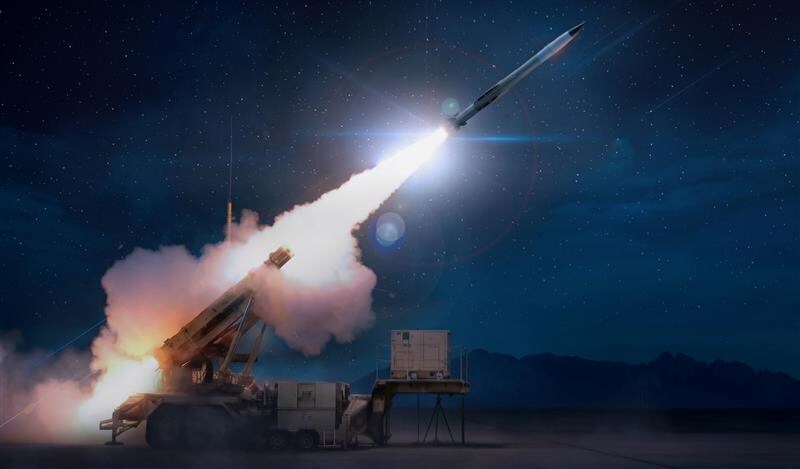
Lockheed Martin has expanded munitions manufacturing capacity at its Grand Prairie, Texas facility, adding roughly 200,000 square feet of new floor space and pushing the site’s total footprint past 735,000 square feet. The company disclosed the expansion on October 14, tying it to a $300 million investment at the site.
According to Lockheed Martin, the added space will support automation, digital manufacturing and high-precision machining lines. Grand Prairie produces components and subsystems for four major programs: the PAC-3 MSE air defense interceptor, the THAAD terminal missile defense system, the Precision Strike Missile (PrSM), and the AIM-260 Joint Advanced Tactical Missile (JATM). The company said the expansion is meant to raise output across all four simultaneously.
As part of the investment, Lockheed signed a deal with automation firm Hadrian for a 24-machine automated machining cell, expected to come online in early 2027 and to be run by Lockheed’s own production workforce. The company said it expects nearly 100 advanced machines operating at the site by the end of 2026, building on more than 30 already producing thousands of components weekly.
The Grand Prairie expansion sits inside a far larger plan: Lockheed Martin intends to spend between $8 billion and $9 billion through 2030 on munitions production and on upgrading or expanding more than 20 U.S. facilities. The company said the broader effort will create 6,000 new jobs, 2,000 of them in Texas. A Pentagon acquisition official welcomed the move as strengthening the supply chain and the resilience of the industrial base.
The announcement reflects a wider pattern across the U.S. defense industry: replenishing stocks of precision-guided munitions drawn down by the war in Ukraine and tensions in the Middle East. PAC-3 MSE and THAAD rank among the systems in highest demand from both the U.S. military and allied customers, while PrSM is central to the Army’s effort to rebuild long-range fires.
PAC-3 MSE is fielded or on order by Germany, Japan, South Korea, Saudi Arabia, the United Arab Emirates, Poland and Qatar, among other NATO and partner nations, alongside the U.S. Army. THAAD serves the U.S. Army as well as Saudi Arabia and the UAE. That broad user base means the Grand Prairie expansion’s effects extend well beyond American borders — each additional batch of output feeds directly into allied air-defense modernization.
Industry observers read the move as part of a broader global trend of expanding munitions and missile production lines; several countries, including Türkiye, have taken similar steps in recent years, with firms like Roketsan and Aselsan pursuing comparable capacity increases on their own production lines. Seen in that light, Grand Prairie is one more concrete marker of an industry-wide push to prioritize supply security.
Lockheed said the expansion will roll out gradually over coming months, with the Hadrian automation cell reaching full capacity in early 2027. The build-out is being presented as a tangible step in the broader effort by the U.S. and its allies to rebuild strategic missile stockpiles.
Sources
- Lockheed Martin, “Lockheed Martin Expands Advanced Munitions Manufacturing in Texas, Driving Thousands of New American Jobs,” October 14, 2026 — used for the official announcement, investment and jobs figures. (news.lockheedmartin.com)
- Defense News, “Lockheed invests $300M in Texas plant to feed missile surge,” October 15, 2026 — used for the $8-9 billion 2030 plan and the Pentagon official’s comment. (defensenews.com)
- Defence Industry Europe, “Lockheed Martin says munitions manufacturing expansion will create 6,000 U.S. jobs” — used for the Hadrian automation partnership, machine counts and the program list (PAC-3 MSE, THAAD, PrSM, JATM). (defence-industry.eu)