Northrop’s IBCS at Valiant Shield: One Network From Sensor to Shooter

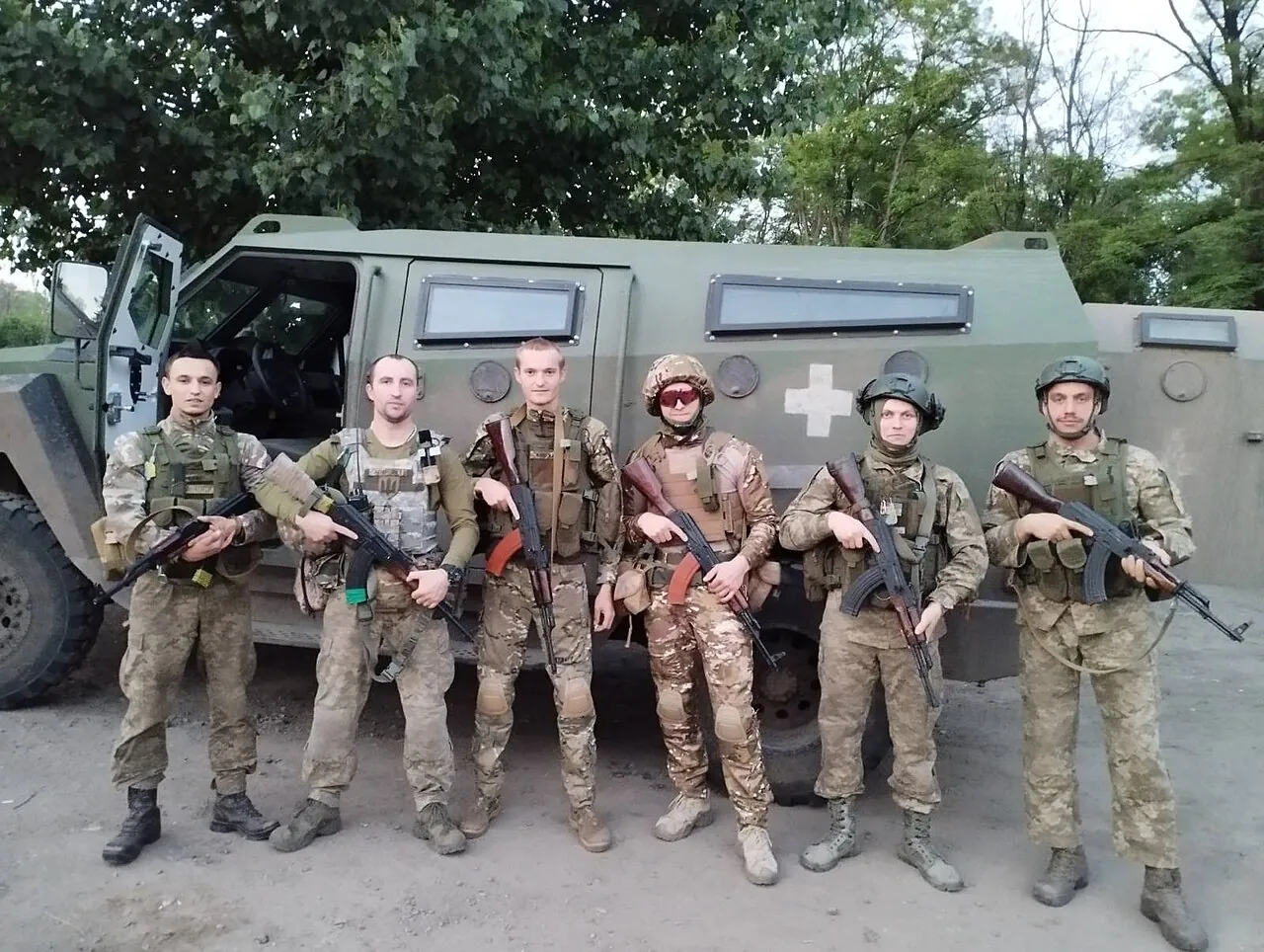
The decisive element of modern air and missile defense is no longer individual weapons, but the network that connects them. According to Northrop Grumman, the company’s IBCS supported US and allied multi-domain operations at Valiant Shield 2026; connected sensors and command systems gave forces a clearer operational picture.
IBCS’s core function is to combine data from different sensors (radar, satellite, aircraft) and match a threat to the most suitable shooter (missile, gun). Thus, regardless of which sensor detects the target, the most suitable weapon engages; this increases the efficient use of munitions and the effectiveness of layered defense.
What Is IBCS, and Why Does It Matter?
The Integrated Battle Command System (IBCS) is the foundation of the US Army’s integrated air and missile defense modernization. In traditional systems each radar is tied to its own missile; IBCS breaks that link: by connecting all sensors and all shooters to a common network, it can strike a target seen by any sensor with any suitable shooter. This is called ‘sensor-shooter decoupling’.
The advantage of this approach is that it makes defense far more flexible and resilient. Even if one radar is knocked out, another sensor on the network keeps seeing the target; if one shooter is busy, another engages. At Valiant Shield, IBCS tested this ‘one battlespace’ concept with allied forces by unifying the systems of different services (land, air, sea).

Multi-Domain and Multinational Integration
IBCS’s role at Valiant Shield was to show the system’s ability to work not only for US forces but together with allied and partner forces. Combining the sensors and shooters of different countries into a common picture raises a coalition’s total defensive power beyond the sum of its individual elements. This is critical especially in a wide, dispersed theater such as the Indo-Pacific.
At the center of the system is ‘data fusion’: turning information in different formats, from different sources, into a single coherent picture. Commanders can thus see a unified view of sensors and shooters and decide accordingly. This shows that modern air and missile defense has become a ‘network war’.
| Item | Detail |
|---|---|
| System | IBCS (Integrated Battle Command System) |
| Maker | Northrop Grumman |
| Task | Sensor-shooter network, data fusion |
| Core principle | Sensor-shooter decoupling |
| Scope | Land, air, sea; multinational |
| Advantage | Flexibility, resilience, efficient munitions |
| Context | Valiant Shield 2026 (Indo-Pacific) |
| Aim | US Army integrated air and missile defense |
Network-Centric Air Defense
The biggest transformation of recent years in air and missile defense is the shift from individual systems to a network-centric architecture. As important as the number of radars and missiles a country has is how well it connects them. A good command-and-control network can extract far more defensive effect from the same number of weapons.
This transformation is especially critical against multiple threats such as drone swarms and missile salvos. Prioritizing dozens of simultaneous targets, matching them to the most suitable shooter and not wasting munitions is only possible with an integrated network. IBCS is the pioneering example of this approach in the US; similar architectures are being developed worldwide.
For Türkiye: The Steel Dome and Integrated Command
The ‘sensor-shooter network’ logic that IBCS establishes maps directly onto Türkiye’s Steel Dome (Çelik Kubbe) project. The Steel Dome aims to unify air defense layers at different ranges and altitudes (SİPER long-range, HİSAR medium/low-range, KORKUT and GÜRZ close defense) into a single integrated command-and-control network. In other words, Türkiye is building its own ‘IBCS’.
The indigenous components of this architecture are strong: HAVELSAN provides the command-and-control and battle management software, ASELSAN the radars, sensors and data links. Türkiye signed contracts worth about $6.5 billion for the Steel Dome in 2026; this shows the system is not just a concept but an architecture rapidly reaching the field.
The critical point is that this network is entirely indigenous. Systems like IBCS form the heart of a country’s defense; for that heart to depend on a foreign supplier is a strategic vulnerability. By building the Steel Dome with indigenous firms such as HAVELSAN and ASELSAN, Türkiye both removes this dependence and develops an exportable integrated air defense architecture. The IBCS at Valiant Shield shows Türkiye is on the right path too.
Frequently Asked Questions
What is IBCS?
What does ‘sensor-shooter decoupling’ mean?
What was shown at Valiant Shield?
Does Türkiye have an equivalent?
Conclusion
Northrop’s IBCS shows that modern air and missile defense is now a ‘network war’; as decisive as the number of weapons is the architecture that connects them. Türkiye is building the same logic indigenously with the Steel Dome: this architecture, uniting SİPER, HİSAR and KORKUT on a HAVELSAN-ASELSAN network, is both the heart of national defense and a capability with export potential.