U.S. Navy orders first 50 ‘Blackbeard’ hypersonic missiles for the Super Hornet

The U.S. Navy has taken a concrete step on a new-generation air-launched hypersonic missile, ordering the first 50 pre-production examples of the weapon called Blackbeard. This first delivery order, worth roughly $23.4 million, moves the missile from relative newcomer Castelion out of the lab and the test range toward real weapons production.
The agreement, announced by Castelion on 16 June 2026, is structured as a firm-fixed-price delivery order. The company will deliver to the Navy 50 “early operational capability”-class pre-production Blackbeard missiles, along with 50 storage and transport containers for them. The bulk of the work will be carried out at the Rio Rancho facility in New Mexico, with supporting work in Torrance, California; deliveries are expected to be complete in 2027.
The first physical weapons to be tested
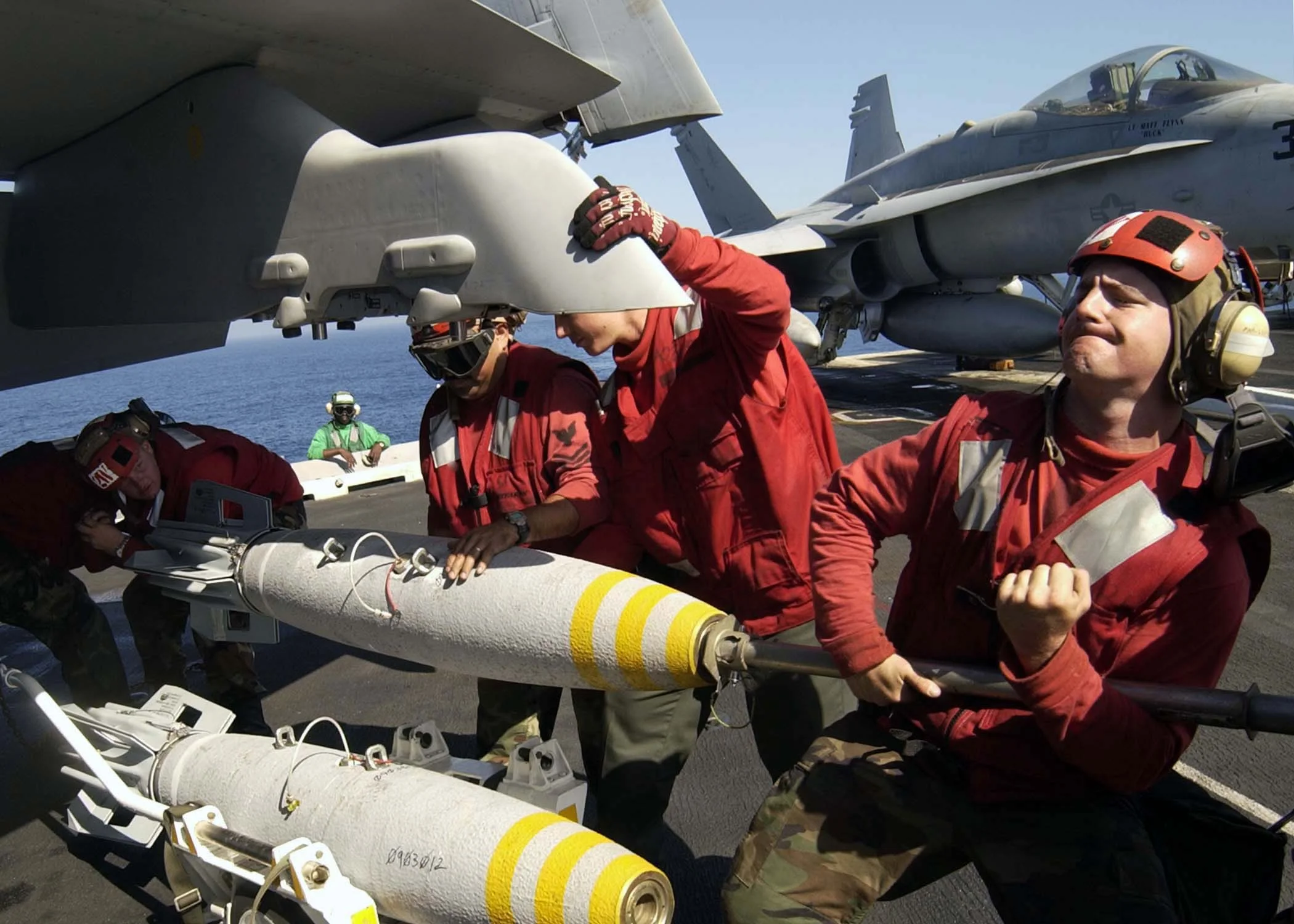
The purpose of this order is not direct combat but getting real weapons into the Navy’s hands for handling (transport and storage), certification, flight test and early operational evaluation. In other words, these 50 missiles are not a war stock but a learning batch aimed at understanding how the system behaves on ships and aircraft.
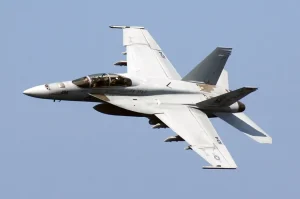
The F/A-18E/F Super Hornet was chosen as Blackbeard’s carrier. The Navy’s twin-engine, multirole backbone fighter already operates from aircraft carriers and offers a natural platform for integrating the new missile. The integration work proceeds under a separate line item: in a contract worth roughly $105 million signed on 24 April 2026, Castelion took on the task of adapting Blackbeard to the F/A-18 and bringing the system to early operational capability in 2027.
What does hypersonic mean?
Hypersonic weapons is a term used for systems that reach speeds higher than five times the speed of sound (Mach 5). But explaining the category by speed alone falls short; the truly distinguishing feature is the ability to maneuver at high speed. While a classic ballistic missile traces a predictable arc, hypersonic weapons can change course during flight, making it harder for defensive systems to position themselves and intercept in advance.
Castelion describes Blackbeard as a “low-cost, highly producible, long-range hypersonic strike weapon.” Because the company has not shared a precise range figure for the missile with the public, no specific distance is given in this article; the only classification verifiable from open sources is that the system is positioned in the long-range and hypersonic speed bracket.
A race to make expensive weapons cheap
What makes Blackbeard notable is not just its speed but the cost philosophy behind it. Hypersonic programs are traditionally known for very high per-unit prices, which confines a military to “few but very expensive weapons.” Castelion, by contrast, puts producibility and low cost at the center, aiming to make hypersonic weapons meaningful by quantity rather than by exception.
The concrete sign of this approach is the company’s infrastructure investment. Castelion has announced that it is committing more than $250 million to a large manufacturing campus in New Mexico designed for scaled hypersonic production. The emphasis on making production serial is part of a claim to break out of the small-batch prototype culture and print the missile at industrial scale.
On Castelion’s side, the program is framed, in the words of Co-Founder and CEO Bryon Hargis, as having been designed from the outset to “support the nation’s conventional deterrence.” The concept that stands out here is non-nuclear deterrence: the logic of dissuading adversaries before conflict with a greater number of more reasonably priced precision-strike weapons.
Regional and global backdrop
The order comes at a maturing stage of the hypersonic race the great powers have run for years. While the United States was long associated with worries about falling behind its rivals, it has recently begun to push forward a new generation of ventures built on both rapid development and low unit cost. Blackbeard is one of the visible faces of this “fast and cheap” trend.
That the weapon will be integrated onto a carrier-based fighter is also significant in itself. It means carrying hypersonic strike capability not only to land bases or large platforms but also to air assets moving at sea—a critical design choice for navies seeking flexibility across vast maritime areas.
The test and evaluation results of the first 50 missiles will largely determine the program’s future. Castelion and the Navy foresee scaling the system to larger production batches once this phase is cleared successfully. So this relatively modest $23.4 million order chiefly serves as the door in front of a far larger procurement decision.
Open-source verification notes
- The order date (16 June 2026), the 50 pre-production examples plus 50 containers, the ~$23.4 million fixed price and the Rio Rancho (New Mexico) / Torrance (California) work split have been confirmed from Castelion’s official statement.
- The separate ~$105 million contract of 24 April 2026 for F/A-18 integration and the 2027 early-operational-capability target appear in the official statement.
- Because no precise range or official Mach speed figure for Blackbeard has been shared with the public, no specific range/speed value is claimed in this article; the phrase “above Mach 5” is used as the general definition of the hypersonic class.
- The more than $250 million New Mexico production investment has been reported by independent defense publications.
Sources
- Castelion official statement — “U.S. Navy Awards Castelion First Delivery Order for Blackbeard Hypersonic Weapon”
- PR Newswire — Castelion press release (16 June 2026)
- The Defense Post — “Castelion Secures First Blackbeard Hypersonic Missile Production Order From US Navy”
- Defence-Industry.eu — “U.S. Navy awards first Blackbeard delivery order”