Russia’s Pacific drill points to the real bottleneck in anti-ship warfare: the eyes, not the missile

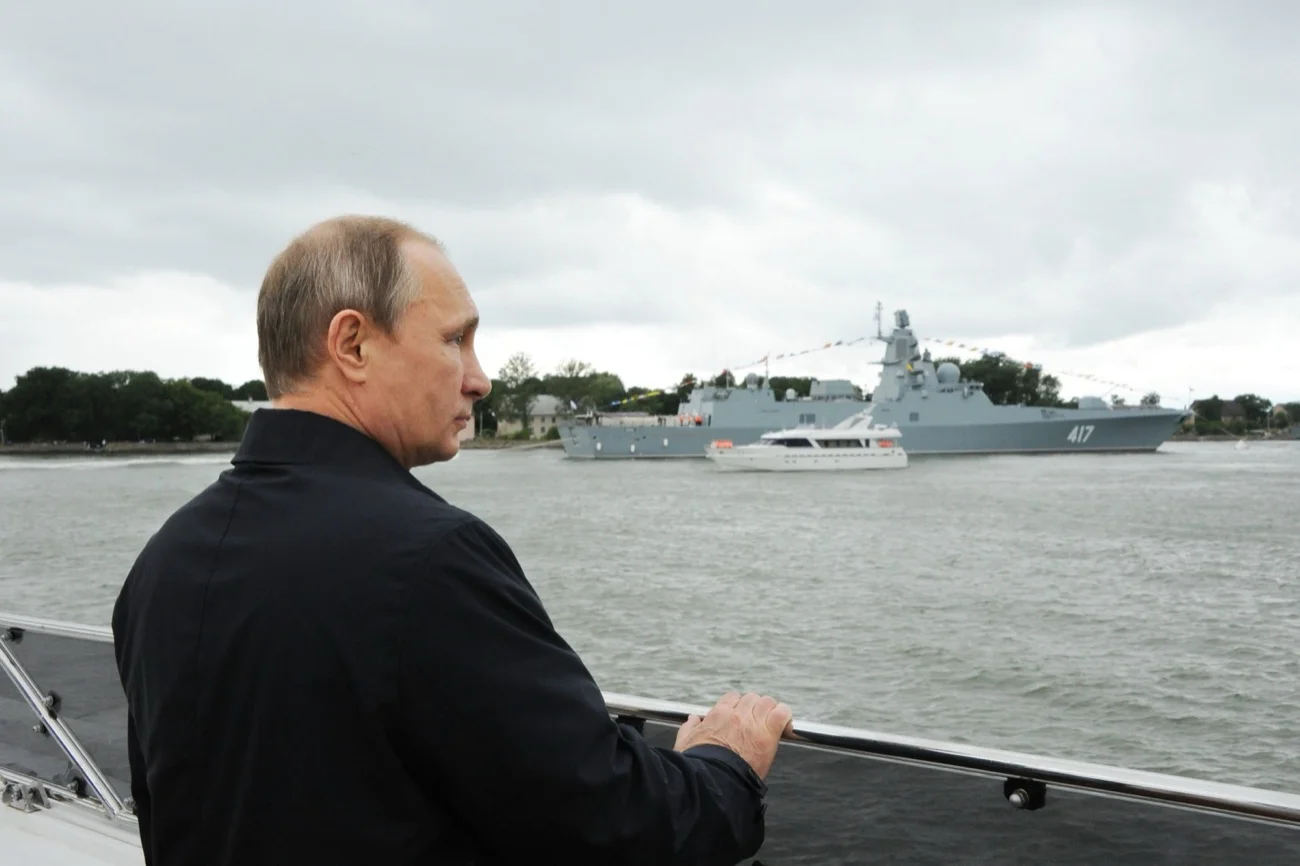
Russia used its large August exercises in the Pacific to work on the weakest link in any anti-ship missile system: finding the target. A Forpost-R reconnaissance drone located and identified simulated naval targets, then handed the coordinates to two different shooters at once — a shore-based Bastion battery and a small missile corvette carrying Uran. Read closely, this is less an exercise detail than a statement about where naval combat is actually decided.
At a Glance
- Who: Russia’s Pacific Fleet and Eastern Military District units.
- What: A reconnaissance-strike chain in which a UAV searches for a naval target and feeds coordinates to both coastal missile systems and warships.
- Where: The Sea of Okhotsk, the Sea of Japan and the northwestern Pacific.
- When: The wider exercise opened on 4 August 2026; the drone-missile coordination ran ahead of Air Force Day on 12 August.
- Scale: More than 13,000 personnel, 60 warships and submarines, roughly 30 aircraft and UAVs.
- Weapons: Oniks-armed Bastion coastal system ashore, a Project 1234 Ovod-class missile corvette with Uran at sea.
- The point: An anti-ship missile may reach 300 km, but a ship’s own radar sees barely a tenth of that. Something has to look over the horizon.
The problem is not range. It is sight.
A warship’s own radar typically detects a surface contact somewhere between 30 and 45 kilometres out, depending on antenna height. That limit has nothing to do with power or processing — it is the curvature of the Earth. Past a certain distance the beam simply passes over the target and into empty space. Engineers call it the radar horizon. The anti-ship missile sitting in the launcher, meanwhile, can fly two to three hundred kilometres.
That gap is the oldest unresolved problem in naval warfare. A 300-kilometre missile paired with a 40-kilometre sensor is a 40-kilometre weapon. Which is why an anti-ship capability is never a single piece of hardware; it is a chain — the sensor that finds, the link that carries the data, the launcher that fires. Break any link and the missile stays in its canister.
The middle link is exactly what Russia rehearsed this month. According to Defense Express, a Forpost-R unmanned aerial vehicle searched for simulated naval targets, identified them, and transmitted their coordinates to two separate shooters: a Bastion coastal defence system deployed ashore, and a Project 1234 Ovod-class small missile ship armed with Uran anti-ship missiles.
The implication is worth sitting with. One sensor, two independent firing solutions. If the coastal battery cannot engage, the ship can. If the ship is out of position, the shore takes the shot. A single reconnaissance asset multiplies the number of ways a target can be attacked — the essence of what military theorists call a reconnaissance-strike complex, and arguably the defining operational concept of the past decade.
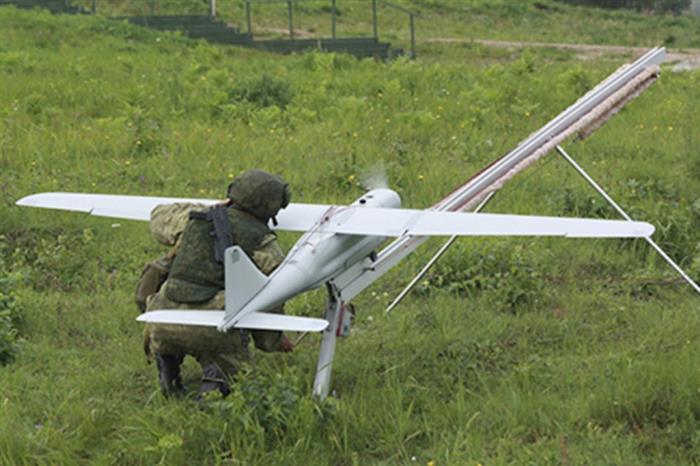
Forpost-R: an Israeli design that outlived its supply chain
Forpost is one of the more instructive case studies in how technology transfer leaves a permanent mark. The airframe descends from Israel Aerospace Industries’ Searcher Mk II, which Russia began assembling under licence at the Ural Civil Aviation Plant in the early 2010s.
When Israeli-origin components stopped flowing after 2022, Russia reworked the aircraft around domestic parts and fielded the localised variant marked with an ‘R’. Forpost-R can carry light guided munitions, and has been used in limited strike roles. But its primary job remains what it always was: loitering over a wide area and searching it with electro-optical and infrared sensors.
In this exercise, that reconnaissance role mattered far more than the strike capability. A drone dropping its own munition can disable a target. A drone passing coordinates can trigger a supersonic missile launched from fifty kilometres inland. The effect is no longer bounded by what the aircraft itself can carry.
Three Links in the Chain
| Forpost-R (reconnaissance UAV) | Derived from IAI Searcher Mk II; built by UZGA; long endurance, electro-optical/infrared payload, data link |
| Bastion / K-300P (coastal system) | Fires P-800 Oniks supersonic anti-ship missiles from wheeled launchers; export-version range reported at roughly 300 km |
| P-800 Oniks | Supersonic cruise; high-low mixed flight profile; descends to sea-skimming altitude in the terminal phase |
| Uran / Kh-35 | Subsonic anti-ship missile, broadly comparable to the Western Harpoon class; sea-skimming cruise |
| Project 1234 Ovod class | Soviet-era small missile ship built around the idea of packing heavy missile armament onto a light hull |
| Exercise scale | 13,000+ personnel, 60 ships and submarines, ~30 aircraft and UAVs across three sea areas |
Bastion and Uran: two ends of the same chain
Bastion is the most visible piece of Russia’s coastal defence architecture. Its P-800 Oniks missiles travel at supersonic speed, which compresses the defender’s reaction window, and the wheeled launchers can displace after firing to avoid counter-battery fire. That mobility is why the system anchors Russian coastal defence from the Black Sea to the Pacific.
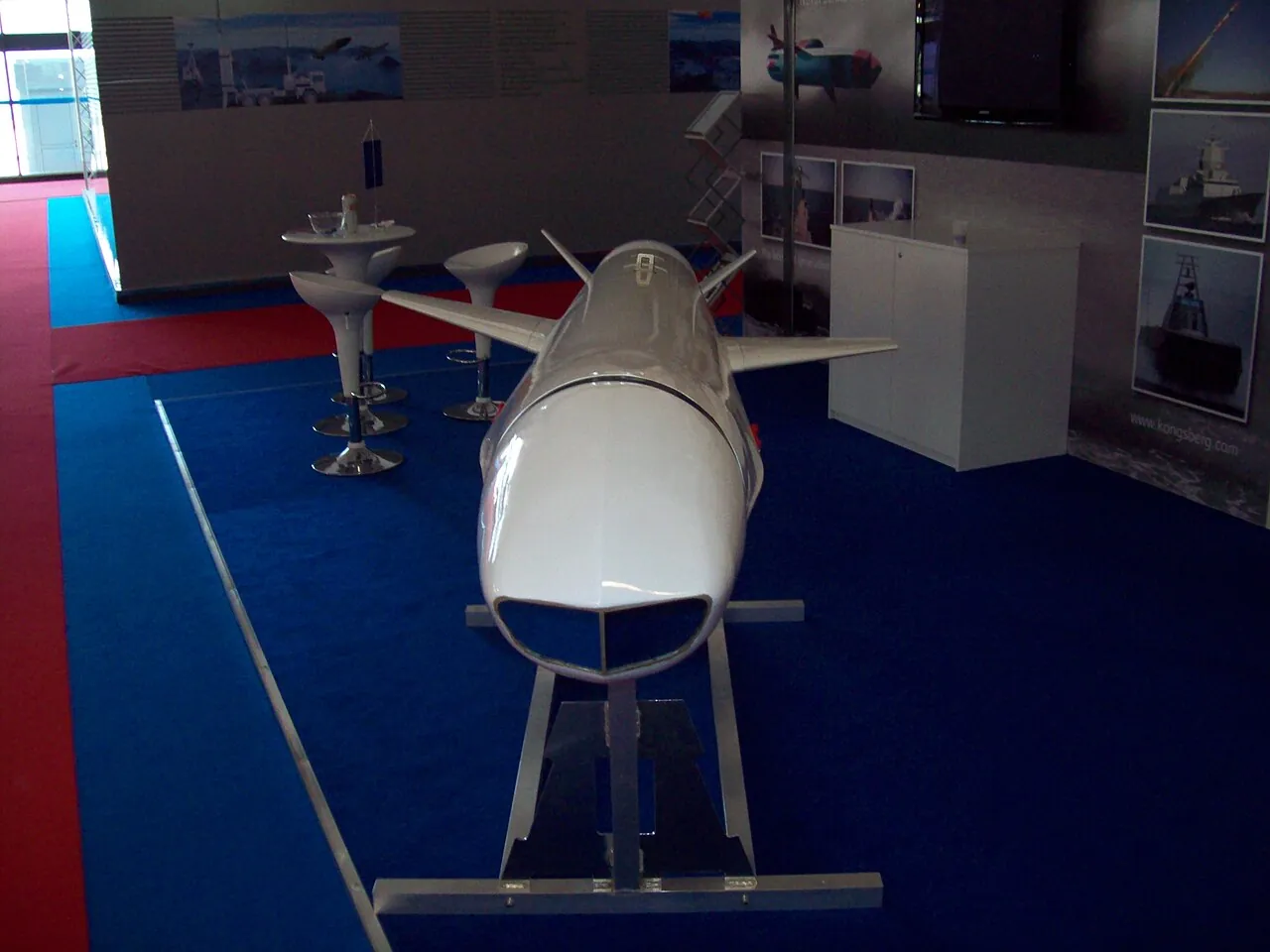
Uran comes from a different design philosophy. The Kh-35 is subsonic, hugs the sea surface, and is small enough to fit on modest hulls. It is slower than Oniks but cheaper and far more widely distributed across the fleet — including the Project 1234 corvette that took part in the drill.
Feeding both from the same sensor complicates the defender’s arithmetic considerably. You are not facing one threat profile but two: a supersonic missile from the coast and a subsonic sea-skimmer from the water, arriving on different vectors with different radar signatures, even though a single drone generated the targeting solution for both.
Defense Express also flagged a possible application. In June 2025 Russia assigned the Uran-armed corvette Boykiy to escort sanctioned ‘shadow fleet’ tankers. Drone-cued targeting, on that reading, is not only about sinking warships — it is also about extending protection over commercial traffic Moscow considers strategic.
What the drill actually demonstrates
Capability shown in an exercise and capability delivered under fire are different things. Cueing a missile onto a simulated target is not the same as doing it while an adversary jams your data link and hunts the aircraft providing it. Both sides in Ukraine put reconnaissance drones near the top of their target lists precisely because the chain is easier to break at the sensor than at the launcher.
Still, the direction of travel is clear. Naval combat is increasingly decided not by who holds the longer-ranged missile but by who finds the target first and with enough precision to shoot. Missile ranges have grown substantially over two decades; the ability to detect and classify at those ranges has not kept pace, which means a good deal of the world’s anti-ship inventory cannot actually be used at its advertised range.
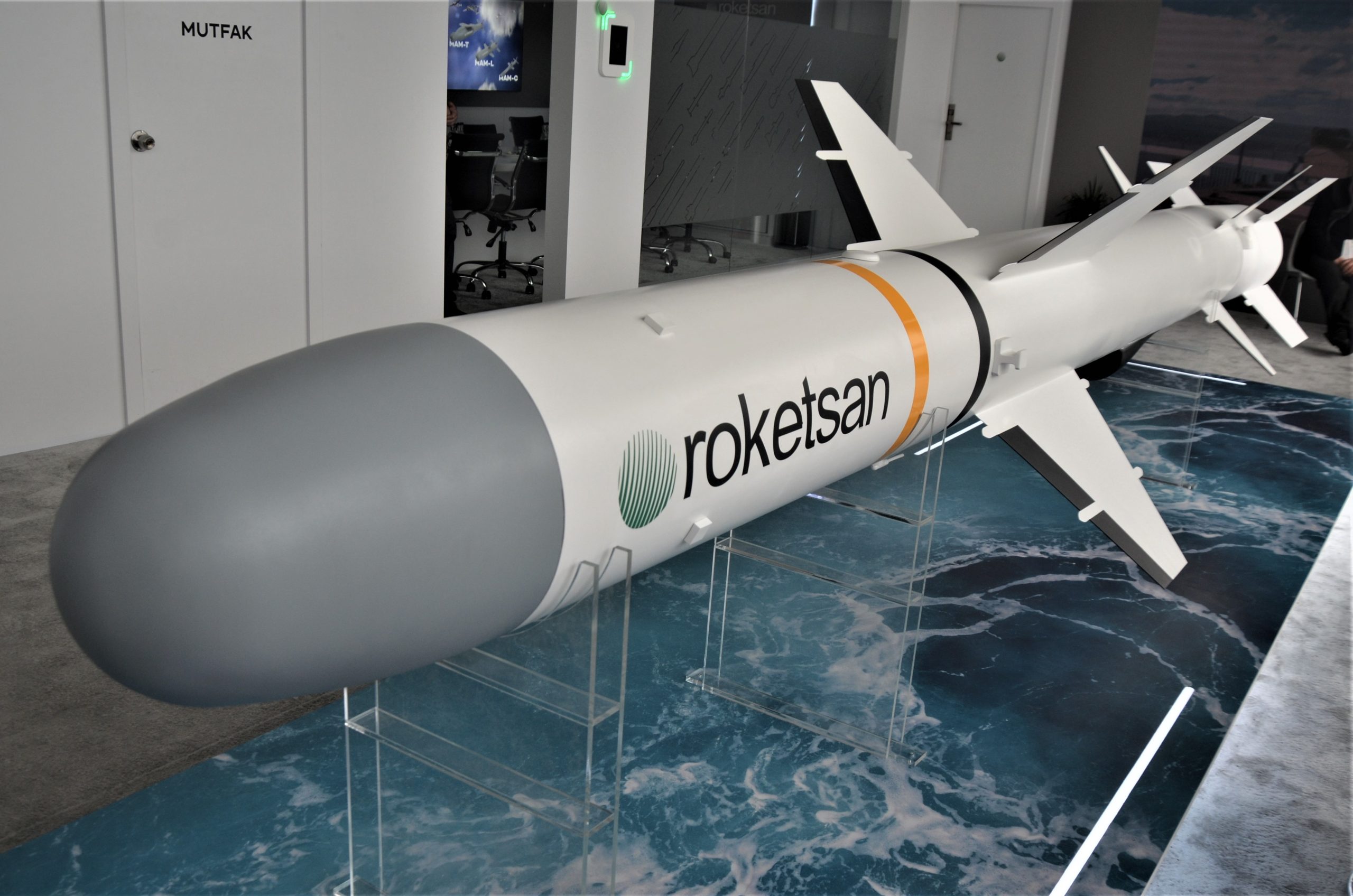
Turkey’s position in this picture is quietly interesting. Roketsan’s ATMACA has been adapted to both surface combatants and a coastal battery configuration — the same shore-and-sea flexibility Russia demonstrated with the Bastion-Uran pairing. And at the other end of the chain, Turkey’s long investment in unmanned aviation gave it early practical experience in wiring sensors directly into firing solutions. In an era where the decisive component is data rather than warhead weight, that experience is worth more than it looks on a specification sheet.
Sources
- Defense Express (en.defence-ua.com) — “russia Tests How Forpost Drones Could Find Targets for Bastion Missile Systems and Uran-Capable Warships”, 17 August 2026
- Russian Ministry of Defence exercise announcements, August 2026
- Israel Aerospace Industries — Searcher Mk II product information
- Wikipedia — Forpost (UAV), K-300P Bastion-P, P-800 Oniks, Kh-35, Nanuchka-class corvette
- Roketsan — ATMACA anti-ship missile product page