





The US Army Is Closing the Drone Battalion It Built to Learn From Ukraine

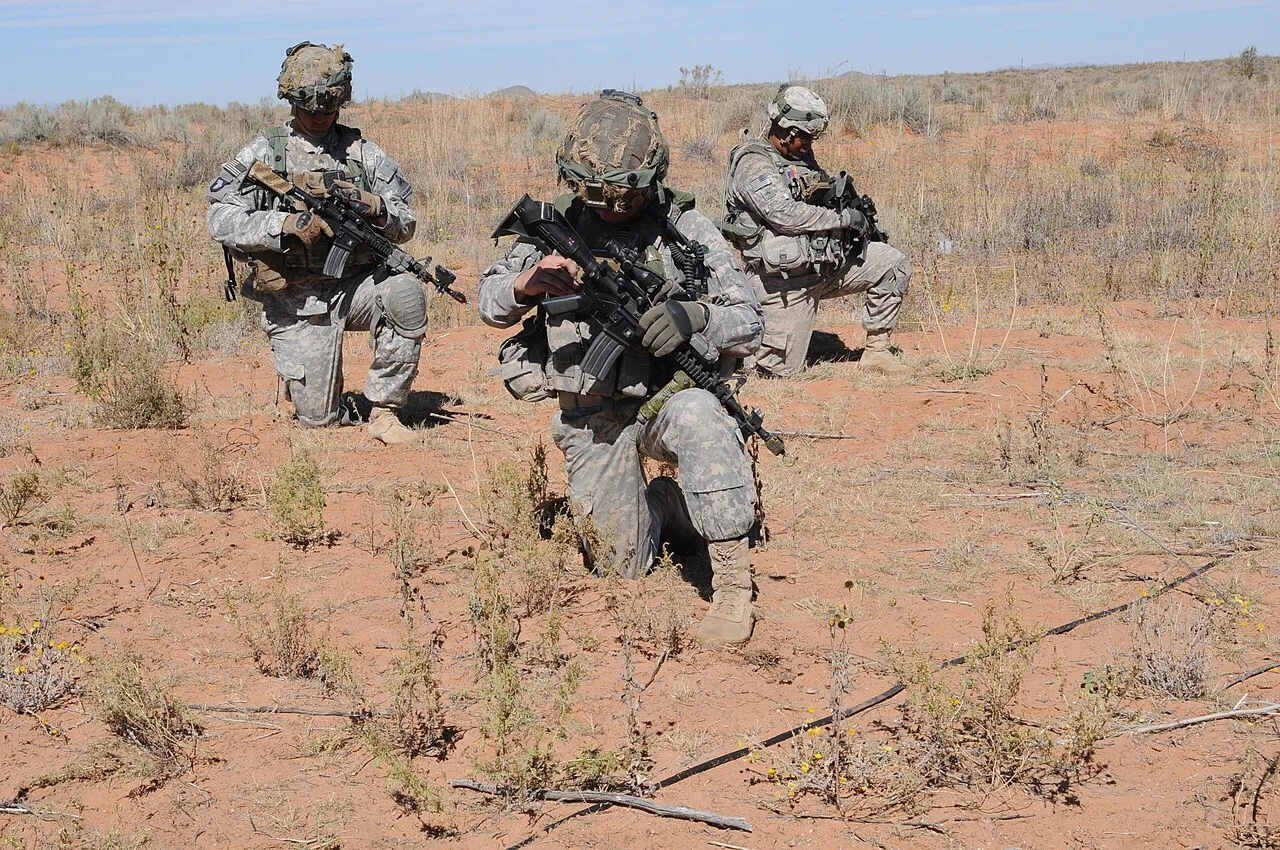
Less than a year after tasking it, the US Army is closing the battalion it created to learn how Ukraine fights with drones. The roughly 600-soldier Unmanned Assault Battalion will finish a multinational exercise in September and then revert to being an ordinary airborne infantry battalion. The decision sits awkwardly beside two years of Pentagon rhetoric about American ‘drone dominance’ — and it is being read in Washington as an institutional reflex rather than a doctrinal conclusion.
At a Glance
- What happened: The US Army is ending its Unmanned Assault Battalion experiment, the unit formed to absorb lessons from the drone war in Ukraine.
- Where: Formed within the 173rd Airborne Brigade under US Army Europe and Africa; the unit also trained at the Bemowo Piskie training area in Poland.
- When: Tasked in November 2025, stood up in early 2026, and closing after Exercise Saber Junction in August–September 2026.
- How many: Roughly 600 soldiers.
- Who decided: Acting Army Chief of Staff Gen. Christopher LaNeve.
- Who created it: Former Army Chief of Staff Gen. Randy George and former USAREUR-AF commander Gen. Christopher Donahue — both since removed or retired early.
- Why it matters: The underlying question — is unmanned warfare a specialist branch or a piece of kit every squad carries? — is one every modern army is now forced to answer.
An Experiment That Did Not Reach Its First Birthday
The US Army tried something unusual: it took an airborne infantry battalion and pointed the whole unit at unmanned systems. Its job was not to fight in the conventional sense. It was to learn — to study how Ukraine builds full-time drone units, how it sustains them, which mistakes it has already paid for, and then to carry those lessons back into Army doctrine, training and requirements.
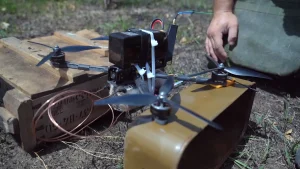
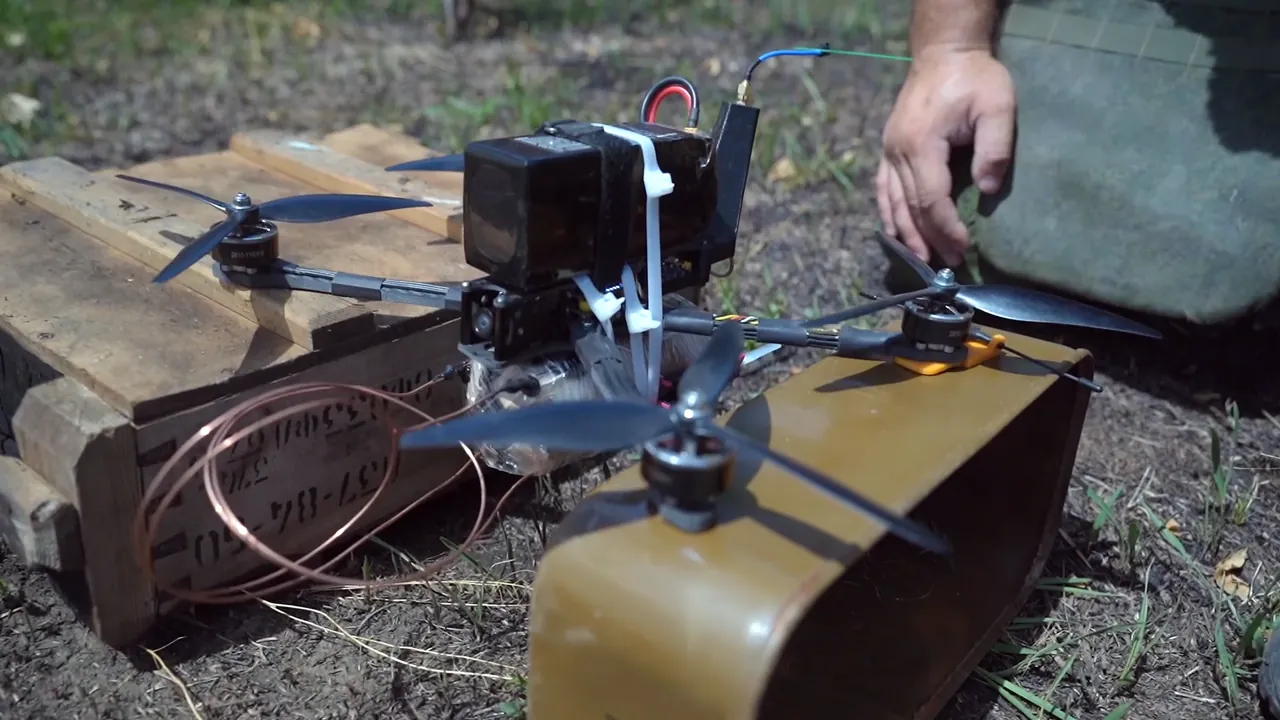
On paper the logic was sound. Nothing in twentieth-century combat experience resembles what has happened on the Ukrainian front since 2022. A first-person-view aircraft assembled from consumer components, costing a few hundred dollars, can destroy an armoured vehicle worth several million. An army short of artillery shells fills the gap with unmanned systems. That is not something you learn from a manual; you learn it from someone who has been holding the line with it.
But the battalion’s lifespan bore no relation to the weight of the task. Tasked in November 2025 and effectively stood up in early 2026, it will hand over a year’s worth of findings during the multinational Saber Junction exercise running through September, then “refocus on its core warfighting tasks as an airborne infantry battalion.”
Officially this is not a failure but a completed experiment. The Army says the knowledge will flow into the force through its separate Ukraine Lessons Learned Task Force. The problem is that in large armies the distance between a lessons report and an actual change in force structure is usually measured in years.
Who Built It, and Who Is Closing It
The most uncomfortable part of this story is not the reasoning but the personnel behind it. The two officers who championed the battalion — then-Army Chief of Staff Gen. Randy George and US Army Europe and Africa commander Gen. Christopher Donahue — are both out of their posts, removed or pushed into early retirement.
The officer closing it is Acting Chief of Staff Gen. Christopher LaNeve. Officials speaking to US outlets describe long-running friction between LaNeve and that previous generation of leadership, including the early end of his own command of the 82nd Airborne Division.
This is not gossip; it is load-bearing. Whether an organisational decision comes out of a doctrinal argument or an internal reckoning determines how durable it is. Doctrinal decisions are defended with data and reversed with data. Decisions rooted in personnel disputes come back to the table when command changes — and in a field this fast-moving, the time lost in between is the hardest loss to recover.
Army Secretary Dan Driscoll‘s remark that he has “not talked to a single person who has said we shouldn’t be learning from what’s occurring in Ukraine” makes the point clearly: nobody senior is arguing against learning. The argument is about what organisational shape the learning should take.
What the ‘Fundamentals of Soldiering’ Argument Actually Says
Read on its own, LaNeve’s reasoning is defensible. The acting chief has stressed that the Army must be able to “counter enemies who employ stand-off weapons, including unmanned systems and WMD” while preserving the “fundamentals of Soldiering” and “small unit tactical skills.”
That is not an anti-drone position. It is an anti-silo position. The argument runs like this: if unmanned expertise is locked inside one battalion, every other infantry unit will treat it as somebody else’s job and never build the skill itself. In modern combat every squad needs to fly its own reconnaissance aircraft, find its own targets and bring down the enemy’s. A specialist unit can become the most comfortable excuse for not distributing the capability at all.
The weakness sits in exactly the same place. Distributing a capability requires the capability to exist in sufficient quantity. Defense Secretary Pete Hegseth‘s July 2025 directive said plainly that US units “are not outfitted with the lethal small drones the modern battlefield requires.” The June 2025 executive order on unleashing American drone dominance came from the same diagnosis.
So the equation reads: the specialist unit is being closed because capability should live at the bottom — while the capability that is supposed to live at the bottom has not fully arrived. Removing one pillar before the other is built is a timing risk, not a doctrinal victory.
Ukraine’s Model: Two Percent of the Force, a Third of the Damage
While Washington debates, the side being studied has deepened its own model. Ukraine made unmanned systems a separate branch in 2024 — the Unmanned Systems Forces — and in early 2025 launched the “Drone Line” project, placing full-time unmanned units on the most contested sectors of the front.
The most visible product of that structure is the 414th Brigade, “Magyar’s Birds,” named for its commander Robert Brovdi’s call sign, expanded to twelve battalions by late 2025. A fibre-optic-guided FPV drone from that brigade — the type that trails kilometres of hair-thin cable to stay immune to jamming — struck a Russian tank inside a hangar 42 kilometres behind the line of contact. One data point, but a striking one: this is no longer a trench-line weapon, it reaches into divisional logistics depth.
By a Ukrainian General Staff assessment circulated in late 2025, the Unmanned Systems Forces made up roughly two percent of Ukraine’s armed forces while accounting for around 35 percent of the damage inflicted on Russian personnel and equipment. That ratio is the single strongest argument available for the specialist model.
It does not transfer cleanly, though. Ukraine leaned on unmanned systems out of necessity as much as choice: artillery shortages, no air superiority, and political limits on long-range munitions forced it to fill the gap with something cheap and domestically producible. An army with full artillery stocks, tactical aviation and cruise missiles should not expect the same ratio.

Russia Chose the Same Road: Rubicon
The party most often left out of this debate is Russia. In August 2024 Moscow created Rubicon, a centralised advanced unmanned technologies centre, and concentrated its most experienced operators there. Hand-picked detachments are then pushed out to priority sectors.
In other words, both sides of the front converged, in different ways, on specialised unmanned organisations. The US is now moving the other way. That does not make the American decision automatically wrong — the US force has resources, air superiority and a sensor-to-shooter chain Ukraine does not. But it does mean the decision runs against what frontline experience currently indicates, and the burden of proof should be correspondingly heavier.
Retired Gen. David Petraeus marks the opposite pole of the argument, suggesting armies should scrap armoured battalions and replace them with drone battalions. That is the exact inverse of what the US Army has just decided, which says something about how wide the range of respectable opinion still is.
Silo or Backbone? The Real Question
The heart of this is organisational science, not technology. Historically, armies absorbing a new capability have taken one of two roads.
The first is creating a branch. Tanks produced armoured formations; aircraft produced air forces; helicopters produced army aviation. A branch gives the new capability its own budget line, career path, schoolhouse and doctrine centre, and the technology matures fast.
The second is organic distribution. Radios, night vision and optics went this way: nobody created a “radio branch,” the device simply went to every unit. This spreads the capability across the whole force but slows maturation.
Unmanned systems currently fit both descriptions. A reconnaissance quadcopter has become as ordinary as binoculars, while a fibre-optic strike aircraft reaching 40 kilometres behind the line is a weapon system that demands its own expertise and its own command chain. The right answer is probably “both” — small systems to the squad, complex long-range systems to a specialist unit. The Army’s decision appears to pick one side without drawing that line.
| Model | How it is organised | Strength | Weakness |
|---|---|---|---|
| Ukraine Unmanned Systems Forces | A separate branch created in 2024; the 2025 “Drone Line” project put full-time unmanned brigades on the most contested sectors | Specialisation, a fast learning loop, direct contact with industry | Friction with conventional manoeuvre units; competition for scarce resources |
| Russia Rubicon Centre | A centralised advanced unmanned technologies centre created in August 2024; hand-picked detachments are pushed to priority sectors | Concentrates the best operators and spreads tactics quickly | Narrow base — units outside the centre stay shallow |
| US model now ending Unmanned Assault Battalion | An existing airborne infantry battalion reassigned to unmanned systems for roughly a year | Builds the institutional memory that writes doctrine in one place | Temporary by design; when the experiment ends, people and knowledge disperse |
| US model preferred Organic distribution | Small unmanned systems pushed down to every squad and company instead of into a dedicated unit | Capability spreads across the force; no single unit becomes a bottleneck | Worthless on paper if procurement and training do not keep pace |
| Türkiye Hybrid | Dedicated UAV bases and squadrons for MALE-class platforms, plus mini systems and loitering munitions inside line units | Strategic and tactical layers are resourced separately | Keeping the two layers integrated in data and command takes constant work |
Table: Envanter Medya compilation, based on open-source reporting.
The Risk Nobody Sees: What Fills the Gap?
When a unit is closed, what is lost is not manpower but accumulation. Six hundred soldiers who spent a year full-time on unmanned systems, in contact with their Ukrainian counterparts, logging their own mistakes, will scatter to other assignments in September — and that year compresses into a thirty-page exercise report. Reports get archived. Reflexes only live in people kept together.
The second risk is industrial. For small unmanned systems manufacturers, the answer to “who buys this?” depends on there being a defined customer unit across the table. The battalion was both a demand signal and a fast feedback loop. Remove it and the loop reverts to the normal speed of acquisition bureaucracy.
The third and most important is timing. In this field the learning curve is measured in months, and in Ukraine the useful life of a jamming technique is measured in weeks. Closing a one-year experiment and promising to disseminate the lessons later means slowing the institutional clock in the one domain where it can least afford to slow.
At Odds With the Pentagon’s Own Targets
The decision looks more contentious still when placed beside the language US defence leadership has used for two years. The 2025 Army Transformation Initiative put unmanned systems at the centre of modernisation. The executive order and the Defense Department directive signed that same year described pushing small drones down to unit level as urgent.
All three documents point the same way: more drones, faster, lower down. Closing the specialist battalion is consistent with that direction only if one can say the capability has already gone so far down that a specialist unit is redundant. Fielding data does not yet support that claim.
Which is why the decision is being read in Washington not as “the doctrine matured” but as “the institutional reflex returned.” In large armies, experimental units are the first thing closed when their patrons leave, because the most vulnerable line in any budget is the one that has not yet built its own constituency.
How Türkiye Answered the Same Question Earlier
The question Washington is arguing about — specialist branch or squad equipment — was settled in Türkiye much earlier, and settled as a hybrid.
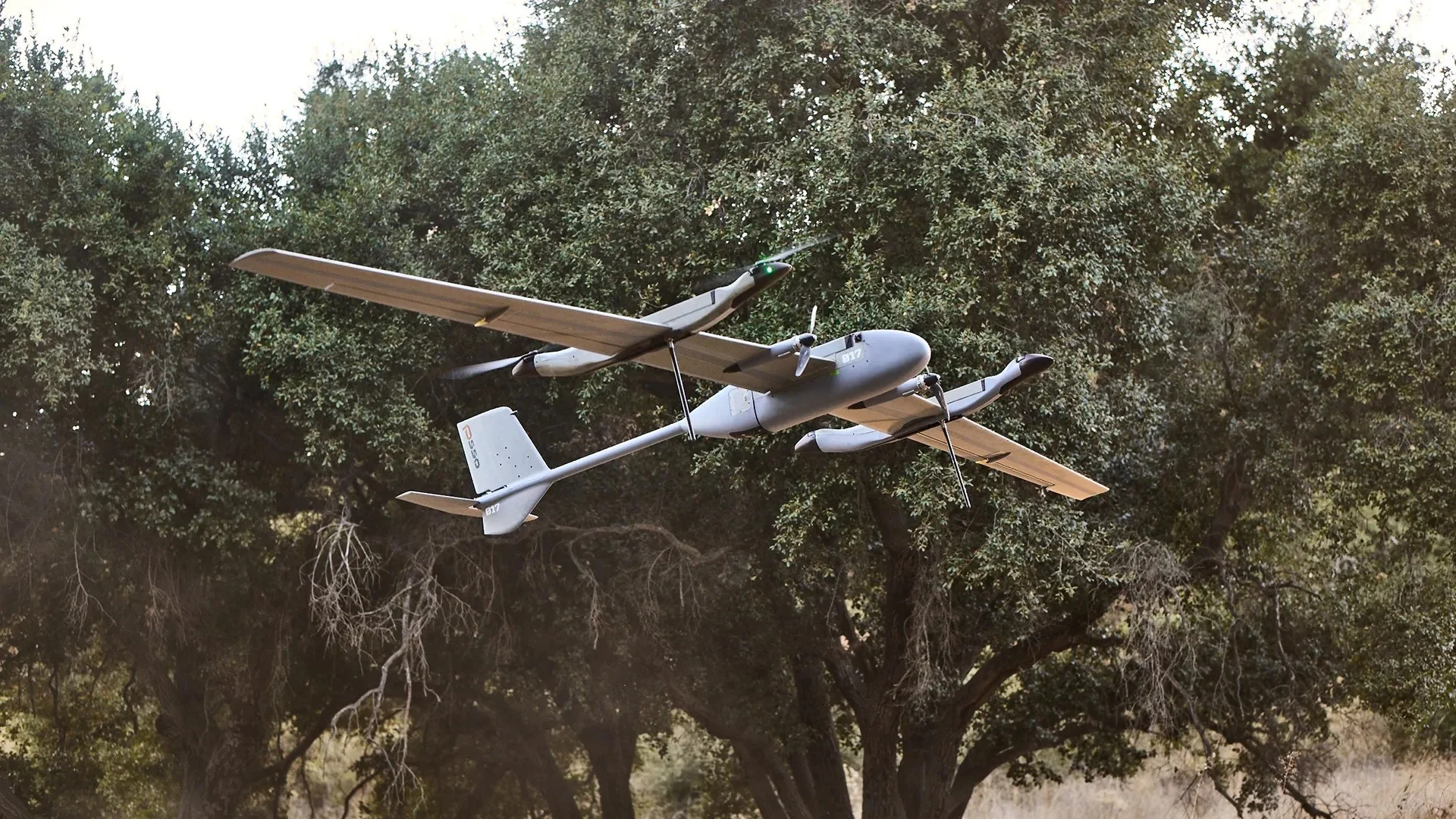
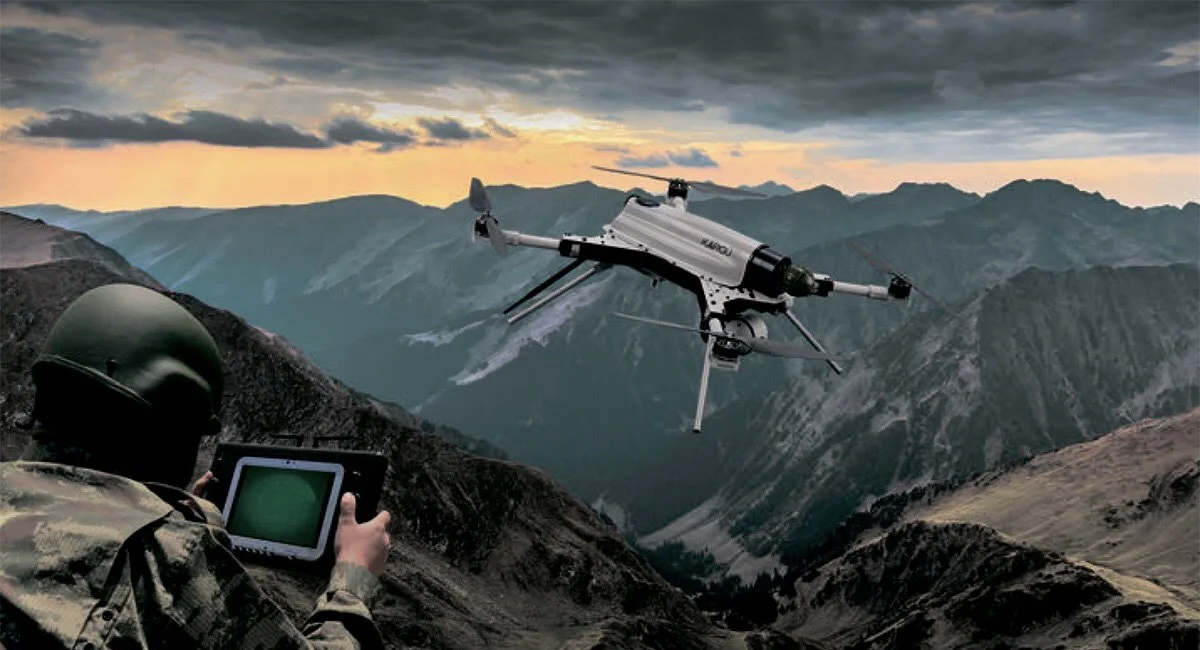
The Turkish Armed Forces built dedicated bases, dedicated crew structures and a distinct operating culture around medium-altitude long-endurance platforms. Bayraktar TB2 and AKINCI sit inside specialist organisations with their own pilot-operator and payload specialist cadres. Meanwhile tactical mini systems and loitering munitions such as KARGU and ALPAGU were pushed into line unit inventories. The silo and the organic distribution were run at the same time.
That split did not appear by design so much as by circumstance. Turkish unmanned capability grew out of the export restrictions of the early 2010s: when armed systems could not be bought abroad, domestic production became compulsory, and the organisation matured alongside the technology rather than after it. That is the structural difference between an army that buys a capability and then asks who should operate it, and one that grows the capability and the organisation together.
The useful lesson for Ankara is that no such answer stays settled. Fibre-optic strike drones, swarming, and counter-unmanned defence — the layer consolidated under the ÇELİK KUBBE architecture — will all reopen the organisational question. It is a decision every technological wave forces an army to make again.
What Happens Next
In the short term the picture is clear. The battalion finishes the exercise in September, delivers its findings and returns to the airborne infantry mission. The Ukraine Lessons Learned Task Force continues, so the learning channel is not shut — only the link closest to actual frontline experience is removed.
In the medium term what matters is how quickly small unmanned systems reach line units. If squad-level reconnaissance and strike drones become common within the next year, today’s decision will look like a well-timed normalisation. If they do not, the Army will have closed its fastest learning channel early.
In the long term the question becomes how far command turnover can swing doctrine. In a domain that moves this fast, institutional stability is as scarce a resource as technological advantage — and considerably harder to procure.
Sources
- Defense News — “US Army to end experimental drone battalion in Europe,” 21 August 2026
- CBS News — “U.S. Army moves to end drone battalion set up to absorb lessons from Ukraine war,” August 2026
- Army Recognition — “US Army disbands its dedicated drone battalion despite Ukraine’s latest battlefield success,” 24 August 2026
- Breaking Defense — Army Transformation Initiative and Pentagon unmanned systems policy coverage, 2025–2026
- Ukrainian Unmanned Systems Forces (usforces.army) and Militarnyi — 414th Brigade operational reporting
- US Department of Defense — “Unleashing U.S. Military Drone Dominance” memorandum, July 2025