





EC-130H Compass Call Flies Final Mission as EA-37B Takes Over

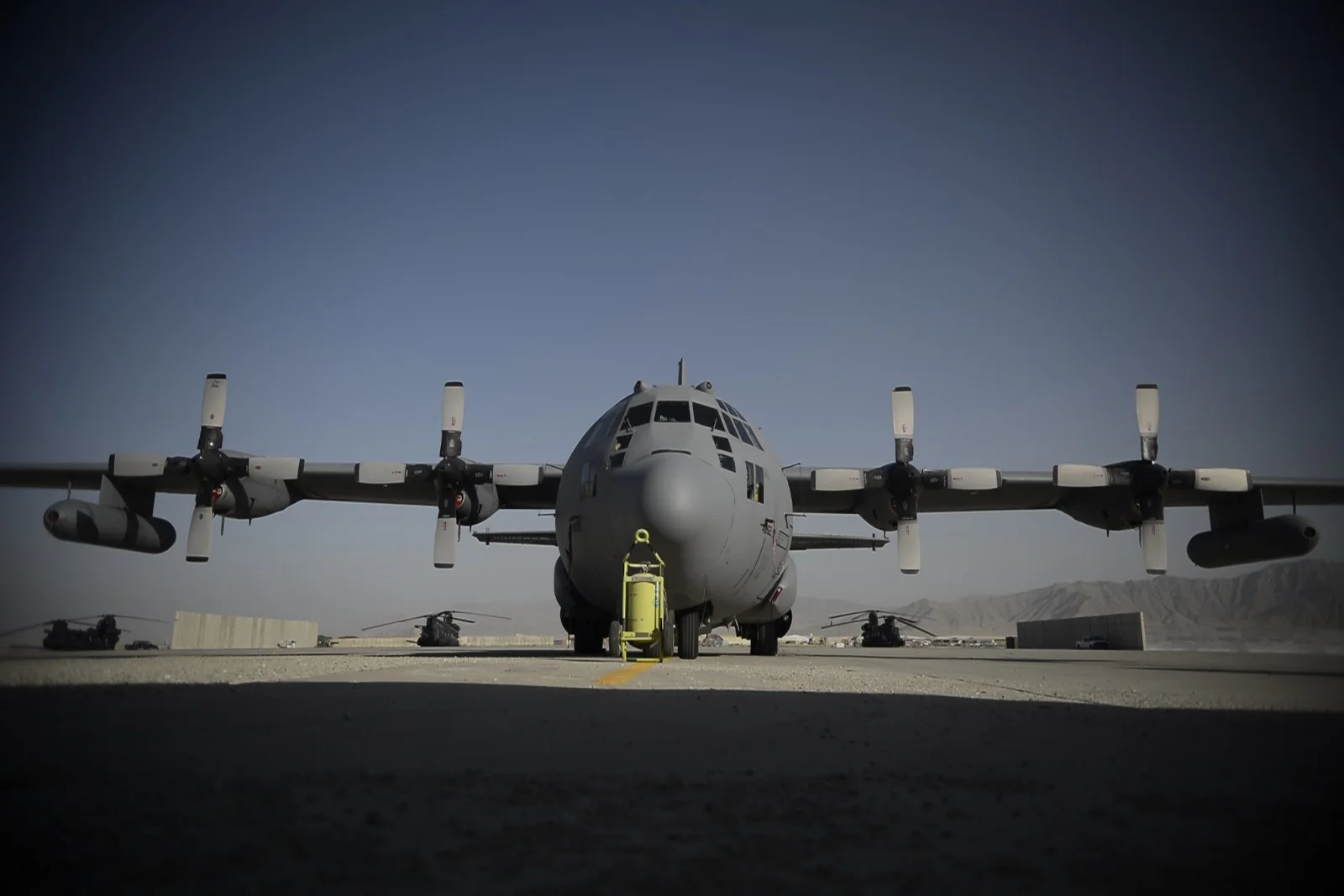
After more than four decades on the front line of American electronic attack, the EC-130H Compass Call has flown its last mission. For the first time in the type’s history, it flew in formation with its successor — the jet-powered EA-37B Compass Call — over southern Arizona, handing over a mission it has carried since the early 1980s. A formal retirement ceremony is scheduled for 18 September at Davis-Monthan Air Force Base.
End of a line
The final sortie was flown by the 55th Electronic Combat Group, which operated the entire EC-130H fleet, near its home base at Davis-Monthan. With it, the propeller-driven platform’s role in the U.S. Air Force’s electronic attack mission formally closes.
The record is substantial. In the last twenty years alone, EC-130H crews logged more than 76,000 combat hours across named operations worldwide. The type served from Panama through the Balkans, Iraq, Afghanistan and Syria — rarely visible in coverage of any of them, which is largely the point of the mission.
What Compass Call does
Compass Call is not a radar jammer in the conventional sense. Its target is the adversary’s command, control and communications network. It disrupts radio traffic, data links, early warning networks and the flow of information between the components of an integrated air defence system — the objective being to leave the enemy deaf and mute rather than merely blind.
This is the least understood and arguably most decisive branch of electronic attack. However capable a surface-to-air missile may be, an air defence system loses coherence the moment the link between its radars and its command posts is broken. Compass Call works on that link. In recent years the platform’s mission set was publicly described as extending into cyber effects delivered against communications networks.
EA-37B: same mission, different aircraft
The EA-37B is built on a Gulfstream G550 business jet airframe, with mission system integration led by L3Harris and BAE Systems. A substantial portion of the electronic attack suite was transferred from the EC-130H and modernised rather than designed from a blank sheet.
The rationale for changing airframes is straightforward. The C-130 operated low and slow, which made it difficult to work outside the engagement envelope of modern long-range air defences. The G550 flies markedly higher, transits faster and can generate effects from farther away.
In electronic warfare, altitude converts directly into range. Because electromagnetic propagation is largely line-of-sight, a platform tens of thousands of feet higher can influence a far larger area with the same transmitter. That, more than speed, is the EA-37B’s core gain.
The transition in numbers
The Air Force planned the EA-37B fleet around a target of ten aircraft, with first deliveries beginning in 2024 and crew training running in parallel with operational evaluation. The EC-130H fleet drew down progressively, the last airframe finishing its service with the 55th Electronic Combat Group.
The most notable feature of the changeover is that the mission system was designed to be platform-agnostic. Much of the electronic attack package could be lifted from the retiring aircraft and installed in the new one, cutting cost and limiting capability loss — a working example of buying capability rather than platforms.
The trade-off is volume. A business jet fuselage carries less than a C-130, which means weight and power budgets for future mission system growth will need tighter management.
Why it matters
Electronic warfare has moved to the centre of defence planning over the past three years. Ukraine demonstrated that GPS jamming can neutralise precision munitions, that signals intelligence can direct artillery, and that cutting a drone link can move a front line.
Against that background, shifting the American electronic attack fleet onto a faster, higher-flying and cheaper-to-sustain platform is a coherent choice. The risk sits in the seam: the interval between the EC-130H leaving the inventory and the EA-37B reaching full operational capability is the part of this transition that will need the most careful fleet management.
Sources
- U.S. Air Force and 55th Electronic Combat Group statements
- DVIDS official imagery and release archive
- Reporting by Air & Space Forces Magazine and Defence Blog