Laos’s Military Strength: Tanks, Aircraft and Rocket Artillery in the Inventory (2026)

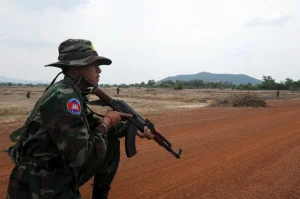
Laos’s military inventory belongs to one of Southeast Asia’s smallest and least-funded armed forces. Global Firepower’s 2026 list places the country 125th among 145 militaries, showing 160 tanks and 64 rocket-artillery systems — and zero fighters. With no coastline, the naval column is empty too. This article works line by line through the land, air, air-defence and riverine holdings of the Lao People’s Armed Forces, based on open sources.
At a Glance
- Active personnel: Ranges from ≈ 29,100 (IISS) to ≈ 100,000 (Global Firepower 2026) depending on the source
- Main battle tanks: ≈ 160; the bulk is T-55 generation, with ≈ 50 T-72B1MS delivered from Russia in 2018-2019
- Military aircraft (total): ≈ 29 (16 serviceable); fighters: 0
- Rocket artillery: ≈ 64 (BM-21, BM-14 and the Chinese SR-5)
- Navy: None — landlocked; a ≈ 500-strong riverine unit under the army patrols the Mekong
- Defence budget: The official 2024 budget was ≈ $39 million (0.23% of GDP); Global Firepower’s 2026 estimate is ≈ $355 million
Note: The inventory figures below are approximate values drawn from open sources such as Global Firepower, the IISS Military Balance and SIPRI.
About the Laos Armed Forces
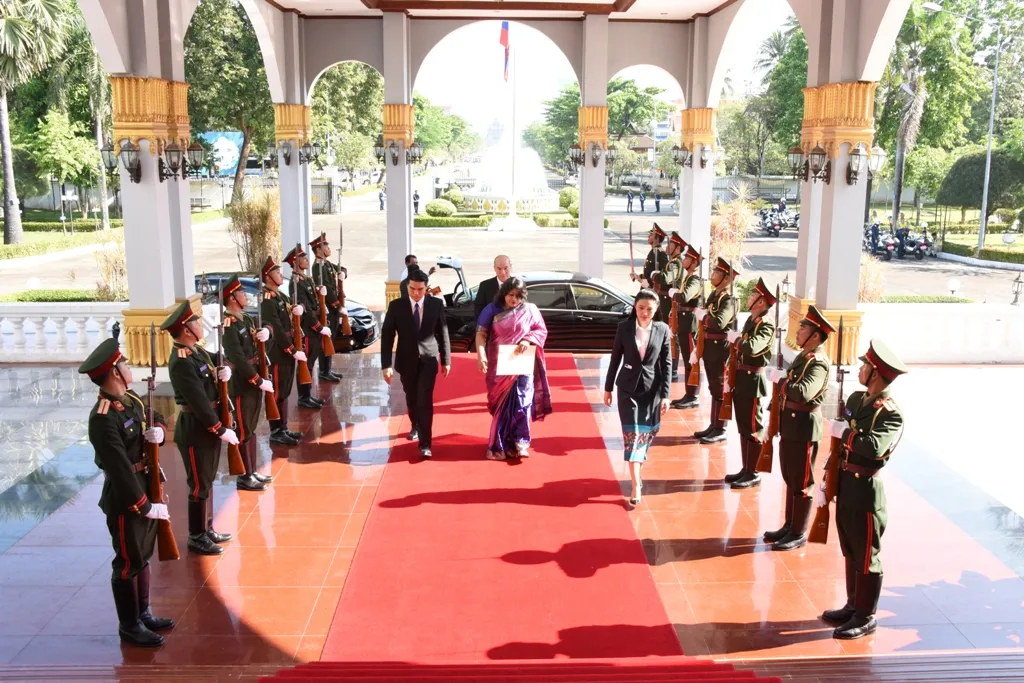
The Lao People’s Armed Forces comprise three components: the Lao People’s Army (which also contains the riverine force), the Lao People’s Air Force and the Self-Defence Militia Forces spread across the country. The organisation was founded on 20 January 1949. General Secretary and President Thongloun Sisoulith is the commander-in-chief; Gen. Khamlieng Outhakaysone serves as defence minister and Lt. Gen. Saichay Kommasith as chief of the general staff. Conscription covers ages 18 to 45 with a minimum service term of 18 months.
Personnel is the most contested line in this inventory. Sources such as the IISS and Wikipedia put active personnel between 29,100 and 30,000 with about 100,000 reservists, whereas Global Firepower’s 2026 data points to a total structure of 250,000 — 100,000 active, 30,000 reserve and 120,000 paramilitary. The gap comes down to whether the militia forces are counted; both figures should be read with that caveat.
The budget shows a similar spread. Laos’s 2024 defence budget was officially announced as $39 million, just 0.23 percent of GDP, while Global Firepower estimates $355.6 million for 2026. Whichever figure is used, the conclusion holds: Laos is among the lowest defence spenders in the region, and its inventory is therefore shaped by grants, credit and barter rather than by purchases.
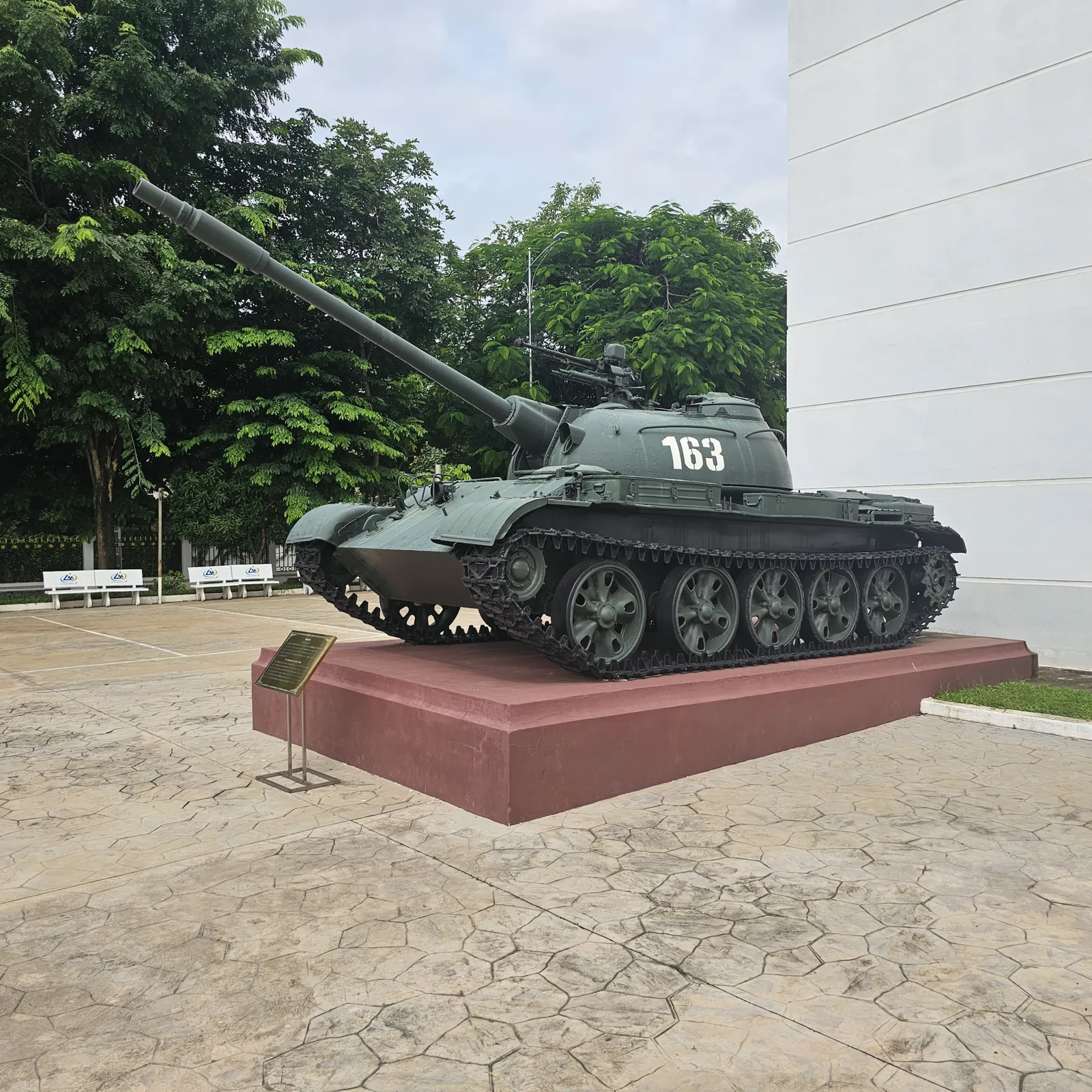
The clearest change in the land inventory over the past decade came in the tank column. Under an agreement signed with Russia in January 2018, Laos handed over around 30 Second World War-era T-34-85 tanks; in return a battalion-sized batch of roughly 30 T-72B1MS was committed, with deliveries made in groups of ten. The first batch arrived in December 2018, the tanks were displayed at the Vientiane parade in January 2019, and further deliveries followed in late 2019 and early 2020. Fitted with a Kontakt-1 explosive reactive armour kit, a Sosna-U gunner’s sight with thermal imager and automatic target tracker, and a remotely operated 12.7 mm machine-gun mount, these are without question the most modern item in the inventory.
The rest of the tank column is Cold War generation: about 85 T-55s and 25 PT-76 amphibious light tanks. The armoured fleet includes BTR-60PB personnel carriers (≈ 70), BRDM-2M scout cars modernised by Russia and delivered in late 2018 (≈ 20), older BTR-152s and BTR-40s, and MT-LBs. Global Firepower’s figure of 7,700 armoured vehicles rests on a broad definition; the number of combat armour is far lower.
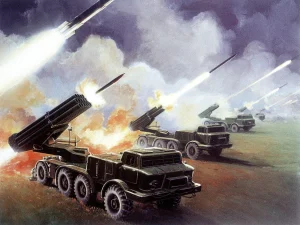
Artillery is the most balanced part of the inventory and the clearest illustration of its supply diversity. The towed column holds Soviet-built 122 mm M-30s and D-30s, US-legacy 105 mm M-101s and 155 mm M-114s, and Chinese 152 mm Type 66s side by side. The self-propelled column carries 152 mm 2S3 Akatsiyas, truck-mounted PCL-09 systems bought from China, and a locally mounted 122 mm truck system. Rocket artillery consists of BM-21 Grads, BM-14s and 12 SR-5 systems acquired from China in the 2010s — the SR-5 being the newest artillery system on the books.
In the air the picture inverts. Although Global Firepower’s 2026 list shows 29 aircraft, only about 16 of them counted as serviceable, the fighter and attack columns read zero. The MiG-21 fleet has been retired; one, tail number 725, is now displayed at the Lao People’s Army Historical Museum in Vientiane. The only combat-capable platform in the inventory is the Yak-130 advanced jet trainer, bought from Russia on a commercial basis under a 2017 contract. The first aircraft was delivered from Irkutsk to Vientiane on 20 December 2018 and four arrived in total; a crash during a training flight in Xieng Khouang province on 3 October 2024 cost the lives of two pilots. Four Chinese-built Hongdu K-8 trainers complete the fleet.
Transport and rotary-wing holdings are limited. The fixed-wing transport arm consists of one Xian MA600 and one An-26. The rotary-wing element comprises some 17 Mi-17/172s, four Harbin Z-9s and two Kamov Ka-32s; given the country’s mountainous terrain, these helicopters are used for disaster response and search and rescue as much as for military tasks. No attack helicopter or in-service unmanned aerial vehicle is confirmed in open sources. The air force operates from Wattay, Long Tieng, Pakse and Xieng Khouang.
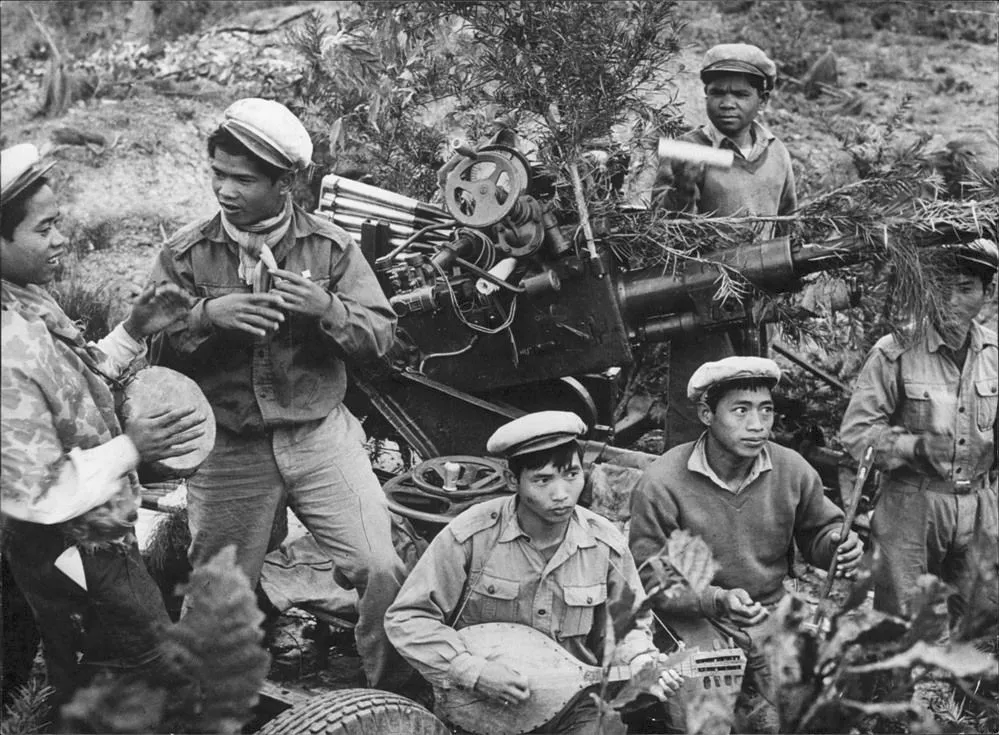
Air defence rests entirely on the Cold War generation. The only fixed medium-range layer is the Soviet-built S-125 Neva/Pechora. The mobile short-range side holds 9K35 Strela-10s and vehicle-mounted Yitian systems acquired from China. The backbone of the low-altitude layer is made up of ZSU-23-4 Shilka self-propelled anti-aircraft guns together with 37 mm, 57 mm and ZU-23-2 towed pieces, supplemented by roughly 100 Strela-2 man-portable launchers received from the Soviet Union in the 1980s. The ballistic and cruise missile column is empty.
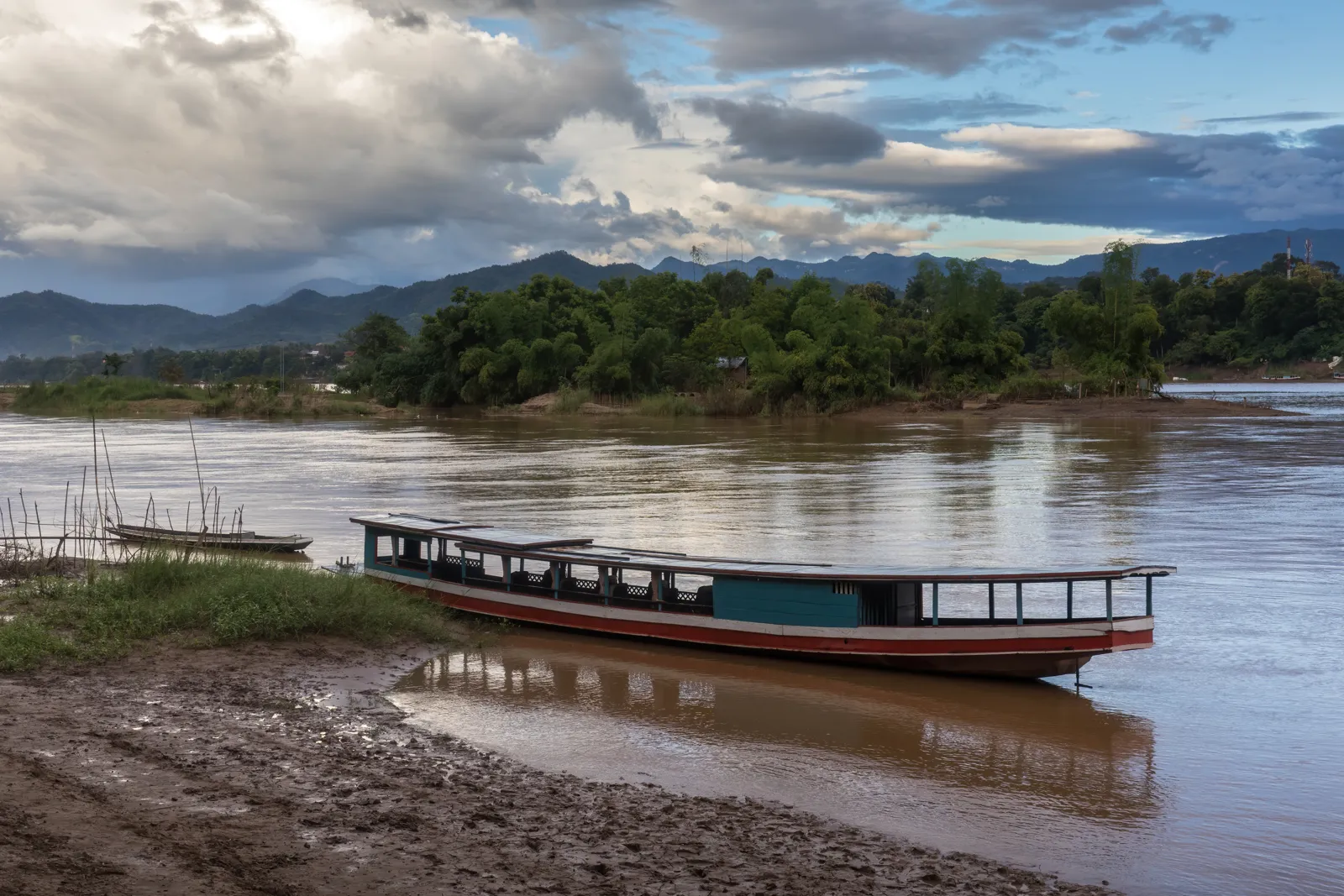
Having no coastline, Laos has no navy; Global Firepower classifies the country outright as landlocked. The maritime function is performed by a riverine unit of about 500 personnel operating under the Lao People’s Army. Its core was built from US-supplied river craft and landing boats inherited from the pre-1975 Royal Lao Navy, and it reached its present shape with some 40 patrol craft received from the Soviet Union in 1985, among them Shmel-class boats. Its training and river-operations doctrine were shaped largely with the help of Vietnamese military advisers.
The unit’s mission is entirely domestic: border patrol along the Mekong, counter-smuggling and internal security. Because the Mekong forms most of the border with Thailand, that mission is both a frontier and a law-enforcement task, and it extends to the regional patrols mounted against narcotics trafficking in the Golden Triangle.
One further heading falls outside the inventory yet effectively sets the Lao military’s agenda: unexploded ordnance. More than two million tons of ordnance were dropped on the country between 1964 and 1973, including over 270 million cluster submunitions. Close to a third of it failed to detonate; more than 80 million unexploded submunitions are estimated to remain on Lao soil today, and only around 10 percent of the contaminated area has been cleared. Since 1975 roughly 20,000 people have been killed or seriously injured by this ordnance. The army’s engineering and explosive ordnance disposal units devote more time to that clearance work than to conventional military tasks.
In external military relations, Russia and China are decisive. The Laros exercises with Russia have become a fixture since 2019: Laros-2025 was held in Vientiane to mark the 65th anniversary of Russian-Lao diplomatic relations and the 50th anniversary of the proclamation of the Lao PDR, running until 25 September 2025. The active phase of Laros-2026 took place in June 2026 at the Kommadam training ground of the Academy of the Lao People’s Armed Forces, built around a scenario in which a military facility seized by illegal armed groups is retaken. China, for its part, is the supplier of record in the artillery and air-defence columns.
Land Forces Inventory
| System type | Est. quantity |
|---|---|
| Main battle tanks (T-72B1MS, T-55) | ≈ 135 (≈ 50 T-72B1MS + ≈ 85 T-55); the GFP total is ≈ 160 |
| Light / amphibious tanks (PT-76) | ≈ 25 |
| Armoured vehicles (BTR-60PB, BTR-152, BTR-40, BRDM-2M, MT-LB) | ≈ 7,700 (GFP’s broad definition; the combat-armour figure is far lower — BTR-60PB ≈ 70, BRDM-2M ≈ 20) |
| Towed howitzers (M-30 and D-30 122 mm, M-101 105 mm, M-114 155 mm, Type 66) | ≈ 97 |
| Self-propelled artillery (2S3 Akatsiya, Chinese PCL-09, a locally mounted 122 mm truck system) | ≈ 50 |
| MLRS (BM-21 Grad, BM-14, Chinese SR-5) | ≈ 64 |
Air Force Inventory
| Platform | Est. quantity |
|---|---|
| Total military aircraft | ≈ 29, of which ≈ 16 are serviceable |
| Fighters / attack aircraft | 0 — the MiG-21 fleet has been retired; one is on display at the army museum in Vientiane |
| Trainers / light attack (Yak-130, Hongdu K-8) | ≈ 7; the only combat-capable platform is the Yak-130 (3 in service, 1 lost in October 2024) |
| Transport aircraft (Xian MA600, An-26) | ≈ 2 |
| Helicopters (Mi-17/172, Harbin Z-9, Ka-32) | ≈ 20 |
| Attack helicopters / UAVs | None / not confirmed in open sources |
Missile and Air-Defence Systems
| System | Type / Note |
|---|---|
| S-125 Neva / Pechora | The only fixed medium-range air-defence layer in the inventory; Soviet generation |
| 9K35 Strela-10 | Vehicle-mounted short-range surface-to-air missile |
| Yitian (China) | Vehicle-mounted short-range air-defence system acquired from China |
| Anti-aircraft guns (ZSU-23-4 Shilka, 37 mm, 57 mm, ZU-23-2) | Backbone of the low-altitude layer |
| Man-portable air-defence missiles (Strela-2 / SA-7) | ≈ 100 launchers were received from the Soviet Union in the 1980s |
| Ballistic or cruise missiles | None |
Naval Power
| Class / Type | Est. quantity |
|---|---|
| Naval forces | None — Laos is landlocked |
| Riverine force (subordinate to the army) | ≈ 500 personnel |
| River patrol craft (Soviet generation, incl. Shmel class) | ≈ 40; most were received from the Soviet Union in 1985 |
| Area of operations and mission | The Mekong river; border patrol, counter-smuggling and internal security |
The Turkey Angle: Turkish Defence Industry
Laos is one of the markets the Turkish defence industry has never entered. Open sources record no Turkish-built platform in the Lao People’s Armed Forces inventory and no defence-industry cooperation agreement between the two countries. This section should therefore be read not as an account of deliveries made, but as a market reading of where the existing relationship stands and where it could touch.
The diplomatic basis is old. Diplomatic relations between Turkey and Laos were established on 20 June 1958. Distance and diverging foreign-policy priorities kept contact limited for decades: Laos was covered first by the embassy in Kuala Lumpur and then, between 1975 and 2017, by the embassy in Bangkok. Turkey’s embassy in Vientiane began operating on 27 December 2017; Laos maintains an honorary consulate in Ankara.
The legal framework has stayed on trade and development. The Trade and Economic Cooperation Agreement signed in 2008 entered into force in 2013; memoranda of understanding were signed between ministries in 2014 and 2024, along with a cooperation agreement between the two countries’ diplomatic academies. Trade volume, however, remains very low: bilateral trade stood at $2.88 million in 2015. On the development side, the Turkish Cooperation and Coordination Agency (TIKA) ran 15 projects in education, agriculture, health and disaster management over 2023-2024, and 10 Lao students have studied in Turkey under the Türkiye Scholarships programme since 1992.
Contact has picked up markedly over the past two years. Deputy Prime Minister and Foreign Minister Saleumxay Kommasith visited Turkey in February 2024. Foreign Minister Hakan Fidan attended the Sixth Trilateral Meeting of the Türkiye-ASEAN Sectoral Dialogue Partnership in Vientiane on 26-27 July 2024 — one of the concrete markers of the diplomatic attention Turkey has directed at the region under its ‘Re-engagement with Asia’ initiative.
The most significant outcome of that process came in 2026. By a decision taken at the 59th ASEAN Foreign Ministers’ Meeting held in Manila on 18-23 July 2026, Turkey was accepted as an ASEAN Dialogue Partner as of 21 July 2026. The status Turkey applied for in 2024 is the rank immediately below member-state standing within the organisation and had previously been granted to only 11 states. Laos being an ASEAN member, this gives the bilateral relationship an institutional footing it has never had. It should be stressed that this does not amount to defence procurement; what it provides is a regular, multilateral framework for contact.
In procurement terms the picture holds both a gap and an obstacle for Turkish industry. The shortfalls in Laos’s inventory are clear: no combat aircraft, no confirmed unmanned aerial vehicle, an air defence resting entirely on Soviet-generation systems, an armoured fleet largely of Cold War vintage and an artillery park assembled from four different national generations. Most of those headings overlap with areas where Turkish industry is strong: tactical-class UAVs, mine-resistant armoured vehicles, 155 mm artillery systems and river and coastal patrol boats.
Laos’s purchasing behaviour, however, is governed by its budget and its supply model. An official defence budget of $39 million means the country has almost no cash purchasing capacity; that the tank renewal was funded by a barter arrangement handing over old T-34s is the clearest illustration. Turkish industry’s ability to compete in this market appears to depend less on product quality than on the financing and cooperation model on offer.
Regional precedent shows Turkish industry can enter South and Southeast Asia. Bangladesh contracted with Roketsan for the TRG-230 and TRG-300 guided rocket systems and moved to buy Bayraktar TB2 drones in 2022, while cooperation with Indonesia and Malaysia has built lasting footholds in the region. In Laos’s case there is no contract on the table today; but the overlap between the map of gaps in its inventory and the Turkish product range, together with the institutional channel opened by the ASEAN Dialogue Partnership, makes a relationship currently worth zero worth recording for the future.
Frequently Asked Questions
How many tanks does Laos have? Global Firepower’s 2026 list shows around 160 tanks. About 85 are Soviet-built T-55s, some 50 are T-72B1MS delivered from Russia in 2018-2019, and 25 are PT-76 amphibious light tanks. The T-72B1MS batch came under a barter deal in which around 30 Second World War-era T-34-85s were handed over to Russia.
Does Laos have fighter aircraft? No. The MiG-21 fleet has been retired and the fighter column reads zero. The only combat-capable platform in the inventory is the Yak-130 advanced jet trainer bought from Russia; one of the four aircraft was lost in a crash at Xieng Khouang on 3 October 2024. Four Chinese-built Hongdu K-8s complete the fleet.
What is Laos’s air defence? The only fixed medium-range layer is the Soviet-built S-125 Neva/Pechora. Alongside it are 9K35 Strela-10 and Chinese Yitian short-range systems, ZSU-23-4 Shilkas and towed anti-aircraft guns, and roughly 100 Strela-2 man-portable launchers acquired in the 1980s. There are no ballistic or cruise missiles.
Does Laos have a navy? No — Laos is landlocked. The maritime function is performed by a riverine unit of about 500 personnel under the Lao People’s Army. With some 40 river craft, most of them received from the Soviet Union in 1985, it carries out border patrol, counter-smuggling and internal security duties along the Mekong.
Is there any Turkish-made system in Laos’s inventory? Open sources confirm no Turkish platform in the Lao People’s Armed Forces inventory, and there is no defence-industry cooperation agreement between the two countries. The relationship rests on diplomacy, trade and development aid; Turkey’s acceptance as an ASEAN Dialogue Partner on 21 July 2026 has, however, opened an institutional channel.
Bottom Line
Laos’s inventory shows clearly what a low-budget military prioritises. On paper, 160 tanks and 64 rocket launchers are modest by regional standards; what really defines the force is that the inventory is four supply generations stacked on top of one another. Soviet-generation T-55s and S-125s, US-legacy M-101 and M-114 howitzers, SR-5 and Yitian systems from China and T-72B1MS tanks and Yak-130s from Russia all sit side by side. That means logistical burden more than flexibility. The second defining feature is that modernisation runs on barter and grants rather than purchases: the tank renewal was financed by handing old T-34s back to Russia. The third is that the army’s real agenda has shifted from conventional combat capability to unexploded ordnance clearance; more than 80 million unexploded submunitions are still believed to lie in Lao soil, with only around 10 percent of the contaminated area cleared. What will define this inventory in the coming period is not a new tank or a new aircraft but three questions: whether air defence can move beyond the Soviet generation, whether the reconnaissance requirement will be met by unmanned aircraft, and how the helicopter fleet — decisive in this mountainous terrain — will be renewed. That these three headings fall precisely where Turkish defence industry is strong, and that Turkey became an ASEAN Dialogue Partner in 2026, makes a relationship currently worth zero worth watching.