Why Did MİLGEM Win Exports? Verifiable Structural Features and Their Limits

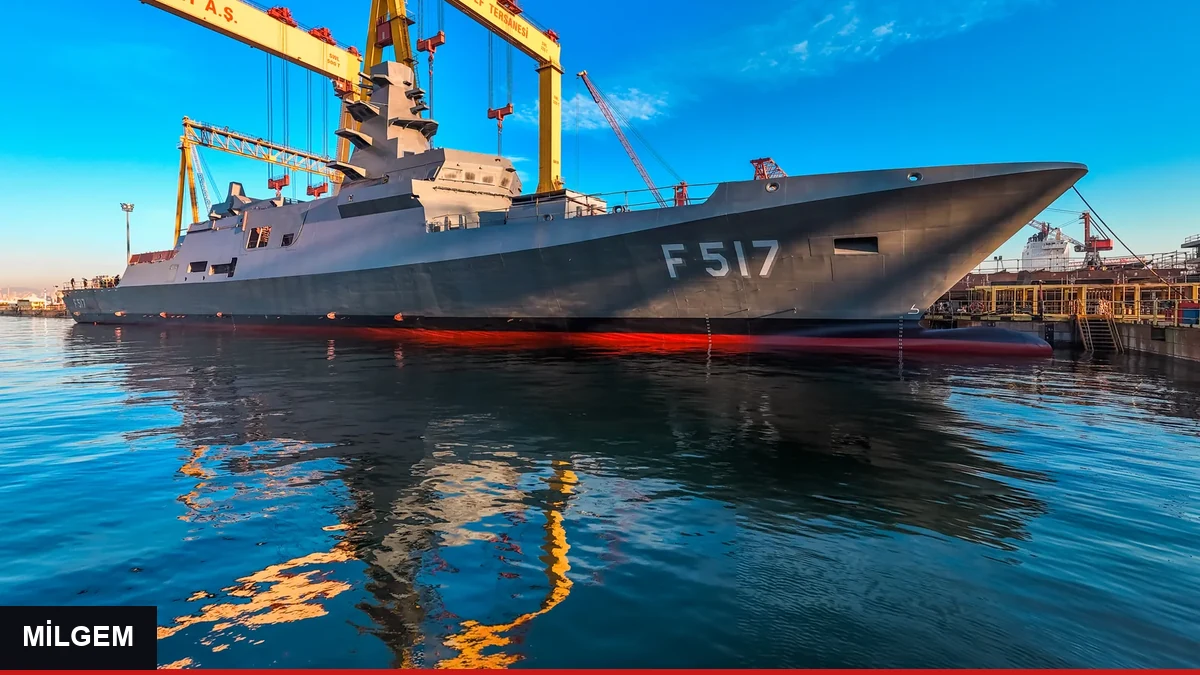
In the previous file we recorded the five lines of the MİLGEM family. Now the question everyone asks: why? It is an attractive question but a dangerous one, because buyer states’ reasons are not announced and every defence sale comes out of a mix of diplomacy, financing and industrial relations. So this file makes no claim: it lists the verifiable structural features that accompanied the export contracts and states the evidence level of each openly.
In file 15 we recorded the lines one by one: the Ada, the İstif, the Babur, Ukraine’s Ada corvettes and Indonesia’s İstif order. This file sits on top of that record. The six-threshold model is again the frame, but we look at which features the thresholds opened with.
The file’s thesis
The common denominator of MİLGEM’s three foreign programmes is not one superior feature but five structural features seen together: reference ships in service, combat equipment adaptable to the buyer, a structure able to work with several yards, a co-production and technology-transfer model and a domestic subsystem family. That these features caused the sales cannot be proved; what can be proved is that the contracts appeared alongside them. That difference is the backbone of the file.
How do we approach the ‘why’ question?
We place each feature at one of three evidence levels. Verified fact: information consistent across several sources — date, quantity, place. According to sources: information reported by a single source or differently by different sources. Unverifiable: buyers’ reasons, the financing terms of contracts and the details of rival bids. The file uses only the first two levels and openly leaves the third out.
Left out of the file
- Buyers’ decision reasons — no official document, not guessed.
- Contract values and financing terms — sources report approximate figures.
- Domestic-content shares — sources give different percentages and scopes.
- Numerical comparison with rival programmes (other countries’ ship exports).
- A size comparison of the Ada and Babur classes — sources conflict.
- Contract claims for Malaysia and other possible buyers.
Contracts came after inventory
The first observation concerns sequence. None of the three foreign contracts was signed before the first ship entered service in 2011, and each came at a time when ships were in service. That fits the pattern in file six: the inventory threshold opens before the export threshold.
The bars show something interesting: from the Ada’s first ship to the Pakistani and Ukrainian contracts seven to nine years passed; on the İstif line, from the first ship to the first export about a year and a half. This file does not know the reason for the difference: no document among the sources explains it. The observation is limited to this: on the İstif line the contract came quickly after the first delivery.
Feature 1: Reference ships in service
There were ships a buyer could see before ordering a design: four Ada corvettes entered the Turkish Naval Forces between 2011 and 2019, and the first İstif-class ship was delivered in 2024. So the export contracts were signed at a time when operating examples of the design existed in the fleet. How much weight this carried in buyers’ decisions is unknown.
| Date | Reference | Later contract |
|---|---|---|
| 27 September 2011 | TCG Heybeliada enters service | — |
| 2018–2019 | Burgazada and Kınalıada enter service | Pakistan 2018, Ukraine December 2020 |
| 19 January 2024 | TCG İstanbul (İstif) delivered | Indonesia, 26 July 2025 |
Feature 2: Combat equipment adaptable to the buyer
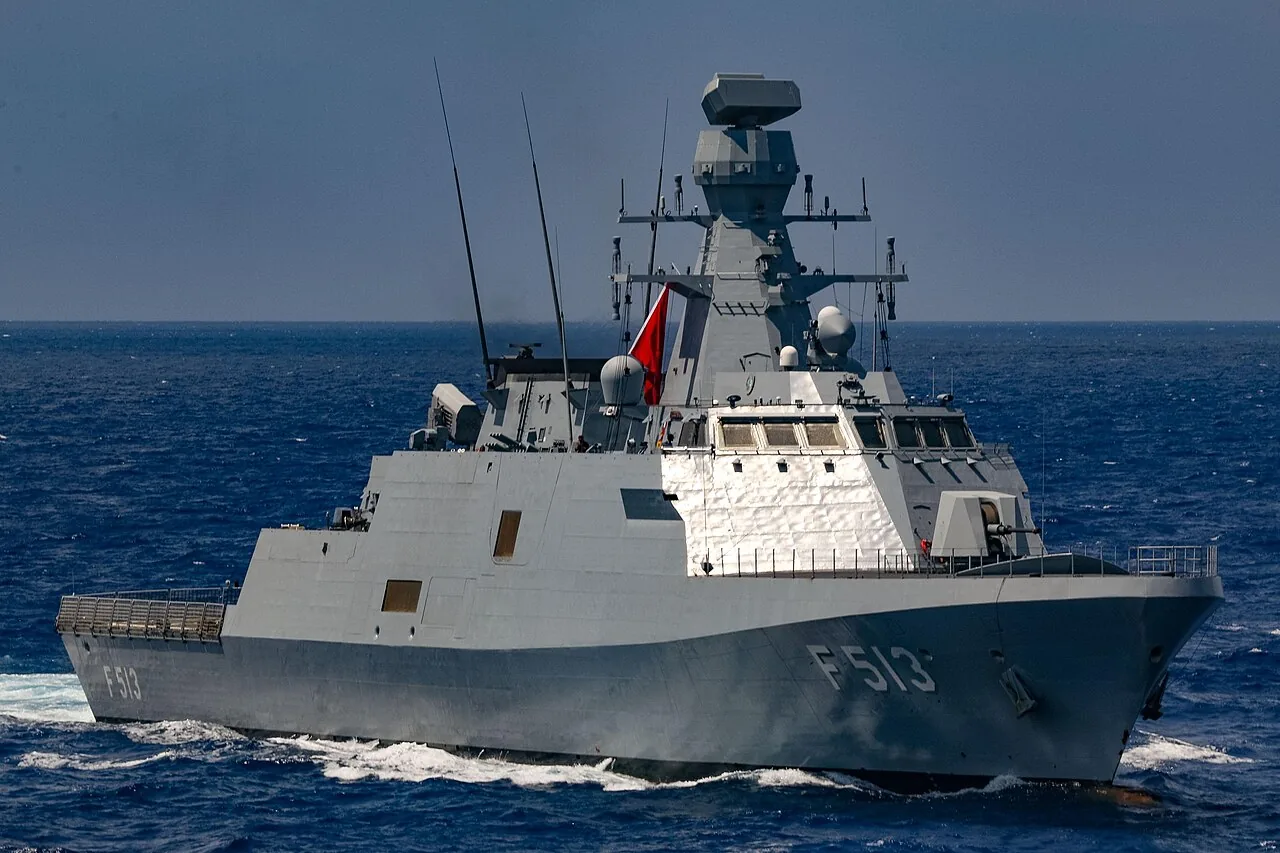
The Babur class is the clearest example of the design being adapted to a buyer’s requirement. According to sources the Ada is optimised for anti-submarine warfare while the Babur will also be used for surface and air tasks; its combat equipment is Pakistan-specific: EDR Magazine reports the MBDA Albatros NG air-defence system, absent on the Ada, and the Pakistani-made Harbah cruise missile. So the design did not stay tied to one weapon package; it could take the buyer’s own systems.
| Line | Reported weight of role | Reported combat equipment |
|---|---|---|
| Ada | Anti-submarine warfare | Domestic sensors and combat management systems |
| Babur | Anti-submarine, surface and air | MBDA Albatros NG and Pakistani-made Harbah (per EDR Magazine) |
| İstif | Multi-role frigate | 16-cell vertical launcher; Atmaca anti-ship and Hisar air-defence missiles |
This table should not be read in a single direction. Adaptability to the buyer and a design’s stability can look opposed; what is reported for MİLGEM is that the adaptation was made mainly in role weighting and combat equipment. The source conflict on hull size is the limit of this reading.
Feature 3: A structure able to work with several yards
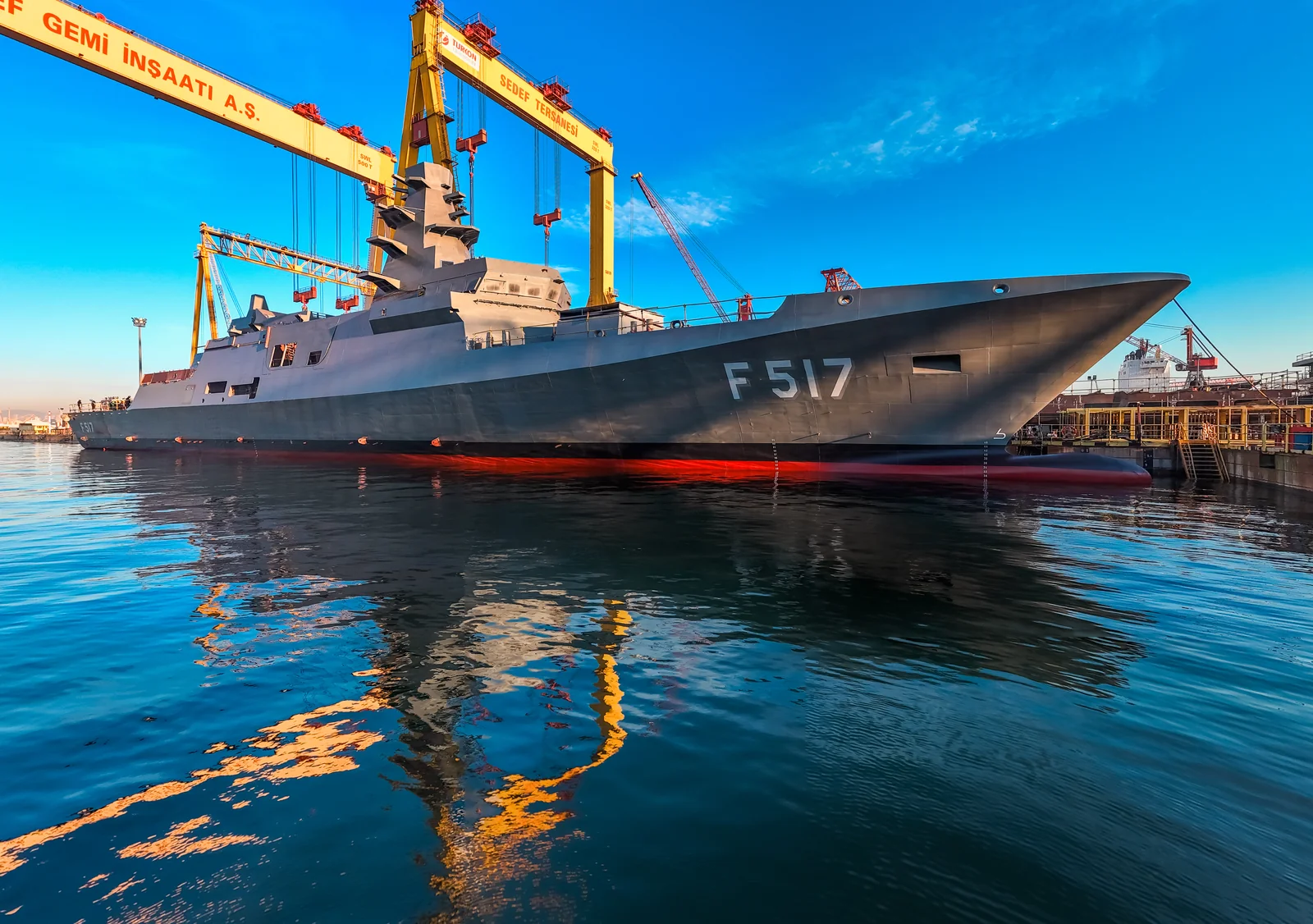
The İstif line is not tied to a single yard. According to sources the ships are built at the Istanbul Naval Shipyard Command and the Anadolu, Sefine and Sedef yards; the sixth ship, TCG Karadeniz (F-520), was launched at the Sedef yard, and the sea acceptance tests of TCG İzmit have begun. On the Pakistan line two ships are built in Istanbul and two in Karachi. That shows the same design can be built at different yards; TAIS’s role in the İstif class covers the yard structure separately.
| Line | Build sites | Note |
|---|---|---|
| Ada | Istanbul Naval Shipyard Command | Four ships |
| İstif | Istanbul Naval Shipyard Command, Anadolu, Sefine, Sedef | Eight ships planned for the class per sources |
| Babur | Istanbul Naval Shipyard Command (2), Karachi KS&EW (2) | Four ships |
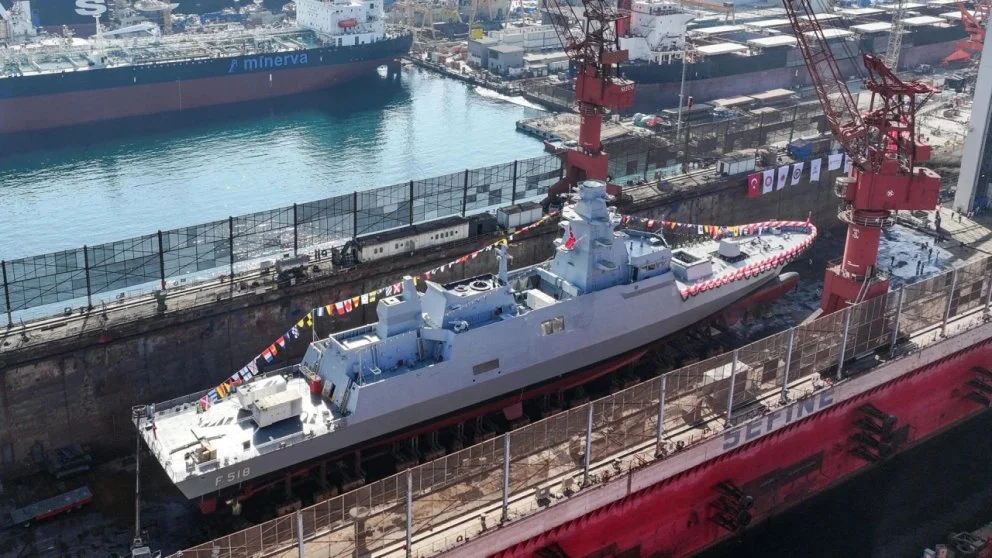
This feature matters because export contracts can demand large quantities and simultaneous delivery, and one yard’s capacity can be limiting. But whether the Turkish Naval Forces’ own fleet and the export programmes share the same yard network, and what that does to delivery timelines, was not verified in this file.
Feature 4: A co-production and technology-transfer model
The most distinctive part of the Pakistan line is its structure: two of the four ships are built at the buyer’s own yard. The prime contractor, the Turkish state-owned ASFAT, manages the programme through its offices in Türkiye and Pakistan; sources mention a technology-transfer agreement and local support. The contract covers design, shipbuilding, outfitting and delivery, plus familiarisation of the crews by Turkish Navy and industry personnel.
This is a direct example of the sixth threshold in file six — production abroad. Giving work to the buyer country’s own yard turns the contract from a sale into more of an industrial partnership. Pakistan–Türkiye defence relations covers the broader ground of that partnership.
The intellectual-property claim was not verified
Some sources claim design intellectual-property rights were transferred to Pakistan. In the verifiable source, however, the work for which shared intellectual property is mentioned is a separate frigate design effort, not the Babur class. For that reason no claim of an IP transfer for the Babur class appears in this file.
Feature 5: A domestic subsystem family
MİLGEM ships are fitted with domestic subsystems: according to sources ASELSAN sensors and radars, HAVELSAN combat management systems and ROKETSAN’s Atmaca anti-ship and Hisar air-defence missiles. For an export buyer that could mean two things: being able to take an integrated package from a single industrial ecosystem, and the makers of that package also being suppliers to the Turkish Naval Forces. But neither reading can be verified in this file; domestic-content shares differ in sources and it is unclear what they measure.
| Area | Wording in the sources |
|---|---|
| Sensors | ASELSAN surveillance and tracking radars, electronic warfare systems |
| Combat management | HAVELSAN combat management systems |
| Anti-ship missile | ROKETSAN Atmaca |
| Air defence | ROKETSAN Hisar (from the vertical launcher) |
How this subsystem family relates to export lines beyond ships can be followed in the project accumulation of the last 25 years and in ecosystem growth.
The evidence level of the five features
| Feature | Fact level | Link to exports |
|---|---|---|
| 1. Reference ships | Verified fact | Sequence verified; weight unknown |
| 2. Adaptable equipment | According to sources | Seen in one buyer (Pakistan) |
| 3. Multiple yards | According to sources | Capacity effect not verified |
| 4. Co-production | Verified fact (Pakistan) | Seen in a single buyer |
| 5. Domestic subsystem family | According to sources | Domestic-content share not verified |
The table must be read honestly: for no feature is it claimed that ‘this feature brought the sale’. Reference ships and co-production are verified facts, but their link to exports is seen in one buyer or one sequence. Adaptability and multiple yards rest on sources; the weight of the subsystem family cannot be measured.
The limits of the comparison
- Causality cannot be proved. The features appear in the same period as the contracts; buyers’ reasons are not announced.
- Diplomacy and financing cannot be measured. Every defence sale is affected by relations between states and financing terms; this file does not guess at them. Indonesia–Türkiye relations and Pakistan–Türkiye relations cover that ground separately.
- No comparison with other programmes. Other countries’ ship-export programmes are not in this file’s source set, so the question ‘why is MİLGEM different from the others’ is not answered. The İstif–FREMM comparison is a separate frame.
- An order is not a delivery. The Indonesian contract and Ukraine’s second ship are at contract stage; the status of the İstif line’s second ship is followed separately.
Conclusion: features yes, verdict no
This file gives no definitive answer to ‘Why did MİLGEM win exports?’, and the reason is methodological: buyers’ reasons, financing terms and rival bids are not public. What it can give is an honest account of the five structural features that accompanied the three foreign programmes and the evidence level of each. There is no single magic element in that account: reference ships in service, buyer-adaptable equipment, several yards, co-production and a domestic subsystem family appear together.
This is the naval-class outcome of the series’ main thesis: the difference appears not in the first ship but in the structural decisions taken after it. How those structural decisions repeat or differ in air-defence programmes is the subject of the next file.
Next in the series
File 17 — Air-defence development models in Türkiye and Europe. We move from naval systems to air defence: with which development models did the two regions’ air-defence programmes advance? The whole series is on the Türkiye and World Defence Programmes page.
Frequently asked questions
Is there a single reason behind MİLGEM’s export line?
This file points to no single reason. What can be verified are the structural features that accompanied the export contracts: reference ships in service, combat equipment adaptable to the buyer, a structure able to work with several yards and a co-production model. Because no official document explains the buyers’ own reasons, causality cannot be proved.
What is the difference between the Ada class and the Babur class?
Sources report that the Babur class is an Ada derivative adapted to Pakistan’s requirements: the Ada is weighted toward anti-submarine warfare, while the Babur is reported to be used for surface and air tasks too; its combat equipment is Pakistan-specific and includes items such as the MBDA Albatros NG air-defence system and the Pakistani-made Harbah cruise missile. On size, sources conflict: one reports the same hull dimensions as the Ada, another a longer hull. This file gives no dimensions.
How is the work split on the Pakistan line?
Two of the four ships (Babur and Khaibar) are built at the Istanbul Naval Shipyard Command and two (Badr and Tariq) at KS&EW in Karachi. The prime contractor is the Turkish state-owned ASFAT; sources mention a technology-transfer agreement and local support.
Are the İstif ships built at a single yard?
No. Sources report that the İstif-class ships are built at several yards: the Istanbul Naval Shipyard Command and the Anadolu, Sefine and Sedef yards. The sixth ship, TCG Karadeniz (F-520), was launched at the Sedef yard.
Does this file say MİLGEM is the most successful programme?
No. The file makes no numerical comparison with other countries’ ship programmes and does not define ‘success’ by a single measure. What it records: contracts for three foreign programmes were signed; delivery status differs from line to line.
Why did Indonesia choose the İstif?
No official document explains Indonesia’s reasons. What can be verified: on 26 July 2025 a contract for two İstif was signed with TAIS, reported as the first export of the İstif line. The reasons are not guessed at in this file.
Will MİLGEM’s export success last?
This file makes no forecast. An order is not a delivery: the Indonesian contract and Ukraine’s second ship are at contract stage, and delivery status should be followed separately through official announcements.