What Is a Vertical Launching System? The Mk 41 VLS Explained

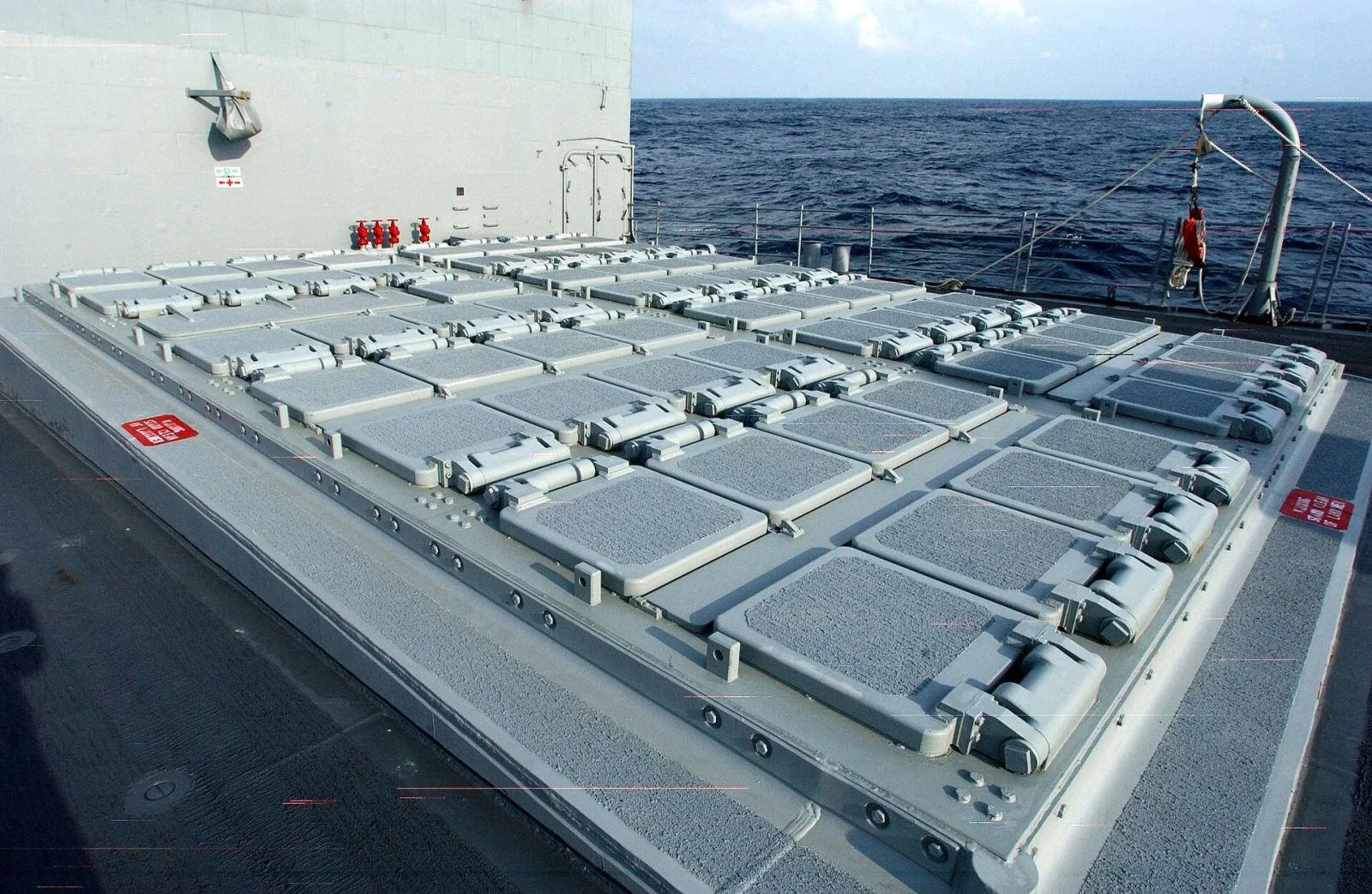
A vertical launching system, or VLS, is a set of missile cells built into a ship’s deck. The missiles are stored upright, fired straight up and then turned toward the target. There is no need to aim a rotating rail at the enemy before the shot.
The best-known Western system is the U.S. Navy’s Mk 41 VLS. A Naval Sea Systems Command fact file, last updated on 20 September 2021, describes it as a fixed, vertical, multi-missile storage and firing system fitted to Ticonderoga-class cruisers, Arleigh Burke-class destroyers and a number of allied ships.
How does a vertical launching system work?
Each module typically holds eight missile cells, with a gas-management and deluge system to handle the exhaust and to cool a cell if needed. The U.S. government, in a 2023 notification of a possible sale to the Netherlands, described the Mk 41 the same way: a modular, below-deck layout of eight-cell groups.
Because the missile leaves the ship vertically, the ship does not have to turn toward the target and the launcher does not have to be “reloaded” onto a rail between rounds. The Navy says this raises the rate of fire compared with older rail launchers.
What missiles can the Mk 41 fire?
According to the Navy fact file, the Mk 41 can launch:
- Standard Missile variants, including those used for air defence and ballistic-missile defence
- Tomahawk land-attack cruise missiles
- Vertical Launch Anti-Submarine Rockets (ASROC)
- Evolved SeaSparrow Missiles (ESSM)
The same file lists the mission areas as anti-air warfare, anti-submarine warfare, ballistic-missile defence and land attack. For how a cruise missile then finds its target, see what a cruise missile is.
Mk 41 in numbers (as of 2021)
The Navy says the Mk 41 entered U.S. service in 1986 on USS Bunker Hill (CG 52). As of the September 2021 fact file, 184 systems had been acquired for U.S. ships and 54 for allied navies, with the system in use in 11 allied nations. The Navy also said the Mk 41 had launched more than 4,200 missiles with a launch success rate of about 99 percent since the programme began.
Those figures are official but dated. Later sales and new ship classes may have raised the totals. The system has been used in operations including Desert Storm, Enduring Freedom, Iraqi Freedom and Odyssey Dawn, the fact file states.
Frequently asked questions
What is a vertical launching system?
It is a fixed set of vertical cells that store and fire missiles from a warship, so the ship does not have to point a rail launcher at the target.
What is the Mk 41 VLS?
It is the U.S. Navy’s standard vertical launching system, used on Ticonderoga cruisers, Arleigh Burke destroyers and allied ships, and able to fire several missile types.
How many missiles does one Mk 41 module hold?
A standard module has eight cells, according to U.S. Navy and U.S. government descriptions.
Sources: U.S. Navy Mk 41 VLS fact file (updated 20 September 2021); Naval Sea Systems Command description of vertical launching systems; U.S. Defense Security Cooperation Agency notice on a proposed Mk 41 sale to the Netherlands (2023).