The World’s Most Exported Tanks

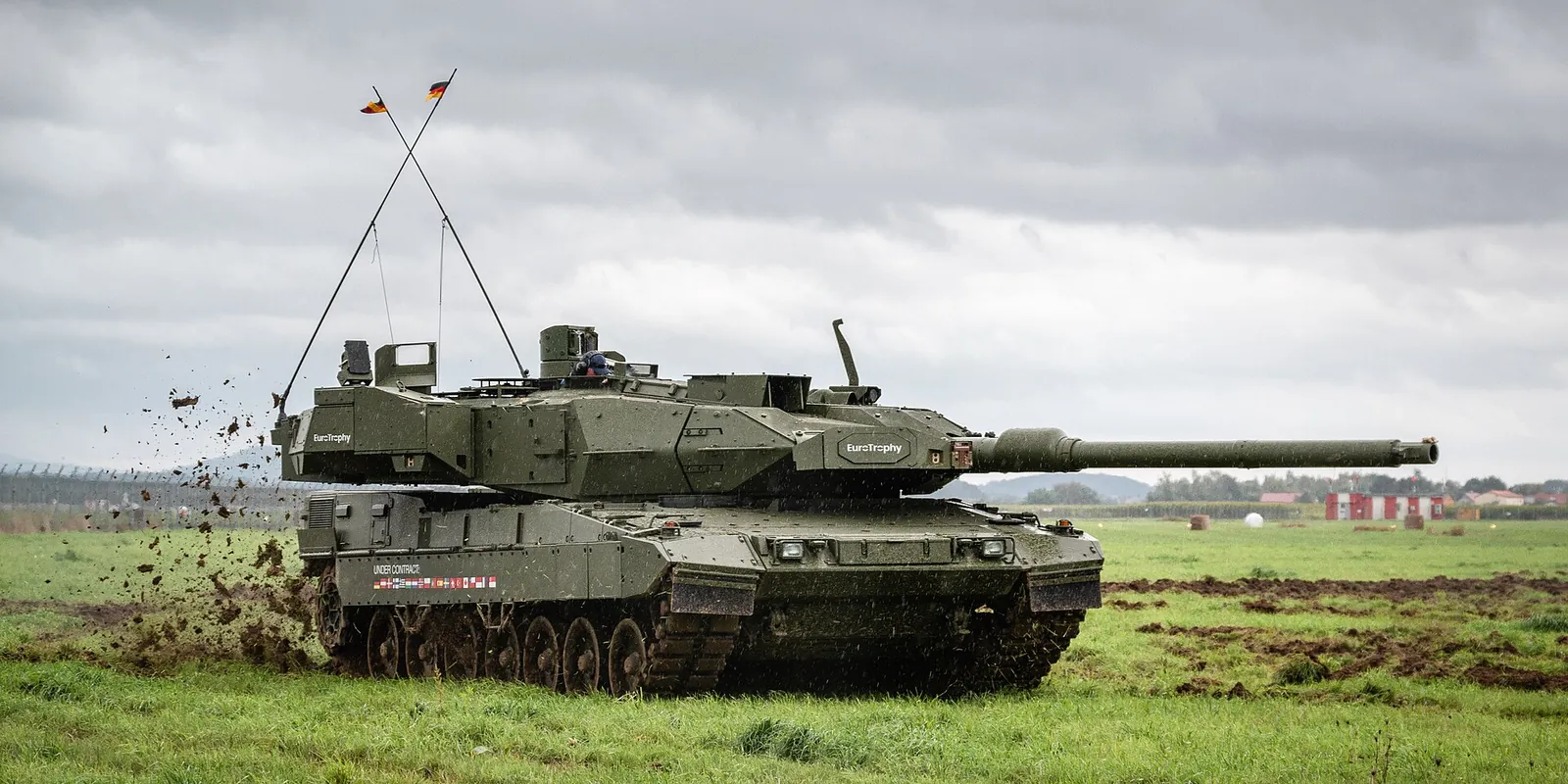
“Which tank is exported the most?” has a more complicated answer than it looks, because there are at least two different things being measured: how many countries bought it, and how many units were built in total. This file builds both tables from data that can be traced to official sources — defence ministries, manufacturers, SIPRI, DSCA — separating the Cold War’s mass-export champions from the current generation’s contracts and the fresh export wave of the 2020s.
Methodology
Two different number types run through this file, and they should not be mixed: (1) the number of countries a tank design has been sold to or licence-built in over its lifetime (an “export band”), and (2) the size of concrete contracts signed since the 2020s (“program ÷ units” or “package ÷ units”). For the second category, we do not divide a total contract value — which typically bundles vehicles, ammunition, training and logistics support — by unit count and present that as a “unit price”; doing so would be seriously misleading.
| Number type | What it means | Where used in this file |
|---|---|---|
| Export band (approximate) | An estimated number of countries a tank family has been sold to or licence-built in, based on publicly documented inventories | Main table |
| Program ÷ units | The total target quantity of a multi-year procurement program | K2–Poland program |
| Package ÷ units | The quantity and total package value from a single DSCA/FMS notification (ammunition, vehicles, support included) | M1A2 SEPv3–Poland contract |
| Manufacturer/government statement | A figure from an official statement by the manufacturer or the relevant government body | Leopard 2A8 order count, T-90 production count |
The tanks with the broadest export base, by country count
| Tank | Origin | Approx. export/operator countries | Note |
|---|---|---|---|
| T-54/T-55 | USSR | Over 50 | The most-produced and most widely distributed tank in history; today mostly limited numbers of modernised variants remain in service |
| T-72 family | USSR/Russia | Over 40 | Includes licensed production in Poland (PT-91), Czechoslovakia, India (Ajeya) and former Yugoslavia (M-84) |
| M60 Patton | USA | ~22 | Widely sold to NATO and Middle East allies during the Cold War; retired or in reserve in most countries today |
| Leopard 2 | Germany | 19 | As of 2026, the modern MBT with the broadest current/active export customer base |
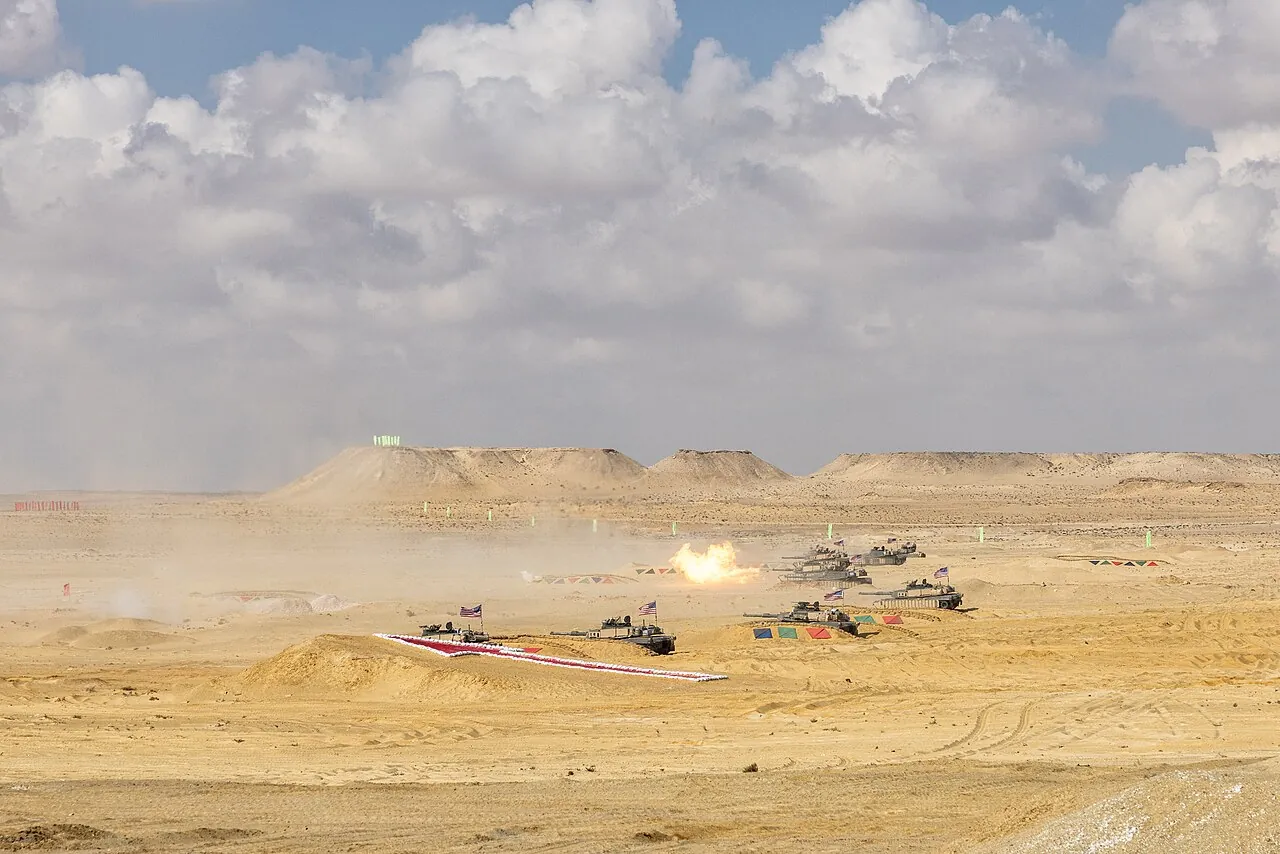
| M1 Abrams | USA | 10 | Per DSCA/GDLS notifications, current export customers: Egypt, Saudi Arabia, Kuwait, Australia, Iraq, Morocco, Poland, Taiwan, Romania, Bahrain |
| T-90 | Russia | 6 | India (licensed production, largest volume), Algeria, Azerbaijan, Iraq, Turkmenistan, Uganda |
The 2020s’ new export wave: concrete contracts
Country counts give a historical picture, but the contracts signed in the second half of the 2020s show where the centre of gravity of tank exports actually sits today. The four programs below, based on official statements, summarise this period’s largest tank movements in concrete unit and package terms.
| Program | Units / target | Number type | Source and note |
|---|---|---|---|
| Leopard 2A8 | Over 350 orders from 5 NATO countries (Czech Republic, Germany, Lithuania, Netherlands, Norway) | Manufacturer statement | KNDS’s December 2025 announcement; a country-by-country breakdown was not detailed by KNDS |
| K2 Black Panther | Total program target with Poland up to 1,000 units (2022: 180 units + 2025: roughly a $6.5 billion follow-on contract) | Program ÷ units | Hyundai Rotem/Polish Ministry of National Defence statements; Poland remains K2’s only major export market to date |
| M1A2 SEPv3 | 250 tanks, part of a roughly $6.0 billion package including vehicles, ammunition and support | Package ÷ units | US Defense Security Cooperation Agency (DSCA) approval, 17 February 2022; the package total is not a per-tank price |
| T-90(IM)/T-90MS | 1,000th vehicle delivered at the AVNL/HVF Avadi facility in India (May 2026) | Manufacturer/govt. statement | Not an export in the strict sense — this is licensed domestic production in India under a Russian licence, and is treated as a separate category |
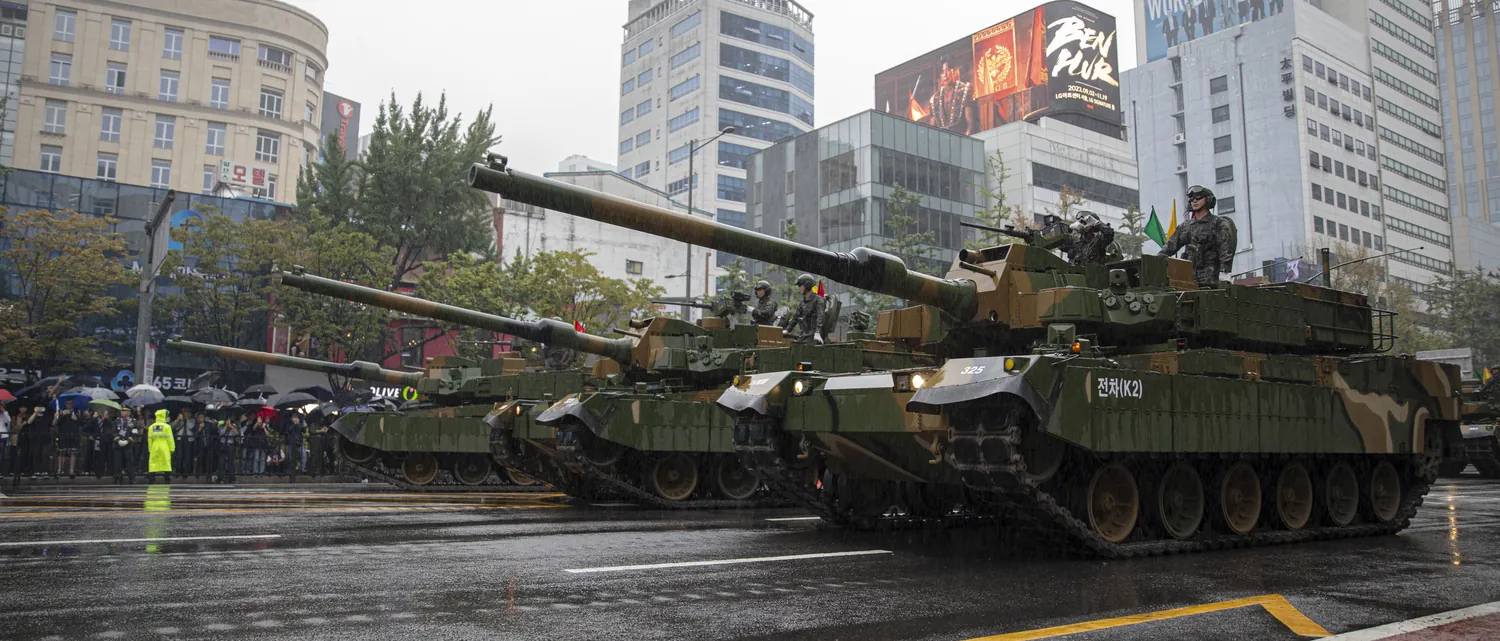
Breadth versus depth: export customer count for current-generation tanks
| Tank | Customer countries | Pattern |
|---|---|---|
| Leopard 2 | 19 | A broad NATO/allied base built up through successive incremental sales |
| M1 Abrams | 10 | A gradually expanding list built through the US FMS/DSCA mechanism |
| T-90 | 6 | Russia’s traditional markets, deepened by a single large licensed-production partnership with India |
| K2 Black Panther | 1 | A record-volume single contract in Poland; export expansion is still at an early stage |
Why does one tank get exported more than another?
1) Unit cost and ease of maintenance
The wide distribution of the T-54/T-55 and T-72 families comes down to low unit cost, simple maintenance requirements, and the extensive spare-parts and training network the Soviet bloc built for its Cold War-era allies. These tanks are technically behind today’s standards, but they remain an attractive option for lower-budget militaries.
2) Alliance standardisation
Leopard 2’s broad adoption across NATO stems from the desire to build shared training, common ammunition and common logistics around a single platform. The need to replenish fleets after donations to Ukraine also accelerated new Leopard 2A8 orders in the 2023-2026 period.
3) Technology transfer and co-production
The K2-Poland and Abrams-Egypt cases show that buyer countries often want production capacity, not just vehicles. Poland’s K2 contract aims to revive its own tank industry, while Egypt has been assembling M1A1 hulls near Cairo since the 1990s.
4) Geopolitical alliances and the FMS mechanism
The US Foreign Military Sales (FMS) system offers a predictable, official process from DSCA approval through to delivery, which has steadily grown Abrams’ list of allies in the Middle East and Asia-Pacific. Russia’s export network, by contrast, has narrowed sharply since the international sanctions imposed after 2022.
Türkiye’s work in this category: Altay
Türkiye’s indigenous main battle tank, the Altay, entered serial production in 2025 at BMC’s new facility in Ankara; the first serial-production vehicles were delivered on 28 October 2025. The Land Forces Command is due to receive a total of 85 Altay T1 vehicles between 2026 and 2028 (11 in 2026, 41 in 2027, 30 in 2028). After 2028, production is set to shift to the T2 variant fitted with the domestically developed “Batu” engine, with 165 further units planned.
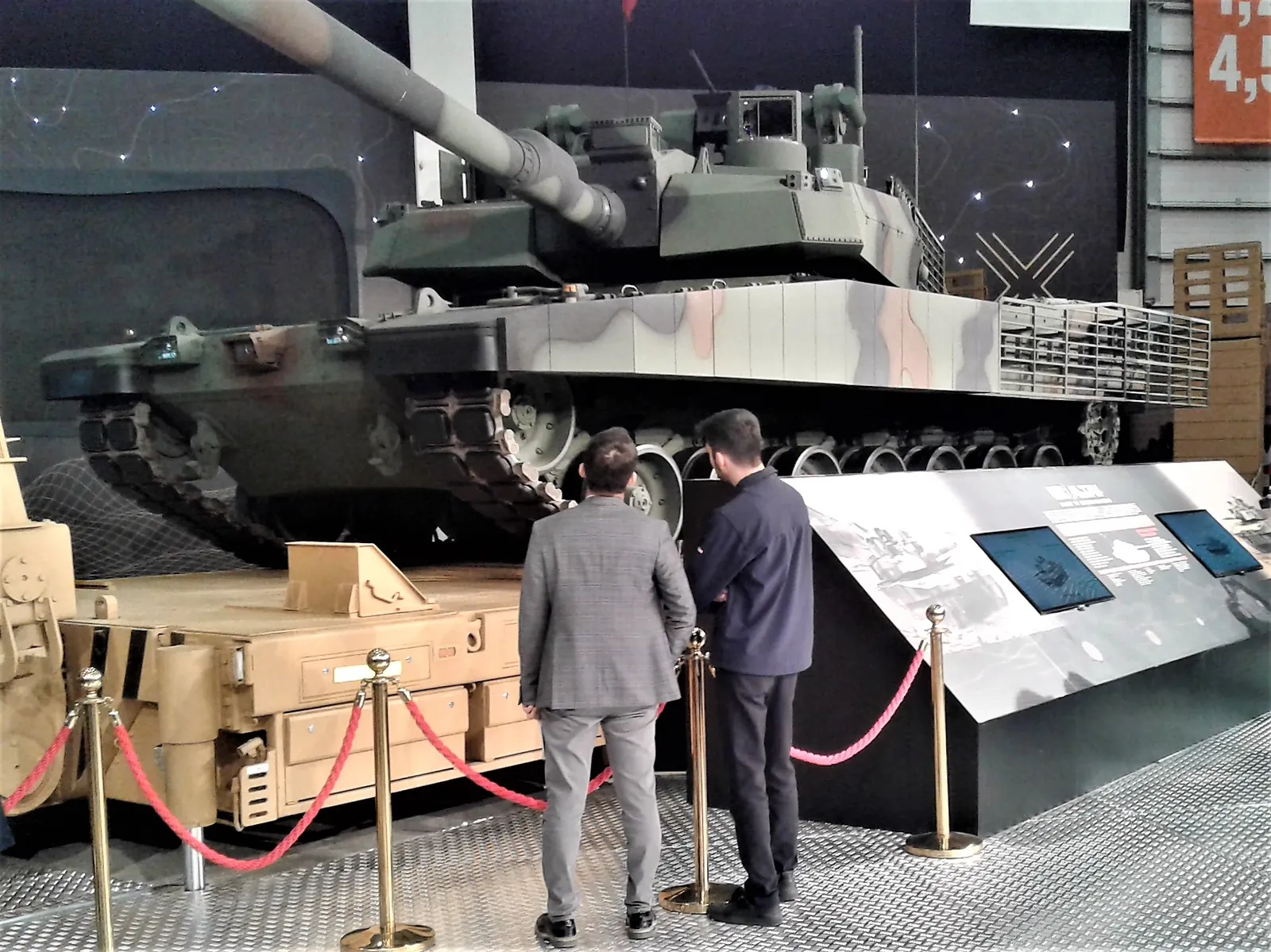
This is a different picture from Türkiye’s export performance in other defence categories, such as UAVs or armoured vehicles; the Altay program is still in its domestic-delivery phase and is focused on scaling up serial-production capacity during this period.
Frequently asked questions
Which tank has been exported the most?
Why does K2 Black Panther rank low in the main table?
What is the per-unit price of the M1A2 SEPv3 sold to Poland?
Does India’s T-90 production count as an export?
Is Türkiye’s Altay tank being exported?
Is this ranking based on total units built or country count?
Sources
- SIPRI Arms Transfers Database — armstransfers.sipri.org
- SIPRI, “Trends in International Arms Transfers” fact sheet series — sipri.org
- US Defense Security Cooperation Agency (DSCA) — Poland M1A2 SEPv3 approval (17 February 2022), Kuwait M1A2 sustainment notification — dsca.mil
- KNDS Group official press releases — Leopard 2A8 delivery/order figures — knds.com
- General Dynamics Land Systems corporate statements — gdlssystems.com
- Hyundai Rotem corporate statements and Polish Ministry of National Defence announcements — K2 Black Panther contract
- Indian Ministry of Defence / Armoured Vehicles Nigam Limited (AVNL) public statements — T-90(IM) production count
- Republic of Türkiye Presidency of Defence Industries (SSB) and BMC corporate statements — Altay T1/T2 delivery schedule