Why Egypt Has Africa’s Strongest Military (2026)


Egypt fields Africa’s largest and most diversified military by nearly every open-source measure: roughly 450,000 active personnel, a defence budget in the $4.5–6 billion range, and an air force, navy and armoured fleet drawn simultaneously from American, French, Russian and Chinese suppliers. No single index fully captures combat readiness, but the scale and diversity of Egypt’s inventory — backed by domestic production, a large conscript base and its Suez Canal geography — is what consistently puts it ahead of Algeria, Nigeria and South Africa in continental rankings.
Table of Contents
- The Short Answer: Four Pillars of Egyptian Military Power
- Personnel and Force Size
- Air Power: A Four-Supplier Air Force
- Naval Power: Bridging the Mediterranean and Red Sea
- Land Forces and Domestic Production
- Budget, US Aid and Multi-Vendor Diplomacy
- Where Egypt Sits Regionally
- The Turkish Question: Why Egypt Isn’t (Yet) a Bayraktar Operator
- What the Ranking Doesn’t Tell You
- FAQ
- Sources
The Short Answer: Four Pillars of Egyptian Military Power
Open-source indices such as Global Firepower (GFP), cross-checked against SIPRI and IISS Military Balance reporting, consistently place Egypt first in Africa on raw scale. Four factors explain the gap with Algeria, Nigeria and South Africa — the next three on most rankings:
- Size: the largest active-duty force on the continent, sustained by conscription.
- Supplier diversity: the only African military operating top-tier US, French, Russian and Chinese-origin equipment simultaneously, which reduces dependence on any single government’s export policy.
- Domestic production: a state-owned industrial base (the Arab Organisation for Industrialization, AOI) that assembles and licence-builds equipment rather than importing everything outright.
- Geography and alliances: control of the Suez Canal and a four-decade US defence relationship that has funded and shaped force structure since the 1979 Camp David accords.
Personnel and Force Size
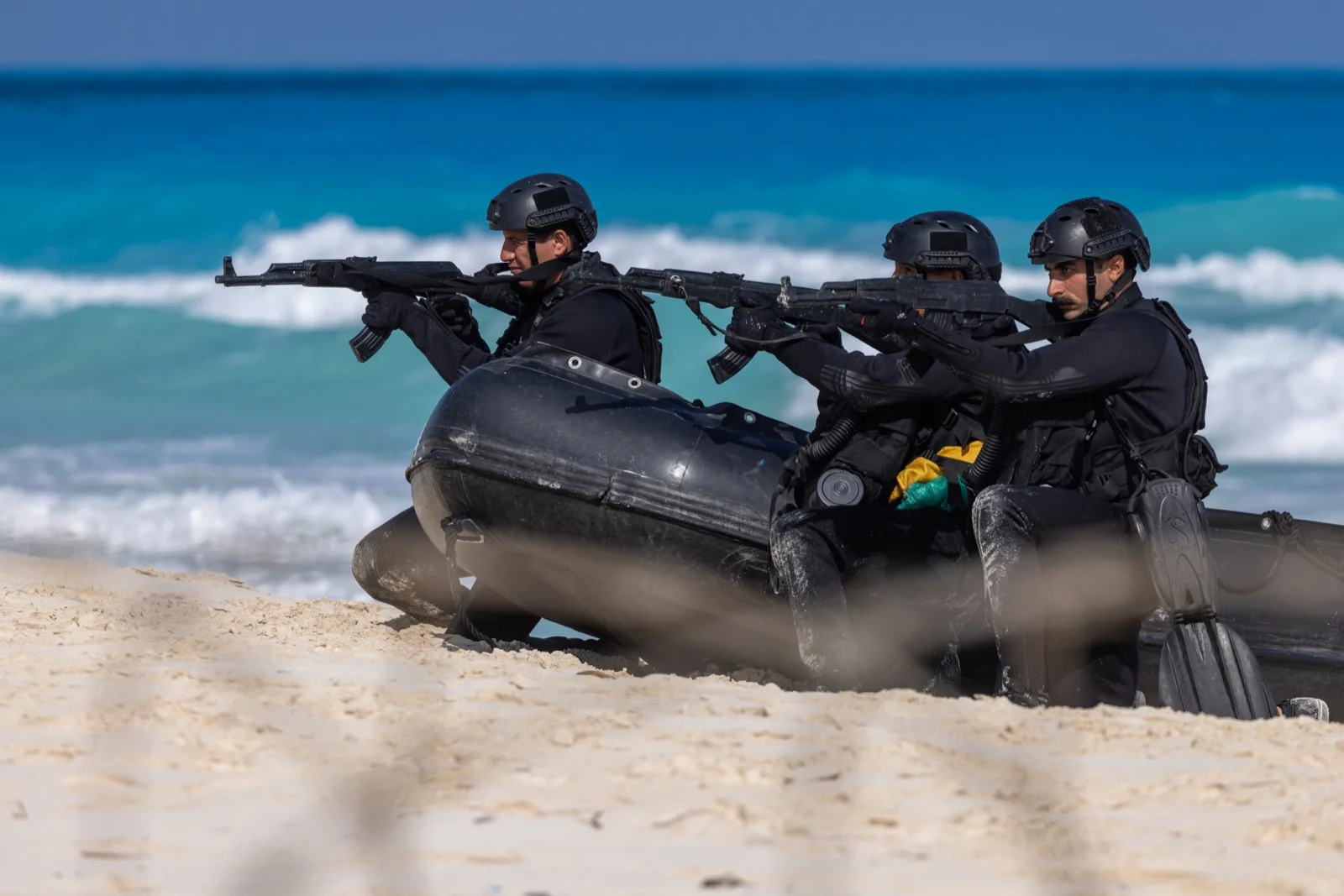
Egypt maintains roughly 450,000 active personnel, the largest standing force in Africa, backed by a reserve pool built on a conscription system requiring one to three years of service depending on education level. That scale alone does not decide rankings — Nigeria and Ethiopia both field large armies shaped by years of counter-insurgency — but Egypt combines its personnel base with equipment depth that neither country currently matches.
| Metric | Egypt | Africa Context |
|---|---|---|
| Active personnel | ~450,000 | Largest on the continent |
| Defence budget (approx.) | $4.5–6 billion | Below Algeria’s $18–25bn, but spread across a broader equipment base |
| Air force suppliers | US, France, Russia, China | No other African air force operates all four simultaneously |
| Major surface combatants | 2 Mistral-class LHDs, FREMM-derived frigates | Only sub-Saharan African navy with helicopter-carrier-class ships is South Africa (no equivalent) |
| Submarines | 4 Type 209/1400mod (Germany) | One of the largest submarine fleets in Africa or the Middle East |
| Domestic defence industry | Arab Organisation for Industrialization (AOI), licence production incl. K9 self-propelled howitzer | Among Africa’s most established state defence-industrial bases alongside South Africa’s Denel |
Figures are rounded, open-source estimates compiled from GFP, SIPRI and IISS-style public reporting; Egypt’s defence ministry does not publish a full itemised order of battle, so all totals should be read as informed approximations rather than verified counts.
Air Power: A Four-Supplier Air Force
The Egyptian Air Force is generally assessed as the most capable on the continent by aircraft count and diversity. Egypt operates US-made F-16s (one of the larger F-16 fleets outside the United States), French Dassault Rafales (an order that grew from an initial 24 aircraft), Russian-origin MiG-29M/M2 fighters and Ka-52 attack helicopters, and Chinese-supplied systems in smaller numbers. Egypt also reportedly agreed to purchase Sukhoi Su-35 fighters from Russia around 2018–2019; multiple outlets, including Reuters, later reported Cairo quietly shelved delivery under threat of US sanctions (CAATSA) tied to the Russia relationship, with the aircraft reportedly redirected to Russia’s own air force instead. Neither government has published a formal cancellation statement, so this is best treated as widely reported rather than officially confirmed.
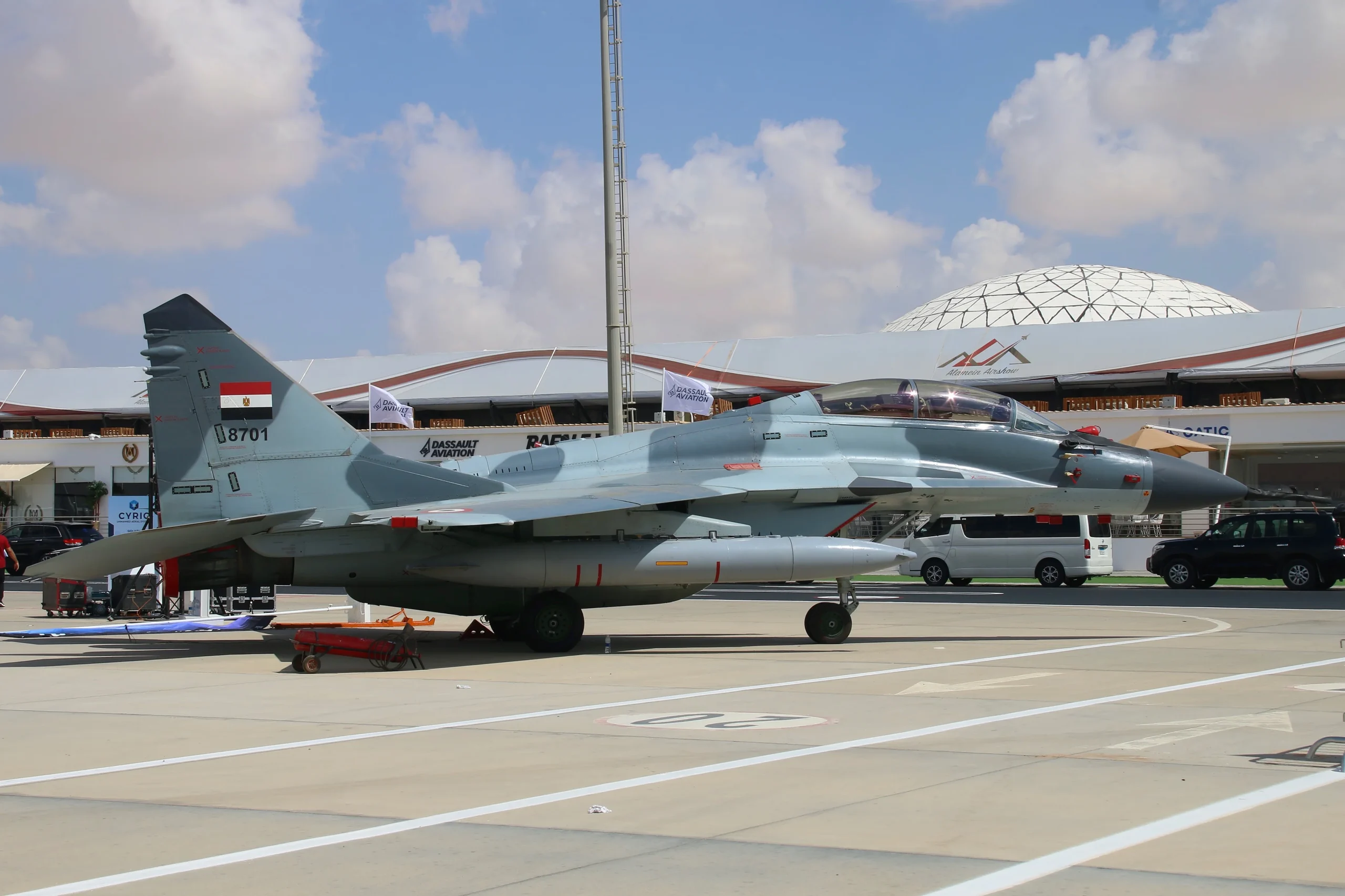
Operating four distinct national equipment ecosystems at once is not without cost: open-source defence reporting repeatedly flags interoperability and maintenance overhead as a recurring challenge for Egyptian planners, since spare parts, munitions and training pipelines rarely cross between the US, French, Russian and Chinese systems. The upside is redundancy — a supplier dispute or sanctions regime affecting one relationship does not ground the whole air force, an insurance policy few African or Middle Eastern states can afford to replicate.
Naval Power: Bridging the Mediterranean and Red Sea
Egypt’s navy is built around two Mistral-class helicopter landing docks, originally built in France for Russia and redirected to Egypt in 2016 after France suspended the Russian delivery over the 2014 annexation of Crimea. That acquisition, paired with FREMM-derived frigates and four German-built Type 209/1400mod submarines delivered between 2016 and 2021, gives Egypt blue-water and undersea capability that no other African navy currently matches at the same scale.
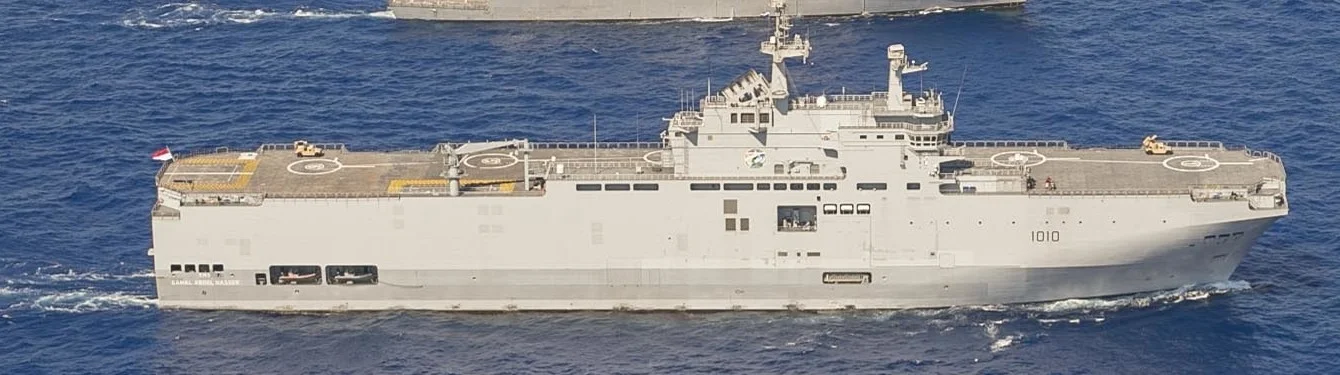
Geography compounds the advantage: Egypt sits astride the Suez Canal, one of the world’s busiest shipping chokepoints, and controls coastline on both the Mediterranean and the Red Sea. That dual-coast position is a standing strategic asset independent of any single platform — it is part of why Egypt’s naval modernisation has drawn sustained interest and financing from Western and Gulf partners alike.
Land Forces and Domestic Production
Egypt’s land forces combine a large fleet of US-supplied M1A1 Abrams tanks — many assembled domestically under a co-production arrangement with the US Army that dates to the 1990s — with armoured vehicles and artillery from multiple sources. In 2022, Egypt and South Korea’s Hanwha signed a licence-production agreement for the K9 self-propelled howitzer through AOI, adding a modern indigenous artillery production line to Egypt’s inventory rather than relying solely on imports.
This domestic-assembly model, run through the state-owned Arab Organisation for Industrialization, is a structural advantage over most African militaries, which typically depend entirely on foreign delivery schedules. It does not make Egypt self-sufficient — critical components, munitions and high-end platforms are still imported — but it shortens some supply chains and builds maintenance and manufacturing capacity that other African states largely lack.
Budget, US Aid and Multi-Vendor Diplomacy
Egypt has received roughly $1.3 billion a year in US Foreign Military Financing since the 1979 Camp David Accords, historically one of the largest US military aid packages outside Israel, though Washington has periodically withheld a portion over human-rights conditions. That steady US funding stream sits alongside independent, cash-financed purchases from France, Russia and China — a multi-vendor approach that gives Cairo negotiating leverage no single-supplier African military has.
Egypt also hosts the biennial EDEX arms exhibition in Cairo and co-hosts Exercise Bright Star, one of the largest multinational military exercises in the Middle East/Africa region, with the United States and other partners. Both are platforms Egypt uses to court new suppliers and showcase domestic AOI-made equipment to potential buyers elsewhere in Africa and the Gulf.
Where Egypt Sits Regionally
Egypt ranks first in Africa on most GFP-style composite indices, ahead of Algeria (larger budget, but a narrower Russian-centred supplier base), Nigeria (larger counter-insurgency experience, smaller conventional inventory) and South Africa (most diversified domestic industry, but a much smaller force after a decade of budget cuts). For the full continental breakdown and methodology notes, see our Strongest Military in Africa 2026 ranking, and for a direct bilateral comparison, our Egypt vs Ethiopia military comparison.
The Turkish Question: Why Egypt Isn’t (Yet) a Bayraktar Operator
Unlike Morocco, Nigeria, Ethiopia and several other African states covered in our Turkish vs. Chinese drones in Africa analysis, Egypt has no confirmed Bayraktar TB2, Akıncı or other Turkish combat-system acquisition on the public record. The reason is political rather than technical: relations between Cairo and Ankara ruptured after Egypt’s 2013 change of government and stayed frozen for roughly a decade. Normalisation resumed gradually from 2020, with full ambassador-level relations restored in mid-2023 and a Cairo visit by President Erdoğan in February 2024 — but the two governments have not announced a major defence-industrial deal to date.
Given Egypt’s demonstrated appetite for diversifying suppliers (the same logic that brought in US, French, Russian and Chinese equipment simultaneously) and Turkey’s growing footprint elsewhere in Africa and the wider region, defence analysts have flagged Egypt as a plausible future market — but as of this writing that remains an unverified prospect, not a reported negotiation or confirmed order. Readers should treat any claim of an existing Egypt-Turkey arms deal as unconfirmed unless tied to an official statement from either government.
What the Ranking Doesn’t Tell You
Composite indices like GFP weight equipment counts and personnel heavily but do not fully capture training quality, maintenance readiness, munitions stockpiles, doctrine or logistics endurance — the factors that historically decide outcomes more than inventory size. Egypt’s four-supplier air force is a genuine strength in redundancy, but the same complexity creates interoperability friction that a single-supplier force does not face. None of the figures in this article should be read as a prediction of how Egypt’s military would perform in any specific scenario.
FAQ
Is Egypt really Africa’s strongest military?
By scale and equipment diversity on GFP-style composite indices, yes — Egypt ranks first in Africa, ahead of Algeria, Nigeria and South Africa. These indices measure inventory and personnel more than readiness, so the ranking describes capacity, not a guaranteed outcome in conflict.
Does Egypt use Turkish military equipment?
No confirmed Turkish combat-system acquisition by Egypt appears on the public record. Diplomatic relations normalised in 2023–2024 after a decade-long rupture, but no major defence deal has been announced by either government as of this writing.
Why did Egypt not take delivery of its Su-35 order?
Reuters and other outlets reported around 2022 that Egypt quietly dropped delivery of a reported Su-35 order under the threat of US CAATSA sanctions, with the aircraft reportedly redirected to Russia’s own air force. Neither government has issued an official cancellation statement.
What is the Arab Organisation for Industrialization (AOI)?
AOI is Egypt’s state-owned defence-industrial conglomerate, which licence-assembles and co-produces equipment including M1A1 Abrams components and, since a 2022 agreement with Hanwha, the K9 self-propelled howitzer, rather than relying solely on imported platforms.
Is Global Firepower an official military data source?
No. GFP is an independent, open-source aggregator, useful for comparison but not equivalent to SIPRI, IISS Military Balance or a government’s own disclosed figures. This article cross-references GFP-style estimates against those sources where possible.
Sources
- Global Firepower — Egypt and Africa military strength listings (2026)
- SIPRI Military Expenditure Database
- IISS — The Military Balance
- Reuters — reporting on Egypt’s shelved Su-35 delivery under CAATSA pressure
- Reuters / AP — Egypt-Turkey diplomatic normalisation, 2023–2024
- Naval News / Naval Technology — Egypt’s Mistral-class and Type 209/1400mod submarine programmes
- Hanwha / AOI — K9 self-propelled howitzer licence-production agreement, 2022
- U.S. Department of State — Foreign Military Financing, Egypt country page
Last updated: September 24, 2026.