Europe’s 10 Biggest Defence Budgets (2026)

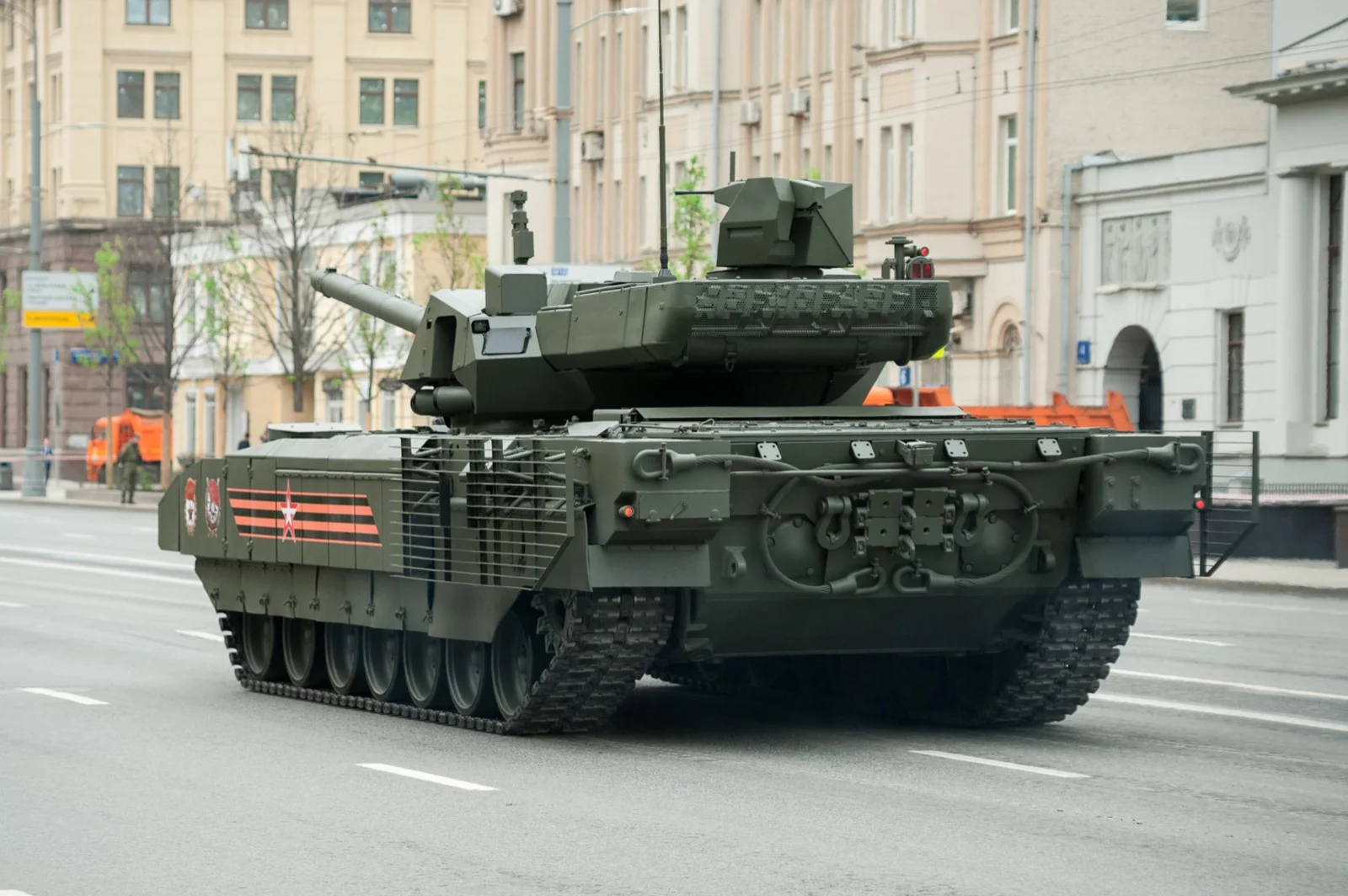
Europe spent thirty years unlearning how to arm itself. When the Cold War ended, shrinking armies looked like common sense: tank battalions were disbanded, conscription was abandoned across much of the continent, and defence industries let production lines go cold. Since 2022 every one of those assumptions has been reversed.
European defence budgets are now growing at the fastest rate since 1945. NATO’s 2 per cent target has become a floor rather than a ceiling, and several capitals plan to go well beyond it. The gap between money and capability, however, is not closing: a budget can be doubled in a year, a shipyard or a shell line cannot.
So which ten European countries spend the most on defence in 2026? Has Germany really taken the top spot, where does Poland rank, and where does Türkiye sit in this table? The countdown starts at ten.
The ranking uses GlobalFirepower’s 2026 defence spending dataset. Figures reflect announced annual allocations and are not adjusted for purchasing power parity. Countries geographically in Europe, or whose defence planning is wholly tied to European security, are included.
#10Netherlands
Defence budget · Western Europe
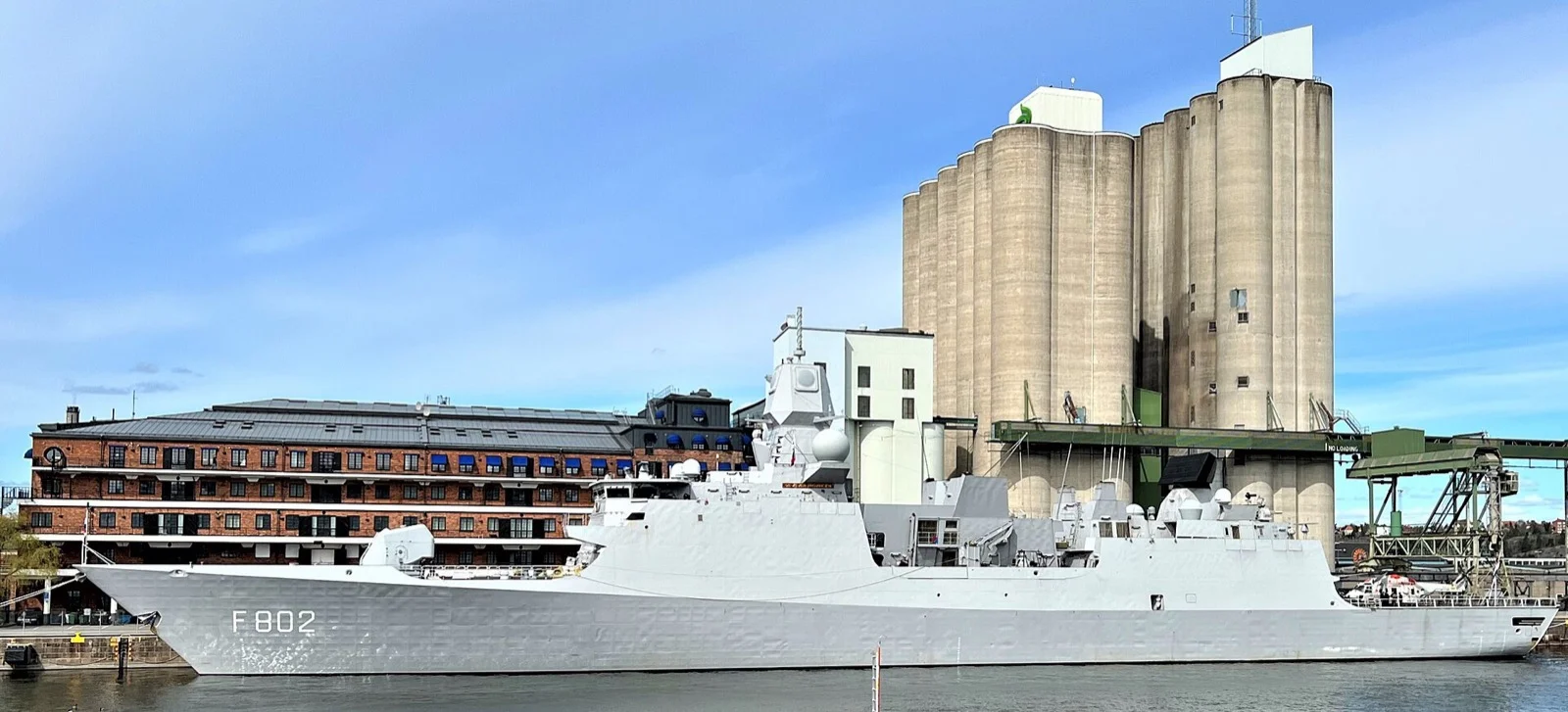
For a country of 18 million people, the Dutch defence budget is remarkably large. The explanation is that The Hague does not define its military as a standalone force. Dutch land forces are integrated into German structures to an unusual degree, with brigades assigned under German divisions.
The clearest illustration is armour: the Netherlands owns no tank fleet of its own, and its 18 Leopard 2s are operated inside a joint unit with Germany. Maritime and air capability is another matter. The 140 naval vessels are weighted toward mine countermeasures and patrol types, while De Zeven Provinciën-class air defence frigates anchor NATO’s northern maritime picture.
The air force has moved entirely to the F-35A, having been one of the earliest European partners in the programme. Most of the budget growth is going into munitions stockpiles, air defence and cyber. Support packages for Ukraine are funded from the same envelope.
The Netherlands spends 62 per cent of what Türkiye does, yet fields 2,266 fewer tanks and 971 fewer aircraft.
| Capability | Total |
|---|---|
| Defence budget | $31.79 bn |
| Active personnel | 44,245 |
| Tanks | 18 |
| Total aircraft | 130 |
| Naval vessels | 140 |
One place higher, a budget built around one of the Mediterranean’s largest fleets.
#9Italy
Defence budget · Southern Europe
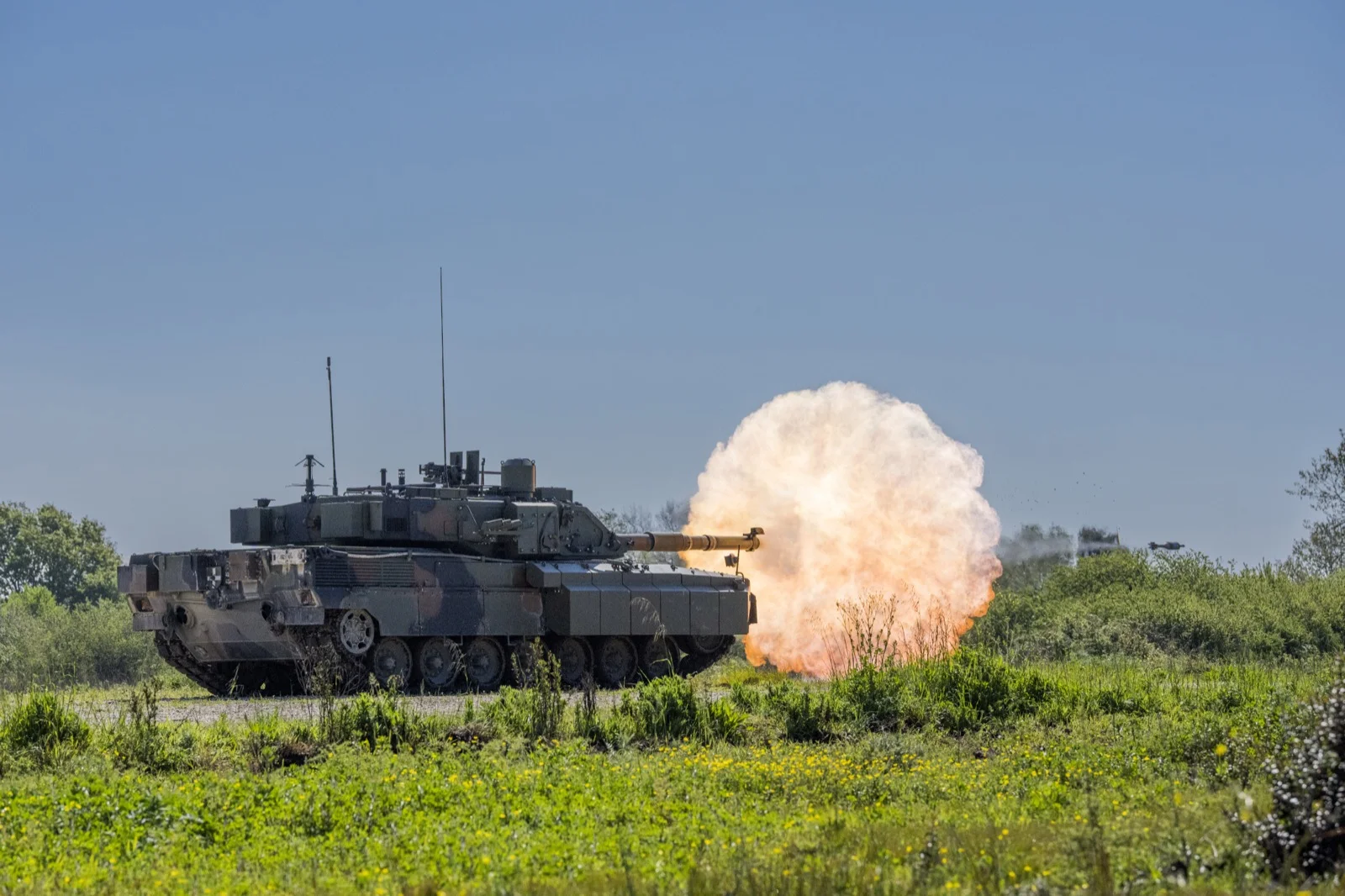
Italy’s defence spending looks seaward. With 285 naval vessels it operates one of the most numerous fleets in Europe, and the carriers Cavour and Trieste both embark F-35Bs — putting Italy in the short list of European states with fixed-wing naval aviation.
On land the picture is thinner: 203 tanks, many of them awaiting modernisation. Rome is looking to German partnerships for next-generation land platforms. What Italy does have is one of the deepest industrial ecosystems on the continent, with Leonardo, Fincantieri and MBDA Italy covering everything from helicopters and frigates to radars and missiles.
Strategic priorities point at the Mediterranean: instability in Libya, irregular migration routes and energy competition in the Eastern Mediterranean all shape planning. For the sixth generation, the GCAP programme with Japan and the United Kingdom sits at the centre of Italian industry’s twenty-year roadmap.
Italy fields 93 more naval vessels than Türkiye, but fewer than a tenth as many tanks.
| Capability | Total |
|---|---|
| Defence budget | $37.33 bn |
| Active personnel | 165,500 |
| Tanks | 203 |
| Total aircraft | 714 |
| Naval vessels | 285 |
Next up: the last major European economy to commit to exceeding the NATO target.
#8Spain
Defence budget · Southern Europe
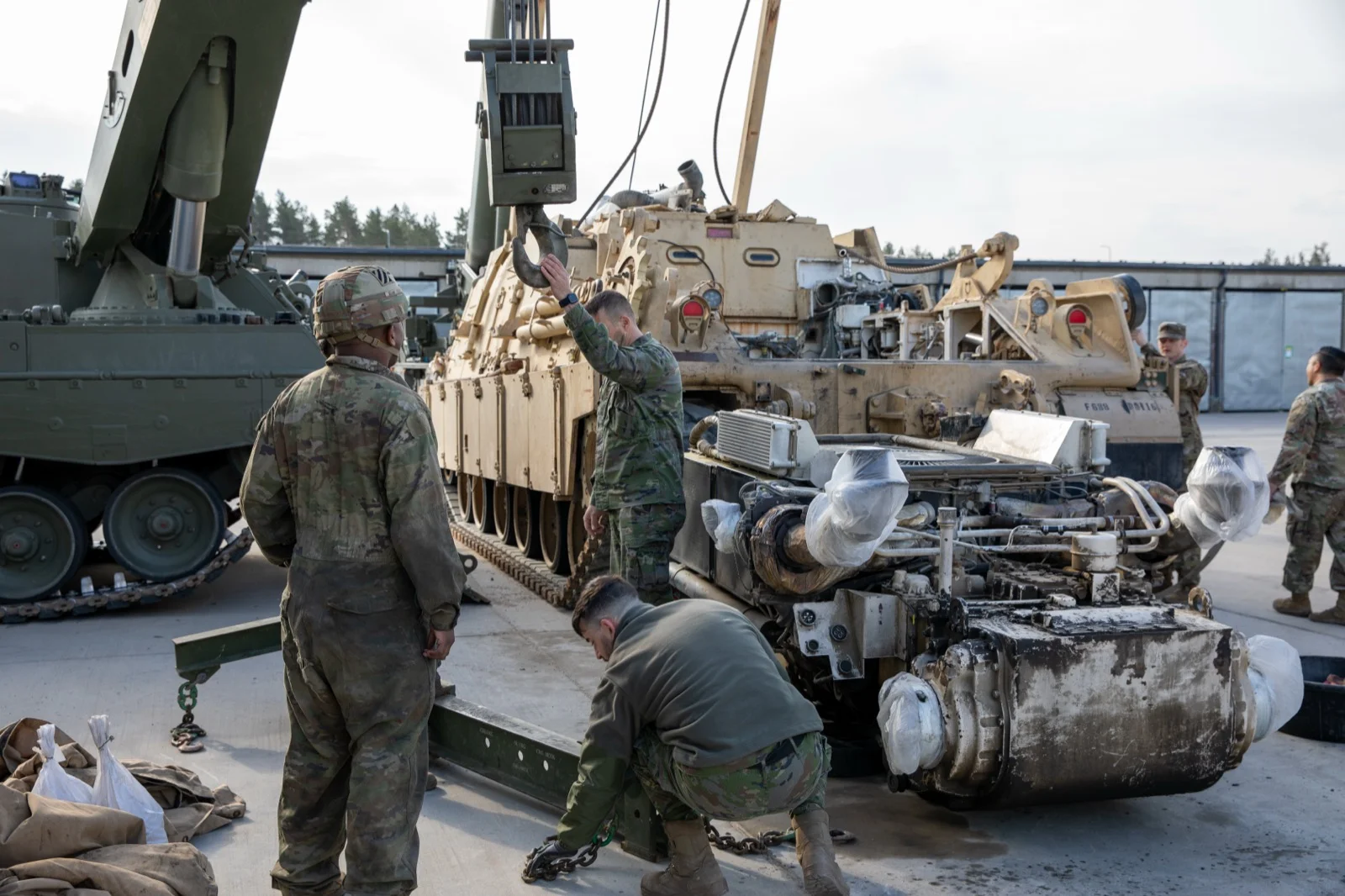
Spain spent years as one of NATO’s laggards on the 2 per cent benchmark. Recent increases have changed that, lifting Madrid’s budget to $39 billion, with most of the growth directed at air defence, munitions and naval platforms.
The Spanish navy is among Europe’s most capable. The multipurpose amphibious ship Juan Carlos I, the Álvaro de Bazán-class Aegis frigates and the new S-80 submarines form its backbone. Navantia also exports, with project partnerships spanning Australia and Türkiye.
The air force fields 136 fighters; the Eurofighter fleet is being upgraded and further tranches ordered to replace the F/A-18s. Spain is the third partner in the FCAS sixth-generation programme. On land, an inventory of 298 tanks rests largely on Leopard 2Es.
Spain outspends Italy by $1.7 billion but operates 110 fewer naval vessels and 274 fewer aircraft.
| Capability | Total |
|---|---|
| Defence budget | $39.00 bn |
| Active personnel | 121,802 |
| Tanks | 298 |
| Total aircraft | 440 |
| Naval vessels | 175 |
The next budget is not set by peacetime planning but by an active war.
#7Ukraine
Defence budget · Eastern Europe
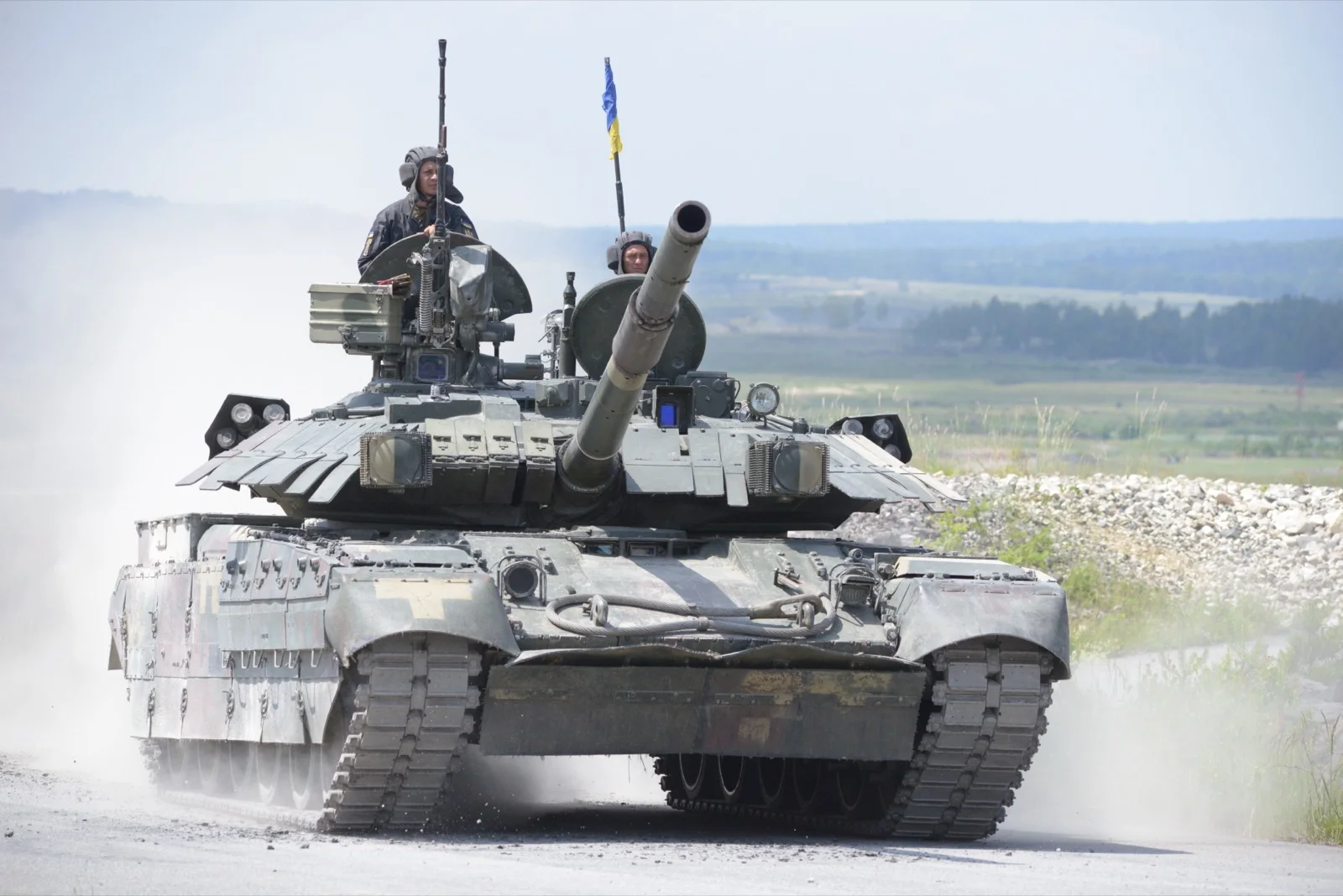
Ukraine’s $45 billion is built on entirely different logic from every other entry here. It is not the cost of a modernisation plan but of a war in progress. With 900,000 active personnel, Ukraine fields the largest standing force in Europe.
Most of the money goes to personnel, munitions and repair. Ukraine has also built a defence industry in wartime: unmanned aerial systems, naval drones and long-range strike weapons are now largely produced domestically, on short development cycles and rapid iteration rather than the decade-long programmes typical of Western procurement.
The Ukrainian experience has rewritten doctrine across the continent. Saturation drone use, electronic warfare competition, artillery consumption rates and the return of entrenched warfare have forced every European defence ministry to revise its planning assumptions. The 169 naval vessels are mostly riverine and patrol types; the real Black Sea effect has come from uncrewed surface vessels.
Ukraine’s 900,000 active personnel exceed the combined strength of Germany, France and the United Kingdom by more than half.
| Capability | Total |
|---|---|
| Defence budget | $45.00 bn |
| Active personnel | 900,000 |
| Tanks | 1,121 |
| Total aircraft | 347 |
| Naval vessels | 169 |
Into the top six — and the next country spends most of its budget at home.
#6Türkiye
Defence budget · NATO / Europe
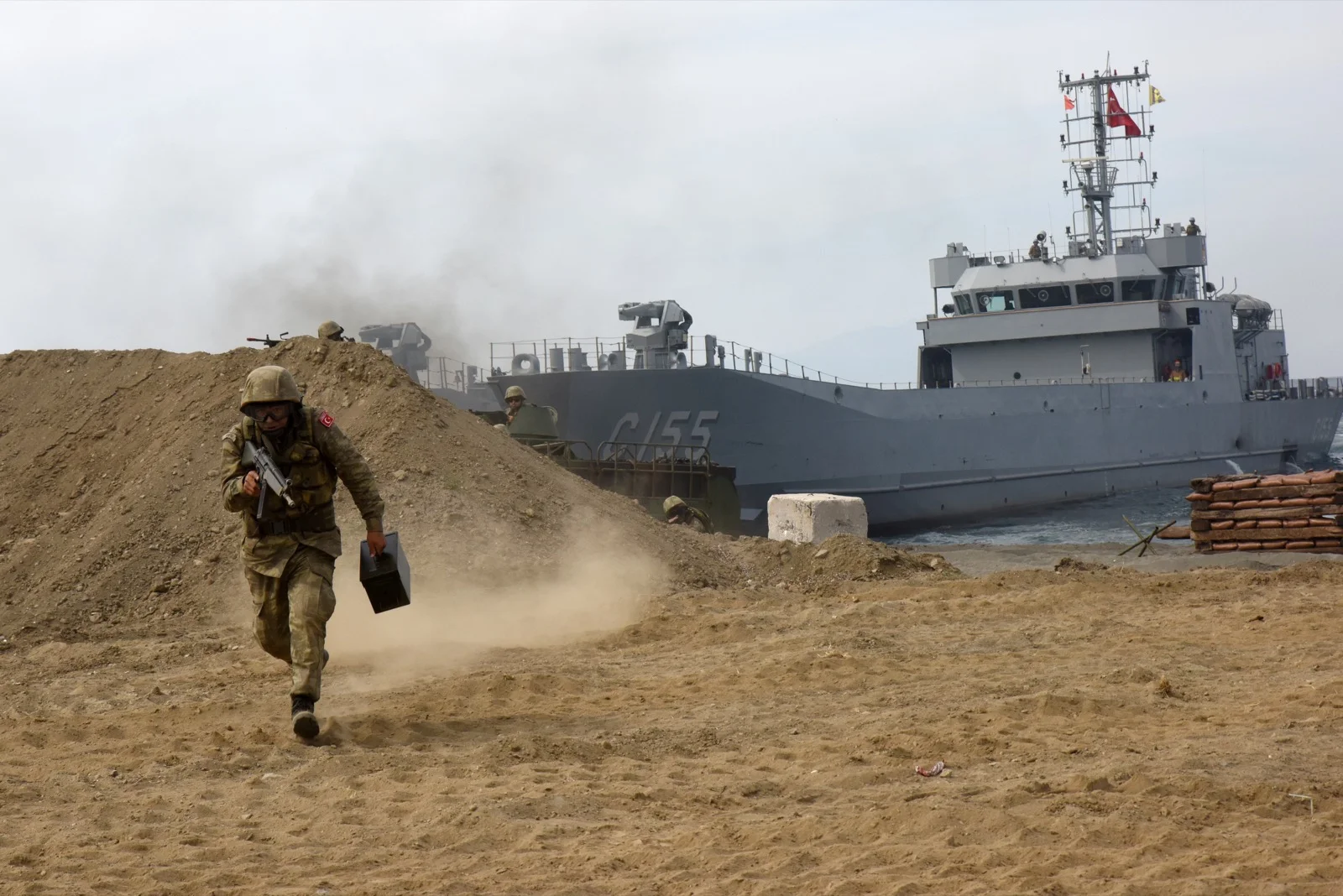
Türkiye ranks sixth in Europe with $51.4 billion. The number means something different from the others on this list, because most Turkish procurement happens inside Türkiye — a large share of each dollar returns as domestic industrial output and employment.
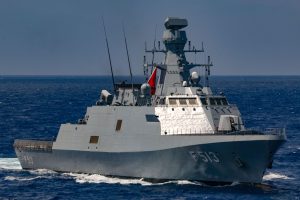
The Turkish Armed Forces field 481,000 active personnel, the second-largest standing force in Europe. With 2,284 tanks, 1,101 aircraft and 192 naval vessels, no European country except Russia comes close on inventory depth. Türkiye also operates 14 submarines and is preparing to move to a national submarine design under the MİLDEN programme.
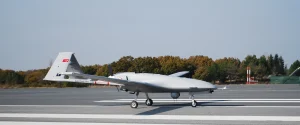
Defence exports are the most striking dimension. Turkish companies no longer merely meet domestic demand; they sell unmanned systems, armoured vehicles, naval platforms and electronic warfare suites abroad. That turns the defence budget from a pure cost line into an industrial policy that generates revenue.
Türkiye outspends the Netherlands by 62 per cent — and fields 127 times as many tanks, eight times as many aircraft and eleven times the active personnel.
| Capability | Total |
|---|---|
| Defence budget | $51.40 bn |
| Active personnel | 481,000 |
| Tanks | 2,284 |
| Total aircraft | 1,101 |
| Naval vessels | 192 |
The next country has become the fastest-rearming army in Europe.
#5Poland
Defence budget · Central Europe
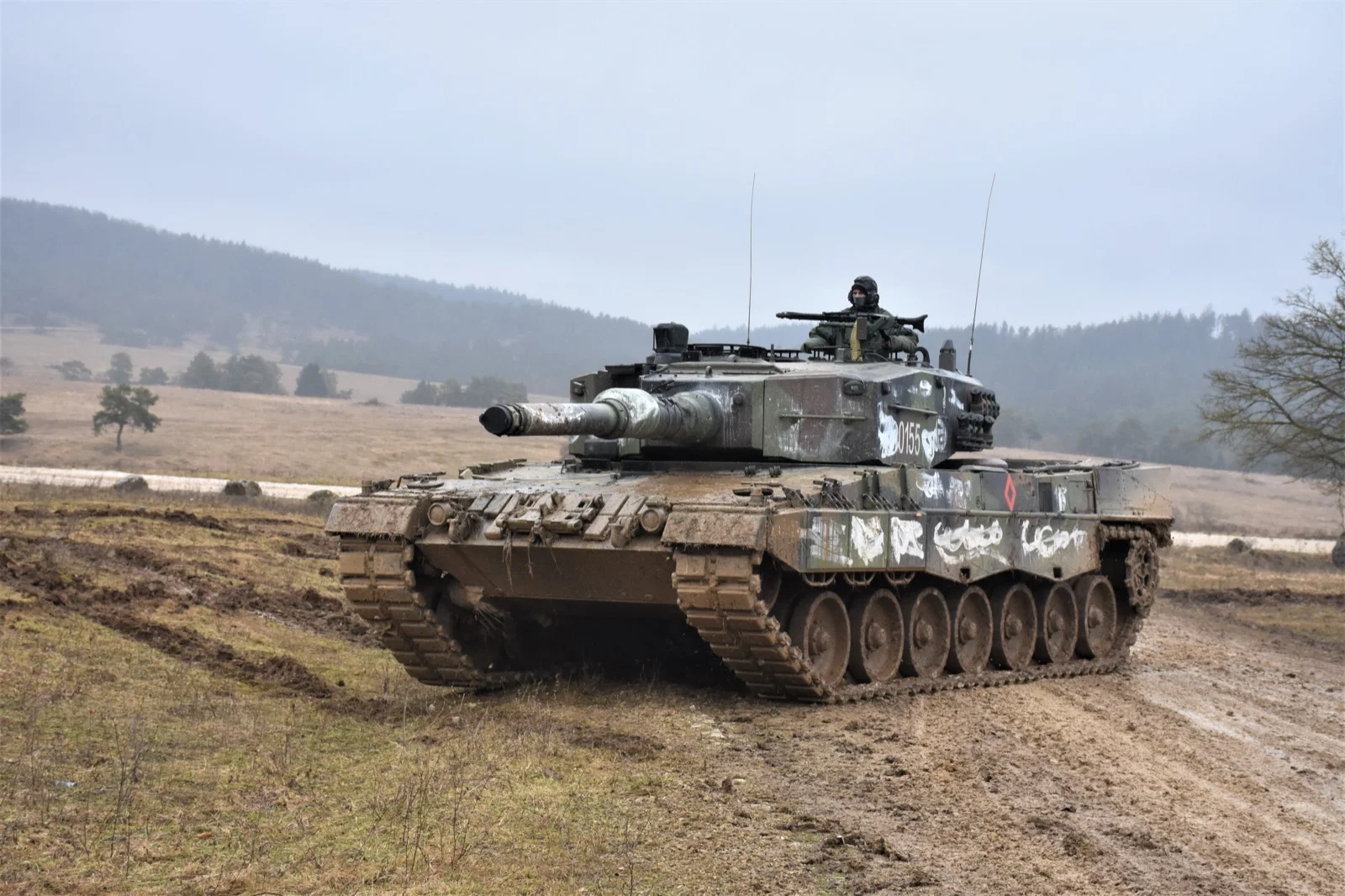
Poland is the defence story of the decade. It now spends a higher share of GDP on defence than any other NATO member, with an explicit goal: turning its land forces into the largest and most modern army on the continent.
The shopping list is extraordinary. K2 Black Panther tanks and K9 howitzers from South Korea, Abrams tanks and HIMARS from the United States, FA-50 light combat aircraft again from Korea. The current figure of 798 tanks will climb steeply as deliveries continue, alongside a Patriot-based layered air defence architecture.
Two problems come with growth this fast. The first is manpower: at 250,000 active personnel, Poland may struggle to fill the structure it is buying. The second is integration — making Korean, American and domestic systems work inside one command and control architecture is a serious engineering task. In exchange, offset and co-production deals are expanding Polish industry rapidly.
Poland outspends Türkiye by $4.5 billion while fielding 1,486 fewer tanks and 644 fewer aircraft.
| Capability | Total |
|---|---|
| Defence budget | $55.87 bn |
| Active personnel | 250,000 |
| Tanks | 798 |
| Total aircraft | 457 |
| Naval vessels | 63 |
The top four includes both of Europe’s independent nuclear powers.
#4France
Defence budget · Western Europe
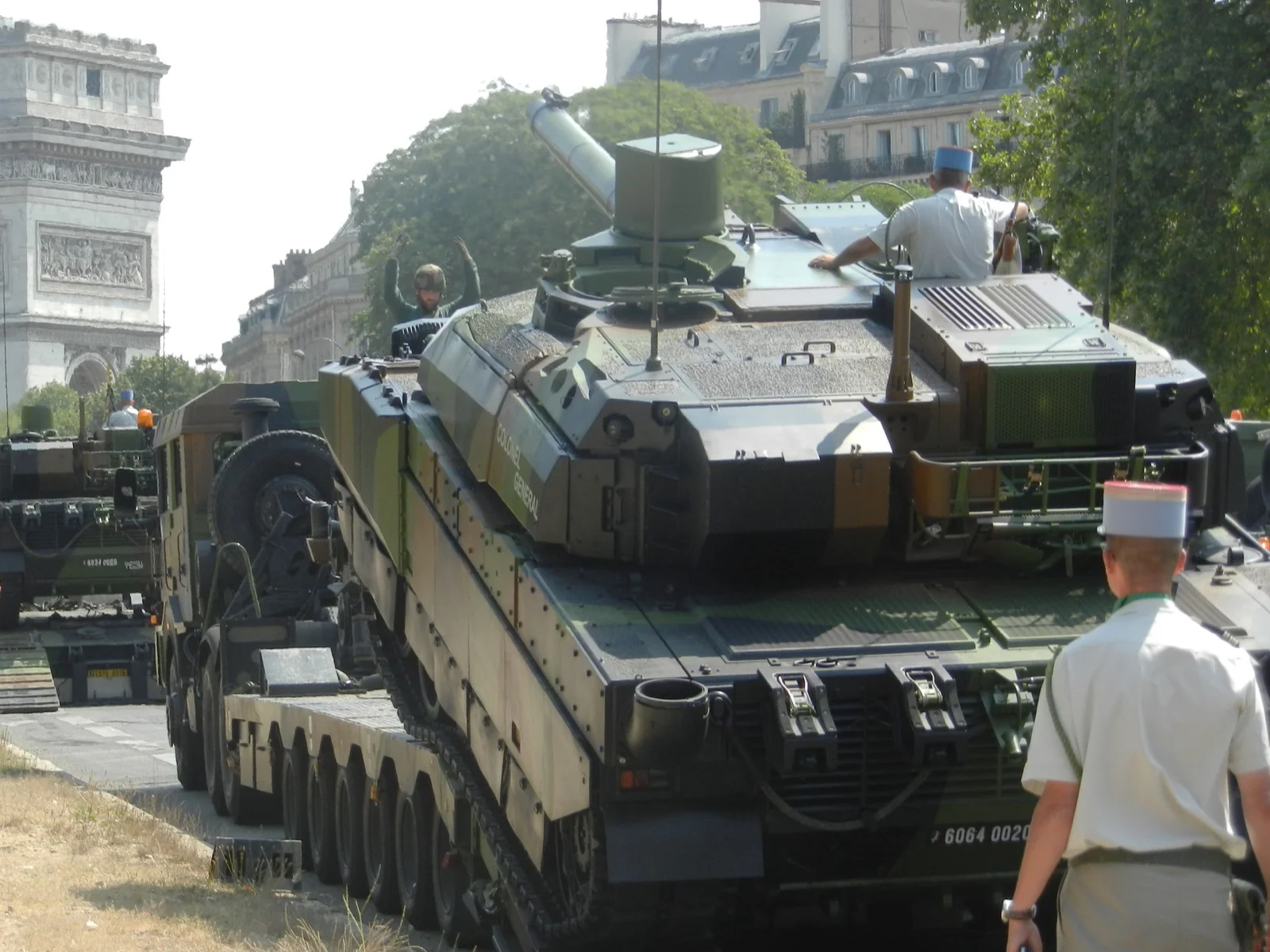
Nuclear deterrence defines how France spends its $67.2 billion. The submarine-launched M51 and the air-launched ASMP-A carried by Rafale consume close to a fifth of the budget on their own. That is the price of being the European Union’s only independent nuclear power.
The military planning law aims to double defence spending within a decade. Priorities are set: a next-generation nuclear carrier to replace the Charles de Gaulle, Barracuda-class submarines, the Rafale F5 standard and FCAS. The army is transitioning to Jaguar and Griffon vehicles under the Scorpion programme.
France’s real advantage is industrial depth. Dassault, Thales, Naval Group, Safran and MBDA let the country build almost everything it needs, from submarines to radars. Overseas territories give the French navy genuine global reach, and France remains the only European state with a permanent military presence in the Indo-Pacific.
France outspends Poland by $11.4 billion while fielding 371 fewer tanks — the difference sits entirely in nuclear and naval lines.
| Capability | Total |
|---|---|
| Defence budget | $67.23 bn |
| Active personnel | 264,000 |
| Tanks | 427 |
| Total aircraft | 974 |
| Naval vessels | 166 |
Third place goes to a country funding global reach rather than territorial defence.
#3United Kingdom
Defence budget · Western Europe
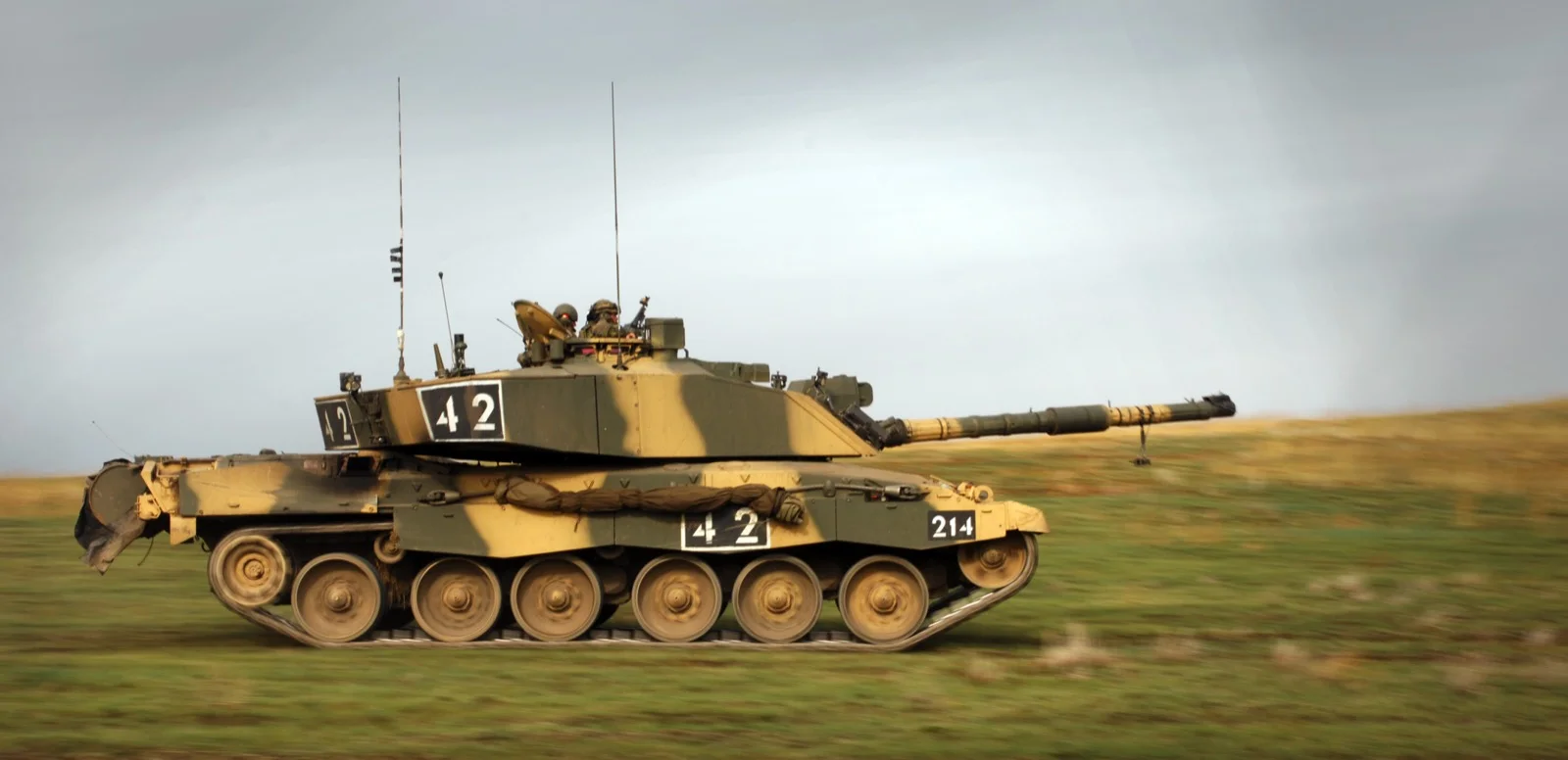
The United Kingdom concentrates $88.5 billion into a handful of very large programmes. Two Queen Elizabeth-class carriers, the Dreadnought-class ballistic missile submarines and the F-35B fleet take the lion’s share. British deterrence is submarine-only; there is no air or land leg.
The army, by contrast, has shrunk sharply. With 288 tanks and 141,330 active personnel it is at one of the smallest levels in its modern history. The Challenger 3 upgrade and the Ajax reconnaissance programme aim to substitute quality for mass, but the numerical depth is gone.
London’s real leverage is its alliance network. It transfers nuclear submarine technology to Australia through AUKUS, develops a sixth-generation fighter with Japan and Italy under GCAP, and leads the Joint Expeditionary Force on NATO’s northern flank. Those partnerships extend British influence well beyond what the budget alone would buy.
The United Kingdom outspends Türkiye by $37 billion while fielding 1,996 fewer tanks, 476 fewer aircraft and 340,000 fewer active personnel.
| Capability | Total |
|---|---|
| Defence budget | $88.53 bn |
| Active personnel | 141,330 |
| Tanks | 288 |
| Total aircraft | 625 |
| Naval vessels | 116 |
Second place belongs to a country nobody would have predicted a few years ago.
#2Germany
Defence budget · Central Europe
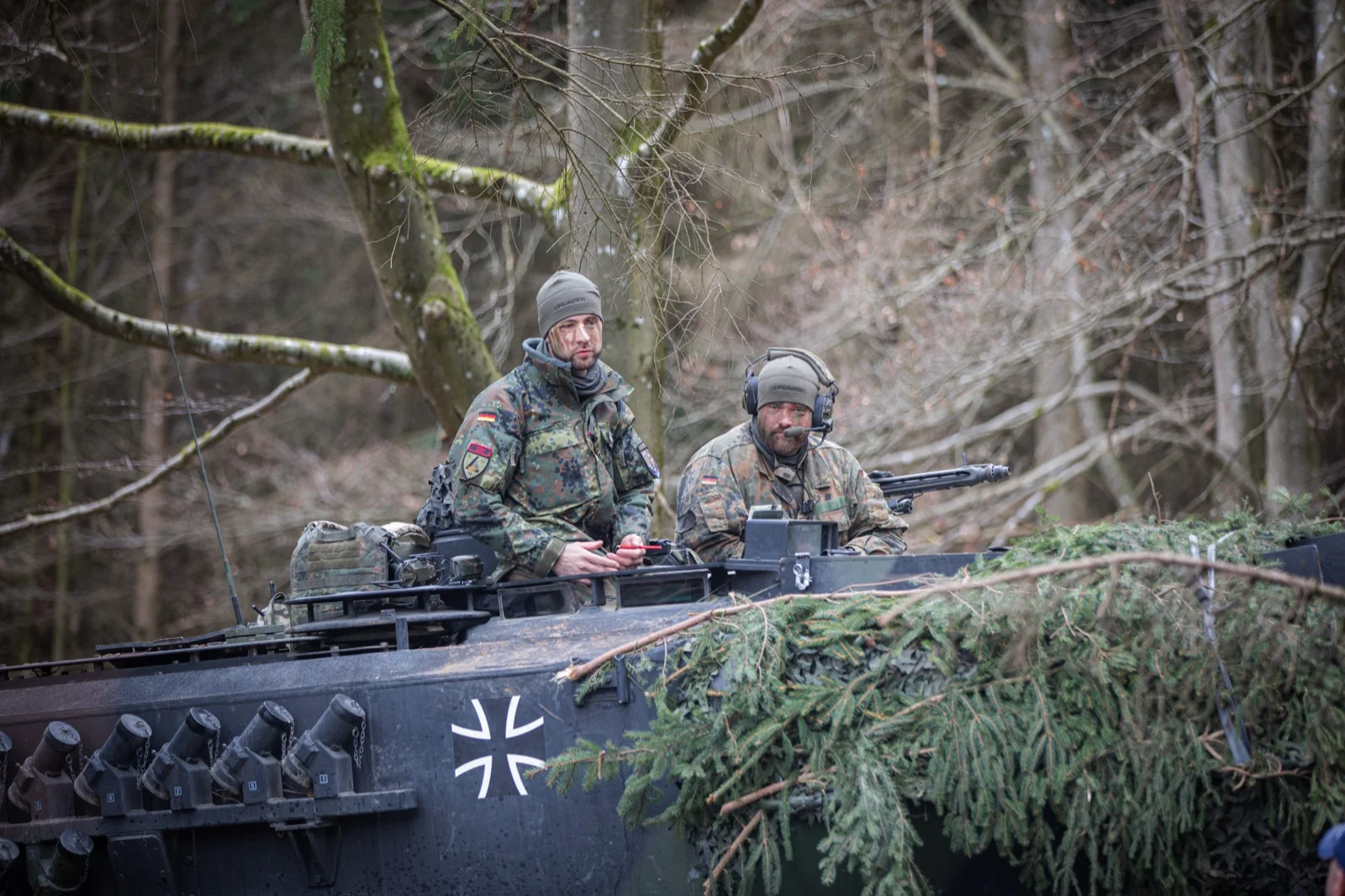
Germany’s $127.4 billion is the single biggest break in Europe’s defence map. After decades below NATO’s 2 per cent line, Berlin has become the largest defence spender in the European Union and NATO Europe, through a dedicated special fund and permanent budget increases.
The gap between that figure and the actual inventory is striking: 296 tanks, 569 aircraft, 96 naval vessels. Thirty years of underinvestment drained munitions stocks, readiness rates and procurement capacity, and none of that is fixed by one year of higher spending.
Where the money is going is clear enough: F-35As for the nuclear sharing mission, the Arrow 3 air defence system, new F126 frigates, Puma infantry fighting vehicles and Leopard 2A8s. Germany is also stationing a permanent brigade in Lithuania, a fundamental shift in postwar German military policy. Rheinmetall, Diehl, Hensoldt and TKMS are scaling production to meet the demand wave.
Germany spends 2.5 times what Türkiye does, yet fields an eighth as many tanks and barely half the aircraft.
| Capability | Total |
|---|---|
| Defence budget | $127.40 bn |
| Active personnel | 184,324 |
| Tanks | 296 |
| Total aircraft | 569 |
| Naval vessels | 96 |
And at the top, the country at the centre of Europe’s security equation.
#1Russia
Defence budget · Eurasia
Russia spends $212.6 billion, 1.7 times second-placed Germany. But a dollar comparison captures only part of the picture.
Adjusted for purchasing power parity, Russian defence spending buys considerably more than the headline figure suggests. Labour costs, domestic energy inputs and an almost entirely domestic supply chain mean the same dollar goes far further in Moscow than in Berlin. An inventory of 5,630 tanks, 4,237 aircraft and 747 naval vessels is the result.
A large share of that inventory was inherited from the Soviet era, and much of what sits in storage needs modernisation before it is usable. Sanctions on microelectronics and precision manufacturing equipment remain the principal constraint on output. Russian industry has shifted to a war footing and raised volume, but the gains are concentrated in quantity rather than quality.
The other defining feature is the nuclear share. Maintaining a full triad across land, sea and air consumes a permanent and substantial slice of the budget, with the Sarmat intercontinental missile and Borey-class submarines the most visible parts of that line.
Russia spends close to the combined defence budgets of second- and third-placed Germany and the United Kingdom.
| Capability | Total |
|---|---|
| Defence budget | $212.64 bn |
| Active personnel | 1,320,000 |
| Tanks | 5,630 |
| Total aircraft | 4,237 |
| Naval vessels | 747 |
What Europe’s spending table actually shows
The first conclusion is that Europe is rearming unevenly. Germany, Poland and the Netherlands have grown budgets by double digits, while parts of southern Europe are only now approaching the NATO benchmark. The burden is still distributed unequally across the continent.
The second is that money and inventory remain far apart. Germany spends 2.5 times what Türkiye does and fields an eighth as many tanks. The Netherlands has a $31.8 billion budget and 18 tanks. Three decades of underinvestment hollowed out production lines and stockpiles, and budgets move faster than factories.
The third is that the domestic production share has become decisive. Countries that build their own platforms — France and Türkiye above all — convert a far larger share of spending into inventory and jobs. Poland chose speed through imports instead: it grows the fleet quickly, at the cost of long-term sustainment, spares and integration complexity.
The fourth is that Türkiye occupies an unusual position in this table. Sixth by budget, second in Europe by inventory depth behind Russia alone: 2,284 tanks, 1,101 aircraft, 192 naval vessels and 481,000 active personnel. As ALTAY, MİLGEM, KAAN, HÜRJET and KIZILELMA move into serial production, that gap should widen further, because each of those programmes delivers capability well below the cost of importing the equivalent.
The fifth conclusion is that a spending table is not a power table. Ukraine ranks seventh on $45 billion, yet is the fastest-learning military on the continent in combat experience and unmanned systems production. The question that will define the next decade in Europe is not who spends the most, but who converts spending into capability fastest.
Comparison table: Europe’s ten largest defence budgets (2026)
| # | Country | Defence budget | Active personnel | Tanks | Aircraft | Naval vessels |
|---|---|---|---|---|---|---|
| 1 | Russia | $212.64 bn | 1,320,000 | 5,630 | 4,237 | 747 |
| 2 | Germany | $127.40 bn | 184,324 | 296 | 569 | 96 |
| 3 | United Kingdom | $88.53 bn | 141,330 | 288 | 625 | 116 |
| 4 | France | $67.23 bn | 264,000 | 427 | 974 | 166 |
| 5 | Poland | $55.87 bn | 250,000 | 798 | 457 | 63 |
| 6 | Türkiye | $51.40 bn | 481,000 | 2,284 | 1,101 | 192 |
| 7 | Ukraine | $45.00 bn | 900,000 | 1,121 | 347 | 169 |
| 8 | Spain | $39.00 bn | 121,802 | 298 | 440 | 175 |
| 9 | Italy | $37.33 bn | 165,500 | 203 | 714 | 285 |
| 10 | Netherlands | $31.79 bn | 44,245 | 18 | 130 | 140 |
A new ranking tomorrow
Coming next: Asia’s largest helicopter fleets, Africa’s largest standing armies and the world’s biggest air inventories.
Frequently Asked Questions
Which European country spends the most on defence?
Russia, at $212.64 billion. Among EU and NATO Europe members, Germany leads with $127.4 billion.
Where does Türkiye rank among European defence budgets?
Sixth, with $51.4 billion. By inventory depth Türkiye ranks second in Europe, behind Russia only.
Why is Germany’s inventory small relative to its budget?
The increase is recent. Three decades of underinvestment drained munitions stocks, production capacity and readiness, and new procurement will take years to show up in the inventory.
Why is Poland rearming so quickly?
Warsaw aims to build the largest and most modern land force in Europe. Large procurement deals with South Korea and the United States — K2, K9, Abrams, HIMARS, FA-50 — are the instruments of that goal.
What is the source of these figures?
GlobalFirepower’s 2026 defence spending dataset. Figures reflect announced annual allocations and are not adjusted for purchasing power parity.
Sources
- GlobalFirepower 2026 defence spending ranking
- NATO Defence Expenditure reports
- SIPRI Military Expenditure Database
- IISS The Military Balance
- European defence ministry budget statements
- Source: https://www.globalfirepower.com/