USS John F. Kennedy Begins Acceptance Sea Trials, a Key Milestone Toward 2027 Delivery

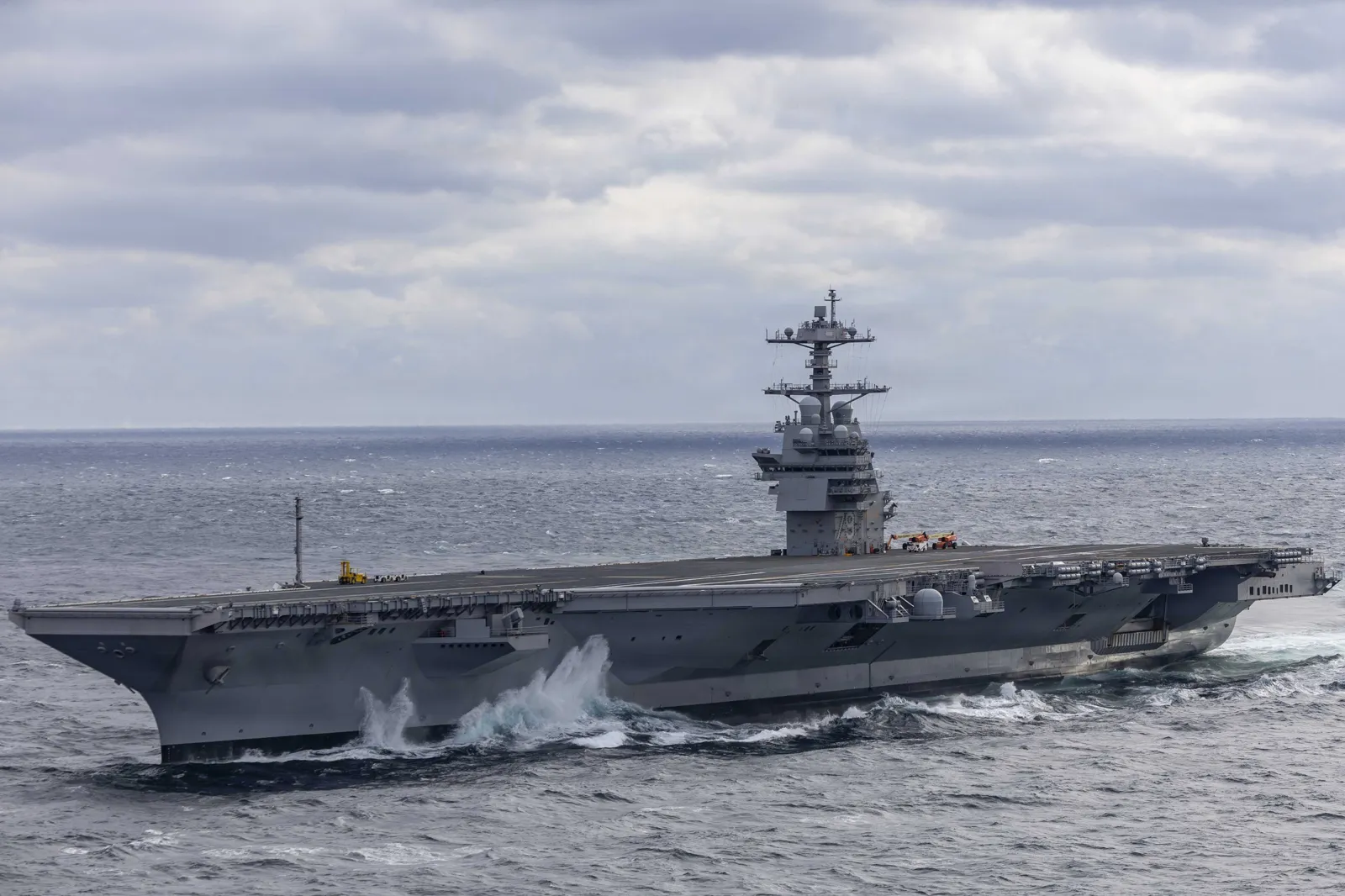
The US Navy’s newest nuclear-powered aircraft carrier, USS John F. Kennedy (CVN-79), departed Newport News Shipbuilding on 12 August 2026 to begin acceptance sea trials. The phase marks the final major evaluation before the ship’s delivery, currently projected for March 2027.
At a Glance
- CVN-79 departed Newport News Shipbuilding on 12 August 2026 to begin acceptance sea trials.
- The ship completed builder’s sea trials in February 2026; acceptance trials are the next major phase.
- According to USNI News, seven weapons elevators had been delivered to the ship ahead of the trials.
- The roughly 100,000-ton nuclear-powered carrier is being evaluated on propulsion, navigation, combat systems, aviation infrastructure, safety, habitability and operational reliability.
- Delivery to the US Navy is planned for March 2027.
Background
USS John F. Kennedy (CVN-79) is the second hull of the Gerald R. Ford-class carriers. Following the class lead ship USS Gerald R. Ford’s commissioning in 2017, Kennedy’s construction has proceeded over a multi-year build cycle. Builder’s sea trials, completed in February 2026, marked the ship’s first at-sea evaluation, verifying that core systems functioned as designed.
The acceptance sea trials that began on 12 August are conducted directly under US Navy leadership and represent the ship’s final comprehensive evaluation before delivery. USNI News reported that seven weapons elevators had been delivered to the ship ahead of the trials — a sign that munitions-handling and flight-deck readiness capacity is approaching operational status. The trials involve a comprehensive assessment of propulsion, navigation, combat systems, aviation infrastructure, safety, habitability, and operational reliability under sustained at-sea conditions.
The ship’s delivery is planned for March 2027. As the second Gerald R. Ford-class carrier, Kennedy inherits pioneering technologies from the lead ship, including the Electromagnetic Aircraft Launch System (EMALS) and advanced arresting gear, while incorporating lessons learned during construction to improve cost and schedule performance.
Regional Impact
Turkey does not field a platform comparable to the US Navy’s nuclear-powered supercarrier class, but its TCG Anadolu light carrier/amphibious assault ship makes it an active player in the regional naval balance. Gerald R. Ford-class carriers moving closer to operational readiness reinforces the US Navy’s global deployment capacity — a factor that indirectly shapes NATO’s deterrence posture in the Mediterranean and the Black Sea. The maturing of technologies such as EMALS also feeds broader global debates over unmanned aircraft operating from carrier decks, an area Turkey is closely tracking through its own UAV/UCAV ecosystem.
FAQ
What are acceptance sea trials?
The final phase before a ship’s official delivery, in which the Navy leads a comprehensive at-sea evaluation of all critical systems, including propulsion, navigation, combat systems and operational reliability.
When will the ship be delivered?
Delivery is planned for March 2027.
What’s the difference between builder’s trials and acceptance trials?
Builder’s trials are the shipyard’s first at-sea tests; acceptance trials are the Navy-led, more comprehensive final evaluation before delivery.