LHD-230 vs Juan Carlos I and Mistral compared

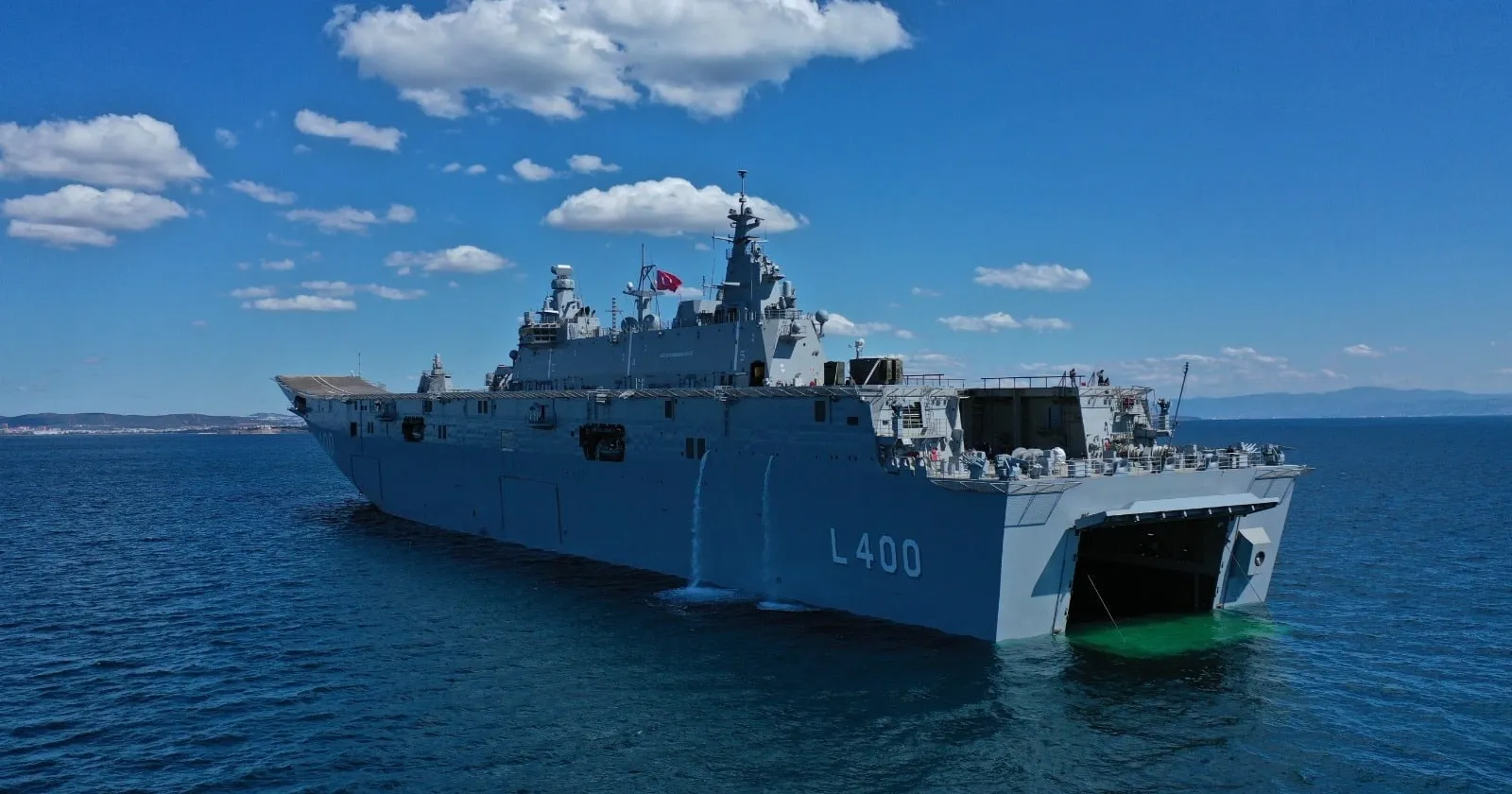
Quick answer: The LHD-230 is the largest platform in the TAIS Shipyards catalog: an amphibious assault ship (LHD) design of 230.8 meters in length and 27,000 tons displacement. This file places the LHD-230’s officially published data side by side with two reference classes on the world market — Spain’s Juan Carlos I and France’s Mistral class. The aim is not a superiority ranking but to show, with sourced data, which size and mission band the design occupies.
Three platforms in one table
| Feature | LHD-230 (TAIS) | Juan Carlos I (Navantia) | Mistral class (DCNS/STX) |
|---|---|---|---|
| Length overall | 230.8 m | 230.82 m | 199 m |
| Beam | 32 m | 32 m | 32 m |
| Displacement | 27,000 t | 26,000 t | 21,500 t (full load) |
| Speed | 20 kn | 21 kn | 18.8 kn |
| Range | 9,000 nm | 9,000 nm (15 kn) | 10,700 nm (15 kn) |
| Personnel capacity | 1,354 | 261 crew + 172 air group + 913 troops | 160 crew + 450 troops |
| Status | Design/proposal stage | In service since 2010 | 3 ships in French service |
The values in the LHD-230 column come from TAIS’s official product page and from an Army Recognition report on the ship’s presentation at DIMDEX 2026; the Juan Carlos I and Mistral data come from the ships’ English Wikipedia pages. Measurement definitions across sources (standard versus full-load displacement) may not align exactly; the table should be read with that caveat.
Size band: same class as Juan Carlos I
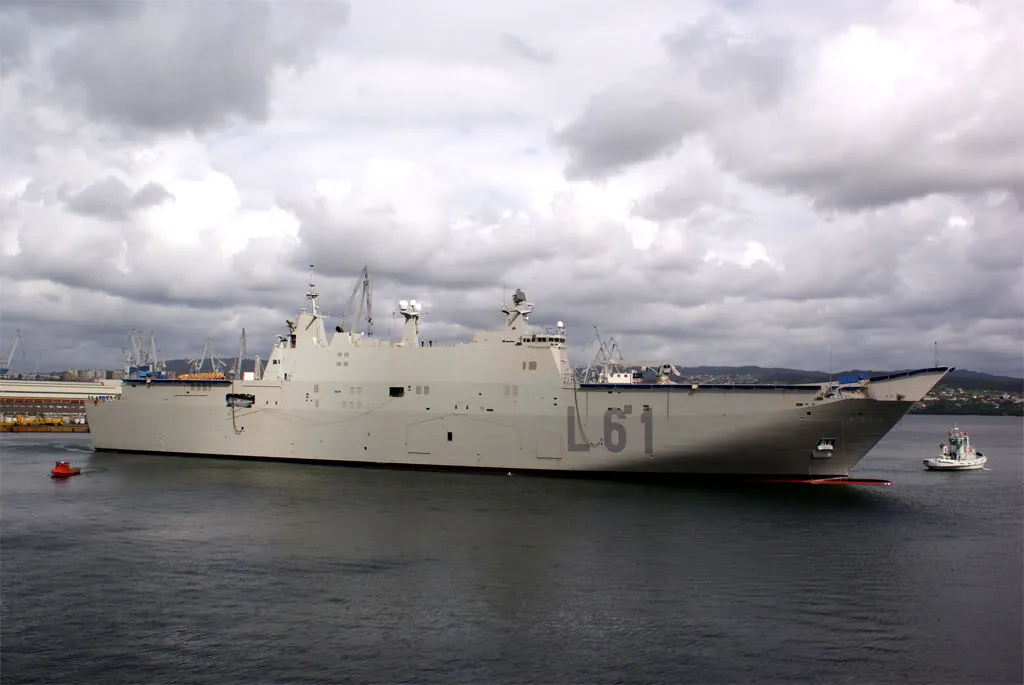
The LHD-230’s 230.8-meter length and 32-meter beam align almost exactly with Navantia’s Juan Carlos I design. That is no coincidence: TCG Anadolu, the Turkish adaptation of the Juan Carlos I design, was built at TAIS partner Sedef Shipyard, and the yard completed the entire production cycle of a ship of this size. The LHD-230 sits in the catalog as the export-oriented national-design counterpart of that experience; the TCG Anadolu story is told in the amphibious platforms file.
Differences in mission profile
According to Army Recognition’s DIMDEX 2026 report, the LHD-230’s primary missions are amphibious assault, force projection, operations as an aviation-capable ship and logistics support to forces put ashore; secondary missions include humanitarian aid, evacuation operations and joint operations command. The same source reports five ASELSAN STOP 25-millimeter weapon stations, two Phalanx close-in weapon systems, provisions for the RAM missile system and the ADVENT combat management system. Operating with unmanned aerial vehicles is one of the headline points in the ship’s promotion.
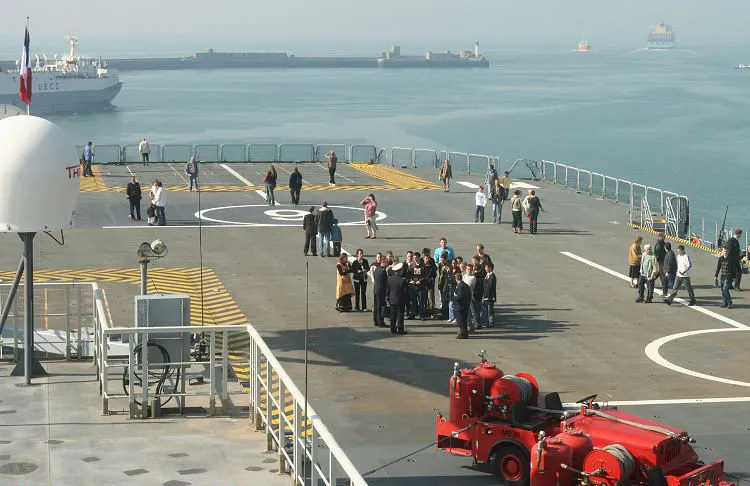
The Mistral class, with its smaller hull, is a design weighted toward helicopter carriage and the command ship role; with a well deck arrangement for 16 heavy helicopters and capacity for 450 troops, it carries a lighter amphibious load than the LHD-230 and Juan Carlos I. It has no fixed-wing aircraft capability, whereas Juan Carlos I’s ski-jump deck allows short take-off aircraft. The TAIS official page does not publish a numerical breakdown of the LHD-230’s hangar and deck capacity; this detail is not officially disclosed.
Market context
In the amphibious assault ship market, the Juan Carlos I design has been licensed to Australia (the Canberra class) and to Turkey; two Mistral-class ships were sold to Egypt. The LHD-230, by contrast, is a design proposal that has not yet won an order; Army Recognition reports that the ship was offered to the export market at the DIMDEX 2026 and DSA 2026 exhibitions. The other hulls in the amphibious line of the TAIS catalog are listed in the projects guide, and the combatant line in the BORA family file.
Frequently asked questions
Has the LHD-230 been built?
No. The LHD-230 is a design listed in the TAIS catalog and offered for export at exhibitions; it has no announced order and no example under construction.
Is the LHD-230 the same ship as TCG Anadolu?
No. TCG Anadolu is the Navantia-licensed adaptation of the Juan Carlos I design built at Sedef Shipyard; the LHD-230 is TAIS’s own catalog design.
Will the LHD-230 be able to carry aircraft?
The official page publishes no numerical capacity for fixed-wing operations; promotion emphasizes operating with unmanned aerial vehicles. The detail is not officially disclosed.
Which of the three designs is largest?
The LHD-230 and Juan Carlos I share the same size band (about 231 m); displacement figures in the sources are 27,000 and 26,000 tons respectively. The Mistral, at 199 meters, is smaller.
What weapons does the LHD-230 carry?
According to the exhibition presentation: five 25 mm STOP stations, two Phalanx systems and RAM provisions. The final configuration depends on customer requirements.
Sources and verification note
Every figure in the comparison table appears in one of the sources below; differences in measurement definitions between sources are noted in the text. Accessed: August 13, 2026.
- TAIS, LHD-230 Landing Helicopter Dock: https://www.taisshipyards.com/en/lhd-landing-helicopter-dock
- Army Recognition, “Türkiye’s TAIS displays LHD-230 amphibious assault ship at DIMDEX 2026”: https://www.armyrecognition.com/news/dimdex-2026/tuerkiyes-tais-displays-lhd-230-amphibious-assault-ship-at-dimdex-2026-for-global-deployments
- Army Recognition, “Türkiye Offers LHD-230 Drone Carrier for Export” (DSA 2026): https://www.armyrecognition.com/archives/archives-defense-exhibitions/2026-archives-news-defense-exhibitions/dsa-2026/tuerkiye-offers-lhd-230-drone-carrier-for-export-with-amphibious-assault-and-uav-operations
- English Wikipedia, “Spanish ship Juan Carlos I”: https://en.wikipedia.org/wiki/Spanish_ship_Juan_Carlos_I
- English Wikipedia, “Mistral-class amphibious assault ship”: https://en.wikipedia.org/wiki/Mistral-class_amphibious_assault_ship