What Is L3Harris? Products, Revenue and Role in US Defense
- 08 Oct 2026 10:30
- Updated: 08 Oct 2026


L3Harris Technologies is an American defense and aerospace company headquartered in Melbourne, Florida. It was formed in June 2019 by the merger of L3 Technologies and Harris Corporation, the latter tracing its roots to 1895. The company builds tactical radios, electronic warfare suites, electro-optical sensors, space payloads and, through Aerojet Rocketdyne acquired in 2023, rocket engines and missile motors. With roughly 50,000 employees and revenue of about $21.3 billion in 2024, it is commonly described as the sixth-largest US defense prime contractor. This profile outlines its history, segments, products and international footprint.
Overview and history
L3Harris descends from two lineages. The older is Harris. In 1895 brothers Alfred and Charles Harris founded the Harris Automatic Press Company in New York State to build printing presses. The firm made printing equipment for decades, shifted toward electronics in the 1950s and entered military communications and space electronics in 1967 by acquiring Radiation Inc. of Melbourne, Florida. Headquarters moved to Melbourne in 1978. By the 1990s Harris had become one of the principal suppliers of tactical radios to the US armed forces; the Falcon radio family dates from this period.
The second lineage is L3 Communications. It was created in 1997 when Frank Lanza and Robert LaPenta, backed by Lehman Brothers, bought several electronics units that Lockheed Martin had inherited from Loral. The three L’s in the name refer to those three founders. L3 grew through dozens of acquisitions over two decades, assembling a diverse portfolio spanning training simulators, security screening, electro-optics and undersea systems. It renamed itself L3 Technologies in 2016.
The two companies completed an all-stock merger, presented as a merger of equals, in June 2019, creating L3Harris Technologies. Management positioned the new firm between the large platform primes and the component suppliers, adopting the phrases “trusted disruptor” and “sixth prime”. These are the company’s own descriptions. In industry rankings L3Harris typically appears as the sixth-largest US defense contractor after Lockheed Martin, RTX, Northrop Grumman, Boeing and General Dynamics.
Business segments
L3Harris reports four segments. Space & Airborne Systems covers space payloads, missile-warning sensors, avionics and electronic warfare. Integrated Mission Systems includes ISR aircraft, electro-optical/infrared sensors, maritime systems and mission integration. Communication Systems is responsible for tactical radios, night vision and military networks. The fourth segment, Aerojet Rocketdyne, produces rocket engines and missile propulsion.
Aerojet Rocketdyne was acquired in July 2023 for about $4.7 billion. An earlier attempt by Lockheed Martin to buy the same company had collapsed on antitrust grounds. The deal gave L3Harris one of the two main US producers of solid rocket motors, the other being Northrop Grumman, and placed the company directly in the missile and munitions supply chain.
Segment revenue shifts from year to year; in 2024 the largest contributions came from Space & Airborne Systems and Integrated Mission Systems. The table below summarizes the four segments.
| Segment | Main activities | Example products/programs |
|---|---|---|
| Space & Airborne Systems | Space payloads, missile warning, avionics, electronic warfare | SDA tracking satellites, AN/ALQ-254 Viper Shield |
| Integrated Mission Systems | ISR aircraft, EO/IR, maritime and mission systems | WESCAM MX series, VAMPIRE |
| Communication Systems | Tactical radios, night vision, military networks | AN/PRC-117G, AN/PRC-163, Falcon IV |
| Aerojet Rocketdyne | Rocket engines, missile propulsion | RS-25, RL10, GMLRS/Javelin/THAAD motors |
Main products
The company’s best-known product line is tactical radios. The AN/PRC-117G is a wideband manpack radio used by US and many NATO forces. The newer AN/PRC-163 is a two-channel handheld in the Falcon IV family, selected by US Special Operations Command and in Army modernization programs. Falcon IV unifies manpack, vehicular and handheld radios around common software waveforms.
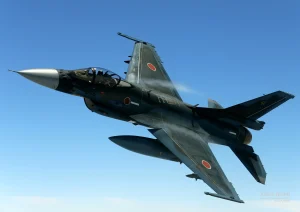
In electronic warfare, the AN/ALQ-254 Viper Shield is the internal EW suite developed for new-build F-16 Block 70/72 aircraft. In electro-optics, the WESCAM MX series (MX-10, MX-15, MX-20), built in Canada, is widely fitted to helicopters, drones and patrol aircraft. VAMPIRE is a vehicle-agnostic, palletized counter-drone system firing laser-guided APKWS rockets; it has been delivered to Ukraine.
The Aerojet Rocketdyne portfolio includes the liquid-fueled RS-25 (the SLS core-stage engine) and the RL10 upper-stage engine. Its solid rocket motors power GMLRS, Javelin, Stinger, THAAD, PAC-3 MSE and the Standard Missile family. In space, the company supplies tracking-layer satellites to the Space Development Agency and hypersonic tracking sensors to the Missile Defense Agency.
| Product | Category | Main users |
|---|---|---|
| AN/PRC-117G | Manpack tactical radio | US Army, NATO forces |
| AN/PRC-163 | Two-channel handheld radio (Falcon IV) | US SOCOM, US Army |
| Falcon IV family | Software-defined radio family | US and allied land forces |
| VAMPIRE | Palletized counter-UAS rocket system | Ukraine, US Navy (as reported) |
| AN/ALQ-254 Viper Shield | Internal electronic warfare suite | F-16 Block 70/72 customers |
| WESCAM MX-15 / MX-20 | EO/IR surveillance turret | Helicopters, UAVs, maritime patrol aircraft |
| RS-25 | Liquid-fueled core-stage engine | NASA SLS |
| RL10 | Upper-stage engine | ULA Vulcan, Atlas V, SLS |
| Solid rocket motors | Missile propulsion | GMLRS, Javelin, Stinger, THAAD, PAC-3 MSE |
| Space payloads | Missile warning and tracking sensors | SDA, MDA, US Space Force |
Role in the missile and munitions supply chain
The Aerojet Rocketdyne purchase placed L3Harris at a critical node of US munitions production. The solid rocket motors for GMLRS rockets, Javelin and Stinger missiles and PAC-3 MSE interceptors come from this business. After the war in Ukraine began, the Pentagon sought to raise output of these weapons, and motor capacity emerged as one of the tightest bottlenecks. Defense Production Act funding was reportedly directed to Aerojet to expand capacity; amounts vary by program.
Lockheed Martin is prime contractor for these missiles and depends on Aerojet for motors. In 2024 the two companies were reported to have reached agreements to increase GMLRS and PAC-3 MSE motor production; detailed terms and values were not fully disclosed. The arrangement draws attention in the industry because a rival prime relies on L3Harris for a critical component.
The company has announced capacity expansion at its Camden, Arkansas and Huntsville, Alabama sites. Delivery delays and quality issues had drawn criticism of Aerojet in earlier years; L3Harris management states that it has invested in these areas since the acquisition. Independent data to assess the results remain only partly public.
International activity and the Türkiye context
L3Harris earns most of its revenue from the US government; international sales account for roughly a quarter of the total. Its widest overseas footprint is in tactical radios: the AN/PRC-117G and PRC-152 families serve in many NATO and partner armies. The company operates manufacturing and engineering sites in Canada, the United Kingdom and Australia; WESCAM MX turrets are built in Canada.
For Türkiye the first link is the F-16 program. The F-16 Block 70 aircraft ordered by Türkiye carry the AN/ALQ-254 Viper Shield as the standard electronic warfare suite; delivery schedules and configuration details depend on statements from US and Turkish authorities. Tactical radios in the Turkish Armed Forces are predominantly made by ASELSAN, so L3Harris radios have a limited presence in Türkiye.
At Eurosatory in June 2026, a partnership between L3Harris and the Turkish company Skydagger on co-production of FPV-type interceptor drones was reported. Public information on the scope, production location and commercial terms is limited, so it is presented here only as reported.
Market position and debates
In SIPRI’s ranking of arms producers L3Harris sits among the world’s top ten defense companies and is described as the sixth-largest US prime. It reached this position without building major platforms: it makes no aircraft, ships or tanks. Its portfolio is weighted toward subsystems, sensors, communications and propulsion, which makes it both a competitor and a supplier to Lockheed Martin, RTX and Northrop Grumman.
After the merger, management moved to simplify the portfolio. Aviation training, security screening and some commercial units were divested. In late 2024 the company announced the sale of its Commercial Aviation Solutions business to the investment firm TJC, with completion reported in 2025. The Aerojet Rocketdyne acquisition moved in the opposite direction, increasing the company’s defense weighting.
Points of debate include post-merger integration costs, delays on some space programs and Aerojet’s historical delivery problems. Critics question, on competition grounds, a prime contractor controlling a critical motor supplier to its rivals; the company states that it serves all customers equally. These issues remain on the agenda of the US Congress and regulators.
- Main competitors: RTX (communications, sensors, propulsion), Northrop Grumman (solid rocket motors, space), Lockheed Martin (space payloads, electronic warfare)
- Main customer: US Department of Defense and intelligence agencies; international share ~25%
- Divested units: aviation training, security screening, Commercial Aviation Solutions (as reported)
Frequently Asked Questions
Which country is L3Harris from?
L3Harris Technologies is a US company. It is headquartered in Melbourne, Florida, and trades on the New York Stock Exchange under the ticker LHX. Most of its revenue comes from the US government.
What does L3Harris make?
It makes tactical radios, electronic warfare suites, electro-optical turrets, mission systems for reconnaissance aircraft, space payloads and, under the Aerojet Rocketdyne name, rocket engines and missile motors. It does not build aircraft, ships or tanks.
When was L3Harris founded?
The company was formed in June 2019 through the merger of L3 Technologies and Harris Corporation. Harris traces its origins to 1895 and L3 to 1997.
Does L3Harris own Aerojet Rocketdyne?
Yes. L3Harris acquired Aerojet Rocketdyne in July 2023 for about $4.7 billion. It is now reported as the fourth segment and builds motors for missiles such as GMLRS, Javelin and THAAD.
What is L3Harris’s connection to Türkiye?
The F-16 Block 70 aircraft ordered by Türkiye use L3Harris’s Viper Shield electronic warfare suite. In 2026 a partnership with the Turkish firm Skydagger on FPV interceptor drones was reported.
Sources
- L3Harris Technologies official website
- US Securities and Exchange Commission – L3Harris 10-K filings
- SIPRI Arms Industry Database