Shore Batteries, Open Water: Coastal Defence and Anti-Ship Missiles in the Gulf

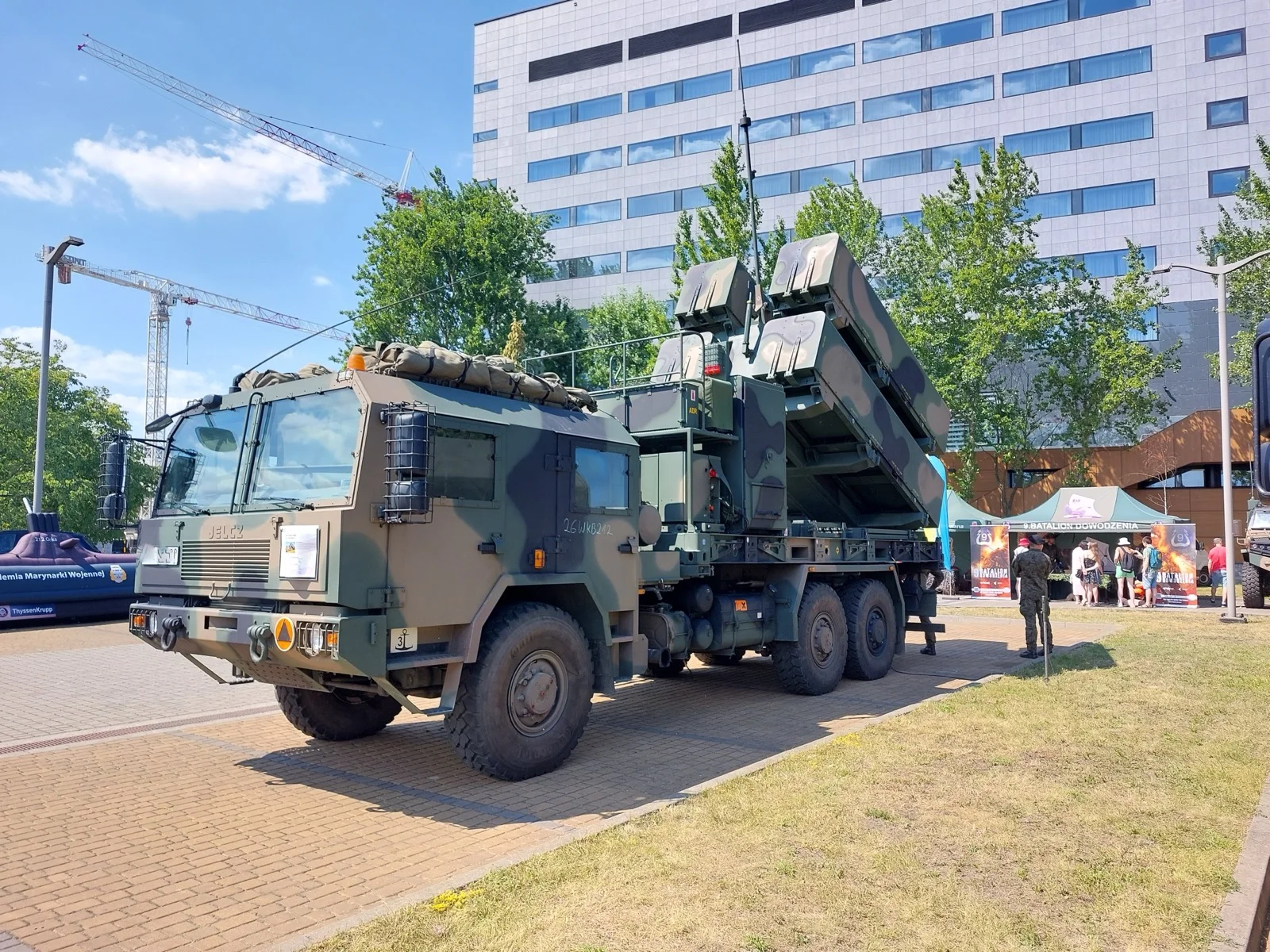
The Gulf’s naval procurement debate has focused for years on hulls — corvettes, frigates and offshore patrol vessels — while the shore-based batteries that can threaten shipping without ever putting a vessel to sea have drawn comparatively little sustained analysis. That gap is closing. Iran’s coastal missile force along the Strait of Hormuz has been the subject of repeated strikes and countermeasures through 2026, and the episode has sharpened GCC planners’ attention on a category of weapon that is cheap relative to a warship, hard to find once dispersed, and capable of closing the world’s most important oil chokepoint without a single ship being fired upon. Only two Gulf states currently field a dedicated, road-mobile coastal anti-ship battery in the sense NATO planners would recognise the term; the rest rely on missile stocks assigned to ships and aircraft, or on the presence of allied naval forces, to cover the same threat axis.
Executive Summary
Qatar operates the region’s most complete coastal defence system: a Mobile Coastal Defence System (MCDS) built around both the MBDA Exocet MM40 Block 3 and the Marte ER anti-ship missile, delivered under a contract reported at roughly EUR640 million and inaugurated to cover the Qatar Emiri Naval Forces’ approaches. Oman has ordered the Exocet MM40 Block 3 in a similar configuration, giving it the second confirmed shore-based battery in the GCC. Saudi Arabia, Bahrain and Kuwait hold Exocet-family missiles in inventory — Bahrain and Kuwait among the roughly three dozen states that operate some Exocet variant worldwide — but none has a confirmed, standing coastal-battery unit comparable to Qatar’s or Oman’s; their anti-ship capability sits primarily on ships and aircraft rather than ashore. The UAE has invested in the Marte Mk2/N missile since 2009 and expanded that order in 2017, again primarily for shipborne and helicopter-launched use rather than a fixed or road-mobile coastal unit. Against this uneven regional picture, the market itself is diversifying: Kongsberg’s road-mobile NSM, Boeing’s Harpoon Coastal Defense System and Roketsan’s containerised Kara Atmaca/Barbaros system have all secured or pursued export contracts elsewhere in the past three years, giving Gulf navies more options than the Exocet-centred procurement pattern of the past two decades.
Operational Context
A coastal anti-ship battery solves a different problem than the standoff missiles carried aboard a corvette or frigate, a subject this series addressed directly in its examination of Atmaca, Harpoon, NSM and Exocet procurement for Gulf surface combatants. A shipborne missile extends the reach of a hull that must itself be found, tracked and, in a contested strait, potentially struck before it can fire. A land-based battery removes that vulnerability by putting the launcher on a truck or trailer that can disperse, relocate and hide between firing positions — a doctrine Iran’s IRGC Navy has practised for decades with its Noor and Qader missile batteries, derived from the Chinese C-802 design and reported to range between roughly 120 km and, in extended variants, 200–300 km, sufficient to cover nearly the full width of the Strait of Hormuz and its Gulf of Oman approaches from concealed positions along the Iranian coastline. The 2026 strikes on hardened Iranian coastal missile sites, reported to have included heavy bunker-buster munitions against fixed installations, illustrate the operational lesson Gulf planners are drawing in the opposite direction: a battery that cannot move is a battery that can be targeted at leisure, and even a mobile one concentrated at a small number of prepared sites offers a limited improvement.
This is the doctrinal backdrop against which Qatar’s MCDS and Oman’s Exocet order should be read. Both systems are built around road-mobile transporter-erector-launchers rather than fixed emplacements, allowing batteries to redeploy along the coastline between alert postures. Qatar’s system, delivered by MBDA and inaugurated to enter service with the Qatar Emiri Naval Forces, was also the launch customer for the extended-range Marte ER, giving Doha both a French and an Italian missile family within a single coastal architecture — a deliberate hedge against any single supplier relationship, and one that also lets Qatar’s Marte ER coastal launchers share a common missile type with the air-launched Marte ER now entering service on its NH90 NFH helicopters, a platform this series examined in the preceding report on Gulf naval aviation and the anti-submarine warfare gap. For Saudi Arabia, Bahrain and Kuwait, the absence of a confirmed dedicated coastal-battery unit does not mean an absence of anti-ship capability, but it does mean that capability is concentrated on ships and aircraft that must be present and undamaged to use it, rather than on a distributed shore-based reserve that survives even if the fleet in port does not.
Comparative Analysis
The systems below span the established European suppliers with confirmed Gulf customers, the two principal alternatives now competing for wider export business, and the Iranian threat systems that give the category its regional urgency.
| System | Manufacturer / origin | Launch platform | Reported range | Seeker | Gulf status |
|---|---|---|---|---|---|
| Exocet MM40 Block 3 | MBDA (France) | Road-mobile TEL / trailer | ~180 km | Active radar homing | Qatar (MCDS, in service); Oman (ordered); missile stocks held by Saudi Arabia, Bahrain, Kuwait |
| Marte ER | MBDA (Italy) | Road-mobile canister; also ship- and helicopter-launched | Extended-range variant, over 100 km | Active radar / IIR | Qatar launch customer (MCDS and NH90 NFH); UAE holds legacy Marte Mk2/N |
| Naval Strike Missile (NSM), coastal variant | Kongsberg (Norway) | Road-mobile canister, truck-to-ship transferable | ~185 km | Passive imaging infrared (low-RF-signature) | No confirmed Gulf order; fielded by Poland, Romania and other NATO coastal-defence programmes |
| Harpoon Coastal Defense System | Boeing (United States) | HEMTT-mounted launcher | 120–140 km | Active radar homing | No confirmed Gulf order; exported to Taiwan (2023, ~USD 2.3bn/100 launchers), earlier to Denmark and South Korea |
| Kara Atmaca / Barbaros Coastal Defence System | Roketsan (Türkiye) | Containerised launcher (20/40 ft), road- or ship-transportable | Reported up to ~400 km | Active radar homing | Unveiled IDEF 2025; offered for export, no confirmed Gulf contract to date |
| Noor / Qader family (context only, not for Gulf procurement) | Iran, derived from China’s C-802 | Mobile TEL, concealed coastal sites | ~120 km (Noor); 200–300 km (Qader) | Inertial + active radar homing | Operated by Iran’s IRGC Navy along the Strait of Hormuz; the principal threat driving GCC interest in the category |
Three points stand out from the comparison. First, the Exocet/Marte pairing that Qatar and Oman have adopted is the only combination with an operational Gulf track record; every other Western system in the table is a plausible but unconfirmed candidate for the region. Second, seeker technology is diverging: NSM’s passive infrared seeker is designed specifically to deny an adversary the radar warning that an active-homing missile such as Exocet or Harpoon can give off in its terminal phase, a consideration that matters more in a strait as saturated with electronic-warfare and surveillance assets as Hormuz than it would in open ocean. Third, the Kara Atmaca/Barbaros system’s containerised launcher and reported range are notable for widening the field of credible suppliers beyond the traditional Franco-Italian and American axis, though — as with any newly unveiled system — it enters Gulf consideration without the in-service references that Exocet, Marte and Harpoon can each point to.
Procurement Considerations
A Gulf state weighing a coastal-battery acquisition is choosing more than a missile; it is choosing a doctrine. Fixed or lightly dispersed sites are cheaper to build and easier to defend with air-defence and counter-UAS assets already in the national inventory — a linkage this series addressed in its reports on layered counter-UAS economics and on air-defence command-and-control integration — but the 2026 strikes on hardened Iranian coastal sites are a reminder that any position, however protected, becomes a known target the moment it is identified. Full road-mobility, of the kind Qatar’s MCDS and the NSM and Harpoon coastal systems are designed around, buys survivability at the cost of a more complex targeting-data chain: a battery that can relocate hourly needs continuous, secure connectivity to whatever surveillance platform is cueing it, whether a maritime patrol aircraft, an over-the-horizon radar, or the MALE/HALE ISR assets this series examined in its preceding report on Gulf surveillance procurement.
Cost benchmarks are difficult to compare directly because contracts bundle missiles, launchers and infrastructure differently, but the available reference points are informative. Qatar’s MCDS, covering two missile types and associated launch and command infrastructure, was reported at roughly EUR640 million; Taiwan’s 2023 Harpoon Coastal Defense System order, for 100 launchers and 400 missiles, was valued at up to USD 2.3 billion. Neither figure translates cleanly to a smaller GCC state’s requirement, but both indicate that a credible coastal-battery capability — enough launchers to sustain dispersal, plus a magazine deep enough to survive an opening exchange — is a program measured in hundreds of millions rather than tens of millions of dollars, a threshold that has likely factored into why Saudi Arabia, Bahrain and Kuwait have so far relied on shipborne and airborne anti-ship missiles rather than standing up a dedicated shore battery of their own.
A further consideration specific to the Gulf is magazine depth relative to the length of coastline and number of chokepoints a battery must cover. Qatar’s peninsula geography concentrates its coastal-defence requirement around a comparatively compact perimeter; Saudi Arabia’s much longer Gulf and Red Sea coastlines, and the UAE’s exposure on both the Gulf and the Strait of Hormuz side of the Musandam peninsula, argue for either a larger number of batteries or a doctrine that accepts partial coverage reinforced by naval and air assets — a trade-off each state’s forthcoming procurement decisions will need to resolve explicitly rather than by default.
Outlook
The likeliest trajectory over the next two to three years is incremental diversification rather than a single large regional program. Qatar’s MCDS and Oman’s Exocet order give MBDA a strong reference base to defend against newer entrants, but the passive-seeker case for NSM and the wider export push behind Harpoon’s coastal variant — both now backed by fresh, publicly reported contracts outside the region — give Saudi Arabia, Bahrain and Kuwait genuine alternatives if and when any of them decides to close its own coastal-battery gap. Roketsan’s Kara Atmaca/Barbaros system enters this competition from a later starting position, without a fielded Gulf reference, and its prospects will depend on demonstrating the same combination of range, seeker performance and sustainment support that has kept Exocet and Marte in Gulf service for a decade. What is unlikely to change is the underlying driver: as long as the Strait of Hormuz remains contested ground, a land-based battery that can threaten shipping without exposing a hull to counterattack will remain one of the most cost-effective instruments of coastal defence available to any state on either side of the waterway, and Gulf navies without one will keep being asked, by their own planners if no one else, why not.
FAQ
Which Gulf states currently operate a dedicated coastal anti-ship missile battery?
Qatar (Exocet MM40 Block 3 and Marte ER, under its Mobile Coastal Defence System) and Oman (Exocet MM40 Block 3) are the only GCC states confirmed to operate a standing, road-mobile coastal battery. Saudi Arabia, Bahrain and Kuwait hold Exocet-family missiles in inventory but rely primarily on ships and aircraft to employ them.
Why does Iran’s coastal missile force matter to Gulf procurement decisions?
Iran’s IRGC Navy operates Noor and Qader anti-ship missiles, derived from China’s C-802, from mobile and concealed sites along the Strait of Hormuz, with reported ranges of roughly 120–300 km sufficient to threaten shipping across the strait and into the Gulf of Oman. Their persistence, despite repeated strikes on fixed sites through 2026, is a central reference point for GCC states weighing their own coastal-defence investment.
Is there a Turkish coastal defence missile competing for Gulf contracts?
Roketsan’s Kara Atmaca missile has been integrated into a containerised Barbaros Coastal Defence System, unveiled at IDEF 2025 and offered for export with a reported range of up to roughly 400 km. As of mid-2026 it has no confirmed Gulf customer, and its prospects will depend on demonstrating the operational track record that Exocet and Marte have already built in the region.