France Green-Lights Rafale F5: New Radar, 20% More Thrust and ASN4G

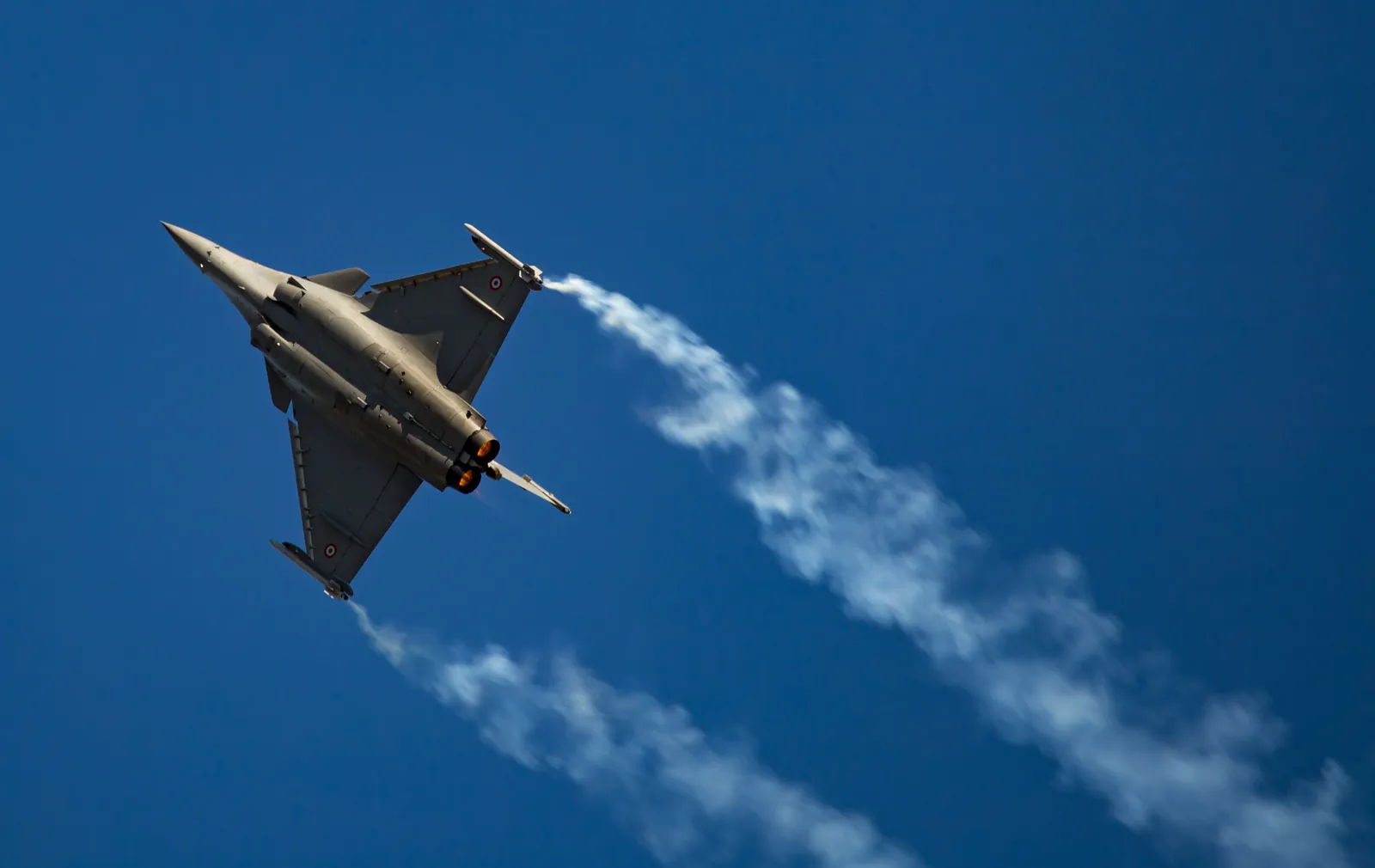
France has signed the first contracts for the Rafale F5 standard, the configuration meant to carry the fighter into the threat environment of the 2030s. The package announced by procurement agency DGA on 9 September 2026 covers a new-generation RBE2-XG radar, a jam-resistant low-probability-of-intercept data link, a fully digital SPECTRA electronic warfare suite and an M88 T-REX engine raising maximum thrust from 7.5 to 9 tonnes. The main development contract is expected by the end of 2026, with qualification around 2033.
Why DGA is spending before the main contract
The contracts placed by France’s procurement agency are not, on paper, the formal launch of the Rafale F5 programme. They are what engineers call risk-reduction work: an effort to mature a programme’s longest-lead, least-certain technologies before the main development contract is signed.
The logic is straightforward. Radars, engines and electronic warfare suites take five to seven years to develop. Start them from scratch on the day the main contract is signed, and the entire programme schedule is hostage to those three items. By placing this work ahead of the development phase it intends to launch at the end of 2026, DGA is pulling design risk forward.
French planning puts qualification of the F5 standard at around 2033. The standard will enter service with the Air and Space Force first, then with the Navy’s carrier air wing. That timeline should be read alongside a second fact: F5 is being defined against operational requirements for 2035 and beyond. France is describing a configuration meant to carry the Rafale into the 2040s.
RBE2-XG: same box, new radar
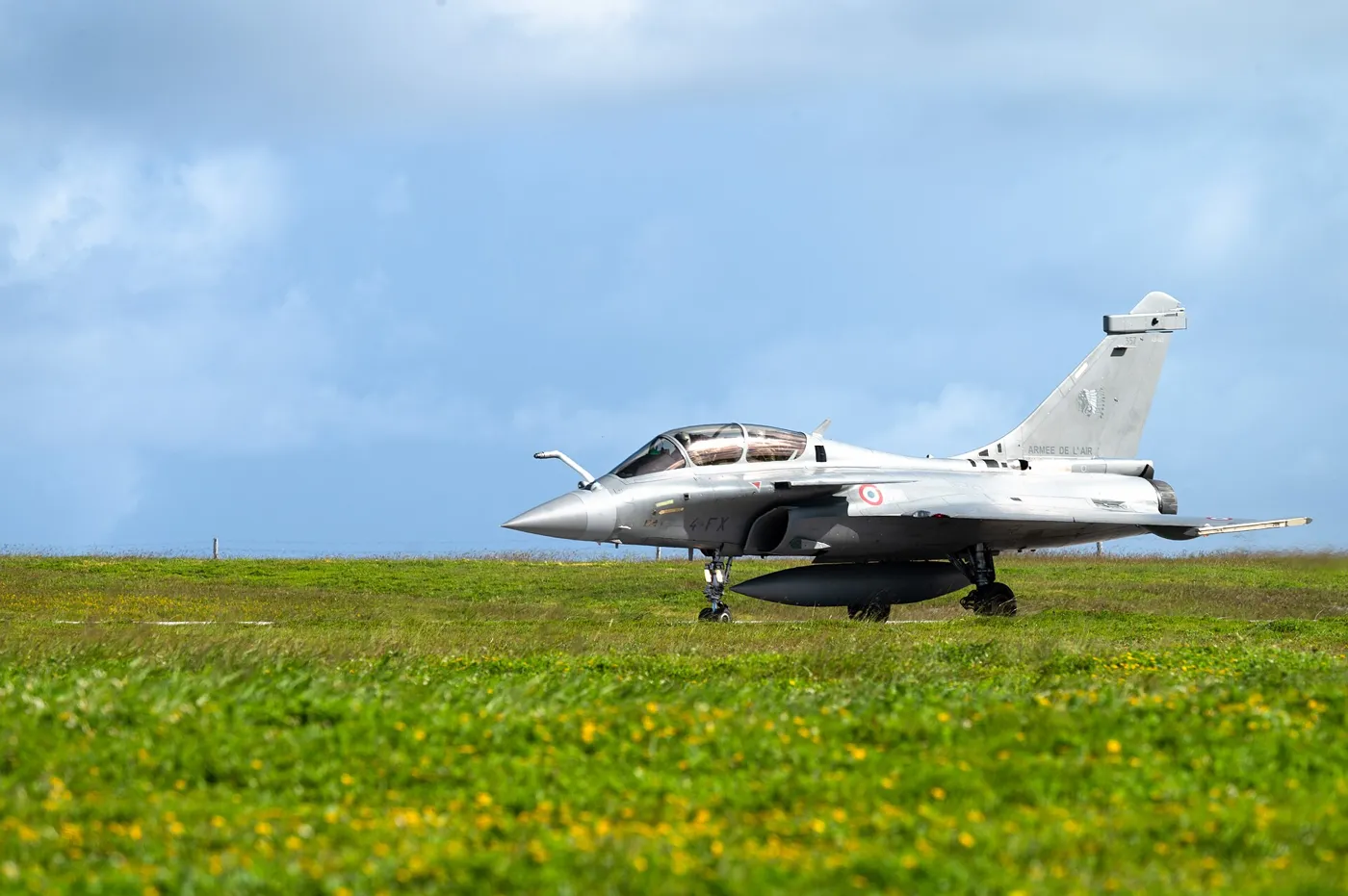
The headline item is Thales’s RBE2-XG electronically scanned radar. DGA describes it as a “significant evolution” of the RBE2 AESA now in service – not a clean-sheet radar, but one that keeps the same physical volume while being rebuilt inside.
Holding the dimensions fixed is not incidental. The radar has to fit inside the nose radome, and a design that preserves existing volume makes retrofitting the in-service fleet dramatically cheaper. The gains are sought in power and processing instead. DGA promises higher radiated power, longer detection range and a marked improvement against targets with extremely low radar cross-sections – meaning low-observable aircraft and missiles.
The second critical heading is computing capacity. The new radar will carry far more processing power, and that power is earmarked for artificial-intelligence-based signal processing. In modern air combat a radar’s real problem is not seeing but sorting: picking the meaningful return out of hundreds of thousands of echoes. Handing that sorting to algorithms that learn is the defining radar trend of the past decade. DGA also stresses the radar’s hardened cyber resilience – a tacit admission that as a sensor’s software surface grows, so does its attack surface.
IVDL: talking without being heard
Thales’s second contract covers an item that rarely makes headlines but forms the backbone of the F5 architecture: IVDL (Inter-Vehicle Data Link). DGA calls it “a new form of stealthy, resilient data link,” built on a broadband waveform and designed to resist jamming.
The underlying problem is not obvious at first glance. The more data a fighter formation shares, the better it fights – but every transmission is also an electronic signature, an opportunity for an adversary to take a bearing. In airspace saturated with electronic warfare, the aircraft that talks the most is the aircraft that reports itself. IVDL promises to resolve exactly that contradiction: high bandwidth at low probability of detection.
It is also the plumbing for whatever uncrewed wingman eventually flies alongside the F5. A stealthy combat drone is only useful if the link controlling it is not the thing that gives the formation away.
SPECTRA goes fully digital

The contract awarded jointly to Thales and MBDA France upgrades the Rafale’s self-protection suite, SPECTRA, to F5 level. SPECTRA is one of the systems that most clearly separates the Rafale from its peers: an integrated electronic warfare architecture that detects, identifies and locates a threat, then defeats it through active jamming or decoying. The aircraft’s survivability record over Libya and the Sahel rests largely on it.
What the F5 version promises is a fully digital architecture. Replacing analogue receive chains with software-defined receivers means the system can be adapted to new threat waveforms through a software update alone. DGA’s reasoning is explicit: by 2035 the electromagnetic spectrum will be both wider and far more congested. A system whose threat libraries live in fixed hardware would have to return to the factory for every revision.
M88 T-REX: from 7.5 to 9 tonnes
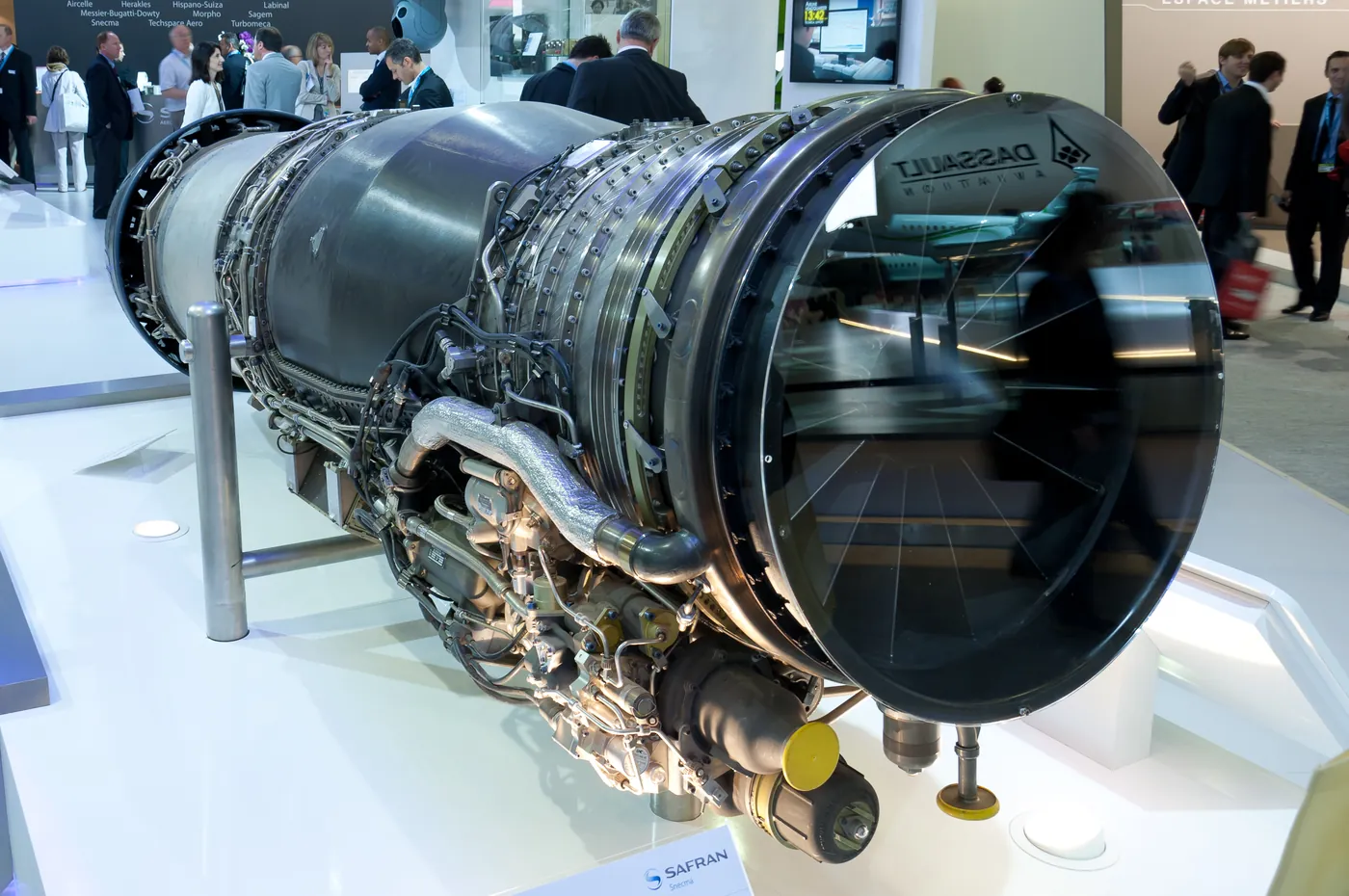
The item that will draw most public attention is the engine. Safran Aircraft Engines has been contracted for the preliminary design phase of the M88 T-REX upgrade, targeting an increase in the M88’s maximum thrust from 7.5 to 9 tonnes – roughly 20 percent.
For a fighter, added thrust is not simply a question of speed. Every new system bolted on – a more powerful radar, a digital EW suite, more processors, heavier weapons – raises empty weight and electrical and cooling loads. Without more thrust, all of that comes out of climb performance, manoeuvrability and combat radius. The French approach is to pay for the weight F5 adds with the engine.
Safran’s second emphasis is that T-REX will preserve the modular architecture. The M88’s modularity allows individual modules to be swapped without stripping the whole engine, which shortens maintenance turnaround and lifts fleet availability. Fuel efficiency is also to be maintained. Taken together, those two constraints suggest the thrust increase will come from work on the core’s thermodynamics rather than a brute-force solution.
Dassault’s share: invisible but critical
The contract awarded to Dassault Aviation is too technical for headlines and militarily no less important than the rest: a very-low-drift inertial navigation unit built on hemispherical resonator gyroscope (HRG) technology.
To understand why that matters, look at the fragility of GPS. Satellite navigation can be jammed or spoofed, as skies over Ukraine and the Middle East have demonstrated repeatedly. An inertial unit needs no external signal at all: it derives position purely from measured acceleration and rotation. Its weakness is that error accumulates over time – drift. Because HRG gyroscopes have no moving parts, drift stays far lower than in classical mechanical units. In short, this item is what lets a Rafale keep knowing where it is in airspace where the satellite signal has been taken away.
The nuclear dimension: ASN4G
The strategic payload of the F5 standard is integration of the hypersonic ASN4G missile. France’s airborne nuclear deterrent currently rests on the ASMP-A Rénové carried by the Rafale; ASN4G is the next-generation system that will replace it. The MBDA-developed weapon is intended to defeat modern air defence networks by flying at hypersonic speed and low altitude.
That integration turns F5 from a modernisation package into the hardware leg of French nuclear doctrine. The nuclear mission on its own raises the aircraft’s requirements for navigation, data links, electronic warfare and cyber resilience – one reason the F5 standard has been defined so broadly.
Envanter Medya examined France’s airborne deterrent and the ASN4G programme in detail earlier this year.
Not in the first package: the combat drone
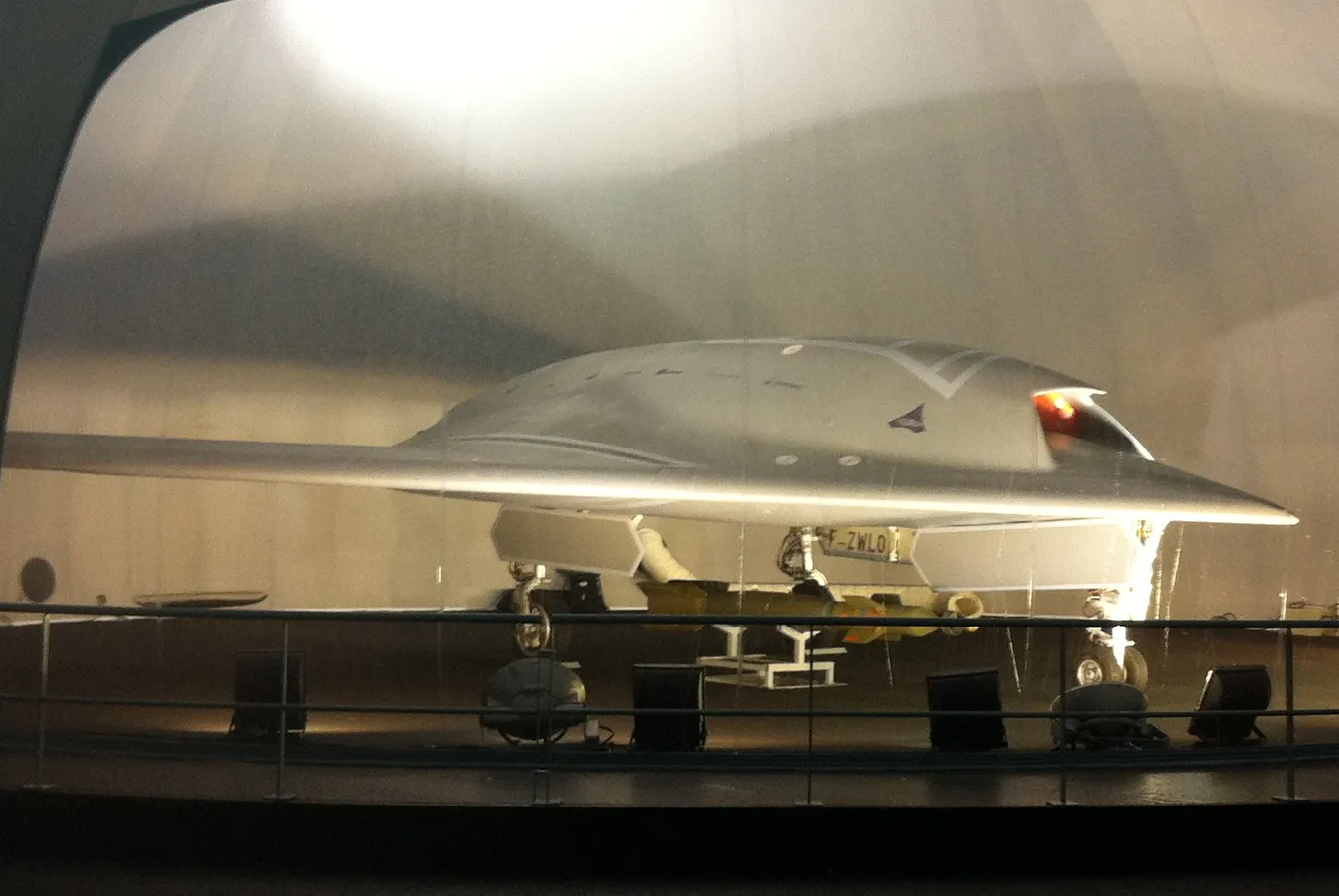
The most widely discussed element of the Rafale F5 debate has been the stealthy combat drone (UCAV) meant to fly alongside the fighter. France has said openly since 2023 that it plans a “loyal wingman” to suppress enemy air defences and take on the dangerous first passes, drawing on the Dassault-led nEUROn demonstrator.
The drone does not appear in the contract list announced this month. The package is built around the engine, radar, electronic warfare, data link and navigation – the aircraft itself. That does not mean the drone has been dropped; it means risk-reduction money went to the longest-lead platform items first. The sequencing, though, is revealing: aircraft first, wingman second.
nEUROn itself remains a notable piece of European industrial cooperation. Dassault is prime contractor, with Saab of Sweden, Leonardo of Italy, Airbus Defence and Space of Spain, RUAG of Switzerland and HAI of Greece taking part. The demonstrator first flew in 2012 and has since completed more than 170 test flights.
What the Rafale F5 package contains
| Item | Contractor | What it delivers |
|---|---|---|
| RBE2-XG AESA radar | Thales | More power in the same volume, longer range, better discrimination of very-low-RCS targets, AI-based processing, cyber resilience |
| IVDL data link | Thales | Broadband, jam-resistant, low-probability-of-intercept link between aircraft |
| SPECTRA F5 EW suite | Thales + MBDA France | Fully digital architecture; threat detection and jamming across a wider, more congested spectrum |
| M88 T-REX engine | Safran Aircraft Engines | Maximum thrust 7.5 t → 9 t (+20%); modularity and fuel efficiency preserved |
| HRG inertial navigation | Dassault Aviation | Very low drift; accurate position without any satellite signal |
| ASN4G integration | MBDA (programme) | Renewal of the airborne nuclear deterrent |
| Combat drone (UCAV) | Dassault (nEUROn legacy) | Absent from the first contract package; planned alongside F5 |
Rafale: eight export customers, close to 300 new-build aircraft
The commercial backdrop to the F5 investment is the export momentum the Rafale has gained over the past decade. Dassault’s multirole fighter has been the backbone of French air power since the Rafale A demonstrator first flew in 1986, entering service with the French Navy in the early 2000s and the Air Force shortly after.
With its canard-delta layout, twin M88 engines, RBE2 AESA radar, SPECTRA electronic warfare suite and Front Sector Optronics, the aircraft combines air superiority, ground attack, anti-ship strike, reconnaissance and nuclear delivery in a single airframe. The French call this omnirôle: the ability to shift between mission types within a single sortie.
Its combat record is broad, spanning Afghanistan, Libya, Mali and operations over Iraq and Syria. On the export side, eight foreign customers have ordered 299 newly built and 24 second-hand Rafales to date, among them Egypt, Qatar, India, Greece, Croatia, the United Arab Emirates, Indonesia and Serbia. The programme sustains more than 400 companies in France and over 7,000 direct and indirect jobs.
A Turkish reading
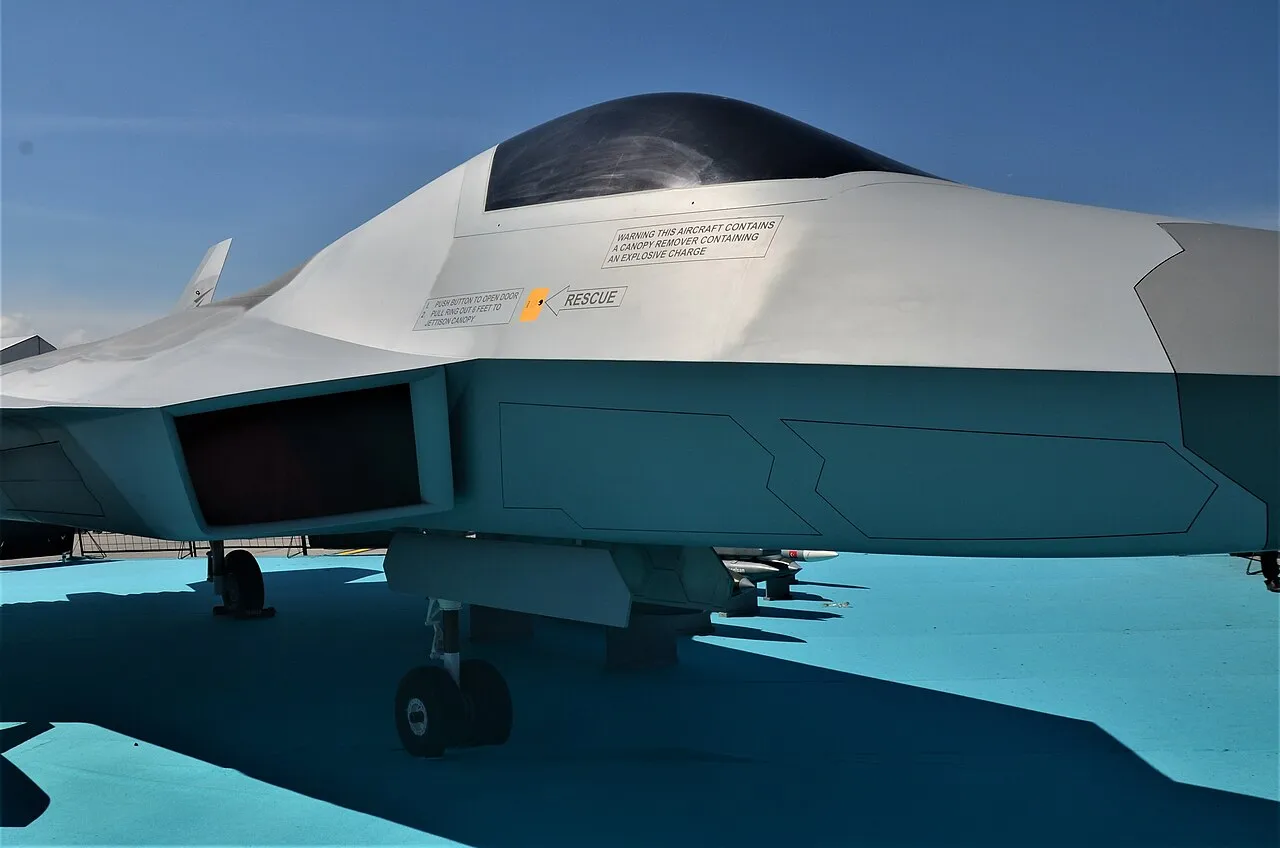
Run down the technology basket France has defined for F5 and it maps almost item for item onto the workstreams inside Türkiye’s own combat aircraft programme: a new-generation AESA radar, a digital electronic warfare suite, an uprated indigenous engine, a jam-resistant data link and a stealthy uncrewed wingman.
KAAN first flew on 21 February 2024, placing Türkiye among the handful of countries developing a fifth-generation fighter. ASELSAN is working the national AESA radar and the self-protection architecture; TEI is running the indigenous turbofan programme. On the wingman question Türkiye already has hardware in the air: TUSAŞ’s tailless ANKA-3 and Baykar’s jet-powered KIZILELMA are flight-testing today as the national answer to the concept France has scheduled for the 2030s.
The difference lies in approach. France chose to lift an existing 4.5-generation platform into the 2040s; Türkiye chose to build a fifth-generation aircraft outright. The French route carries less risk and more predictable cost; the Turkish route is harder but has a higher ceiling. That both programmes will reach maturity in the same 2033-2035 window sets up direct competition in the export markets of the next decade – particularly across the Gulf, North Africa and Southeast Asia.
One further note: the share of the F5 package devoted to “invisible” items such as inertial navigation and a stealthy data link is another reminder that what decides modern air combat is no longer the aircraft alone, but the sensor and communications chain feeding it. That Türkiye builds every link of that chain domestically rests on precisely the sovereignty logic France is trying to protect with F5.
Sources
- Direction générale de l’armement (DGA) — announcement of upstream Rafale F5 contracts
- Defence Industry Europe — France awards early Rafale F5 contracts
- Dassault Aviation — official Rafale product page
- Safran Aircraft Engines — M88 turbofan
- Dassault Rafale — technical and operational history
- Dassault nEUROn — programme and partners