Singapore Navy Launches Second ‘Valour’ Combat Vessel: A Mothership for Unmanned Systems

- Ship: RSS Valour, second Victory-class MRCV
- When/where: July 23, 2026, ST Engineering Benoi Shipyard
- Dimensions: 130 m length, 19 m beam, 5.2 m draught, 110 crew
- Role: Mothership for unmanned air/surface/underwater systems + command ship
- Fleet: Six sister vessels; progressive delivery from 2028
A second hull in nine months
Launched in a ceremony officiated by Coordinating Minister for National Security K. Shanmugam, Valour arrived just nine months after lead ship Victory hit the water in October 2025. That cadence reflects ST Engineering’s serial-build discipline and the Republic of Singapore Navy’s commitment to fleet renewal. The six-ship class inherits the names of its MCV predecessors: Victory, Valour, Vigilance, Valiant, Vigour and Vengeance.
The MRCV’s design philosophy rests on force-multiplication rather than the mold of a conventional frigate. The ship is positioned as a floating base for unmanned aerial vehicles, armed and reconnaissance unmanned surface vessels, and underwater systems—letting a single platform watch an area far beyond its own reach and hand risky missions to unmanned systems.
Small crew, heavy automation
Despite its 130-metre hull, Valour carries just 110 crew—a direct result of extensive automation, where conventional warships of similar size need far larger complements. Through advanced sensors, weapon systems and a networked architecture, the MRCV can serve simultaneously as a command ship and a combatant against diverse threats. The vessels will be delivered progressively from 2028.
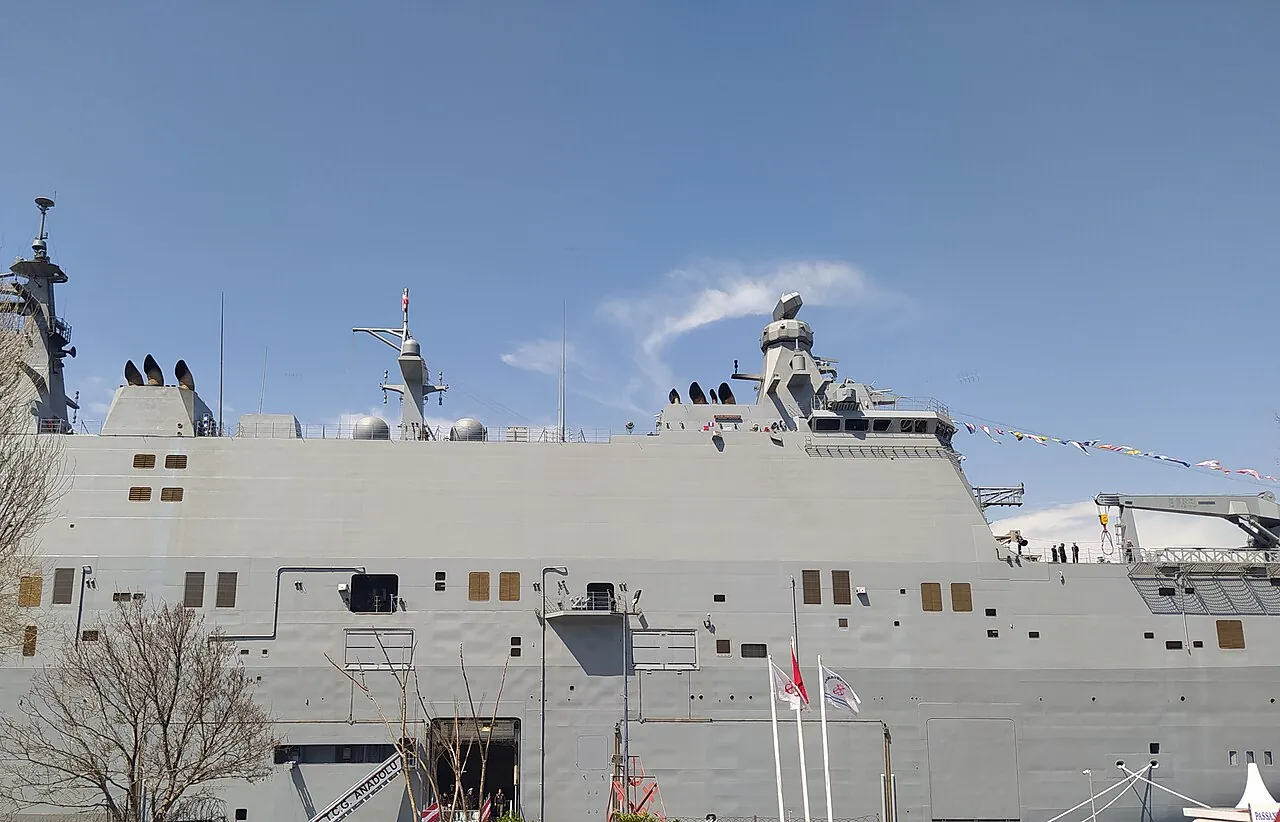
This ‘mothership plus unmanned swarm’ approach is spreading fast across the world’s navies. Turkey’s most concrete step in this space came with TCG Anadolu, which brings unmanned aircraft such as the Bayraktar TB3 and KIZILELMA into operation from the sea, while the ULAQ and MARLIN families advance in unmanned surface systems. Singapore’s MRCV shows that even mid-sized navies are now moving toward a ‘one ship, many systems’ architecture.
RSS Valour (Victory-class MRCV) — Specifications
| Class | Victory-class Multi-Role Combat Vessel (MRCV) |
| Length / Beam | 130 m / 19 m |
| Draught | 5.2 m |
| Crew | 110 |
| Primary role | Mothership for unmanned air/surface/underwater systems + command |
| Deck | Helicopter deck |
| Fleet | 6 ships (Victory, Valour, Vigilance, Valiant, Vigour, Vengeance) |
| Delivery | Progressive from 2028 |
| Builder | ST Engineering (Benoi Shipyard, Singapore) |
Sources
- Naval News — “ST Engineering Launches Second MRCV For Republic of Singapore Navy” (July 23, 2026)
- Singapore Ministry of Defence (MINDEF) press release (July 23, 2026)
- Naval Today; Baird Maritime