The Silent Layer: Naval Helicopter and ASW Procurement in the Gulf
Gulf Defence Procurement Analysis, Week 9 — a weekly series examining how Gulf Cooperation Council states are recapitalising their armed forces, and what the sourcing choices reveal about doctrine, industrial policy and threat perception.
Executive Summary
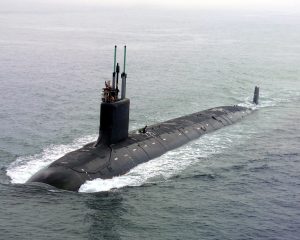
Anti-submarine warfare has historically ranked low on Gulf naval procurement lists, behind surface strike, air defence and coastal patrol. That ordering is being revisited. Iran’s expansion of a dispersed, difficult-to-track submarine force — a handful of Kilo-class boats supplemented by an estimated twenty or more Ghadir-class midget submarines optimised for the shallow, acoustically cluttered waters of the Gulf and the Strait of Hormuz — has exposed a capability gap that surface radar and shore-based patrol cannot close on their own. The organic fix is the embarked naval helicopter: a dipping-sonar- and sonobuoy-equipped airframe that extends a frigate or corvette’s underwater reach well beyond hull-mounted sonar range.
Saudi Arabia, Qatar and the United Arab Emirates have each taken a different route to this capability. Riyadh bought into the Sikorsky MH-60R Seahawk, the type built for blue-water carrier-strike-group ASW; Doha committed to the NHIndustries NH90 NFH as part of a broader helicopter package tied to its Italian-built Doha-class corvettes; Abu Dhabi has relied on an older, lighter Eurocopter AS565 Panther fleet configured more for anti-surface work than deep ASW. Kuwait, Oman and Bahrain have, on the available open-source record, made comparatively little public investment in organic naval ASW aviation — a gap that is likely to narrow as regional threat perceptions harden. This report sets out the operational logic behind each choice, compares the principal platforms on offer, and assesses what a genuinely shallow-water ASW requirement — as opposed to the blue-water doctrine most of these helicopters were designed against — should weigh most heavily in the next round of Gulf procurement.
Operational Context
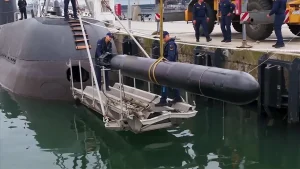
The Gulf is a poor environment for the kind of ASW doctrine that produced the MH-60R and the NH90 NFH in the first place. Both airframes were optimised, in large part, against a deep-ocean adversary: a Soviet or Russian nuclear or diesel-electric boat operating in open water, where thermal layering is comparatively stable and a dipping sonar or sonobuoy field can build a track over tens of kilometres. The Gulf itself averages around 50 metres in depth, is heavily trafficked by commercial shipping, and carries enough biological and industrial noise to complicate passive detection. A Ghadir-class midget submarine, at roughly 29 metres in length and under 130 tonnes submerged displacement, is also a poor sonar target by design: it can sit on the bottom, hug the coastline, and use short engagement ranges against a transiting warship rather than trying to out-run a task group in open water.
That mismatch matters because it is not primarily solved by adding more of the same sensor. A helicopter optimised to prosecute a contact at fifty nautical miles from a carrier strike group is not necessarily the most efficient tool against a midget submarine lying in wait a few kilometres from a coastal chokepoint; that problem leans more on persistent surface and subsurface sensor networks, maritime patrol aircraft, and layered coastal ASW than on any single embarked airframe. The helicopter’s real value in the Gulf context is speed of reaction and flexibility — the ability to reposition a dipping sonar or drop a sonobuoy pattern within minutes of a possible contact, cued by a frigate’s own sonar, a patrolling maritime patrol aircraft, or national intelligence — rather than a substitute for a standing undersea surveillance architecture. Gulf navies that have bought ASW helicopters without also investing in maritime patrol aircraft and fixed or towed sensor networks have, in effect, bought one layer of a system that needs several to function as intended.
The March 2026 loss of the Iranian frigate Dena, and Iran’s subsequent surfacing of Ghadir-class boats in the Strait of Hormuz in a show of force, are the kind of episodes that tend to accelerate procurement conversations in the Gulf capitals watching from the other side of the water. Whether that translates into new helicopter orders, or into investment further up the sensor chain, is the open question this report returns to in its outlook.
Comparative Analysis
Four helicopter types currently define the Gulf’s organic naval ASW and anti-surface picture, each reflecting a different procurement path and a different level of ambition.
| Platform | Gulf operator(s) | Primary sensor | ASW weapon | Typical embarked platform | Programme status |
|---|---|---|---|---|---|
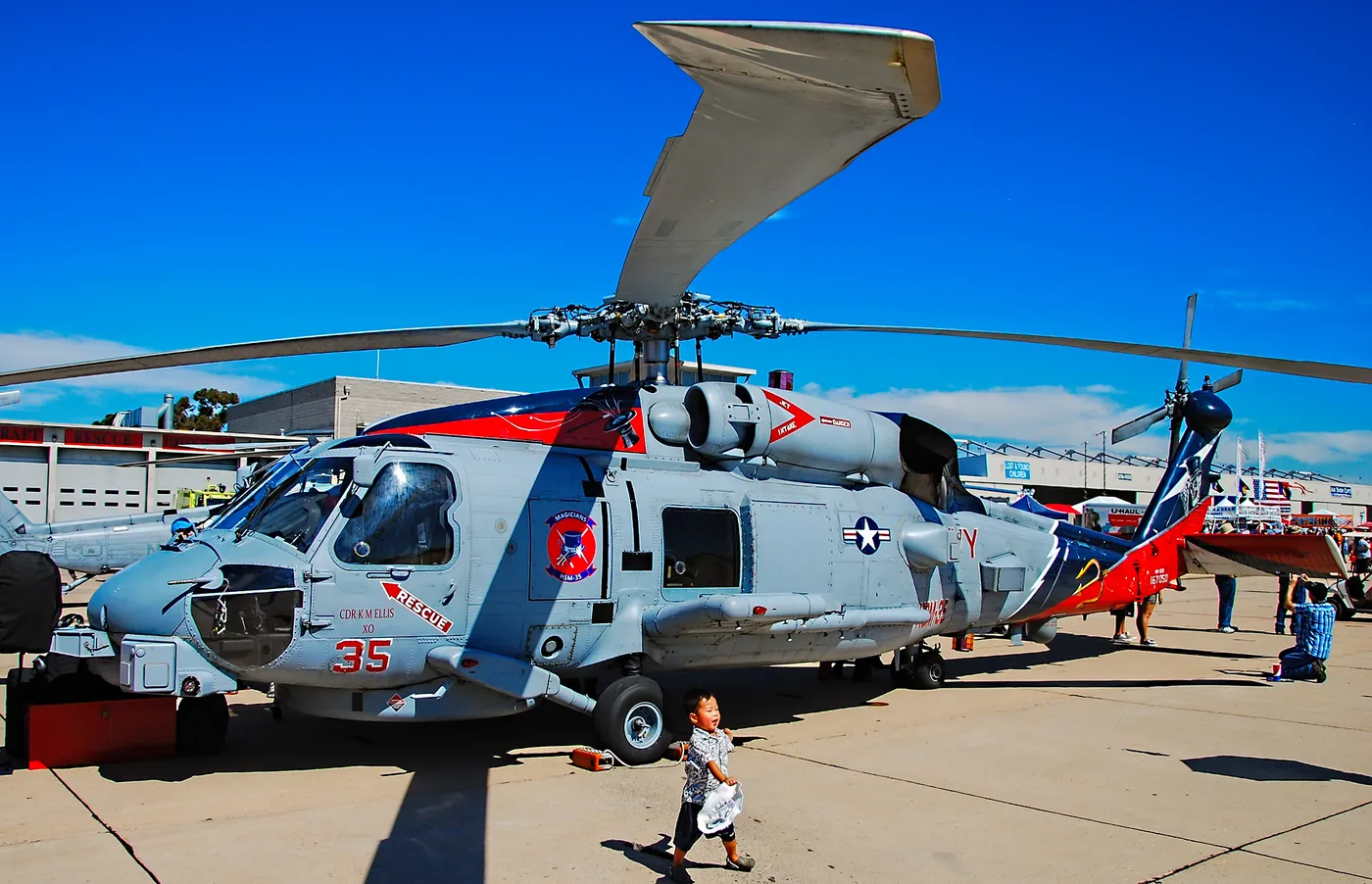
| Sikorsky MH-60R Seahawk | Saudi Arabia (Royal Saudi Naval Forces) | AN/APS-153 multi-mode radar, AN/AQS-22 dipping sonar, sonobuoys | Mk 54 lightweight torpedo | Al Riyadh-class frigates, new Lockheed Martin Multi-Mission Surface Combatants | Ten delivered 2020–2022; combined RSNF/US Navy fleet passed 10,000 flight hours in 2026 |
| NHIndustries NH90 NFH | Qatar (Qatar Emiri Naval Forces) | Thales/Leonardo maritime radar, FLASH dipping sonar, sonobuoys | MU90 lightweight torpedo | Doha-class corvettes | Naval-configured aircraft delivered from 2022 as part of a wider mixed NH90 order; deliveries reported complete by the mid-2020s |
| Leonardo AW159 Wildcat | Not yet in Gulf service; regional benchmark via Algeria’s Adhafer-class order | Seaspray 7400E AESA radar, dipping sonar (export configuration) | Sting Ray torpedo, Martlet light missile | Corvette/frigate flight decks (Type 26/Adhafer-class pattern) | In UK, Korean, Italian and Philippine service; marketed actively into the wider Middle East and North Africa market |
| Eurocopter/Airbus AS565 Panther | United Arab Emirates (UAE Navy) | Search radar, no organic dipping sonar in UAE configuration | AS15TT anti-ship missile (anti-surface role); limited organic ASW | Baynunah-class corvettes | Legacy fleet of roughly seven aircraft; ageing, oriented to anti-surface rather than ASW |
The comparison illustrates a capability spread rather than a single market winner. The MH-60R remains the most heavily instrumented option and the one most closely tied to a blue-water, carrier-strike-group ASW doctrine; its cost and sustainment burden reflect that pedigree. The NH90 NFH gives Qatar a genuine dipping-sonar ASW capability sized to its Doha-class corvette force, at the price of a programme that, across its European operators, has drawn persistent criticism over availability rates and sustainment costs — a record Gulf operators will need to manage rather than assume away. The AW159 Wildcat has not yet been bought by a Gulf navy but sits as the most obvious near-term competitor for any state weighing a first or additional ASW helicopter order, on the strength of its adoption in Algeria for a broadly comparable corvette-borne ASW mission. The UAE’s AS565 Panther fleet, by contrast, illustrates what an anti-surface-first procurement choice looks like a decade or more later: a capable helicopter for its original mission, but one that leaves Abu Dhabi with limited organic ASW reach unless it is supplemented or replaced.
Procurement Considerations
Three considerations should weigh more heavily in Gulf ASW helicopter decisions than they typically have in the wider naval-aviation market. The first is the mismatch, described above, between blue-water sensor optimisation and the Gulf’s shallow, acoustically noisy littoral. Buyers should press manufacturers for evidence of sensor performance in shallow, high-traffic water specifically, rather than accepting deep-ocean trial data as a proxy for Gulf conditions.
The second is sustainment. Naval helicopter fleets in the Gulf operate in a demanding salt-air, high-temperature environment that shortens component life relative to European or North American service. The NH90 family’s availability record in several NATO air arms is a documented concern, and any Gulf state considering the type — or expanding an existing order — should weight through-life support and spares-pooling arrangements as heavily as unit price. The MH-60R’s position inside an established US Foreign Military Sales support pipeline, evidenced by the RSNF’s flight-hour totals cited above, is a comparative advantage on this measure, though it carries the usual FMS considerations around end-use terms and delivery timelines.
The third is fleet sizing against the actual mission. A single squadron of eight to twelve ASW helicopters, however capable, cannot maintain continuous coverage over a chokepoint the size of the Strait of Hormuz; it functions instead as a reaction force cued by other sensors. States that have bought, or are considering buying, ASW helicopters without a parallel investment in maritime patrol aircraft, towed-array or fixed hydrophone networks, and unmanned underwater or surface vehicles risk a procurement that looks complete on paper but leaves the underlying detection problem — finding a Ghadir-class boat before it reaches weapons range — largely unaddressed. Framework or offset arrangements that bundle a helicopter order with investment in this wider sensor architecture, rather than treating the airframe as the whole answer, are likely to deliver a more defensible capability per dollar spent.
Outlook
Expect the next twelve to eighteen months to bring at least one new Gulf ASW helicopter announcement, most plausibly from a state currently reliant on an anti-surface-oriented fleet or none at all. The UAE is the most obvious candidate to formalise a successor to its ageing AS565 Panthers, and the AW159 Wildcat’s growing regional footprint — reinforced by the Algerian order — positions it as a credible option alongside the MH-60R and NH90 NFH already in Gulf service. Kuwait, Oman and Bahrain remain the least visible on this measure in open sources; any move by one of them into organic ASW aviation would mark a genuine shift in how seriously the smaller Gulf navies rate the submarine threat relative to the air and missile threats that have dominated their procurement to date.
The more consequential trend to watch, however, is not which airframe wins the next Gulf order but whether that order arrives bundled with investment in maritime patrol aircraft and undersea sensor networks. A helicopter buy alone addresses reaction time; it does not address detection. Given the specific, well-documented character of the Ghadir-class threat — small, shallow-draft, difficult to classify acoustically, and deployed in exactly the confined, noisy waters where Western ASW doctrine performs least well — the states that pair aviation procurement with sensor-network investment are likely to end up with a materially more useful capability than those that simply add helicopters to an existing fleet mix.