Laser Air Defence Arrives: Ukraine Says Blysk System Downed a Jet-Powered Russian Geran Drone

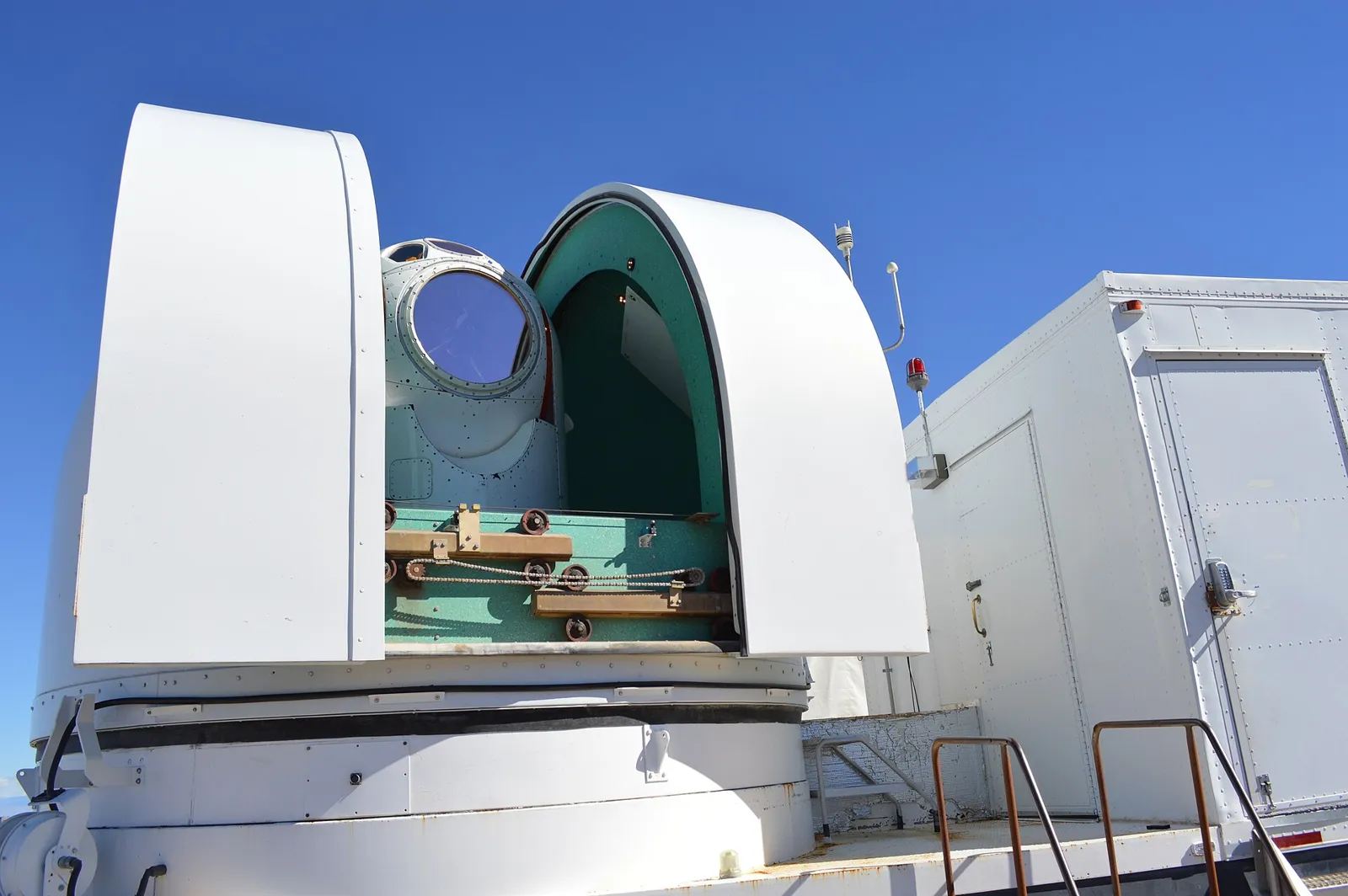
Ukraine says a domestically built laser air defence system has destroyed a jet-powered Russian Geran drone for the first time. Serhiy “Flash” Beskrestnov, a Ukrainian government adviser on drones and electronic warfare, said this week that the Blysk laser engaged the drone while protecting a critical infrastructure facility. The claim, reported by Defense Arabic and Ukrainian sources, has not been independently verified, and the exact date and location of the interception were not released.
What Blysk is
Blysk (“Flash”) is built and operated by Carmine Sky, a private air defence company working under Ukraine’s government-backed Private Air Defence programme with support from the Brave1 defence technology cluster. According to the company, the system has an output of about four kilowatts and an engagement range of up to one kilometre. It needs a fraction of a second to burn through a small FPV drone and several seconds to penetrate the outer skin of a Shahed-type drone.
The Kyiv Independent reported on November 19 that Blysk had been deployed in early November as part of Kyiv’s air defences, describing it as Ukraine’s first air defence laser. At that point it had not engaged a target; the company blamed persistent cloud and fog, conditions that scatter laser energy.
Why the jet Geran matters
Russia has increasingly used jet-powered versions of the Geran, its licensed derivative of Iran’s Shahed-136, which fly faster than the original piston-engine model and leave mobile fire teams with heavy machine guns less time to react. A laser that can track and burn through one of these drones would add a layer of defence that costs almost nothing per shot once the system is installed.
| System | Developer | Reported status |
|---|---|---|
| Blysk | Carmine Sky | Deployed in Kyiv region in November 2026; first claimed kill of a jet Geran |
| Tryzub | Celebra Tech | Final testing announced May 2026; trailer-mounted version |
The Tryzub programme
Blysk is separate from Tryzub (“Trident”), the laser Ukraine first disclosed in December 2024, when the commander of its Unmanned Systems Forces said it could engage aircraft at altitudes above two kilometres. Its developer, Celebra Tech, said in May 2026 that the system had entered final testing in a trailer-mounted configuration and claimed a reach of about five kilometres against Shahed-type drones. Those figures are manufacturer claims. Earlier reporting cited ranges of around 1,500 metres against reconnaissance drones.
Analysis: cheap shots, hard limits
Lasers appeal to every army facing massed drones because the cost per engagement is a fraction of a missile’s. Britain’s DragonFire, Israel’s Iron Beam and several US Army prototypes are all chasing the same goal. Ukraine’s approach is different in one respect: it is fielding lower-power systems quickly through private operators and refining them in combat. Officials have cautioned that laser systems remain complex and expensive and that serial production is premature. Weather, power supply and the time needed to hold a beam on a target will limit how many drones a single unit can stop in a mass raid. Even so, a confirmed kill of a jet-powered Geran would show that low-cost directed energy can contribute to a layered defence alongside guns, interceptor drones and missiles.
FAQ
Has the Blysk kill been independently confirmed?
No. The claim comes from Ukrainian officials and the company.
Who operates Blysk?
Carmine Sky, a private company working under Ukraine’s Private Air Defence programme.