China’s Likely Nuclear-Powered Type 004 Carrier Takes Shape in Dalian, With Launch Possible in 2027

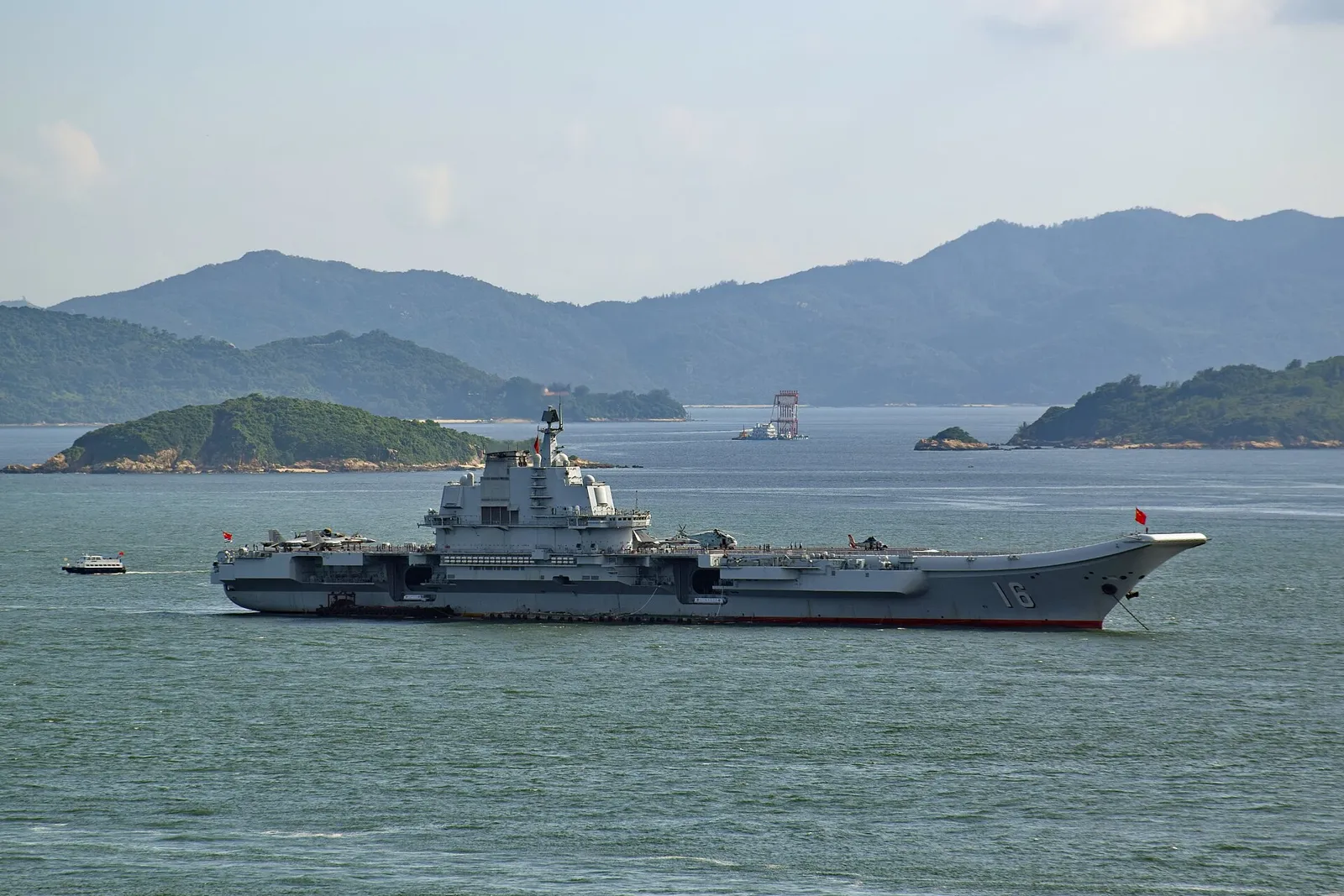
China’s fourth aircraft carrier, widely referred to as the Type 004, has entered a critical construction phase at the Dalian shipyard and could be floated out as early as 2027, according to new satellite analysis by the Center for Strategic and International Studies (CSIS) reported this month. The Washington think tank assesses that the ship is likely nuclear-powered, which would make it the first Chinese carrier capable of sustained operations far from home waters without depending on oilers.
What the imagery shows
CSIS’s Hidden Reach team has tracked the hull in the same Dalian dry dock where the Liaoning, China’s first carrier, was completed. Its central finding is two internal compartments measuring roughly 15 by 15 metres that resemble shielded reactor spaces. CSIS links this to earlier evidence of a land-based naval reactor prototype associated with the 701st Research Institute, the design bureau behind Chinese carriers.
Analysts quoted by the South China Morning Post said the progress of hull modules and the assembly of the flight-deck structure point to a launch next year. The Aviationist, reviewing the same imagery in mid-November, described a hull that is now large enough to be compared directly with the US Navy’s Ford class.
Catapults and air wing
The Fujian, commissioned in 2025, introduced electromagnetic catapults to the People’s Liberation Army Navy with three launch tracks. Analysts expect the Type 004 to carry four, matching American practice and allowing faster launch cycles. That would support a heavier air wing built around the J-35 stealth fighter, the KJ-600 airborne early warning aircraft and a growing family of carrier-capable drones.
Nuclear propulsion matters as much for the electrical budget as for range. Electromagnetic catapults, modern radars and future directed-energy weapons all draw heavily on onboard power, and a reactor plant offers margins that a conventional steam or gas-turbine plant struggles to match.
Caveats
CSIS itself frames nuclear power as likely rather than confirmed. Some outlets have treated it as settled, but others point out that nothing in commercial imagery proves a reactor is installed or mature. Beijing has published nothing about the ship’s design, name or timeline. Displacement figures above 100,000 tonnes circulate online, but they come from less authoritative sources and should be treated as estimates.
Analysis: what it means for the Indo-Pacific
The Pentagon’s latest China Military Power Report says Beijing is aiming for nine carriers by 2035, which would require building at least two hulls at a time. A nuclear Type 004 is the clearest sign yet that China wants carriers designed for distant deployments, not just operations inside the first island chain. For US planners, the significance is less about matching the eleven-carrier American fleet in numbers and more about China gaining a platform that can stay on station in the Indian Ocean or the western Pacific for months.
The harder problem for the PLA Navy is not steel. Carrier power depends on trained deck crews, experienced pilots, escorts, logistics ships and decades of operating doctrine. The US Navy has run nuclear carriers since 1961. China will be learning to run its first while building more. Allies in Japan, Australia and the Philippines will watch the 2027 window closely, because a launch would be followed by several years of fitting out and trials before the ship enters service.
FAQ
Is the Type 004 confirmed to be nuclear-powered?
No. CSIS assesses it as likely based on satellite imagery of reactor-like compartments, but China has not confirmed it.
Where is it being built?
At the Dalian shipyard in northeast China, in the dry dock used to complete the Liaoning.
When could it enter service?
If launched in 2027, outfitting and sea trials would likely push commissioning toward the end of the decade.