Russia May Launch Nuclear-Armed ‘Sputnik-S’ Satellite Within Weeks, German Media Report Citing Intelligence

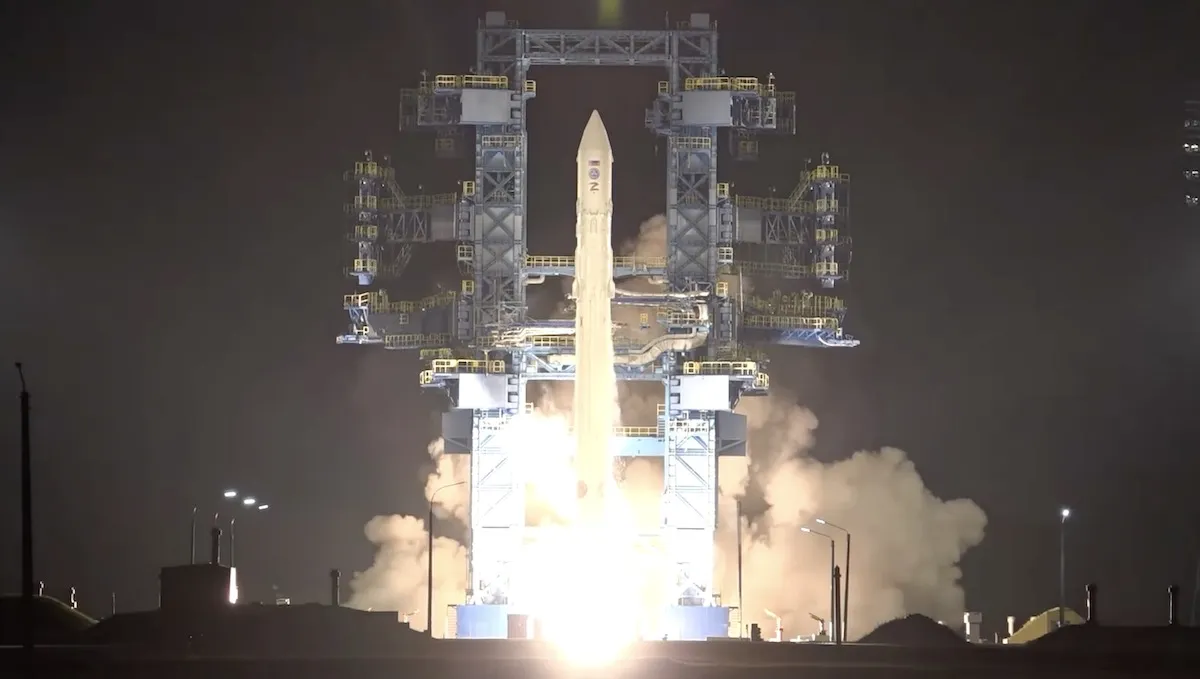
Western intelligence services believe Russia could launch a satellite carrying a nuclear explosive device as early as December, according to a joint investigation by German public broadcasters WDR and NDR and the newspaper Süddeutsche Zeitung published on November 23. The satellite, reportedly referred to as Sputnik-S, was described by unnamed military and intelligence sources as having been built years ago and kept in storage near Moscow. The Kremlin dismissed the reports.
What the report says
According to Defense News and AeroTime, the German report cites an intelligence assessment from early November that put a possible launch “within 60 days.” Germany’s armed forces and its foreign intelligence service, the BND, are said to believe the satellite could go up within weeks. The report does not describe the warhead, the launch vehicle or a precise date. It rests entirely on anonymous sources.
Chancellor Friedrich Merz neither confirmed nor denied the information. Kremlin spokesman Dmitry Peskov said the claims were “hardly worth taking seriously,” and Russia’s embassy in Berlin called them a propaganda campaign.
Background: a long-running concern
The warning did not come out of nowhere. In February 2024, Washington publicly raised concerns about a Russian anti-satellite capability involving a nuclear device. A US Defense Intelligence Agency assessment from October 2026 said Russia is developing a satellite designed to carry a nuclear weapon for use against other satellites. Analysts have focused on Cosmos 2553, launched in February 2022 into an unusual high orbit; US analysts later reported that it appeared to be tumbling. A 2025 analysis by the German Institute for International and Security Affairs (SWP) said it appeared certain that Russia had a nuclear anti-satellite programme, while noting that its strategic purpose remained unclear.
In June 2026, Major General Michael Traut, head of the Bundeswehr’s Space Command, warned that a nuclear detonation in orbit could disable up to a third of satellites in low Earth orbit.
Why a nuclear device in orbit is different
A conventional anti-satellite missile destroys a single target. A nuclear detonation in space would produce an electromagnetic pulse and pump high-energy particles into Earth’s radiation belts, where they could remain for months. Satellites not hardened against radiation, including commercial communications and imaging constellations, would degrade rapidly. The effects would not distinguish between military and civilian spacecraft or between Russian, Chinese and Western assets.
The 1967 Outer Space Treaty, which Russia has ratified, bans placing nuclear weapons in orbit. In April 2024, Russia vetoed a UN Security Council resolution reaffirming that ban.
Analysis: deterrence, signalling or deployment?
For NATO, the question is less whether such a weapon would ever be used than how its presence would change behaviour in a crisis. A dormant nuclear device in orbit would hold hostage the satellite services that Western militaries, and Ukraine, rely on for communications, navigation and intelligence. Previous US assessments suggested Moscow might even launch a dummy to keep adversaries guessing. Until a launch is observed and tracked, the December timeline remains a claim based on unnamed sources. What it has already done is push space resilience, including hardening, redundancy and rapid reconstitution of satellites, higher up European defence agendas.
FAQ
Has Russia launched the satellite?
No launch had been reported as of November 27, 2026.
Is a nuclear weapon in orbit legal?
No. The Outer Space Treaty, to which Russia is a party, prohibits placing nuclear weapons in orbit.