Lockheed Martin Says Vectis Has Hit a New Milestone, First Flight Within Two Years

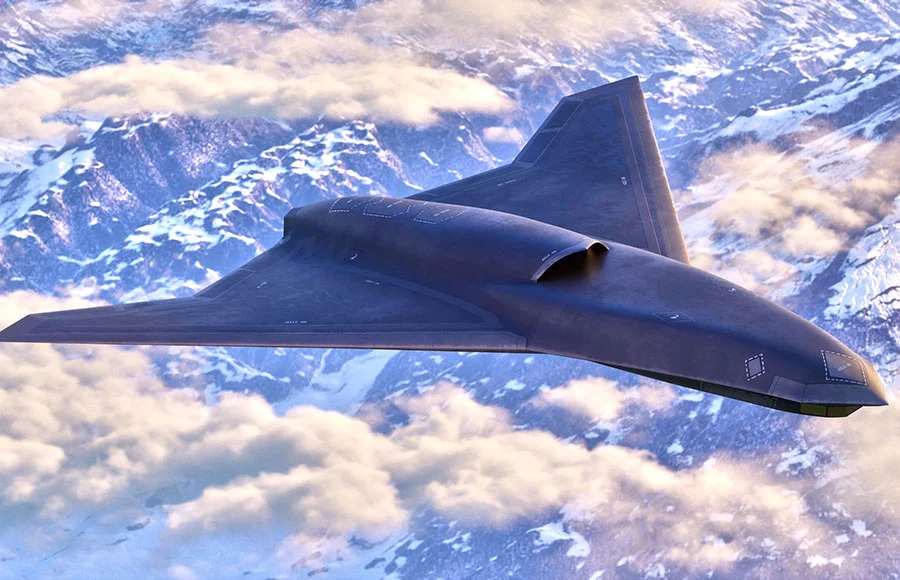
Lockheed Martin says its Vectis uncrewed combat aircraft has reached a new development milestone. On 12 September the company posted a short video of the aircraft’s silhouette with the caption “Next level unlocked.” No technical detail or updated schedule came with it — but the timing suggests prototype work is moving.
What Vectis is
Unveiled in September 2025, Vectis is designed to operate alongside the F-22 Raptor, F-35 Lightning II and future combat aircraft. Lockheed Martin has not tied it to any specific competition, though the design tracks the US Air Force’s push toward affordable uncrewed aircraft that support fifth-generation fighters.
It falls within the Pentagon’s Group 5 classification, the largest and most capable category of uncrewed aircraft. The company describes the design as offering “best-in-class survivability in the CCA category,” a reference to the Air Force’s Collaborative Combat Aircraft programme.
Cheap and low-observable in the same sentence
The claim is that Vectis will cost significantly less to buy and operate than a crewed fighter while combining stealth with advanced mission systems. Listed mission sets span air combat, strike, ISR and electronic warfare.
Open-systems architecture is the second pillar. The aircraft is built to accept sensors, weapons and communications equipment from outside suppliers, letting US and allied operators configure it per mission — flexibility Lockheed Martin sees as central to its export appeal.
“Parts of the prototype are on order, the team is working and we plan to take to the air within the next two years,” the company said in an earlier statement. It also calls Vectis an “everyday aircraft,” with accessible internal systems and durable materials built for field operations — shorthand for sustaining a high sortie rate without depot-grade handling.
A Skunk Works programme
Vectis is the latest from Skunk Works, established during the Second World War under Clarence “Kelly” Johnson and known for the P-80, U-2, SR-71 and F-117, and later for the F-22 design and a major role in the F-35.
The economics, and the competition
The entire CCA concept rests on a cost equation: add uncrewed platforms whose unit price sits far below a fighter’s and whose loss is acceptable, so that a fixed budget puts more sensors and shooters in the air. The hard part is holding low observability and low cost in the same airframe, since the shaping, materials and tolerances that cut radar cross-section normally push cost up.
In the US, General Atomics’ YFQ-42A and Anduril’s YFQ-44A are competing formally in the first CCA increment. Lockheed Martin chose to advance Vectis outside that contest, betting on later increments and allied markets.
The concept is maturing elsewhere too. Baykar’s KIZILELMA and TUSAŞ’s ANKA-3 are Türkiye’s expression of the low-observable uncrewed partner, with KIZILELMA’s air-to-air missile shots and ANKA-3’s flight test programme showing the class is no longer confined to the US and Europe.
The near-term question is whether Lockheed Martin follows this teaser with an actual prototype image or taxi-test announcement. Its two-year window points to a first flight during 2027.
Sources
- Lockheed Martin official social media post, 12 September 2026
- Lockheed Martin Vectis product page and September 2025 press release
- Defence Industry Europe, 13 September 2026