North Korea Fires Again Before the Drills: Ballistic Missile From Wonsan Flies Over 700km

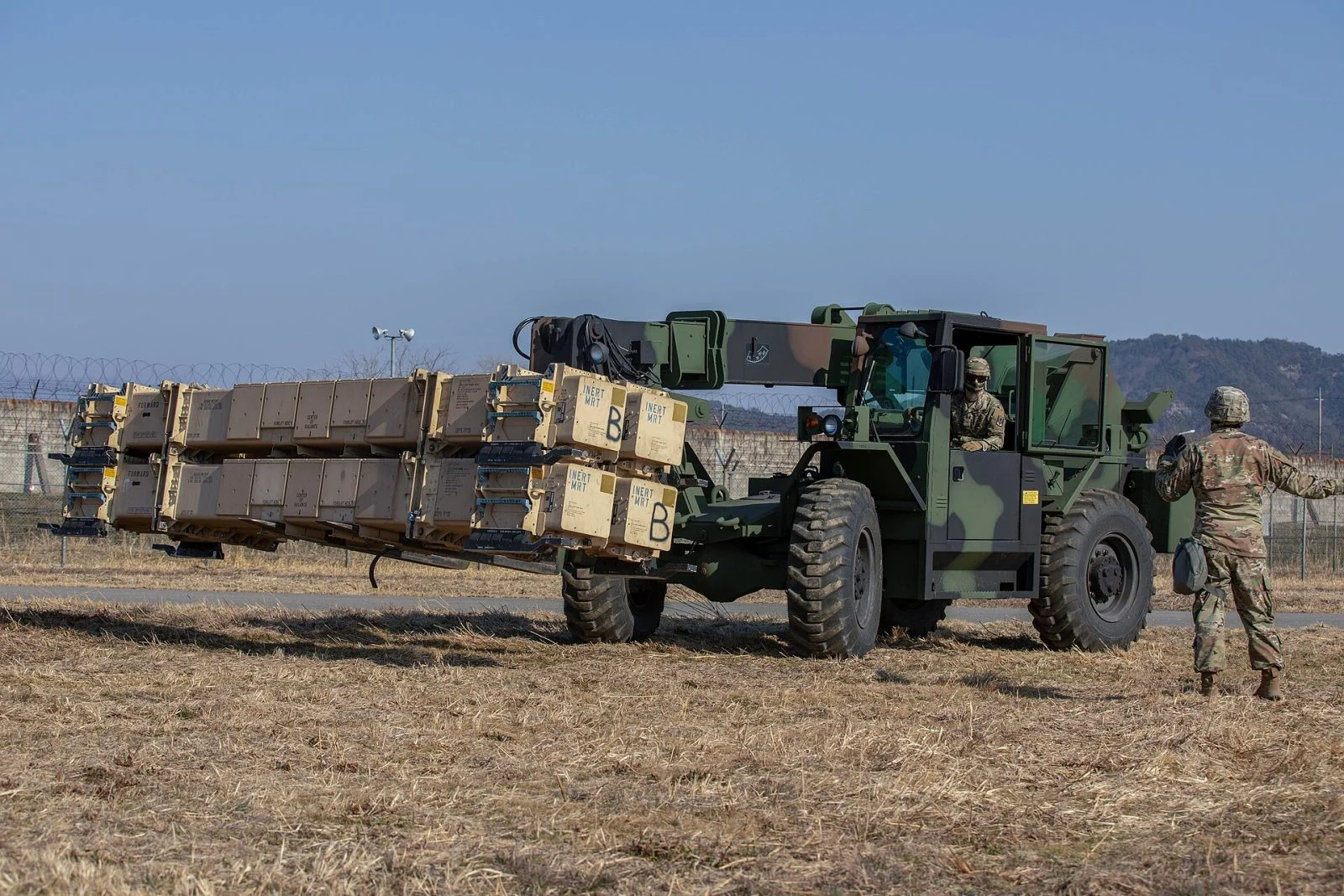
North Korea launched a ballistic missile from the Wonsan area on its eastern coast toward the East Sea on the morning of 12 August. South Korea’s Joint Chiefs of Staff said the missile, detected at around 06:00, travelled more than 700km. It was Pyongyang’s 11th suspected ballistic missile test of 2026.
Second launch in six days
The test came only six days after a short-range ballistic missile launch from the same area on 6 August. What links the two is the calendar: the annual South Korea-United States Ulchi Freedom Shield exercise begins on 17 August and runs for 11 days, with 18,000 South Korean troops taking part.
Pyongyang has for years denounced the drills as a rehearsal for invasion and answered them with weapons tests. This year’s launches follow the same pattern — the exercise schedule is announced, and the missiles follow.
What 700km signifies
Range is the key to classification. A trajectory beyond 700km points either to the upper band of North Korea’s short-range ballistic missile family or the lower threshold of the medium-range class. That distance covers the entire Korean peninsula and parts of Japan’s western coastal regions.
The solid-fuel systems Pyongyang has emphasised in recent years, such as the KN-23 and KN-24, cluster in exactly this band. The solid-fuel choice is not a technical footnote: unlike liquid-fuelled missiles, these systems need no hours-long fuelling sequence, which narrows the window in which satellites and reconnaissance assets can detect launch preparations. Quasi-ballistic and manoeuvring trajectories further complicate conventional missile defence solutions.
The regional defence equation
These launches feed directly into South Korean and Japanese investment in layered air and missile defence. Seoul’s KM-SAM (Cheongung-II) and L-SAM programmes aim to build an indigenous layer above its Patriot batteries, while Japan deepens its own architecture with Aegis destroyers and PAC-3 MSE.
The problem lies in volume overwhelming capacity. Stopping a single missile is a solved technical problem; stopping a salvo of dozens arriving simultaneously on differing trajectories becomes a question of magazine depth and cost.
Reading it from Türkiye
There is no direct link between the Korean peninsula and Türkiye’s threat environment, but the technical equation is largely identical. Türkiye also lives within ballistic missile range in its own neighbourhood, and looks for the answer in the same place: layered defence and indigenous production.
The SİPER programme addresses precisely the band South Korea targets with L-SAM — long-range, high-altitude interception. HİSAR-A+ and HİSAR-O+ form the lower layers, while the ÇELİK KUBBE architecture is designed to fuse these elements under a single command and control structure. The resemblance to South Korea’s long-running approach is striking: use foreign procurement as a starting point, then build the indigenous layer on top of it.
Sources
- Republic of Korea Joint Chiefs of Staff statements, 12 August 2026
- South Korea-US Ulchi Freedom Shield 2026 exercise announcement
- International agency and South Korean press reporting (Korea Times, Korea JoongAng Daily), 12 August 2026